White Lamb Liver and Heart Soup
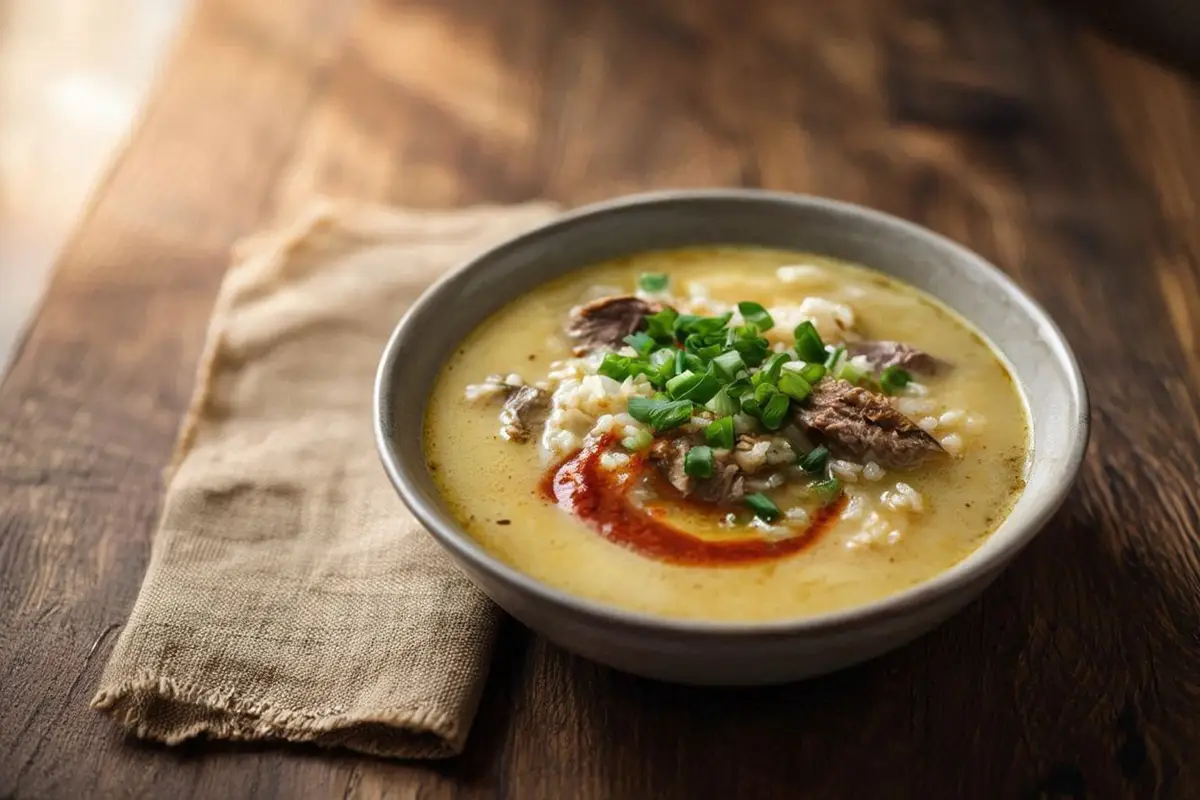
A delicate Central European offal soup of blanched lamb liver and heart with rice, young onions, and a butter-red pepper finish.
Quick Summary
A delicate Central European offal soup of blanched lamb liver and heart with rice, young onions, and a butter-red pepper finish.
Historical recipe
Modernised adaptation of an early 20th‑century source. Not independently kitchen-tested by Attic Recipes. Quantities, temperatures, and food safety guidance have been updated for a contemporary kitchen — results may vary and errors may exist. Nutritional values, where provided, are estimates only and have not been laboratory tested. Always follow current food safety guidelines for your region. If you have a health condition, allergy, or dietary requirement, consult a qualified professional before preparing this recipe.
Use of this recipe is entirely at your own risk and subject to our Terms of Service and Privacy Policy. Attic Recipes accepts no liability for any adverse outcome.
- Dairy
- Gluten
- Sulphites
Additional notes
-
Warning
Very high cholesterol content — 389mg per serving, primarily from lamb liver. The recommended daily limit for dietary cholesterol is 300mg. Not suitable for individuals with hypercholesterolemia, cardiovascular disease, or those on a cholesterol-restricted diet.
Replace liver with an equal weight of lamb heart only to reduce cholesterol significantly. Heart has approximately half the cholesterol of liver.
-
Warning
Lamb liver is very high in vitamin A (retinol). A single serving may exceed the safe upper daily intake. Pregnant women must avoid liver entirely due to the risk of vitamin A toxicity to the fetus.
Pregnant women should substitute lamb heart or lean lamb meat entirely and omit the liver.
-
Note
Organ meats (liver, heart) are high in purines. Individuals with gout or elevated uric acid should consume in moderation.
Substitute with lean lamb shoulder or chicken for a low-purine version.
-
Caution
Contains dairy (butter) and gluten (flour). Use olive oil in place of butter and a cornstarch slurry for a dairy-free and gluten-free version.
- 1
Blanch the offal: Place the liver and heart in a pot with a small amount of boiling water. Blanch briefly until the surfaces turn white and firm — about 3–4 minutes. Do not fully cook them at this stage. Remove, set aside in a bowl, and allow to cool completely.
Tip Blanching removes blood, bitterness, and surface impurities, which is what gives this soup its characteristic mild, 'white' flavor compared to fully browned offal preparations. - 2
Trim and cut: Once cool, cut the liver and heart into small, even pieces with a sharp knife. As you cut, carefully remove and discard all visible veins, blood vessels, and any connective tissue.
Tip Cold offal is significantly easier to trim cleanly than warm. If time allows, refrigerate for 15 minutes before cutting. - 3
Fry the aromatics: Melt 2–3 tablespoons of butter in a heavy pot over medium heat. Add the chopped spring onions and fry until golden, about 5–7 minutes. Add the garlic and fry for one more minute.
- 4
Add offal and rice: Add the trimmed liver and heart pieces to the pot. Stir together with the onion and garlic. Add the rice, then slowly pour in the 600ml of hot water. Bring to a gentle simmer.
- 5
Add herbs and simmer: Add the fresh herb bunch. Simmer on low heat until both the rice and the offal are cooked through — about 15–20 minutes. Do not boil hard; the liver will toughen quickly at high heat.
Tip The liver is done when it is just cooked through with no pink center — cut a piece to check. Overcooking even by a few minutes will make it grainy and tough. - 6
Thicken and season: Mix 1 tablespoon of flour into a smooth slurry with a small amount of cold water. Stir it into the soup and let it simmer for 2–3 minutes to cook out the raw flour taste. Add the wine vinegar, season with salt and pepper, and adjust the water to your preferred consistency.
- 7
Finish with garnish: In a small pan, melt 1 tablespoon of butter. Remove from the heat and immediately stir in the crushed red pepper — the residual heat will bloom the pepper without burning it. Pour this over the soup just before serving.
Nutrition Information per 1 portion (approx. 350ml)
Nutritional values are approximate estimates and may vary based on specific ingredients used, preparation methods, and portion sizes.
Serving Suggestions
Serve with crusty white bread or flatbread to absorb the broth. A small dish of extra wine vinegar on the side allows guests to adjust the acidity. Traditionally a spring and Easter dish, made when fresh young offal from the season's first lamb is available.
About This Recipe
This is a soup of quiet restraint. Where most offal preparations lean into browning, fat, and intensity, this one goes the other way — blanching the liver and heart first to draw out the blood and bitterness, producing a pale, delicate broth that lets the natural sweetness of fresh young offal come forward. It is a dish that rewards sourcing: the difference between day-fresh lamb liver and anything less is impossible to hide.
Why It Works
The blanching step is the technical heart of the recipe. By briefly cooking the liver and heart in a small amount of boiling water before adding them to the soup, you coagulate the surface proteins and remove the blood and bitter compounds that give offal its more aggressive flavor. The result is a much gentler, milder base than raw offal would produce. The flour slurry at the end — rather than a roux made at the beginning — keeps the broth light and clear until the final moment of thickening, and the wine vinegar cuts through the richness of the butter garnish with precision.
Modern Kitchen Tips
- Freshness is everything: Lamb offal is one of the few ingredients where frozen is genuinely not an acceptable substitute. Buy it fresh and cook it the same day.
- The milk soak: If the liver has any strong or bitter smell even after blanching, a 30-minute soak in cold milk before cooking will resolve it completely. Discard the milk and pat dry before adding to the pot.
- Herb choice: Parsley gives freshness, dill gives a distinctly Eastern European character, and savory (čubar) gives an earthy, slightly peppery note. Any combination of two works well.
- The garnish: The butter-red pepper finish must be added at the very last moment, off the heat — this is not a suggestion but a technique. Butter added to a boiling soup will break and disappear; added to a resting soup it floats, perfumes, and colors the surface beautifully.
A classic of early 20th century home cooking, preserved and adapted for the modern kitchen.
The Story Behind This Recipe
Historical Context
Offal soups of this style — built around liver, heart, and lung — were everyday economy dishes across Central European households in the early 20th century. The blanching technique that gives this soup its name ('white') is a deliberate choice to produce a mild, pale broth suited to lighter spring eating, in contrast to the darker, richer braised offal preparations of winter. The finishing garnish of butter and red pepper poured over the soup at the table is a technique with deep roots in the region's culinary tradition.
Modern Kitchen Adaptation
Lamb offal is best sourced fresh from a halal butcher or a farm butcher on slaughter day — it deteriorates quickly and frozen offal loses significant texture. If the flavor of liver is too strong, soaking the raw pieces in cold milk for 30–60 minutes before blanching will mellow it considerably. The unspecified 'bunch of fresh herbs' in the original most likely refers to whatever was available seasonally — parsley is the safest all-purpose choice, dill adds brightness, and savory (čubar) gives a more rustic, peppery note. Lard is the historically correct fat; butter is used here as specified in the original.
This recipe is an independent modern adaptation developed from historical sources in the public domain. It is provided for informational and educational purposes only and does not constitute professional dietary, nutritional, or medical advice. Food preparation involves inherent risks. The reader assumes full responsibility for safe food handling, ingredient sourcing, and adherence to current local food safety guidelines. The site operator accepts no liability for outcomes resulting from the preparation or consumption of this recipe.
One recipe.
Every week.
You Might Also Like
More recipes from the same category
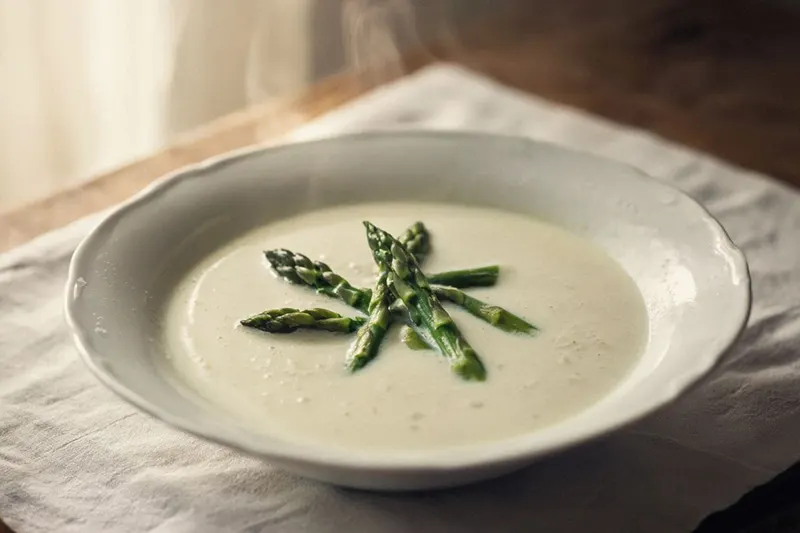
Asparagus Tip Soup
A silky, cream-enriched asparagus soup built on a white roux and finished with tempered egg yolks — an elegant first course from early 20th century cooking.
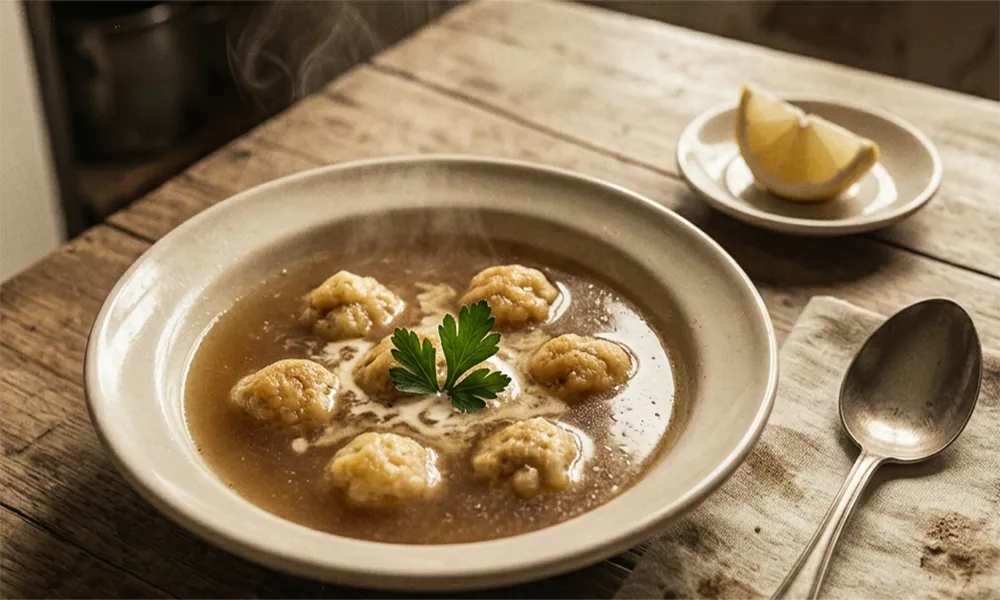
Beef Broth with Stuffed Dough Dumplings
Rich beef bone broth simmered with golden pan-fried dumplings stuffed with seasoned ground beef, finished with a light roux and fresh lemon juice.
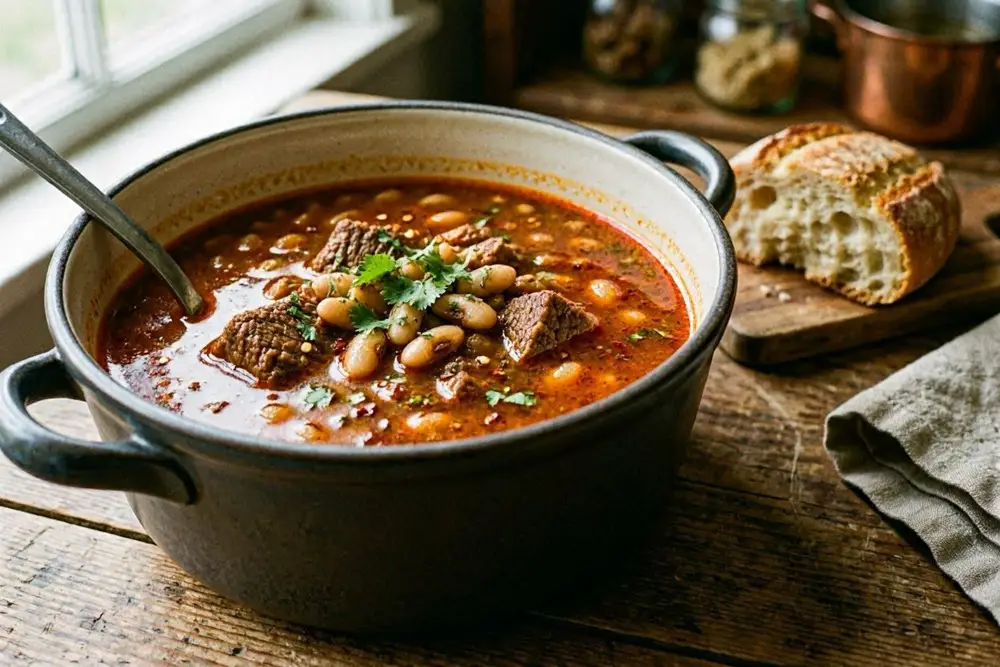
Bean Soup Cooked with Beef
White beans and beef shoulder slow-simmered with a bouquet garni, finished in the oven with a paprika-spiced pan roux. A deeply satisfying one-pot meal.