Lamb Soup with Egg and Lemon
A hearty lamb broth simmered with rice and onion, finished either with a silky egg-and-lemon enrichment or a sharper wine vinegar variation.
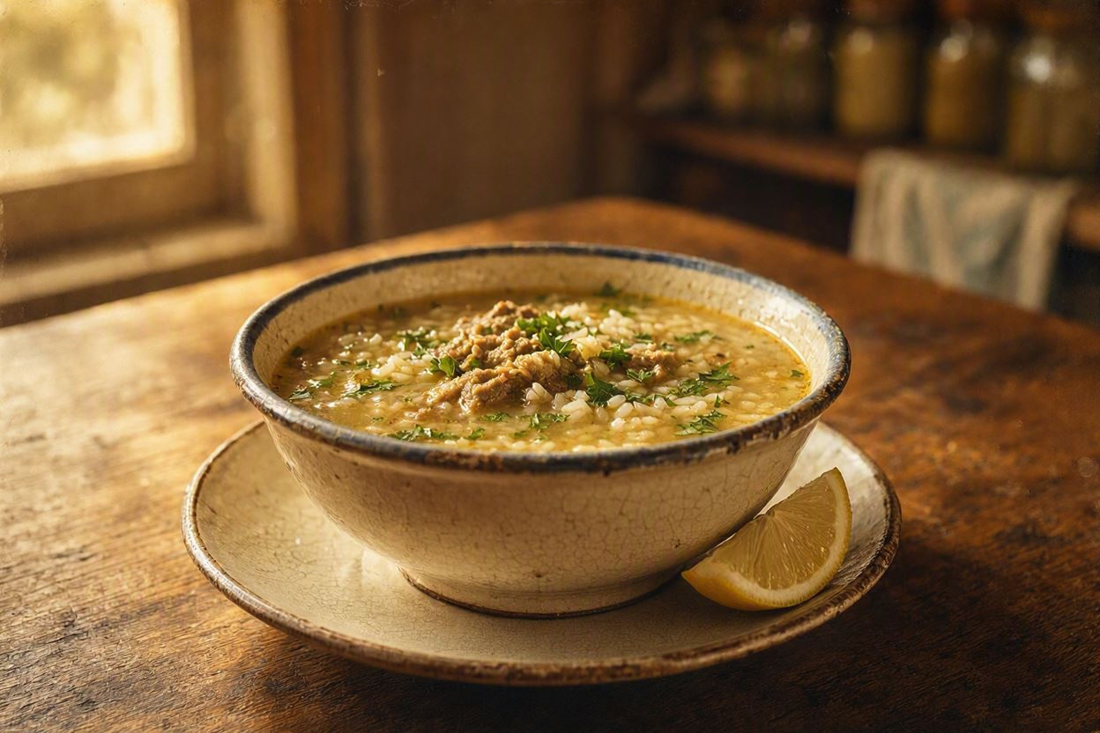
Quick Summary
This lamb broth simmers fatty lamb breast with onion and rice for about 90 minutes, then gets finished one of two traditional ways: whisked eggs and lemon juice for a silky, tangy soup, or wine vinegar and black pepper for a sharper, lighter one.
This recipe uses The Science of Removing Gamey Flavor from Lamb and Mutton — prepare it in advance if you haven't already.
Historical recipe
Modernised adaptation of an early 20th‑century source. Not independently kitchen-tested by Attic Recipes. Quantities, temperatures, and food safety guidance have been updated for a contemporary kitchen — results may vary and errors may exist. Nutritional values, where provided, are estimates only and have not been laboratory tested. Always follow current food safety guidelines for your region. If you have a health condition, allergy, or dietary requirement, consult a qualified professional before preparing this recipe.
Use of this recipe is entirely at your own risk and subject to our Terms of Service and Privacy Policy. Attic Recipes accepts no liability for any adverse outcome.
- Eggs
- Dairy
- Sulphites
Additional notes
-
Warning
The egg-lemon finish uses eggs that are only gently warmed, not fully cooked. Heat the mixture to about 74°C (165°F) without boiling, and use pasteurized eggs when serving pregnant women, young children, older adults, or anyone immunocompromised.
-
Note
This soup is high in saturated fat from the fatty lamb breast and butter (about 14g per serving) — those managing saturated fat intake may want to trim visible fat from the meat before cooking.
- 1
Cut the lamb breast into small pieces and place in a pot with the 1.6 l water. Bring to a boil.
- 2
As soon as it boils, skim off the foam that rises to the surface.
Tip Keep skimming for a few minutes as the broth continues to boil — this keeps the finished soup clear. - 3
Add the salt, black pepper, halved onion, and butter. Reduce heat and simmer gently until the lamb is tender, about 1.5 hours.
Tip Estimated cooking time based on lamb breast; check for tenderness rather than going by the clock. - 4
About 15 minutes before the soup is done, stir in the rice and continue simmering.
- 5
Just before removing the pot from the heat, stir in the chopped parsley. Remove and discard the onion half.
- 6
For the egg-lemon finish, whisk the eggs with the lemon juice in a small bowl. Ladle a cup of the hot broth into the bowl while whisking constantly, then stir the mixture back into the pot off the heat, stirring until the soup thickens slightly.
Tip Heat gently to about 74°C (165°F) without letting it boil — boiling will curdle the eggs, but the mixture should still reach a safe temperature. Use pasteurized eggs if serving anyone in a vulnerable group. - 7
Alternatively, for the vinegar finish, stir in the wine vinegar and a little extra black pepper instead of the eggs and lemon.
Nutrition Information per 1 bowl (approx 350ml)
Nutritional values are approximate estimates and may vary based on specific ingredients used, preparation methods, and portion sizes.
Serving Suggestions
Serve hot as a light main course, with crusty bread on the side.
About This Recipe
This is a simple, fatty-cut lamb broth built around two ideas: a long, gentle simmer to render the meat tender, and a choice of finishes to make the last few minutes of cooking count. The egg-and-lemon version turns a plain broth silky and tangy, closer to the finish you’d find on some Mediterranean soups than typical Central European fare — a reminder that lemon and eggs were valued for lightening a heavy broth wherever they were available.
The second, simpler finish — wine vinegar and black pepper — needed nothing more than a splash from the pantry, making this a dish that could adapt to whatever was on hand. Both versions start from the exact same pot of broth, so the finish is really a last-minute decision rather than a separate recipe.
Fresh butter added early, alongside the onion, rounds out the fat from the lamb breast itself and helps carry the black pepper’s flavor through the broth as it simmers.
Why It Works
Simmering a fatty cut like lamb breast low and slow renders the connective tissue and fat into the broth, building body and flavor rather than toughening the meat. Rice added near the end thickens the broth slightly as it releases starch, without turning the soup into a heavier stew. The egg-lemon finish works through gentle heat alone: whisked eggs, warmed gradually with hot broth before going back into the pot, thicken the liquid slightly as the proteins set — done too fast or too hot, the same proteins curdle instead.
Modern Kitchen Tips
If you’re not confident about tempering the eggs, whisk in the hot broth even more gradually than you think you need to, a spoonful at a time at first, before switching to a slow, steady stream. Trimming some of the visible fat off the lamb breast before it goes into the pot gives you a lighter broth without changing the cooking method. If serving anyone in a vulnerable group, lean toward the vinegar finish, or use pasteurized eggs for the egg-lemon version.
A classic of early 20th century home cooking, preserved and adapted for the modern kitchen.
The Story Behind This Recipe
Historical Context
Finishing a hot broth with beaten eggs and lemon juice is an old way of adding richness and brightness to a simple meat soup without extra cream or flour. Home cooks of the period offered a second option for the same dish — wine vinegar and black pepper — for days when eggs were scarce or a sharper, lighter broth was wanted.
Modern Kitchen Adaptation
Whole eggs whisked into a hot broth can scramble if added too quickly or over direct heat; tempering the eggs with a ladle of hot broth first, then finishing gently off the heat, keeps the texture smooth. Because the eggs aren't fully cooked through in the traditional method, this dish should be finished to at least 74°C (165°F) where possible, and pasteurized eggs are a safer substitute for anyone serving pregnant women, young children, older adults, or anyone with a weakened immune system. The walnut-sized piece of butter and the total simmering time weren't given a precise measurement in the traditional method, so both are estimated here based on standard practice for this style of soup.
This recipe is an independent modern adaptation developed from historical sources in the public domain. It is provided for informational and educational purposes only and does not constitute professional dietary, nutritional, or medical advice. Food preparation involves inherent risks. The reader assumes full responsibility for safe food handling, ingredient sourcing, and adherence to current local food safety guidelines. The site operator accepts no liability for outcomes resulting from the preparation or consumption of this recipe.
One recipe.
Every week.
You Might Also Like
More recipes you'll enjoy
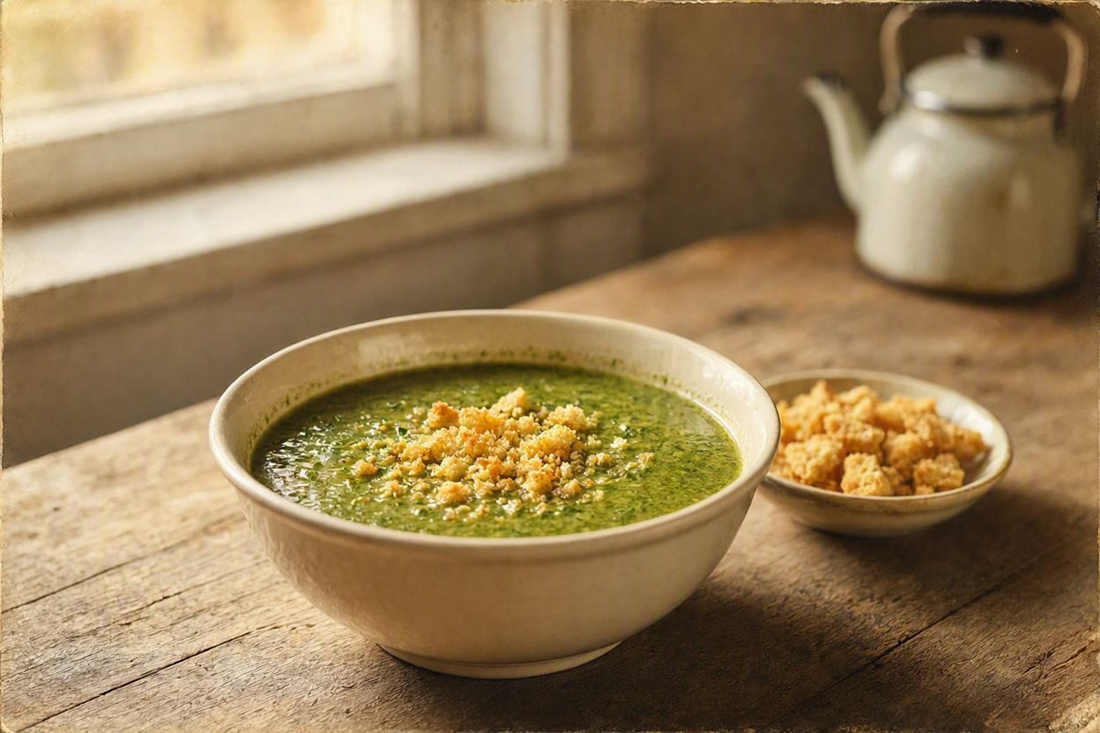
Parsley Soup with Toasted Rusks
A meatless parsley soup thickened with a flour-and-oil roux, simmered with whole parsley bunches, and topped with crisp fried rusks.
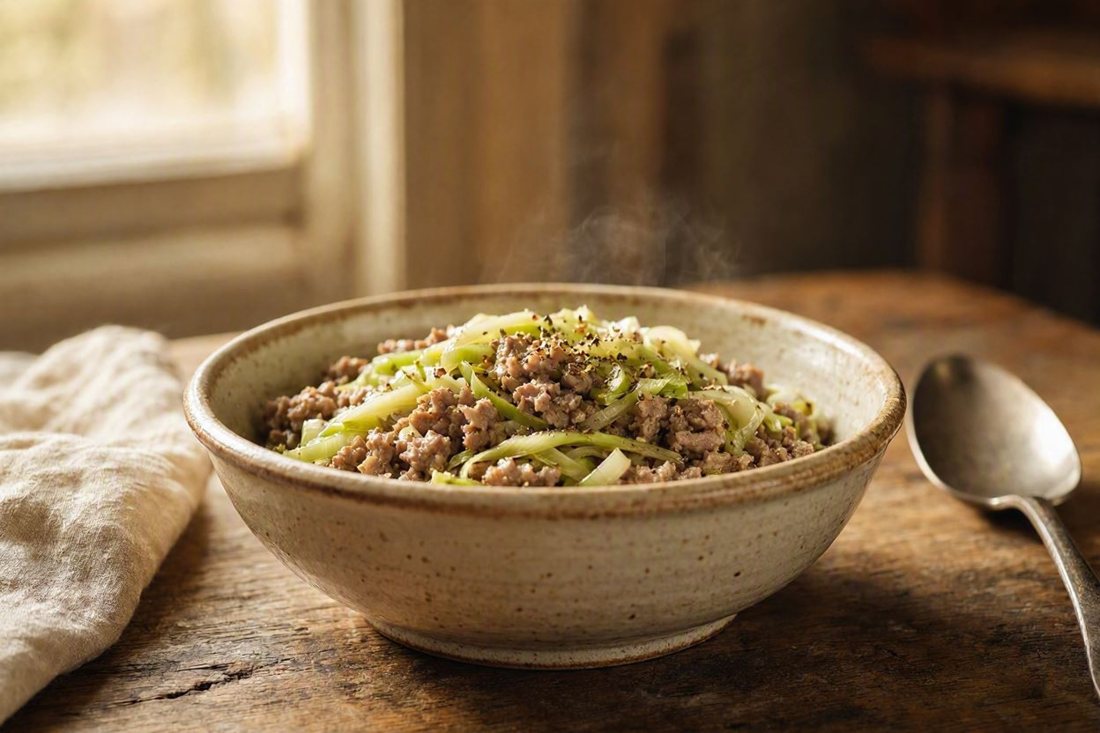
Chopped Pork with Leeks
A one-pan dish of browned, hand-chopped pork and tender leeks, cooked down together until the leeks melt into the meat.

Golden Fried Meat Pastries Baked in Sour Cream
Crispy egg-pasta pockets filled with savory pork, fried golden, then baked under a blanket of sour cream.