Mixed Fruit and Green Tomato Pekmez
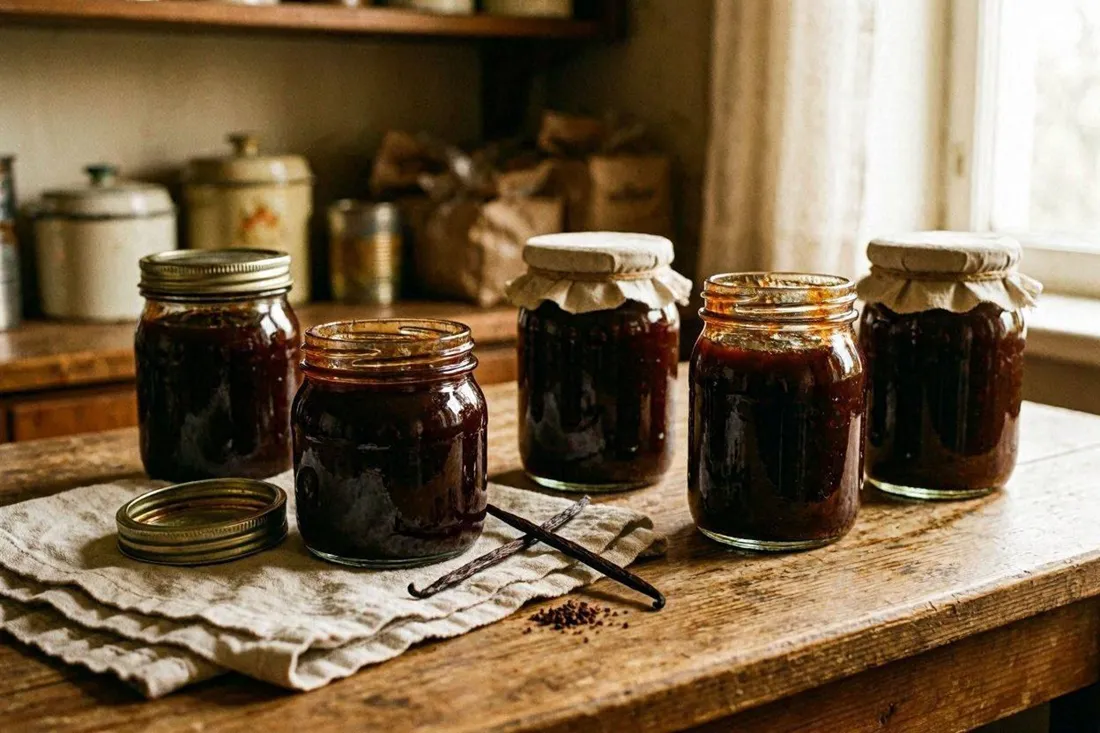
A thick, slow-simmered fruit butter made from grapes, plums, apples, and unripe tomatoes, sweetened lightly and scented with vanilla.
Quick Summary
This Central European fruit butter takes 235 minutes to prepare and cook. It blends grapes, plums, apples, and green tomatoes into a thick, vanilla-scented preserve. Tart tomatoes balance the sweetness, while long simmering—not sugar—creates its rich texture.
Historical recipe
Modernised adaptation of an early 20th‑century source. Not independently kitchen-tested by Attic Recipes. Quantities, temperatures, and food safety guidance have been updated for a contemporary kitchen — results may vary and errors may exist. Nutritional values, where provided, are estimates only and have not been laboratory tested. Always follow current food safety guidelines for your region. If you have a health condition, allergy, or dietary requirement, consult a qualified professional before preparing this recipe.
Use of this recipe is entirely at your own risk and subject to our Terms of Service and Privacy Policy. Attic Recipes accepts no liability for any adverse outcome.
Additional notes
-
Warning
This preserve has a lower sugar content than a standard jam, so proper jar sterilization and full water bath processing are essential — do not skip or shorten either step. Discard any jar with a lid that has not sealed properly, or that shows signs of spoilage (mold, off smell, bulging lid) before opening. This is especially important for pregnant women, children under 18, the elderly, and immunocompromised individuals.
-
Note
The finished pekmez is approximately 25-30% sugar by weight, well below the concentration that keeps a standard high-sugar jam stable after opening. Refrigerate after opening and use within 7-10 days. Discard immediately at any point before that if mold, a fermented smell, bubbling, or off texture appears.
- 1
Wash the grapes, plums, apples, and green tomatoes. Cook each type separately in a small amount of water until soft enough to pass easily through a food mill.
- 2
Pass each cooked fruit and the tomatoes through a food mill or fine sieve, discarding skins, seeds, and pits. Combine all the purées into one large pot.
- 3
In a separate pot, combine the 1.75kg sugar with the 600ml water. Cook over medium heat until it forms a fairly thick syrup.
- 4
Add the combined fruit and tomato purée to the syrup, along with the split vanilla bean.
- 5
Simmer over low heat, stirring frequently, until thickened. Because grapes contribute a large amount of water, this will take noticeably longer than a single-fruit preserve — expect 90-120 minutes, stirring more often as the mixture thickens to prevent scorching.
Tip Stir from the bottom of the pot, especially in the final 20-30 minutes, as this is when scorching is most likely. - 6
While the pekmez simmers, sterilize the empty jars by boiling them in water for 10 minutes.
- 7
Remove the vanilla bean once the pekmez reaches your preferred flavor strength.
- 8
Ladle the hot pekmez into the sterilized jars while still hot, leaving about 1cm of headspace.
- 9
Seal the jars and process in a boiling water bath for 15-20 minutes to ensure proper sterilization.
- 10
Remove the jars, let them cool completely undisturbed, then check that all lids have sealed properly before labeling and storing in a cool, dark place.
Nutrition Information per 1 tablespoon (about 20g)
Nutritional values are approximate estimates and may vary based on specific ingredients used, preparation methods, and portion sizes.
Serving Suggestions
Spread on bread or toast, stirred into plain yogurt, or served alongside soft cheese.
About This Recipe
This pekmez brings together four very different fruits — sweet grapes, soft plums, crisp apples, and tart unripe tomatoes — into one thick, dark preserve scented with vanilla. Unlike a standard jam, it uses a comparatively small amount of sugar for the volume of fruit, letting a long, patient simmer do the work of concentrating flavor and thickening the mixture instead.
Mixed fruit preserves like this one were a practical way to use whatever was ripening in the garden at once, rather than preserving each fruit separately. The addition of green, unripe tomatoes might seem unusual today, but their tartness balances the sweetness of the grapes and plums nicely, and they were a familiar ingredient in preserves of this style.
Why It Works
Cooking each fruit separately before puréeing makes it far easier to pass everything through a food mill cleanly, since different fruits soften at different rates. Making the sugar into a syrup first, rather than adding it directly to the fruit, helps it distribute evenly through the thick purée rather than settling or scorching in pockets. The long final simmer is doing real work here — grapes in particular carry a lot of water, and that water has to evaporate for the pekmez to reach the right thick, spreadable consistency.
Modern Kitchen Tips
- Use a heavy-bottomed pot for the final simmer — a thin pot will scorch the pekmez on the bottom well before it thickens properly.
- Taste as the vanilla infuses; remove the bean once the flavor is where you want it, rather than leaving it in for the full simmer.
- This batch is large — have all your jars washed and ready before you start the final simmer, since the sterilization and jarring steps go faster with everything prepped in advance.
A classic of early 20th century home cooking, preserved and adapted for the modern kitchen.
The Story Behind This Recipe
Historical Context
Early 20th century recipes for this kind of mixed fruit pekmez used a noticeably lower ratio of sugar than a standard jam, relying instead on long, slow reduction to concentrate the fruit's natural sugars and acids. The traditional finishing method involved pouring the hot pekmez into jars and setting them in a barely warm oven just long enough to form a thin skin on the surface, before tying the jars closed and storing them in a cool place. Green, unripe tomatoes were a common addition to mixed fruit preserves of the period, valued for their tartness and their ability to stretch a larger batch.
Modern Kitchen Adaptation
The finishing method has been changed from the period's warm-oven skin-forming technique to proper jar sterilization and a boiling water bath, since forming a surface skin alone does not create a reliable seal against spoilage by current food safety standards. The lower sugar ratio (well below the 600g-per-kg standard used for jam) has been kept as-is rather than increased, since this is a pekmez-style preserve where safety comes from long reduction and proper sealing rather than sugar content — but this makes correct sterilization and water bath processing essential rather than optional. The combined simmering time has been extended and marked as an estimate to account for the extra water grapes contribute compared to the other fruits.
This recipe is an independent modern adaptation developed from historical sources in the public domain. It is provided for informational and educational purposes only and does not constitute professional dietary, nutritional, or medical advice. Food preparation involves inherent risks. The reader assumes full responsibility for safe food handling, ingredient sourcing, and adherence to current local food safety guidelines. The site operator accepts no liability for outcomes resulting from the preparation or consumption of this recipe.
One recipe.
Every week.
You Might Also Like
More recipes from the same category
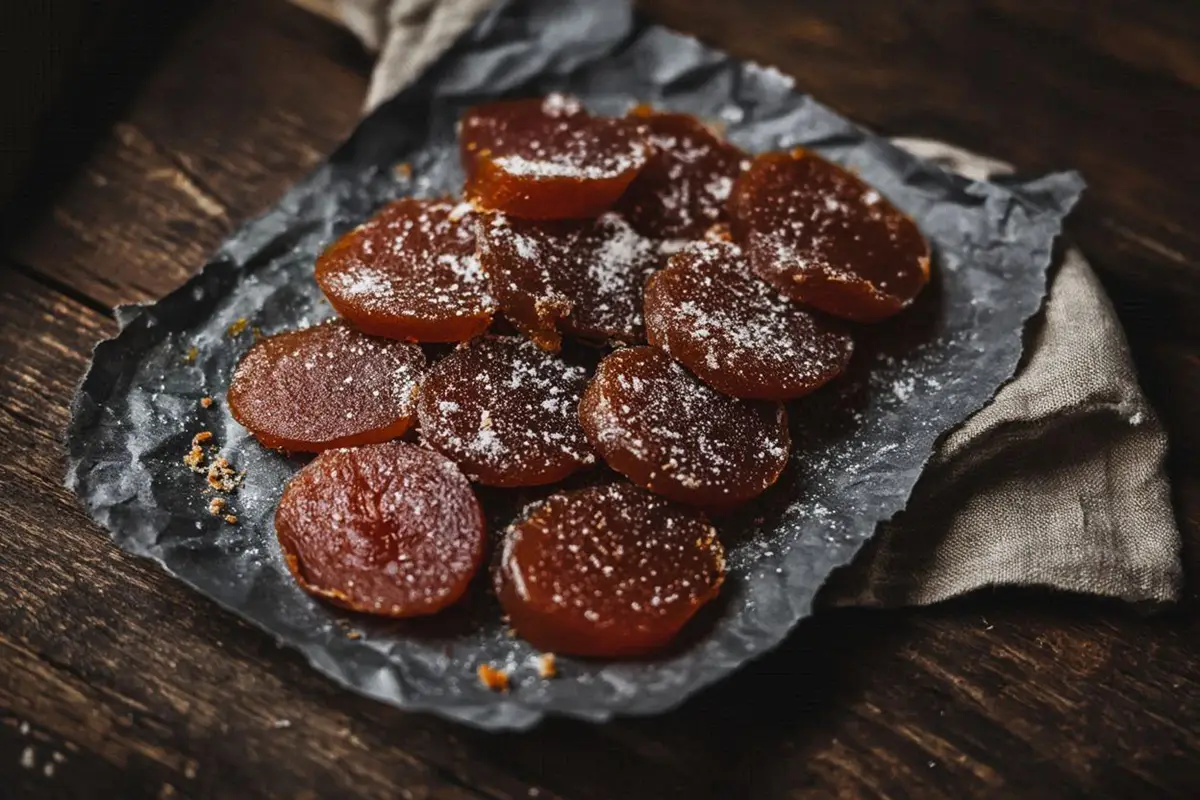
Apricot Fruit Paste
Sieved ripe apricots cooked with equal weight sugar and lemon juice, poured into molds and air-dried — from early 20th century Central European kitchens.
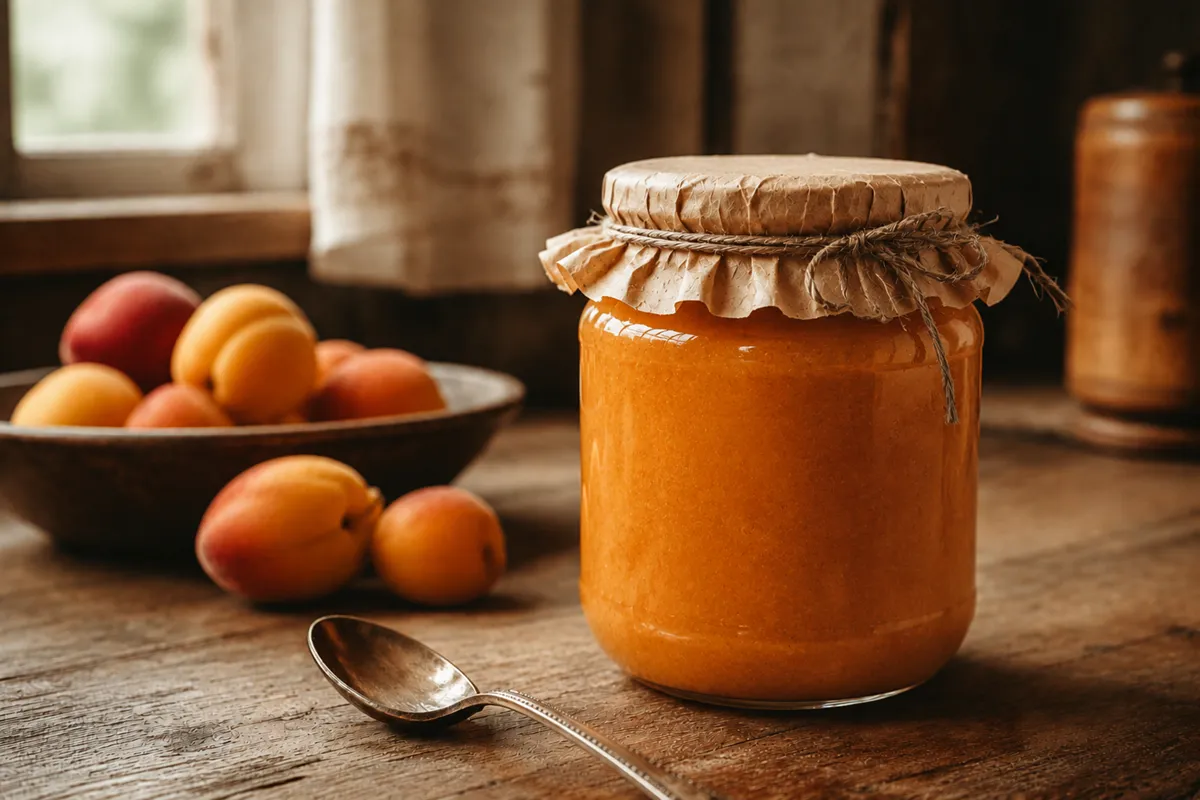
Whipped Apricot or Peach Preserve (No-Cook)
A silky, pale fruit spread made by whipping raw apricot or peach puree with sugar - no cooking required.
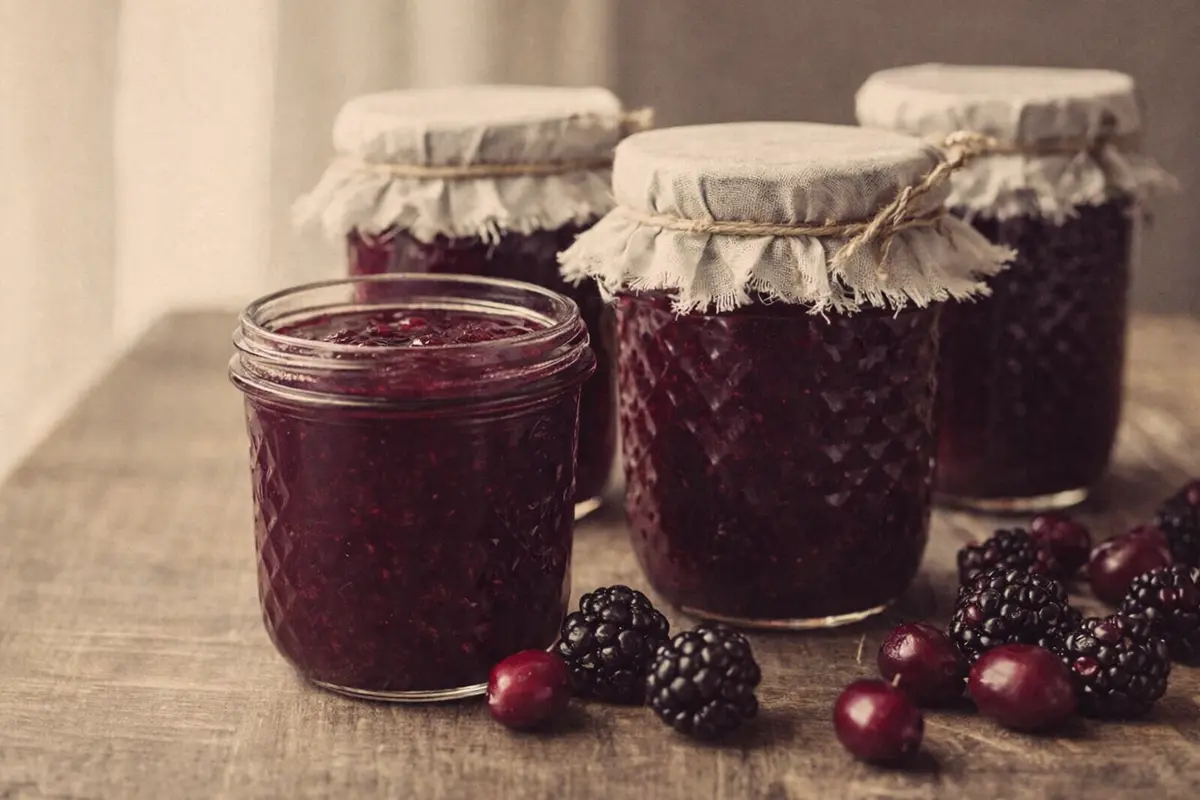
Blackberry and Cornelian Cherry Marmalade
Rich preserve combining tart cornelian cherries with sweet blackberries, cooked to thick consistency with a traditional two-fruit method.