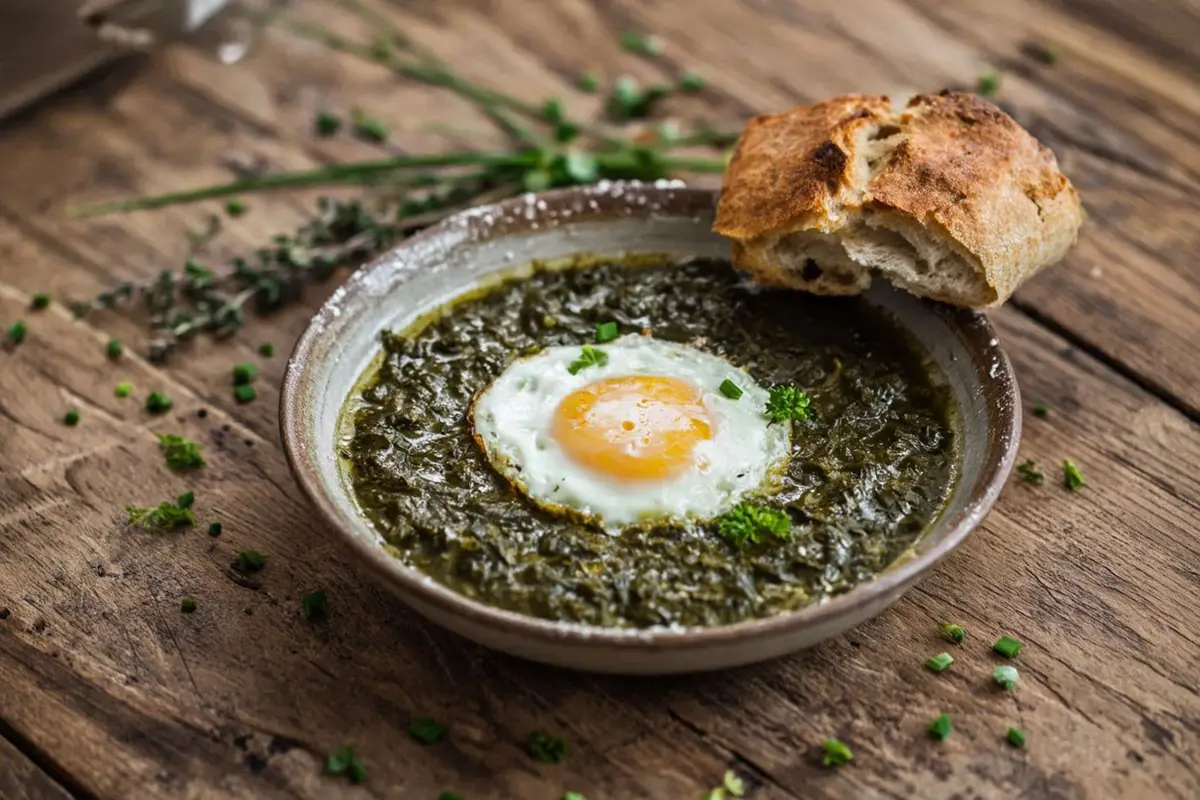
Nettle Stew with Potato, Cheese and Eggs
A thick, rustic stew of blanched nettles, tender potato, aromatic white cheese and eggs — earthy, nourishing, and deeply traditional.
Quick Summary
A thick, rustic stew of blanched nettles, tender potato, aromatic white cheese and eggs — earthy, nourishing, and deeply traditional.
Historical recipe
Modernised adaptation of an early 20th‑century source. Not independently kitchen-tested by Attic Recipes. Quantities, temperatures, and food safety guidance have been updated for a contemporary kitchen — results may vary and errors may exist. Nutritional values, where provided, are estimates only and have not been laboratory tested. Always follow current food safety guidelines for your region. If you have a health condition, allergy, or dietary requirement, consult a qualified professional before preparing this recipe.
Use of this recipe is entirely at your own risk and subject to our Terms of Service and Privacy Policy. Attic Recipes accepts no liability for any adverse outcome.
- Dairy
- Eggs
- Gluten
Additional notes
-
Warning
Raw nettles cause immediate skin irritation and stinging on contact. Always wear rubber or latex gloves when handling raw nettles. The sting disappears completely once nettles are blanched or cooked.
-
Warning
This recipe contains raw eggs added to a hot stew. While the eggs are cooked through during the final simmer, this method does not guarantee full pasteurization. Pregnant women, young children under 5, elderly individuals, and immunocompromised persons should avoid this dish or use pasteurized eggs.
Use commercially pasteurized eggs, or temper the egg-cheese mixture by adding a ladleful of hot stew to the bowl first, stirring, then pouring back into the pan.
-
Caution
Nettles are not recommended for infants or very young children under 12 months. Introduce with caution to young children and monitor for any digestive sensitivity.
-
Caution
Nettles have a mild diuretic effect and may interact with blood pressure or anticoagulant medications. Individuals on such medications should consult their doctor before consuming large quantities.
-
Note
Harvest nettles only from areas free of pesticides, road runoff, or industrial pollution. Roadside nettles should never be used for food.
- 1
Wearing rubber gloves, clean the nettles as you would spinach — remove tough stems, discard any yellowed or damaged leaves. Wash thoroughly in several changes of cold water.
Tip The gloves are essential — raw nettles sting on contact with skin. The sting disappears completely once the nettles are cooked. - 2
Place the cleaned nettles in a large pot. Cover with water (approximately 2 liters), add a pinch of salt, and bring to a boil. Cook for 30 minutes. Drain and discard the cooking water — do not reserve it.
Tip Discarding the cooking water removes oxalic acids and formic acid residue, which makes the stew gentler on digestion and improves the flavor. - 3
While the nettles cook, place the potato chunks in a separate pot, cover with salted water, and boil until fully tender, about 20 minutes. Drain, reserving about 250ml (1 cup) of the potato cooking water. Set the potatoes and reserved water aside.
- 4
Squeeze the drained nettles firmly with your hands (no gloves needed at this point — they no longer sting) to remove excess water. Finely chop them with a knife for a rustic texture, or pass through a food mill or blender for a smoother result.
- 5
In a wide, heavy-bottomed pan, melt the lard (or butter/oil) over medium heat. Add the chopped onion and fry, stirring frequently, until softened and lightly golden — about 8 minutes. Add the flour and stir continuously for 2 minutes to cook out the raw taste.
Tip Don't let the flour burn — keep the heat at medium and stir constantly at this stage. - 6
Add the paprika and stir for 30 seconds. Add the chopped nettles and stir everything together. Fry slowly over medium-low heat for 4–5 minutes, stirring often, until the mixture is fragrant and well combined.
- 7
Add the cooked potato chunks to the pan. Pour in enough of the reserved potato cooking water to reach a thick, stew-like consistency — start with 150ml and add more as needed. Season with salt, stir gently to combine, and simmer for 5 minutes.
- 8
In a bowl, combine the crumbled cheese and beaten eggs. Mix well. Pour the cheese-egg mixture into the simmering stew, stirring gently. Cook for 3–4 minutes over medium-low heat until the eggs are fully cooked through and the stew has thickened.
Tip Stir continuously once the eggs go in — this prevents the eggs from scrambling and helps them bind the stew into a cohesive, creamy texture. - 9
Taste and adjust seasoning. Serve immediately in deep bowls, each portion topped with a freshly fried egg.
Nutrition Information per 1 bowl (approx. 400g) plus 1 fried egg
Nutritional values are approximate estimates and may vary based on specific ingredients used, preparation methods, and portion sizes.
Serving Suggestions
Serve with thick slices of crusty sourdough or corn bread to mop up the stew. A simple salad of raw radishes or cucumber alongside cuts the richness of the cheese and eggs. This dish is also excellent as a starter in smaller portions.
About This Recipe
Nettle stew is one of those dishes that surprises people who have never eaten nettles before — the same plant that stings viciously when raw becomes silky, deeply savory, and almost spinach-like once cooked. This version is a proper meal: thick with potato, enriched with aged white cheese and egg, and finished with a fried egg on top. It is the kind of cooking that treats a free, foraged ingredient with the same seriousness as anything bought at a market, and the result justifies every bit of that respect.
Why It Works
The two-stage cooking process — blanching the nettles separately and discarding that water, then building the stew fresh with potato water — is essential to the dish’s final flavor. Nettle cooking water carries oxalic acids and formic acid residue that make the stew unnecessarily bitter and heavy; potato water, by contrast, adds mild starch and body without any off-notes. The roux of onion and flour creates structure, the paprika adds warmth and color, and the cheese-egg mixture binds everything at the end into something thicker and more cohesive than a simple soup.
A Note on Nettles
If you have never cooked with nettles before, the gloves instruction is not optional — a brush against raw nettles delivers a sharp, lasting sting that can take hours to fade. The good news is that this is entirely a raw-nettle problem: heat destroys the stinging mechanism within seconds. Once blanched, nettles can be handled, tasted, and eaten without any risk. They are nutritionally exceptional — high in iron, calcium, and vitamins A and C — and their flavor is earthy, green, and faintly mineral, somewhere between spinach and sorrel.
Troubleshooting
Stew too thin? Simmer uncovered for a few extra minutes, or mash some of the potato chunks against the side of the pan to thicken naturally.
Eggs scrambling? The heat was too high when you added the cheese-egg mixture. Next time, reduce to the lowest heat and stir continuously. Tempering the mixture first (adding a ladleful of hot stew to the bowl before pouring back) also helps.
Nettles too bitter? Make sure you used only young, tender leaves and discarded the blanching water completely. Older nettles are significantly more bitter regardless of technique.
A classic of early 20th century home cooking, preserved and adapted for the modern kitchen.
The Story Behind This Recipe
Historical Context
Nettles have been gathered and eaten across Central Europe for centuries, valued both as a spring tonic and as a free, abundant green at a time of year when stored winter vegetables were running low. Nettle dishes appear from the Alpine foothills to the Carpathian basin, often prepared during Orthodox fasting periods when meat was restricted. The addition of eggs and aged cheese transforms what might seem a foraged peasant dish into something genuinely sustaining — a pattern common in early 20th-century rural cooking, where nothing was wasted and protein came from whatever was at hand.
Modern Kitchen Adaptation
Lard was the standard cooking fat in Central European kitchens of the era and remains the historically correct choice here. Butter or a neutral vegetable oil are straightforward modern substitutes. Earlier versions of this preparation reserved the nettle cooking water for the stew — current understanding of oxalic acid content suggests discarding this water instead and using the potato cooking water, which adds body and mild starch without bitterness. The unusually long frying time noted in some versions of this dish has been corrected to 4–5 minutes, consistent with the technique described.
This recipe is an independent modern adaptation developed from historical sources in the public domain. It is provided for informational and educational purposes only and does not constitute professional dietary, nutritional, or medical advice. Food preparation involves inherent risks. The reader assumes full responsibility for safe food handling, ingredient sourcing, and adherence to current local food safety guidelines. The site operator accepts no liability for outcomes resulting from the preparation or consumption of this recipe.
One recipe.
Every week.
You Might Also Like
More recipes from the same category
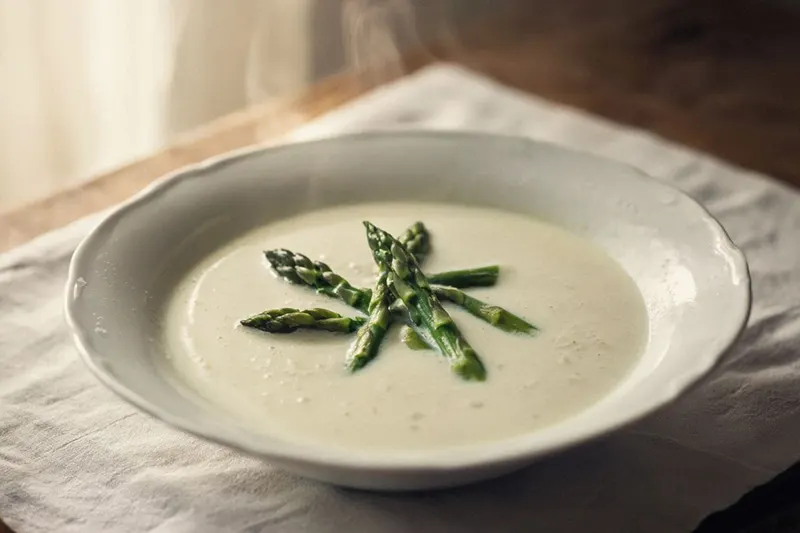
Asparagus Tip Soup
A silky, cream-enriched asparagus soup built on a white roux and finished with tempered egg yolks — an elegant first course from early 20th century cooking.
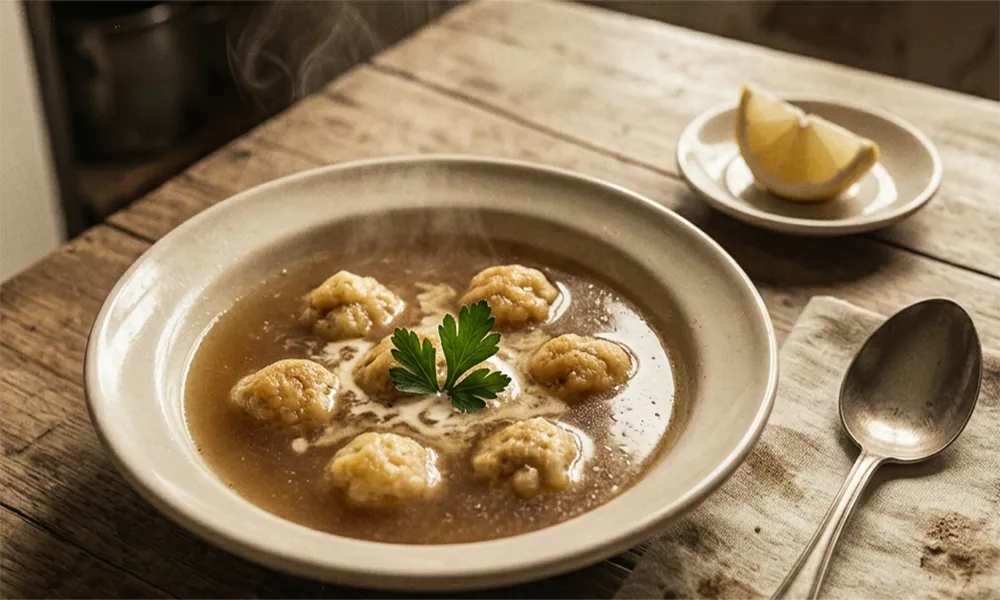
Beef Broth with Stuffed Dough Dumplings
Rich beef bone broth simmered with golden pan-fried dumplings stuffed with seasoned ground beef, finished with a light roux and fresh lemon juice.
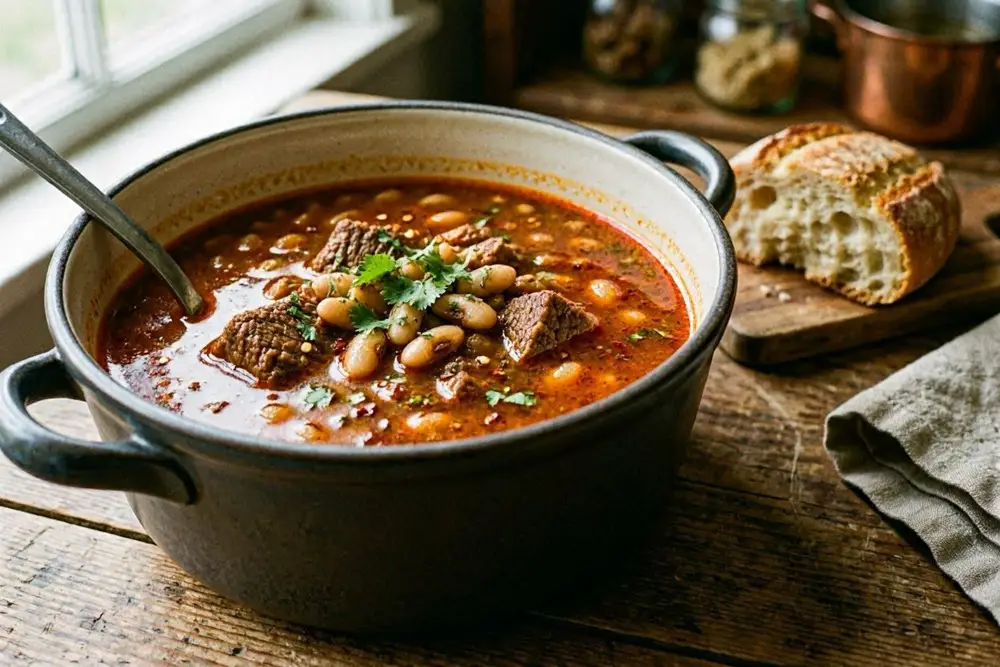
Bean Soup Cooked with Beef
White beans and beef shoulder slow-simmered with a bouquet garni, finished in the oven with a paprika-spiced pan roux. A deeply satisfying one-pot meal.