No-Bake Strawberry Cream
A silky, chilled strawberry cream made with fresh strawberries, gelatin, and whipped cream — no oven required, just a few hours to set.
Quick Summary
This chilled strawberry cream sets with gelatin and whipped cream, no baking required. Active prep takes about 25 minutes, plus a few hours to set. The result is a light, fruity, mousse-like dessert from early 20th century Central European kitchens.
Historical recipe
Modernised adaptation of an early 20th‑century source. Not independently kitchen-tested by Attic Recipes. Quantities, temperatures, and food safety guidance have been updated for a contemporary kitchen — results may vary and errors may exist. Nutritional values, where provided, are estimates only and have not been laboratory tested. Always follow current food safety guidelines for your region. If you have a health condition, allergy, or dietary requirement, consult a qualified professional before preparing this recipe.
Use of this recipe is entirely at your own risk and subject to our Terms of Service and Privacy Policy. Attic Recipes accepts no liability for any adverse outcome.
- Dairy
- 1
Hull the strawberries and purée until smooth.
Tip For a completely smooth cream, pass the purée through a fine sieve to remove seeds. - 2
Soak the gelatin sheets in a bowl of cold water for about 5 minutes, until softened.
- 3
Squeeze the excess water from the softened gelatin, place it in a small pot with the tablespoon of water, then set the pot into a larger bowl or pan of hot water. Stir gently until the gelatin fully dissolves.
Tip Keep the water bath below a simmer — gelatin loses its setting power if it boils. - 4
Remove the dissolved gelatin from the heat and let it cool until just warm to the touch.
- 5
Stir the sugar into the strawberry purée until dissolved, then gradually whisk in the cooled gelatin, stirring constantly to prevent lumps.
- 6
Let the strawberry-gelatin mixture rest at room temperature for about 10 minutes.
- 7
Whip the heavy cream to soft peaks.
- 8
Fold the whipped cream into the strawberry mixture until fully combined.
- 9
Pour into a mold and refrigerate for at least 3 hours, or until fully set.
Tip The original recipe called for chilling the mold directly on ice; a refrigerator gives the same result. - 10
Briefly dip the mold in warm water to loosen the edges, then unmold onto a plate and serve immediately.
Nutrition Information per 1 serving (approx 140g)
Nutritional values are approximate estimates and may vary based on specific ingredients used, preparation methods, and portion sizes.
Serving Suggestions
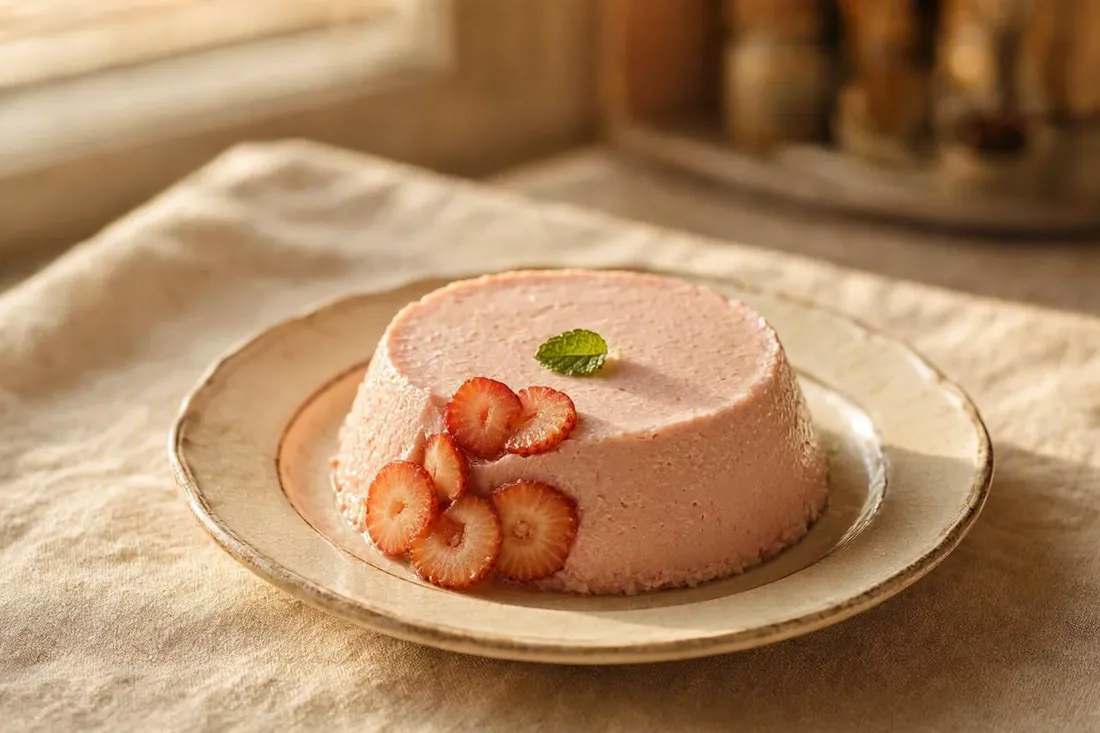
Serve on its own, or top with a few fresh strawberry slices and a mint leaf. A light strawberry coulis also works well spooned over the top.
About This Recipe
A chilled strawberry cream like this one made the most of fresh fruit and dairy without needing an oven at all. Early 20th century Central European kitchens relied on gelatin to set fruit purées and whipped cream into something that held its shape once turned out of a mold — a dessert that looked far more elaborate than the effort it actually took.
The technique behind it is simple and adaptable: fruit purée is loosened with a little dissolved gelatin, rested briefly to let the flavors settle, then folded together with whipped cream for lightness. The same base method works well with other soft fruits in season, which is part of why versions of it turn up across so many home-cooking traditions of the period.
Before refrigerators were standard kitchen equipment, desserts like this one were set by chilling the mold directly on ice, then unmolded just before serving — a practical solution that also made for a nice bit of table theater when the shaped cream came out clean.
Why It Works
Gelatin works by forming a protein network as it cools, trapping the liquid from the strawberry purée into a soft, sliceable gel. Folding in whipped cream adds tiny air bubbles throughout that network, which is what gives the finished cream its light, mousse-like texture rather than a dense, jelly-like one. Keeping the gelatin below a simmer while it dissolves matters here — overheating it breaks down the proteins responsible for setting, leaving you with a cream that never firms up properly.
Modern Kitchen Tips
Taste your strawberry purée before adding the sugar — ripeness varies a lot, and you may need more or less than the amount given here. Work quickly once the whipped cream goes in, since the gelatin will start to set as soon as the mixture cools. This dessert also holds well covered in the refrigerator for a day or two, making it a good make-ahead option.
A classic of early 20th century home cooking, preserved and adapted for the modern kitchen.
The Story Behind This Recipe
Historical Context
Chilled, gelatin-set fruit creams were a popular way to turn fresh fruit and dairy into an elegant dessert without any baking, especially valued in warmer months. Home cooks of the period often used the same word for a fruit purée as for a cooked, sugared preserve, even when the purée itself was neither sweetened nor cooked down. Before home refrigeration was common, molded desserts like this one were typically chilled directly on ice and unmolded just before serving.
Modern Kitchen Adaptation
The original didn't specify a sugar quantity for the strawberry purée, so about 60g of sugar has been added here as a starting point — taste the purée before combining it with the gelatin and adjust up or down depending on how sweet the strawberries are. Gelatin sheet weight also wasn't standardized in the original; this recipe assumes gold-strength sheets at roughly 2g each. Chilling directly on ice has been replaced with standard refrigeration, which produces the same set. For a vegetarian version, agar-agar can replace the gelatin — use about 2g of agar powder for this amount of liquid, and bring it to a full boil rather than melting it in a water bath, since agar needs heat to activate.
This recipe is an independent modern adaptation developed from historical sources in the public domain. It is provided for informational and educational purposes only and does not constitute professional dietary, nutritional, or medical advice. Food preparation involves inherent risks. The reader assumes full responsibility for safe food handling, ingredient sourcing, and adherence to current local food safety guidelines. The site operator accepts no liability for outcomes resulting from the preparation or consumption of this recipe.
One recipe.
Every week.
You Might Also Like
More recipes you'll enjoy
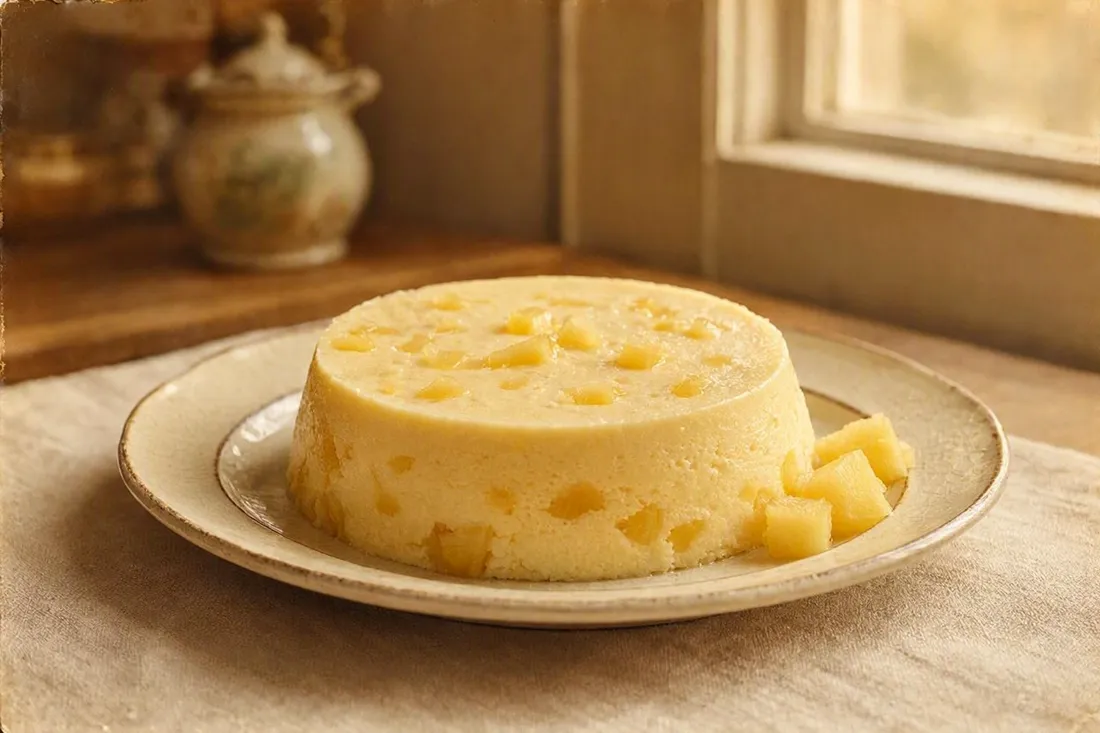
No-Bake Pineapple Cream
A light, chilled pineapple cream made with canned pineapple, gelatin, and whipped cream — no oven required, just a few hours to set.
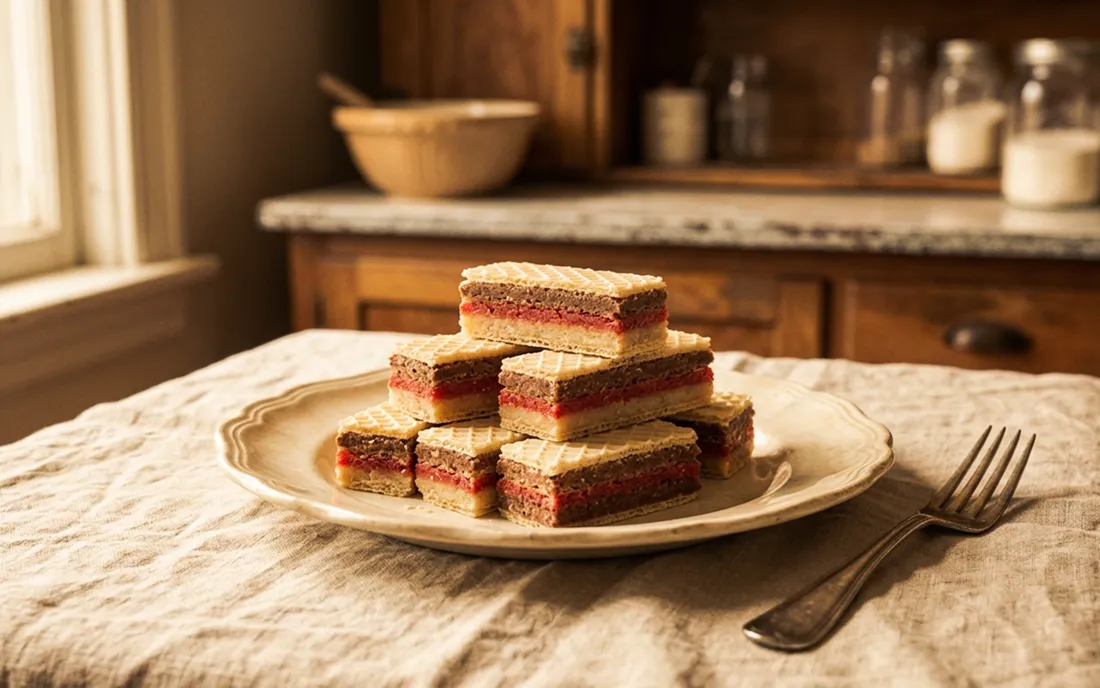
Vegan Almond Wafer Bars (Three-Layer)
Dairy-free, egg-free almond wafer bars in three colorful layers — a no-bake Lenten dessert built from almond paste and crisp wafer sheets.
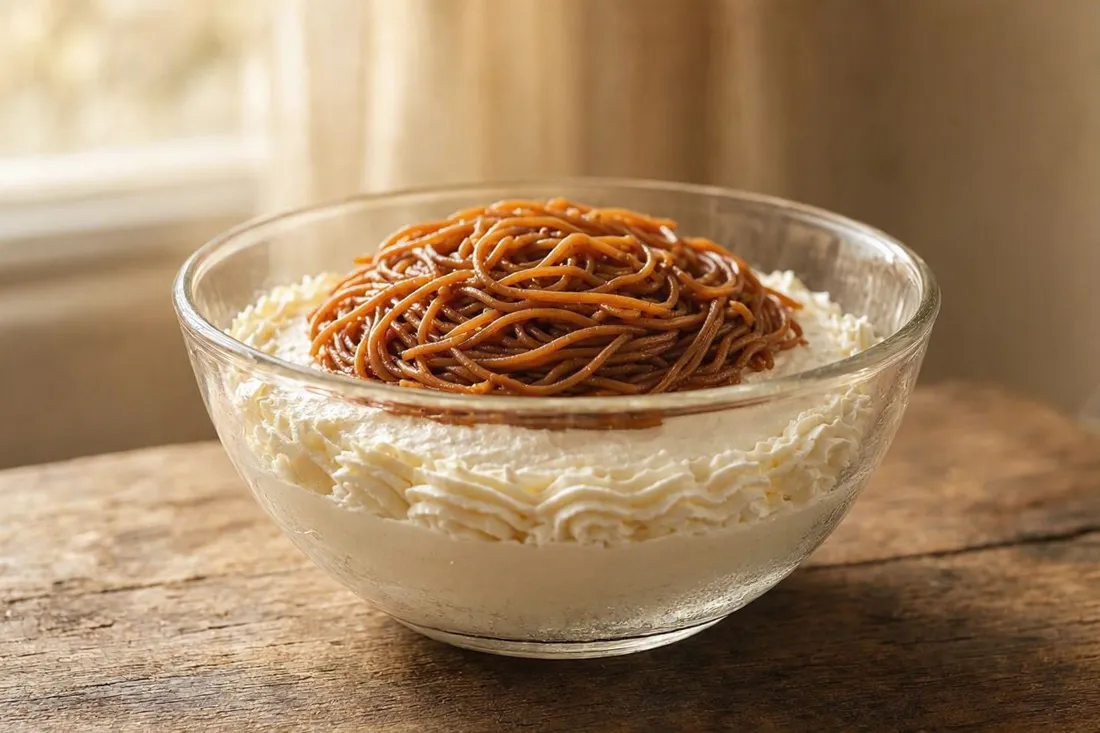
Chestnut Purée with Whipped Cream
Sweetened chestnut puree is pressed through a ricer over whipped cream and finished with a piped border of cream — a rich chestnut dessert.