Potage Parmentier — Classic Potato and Leek Soup
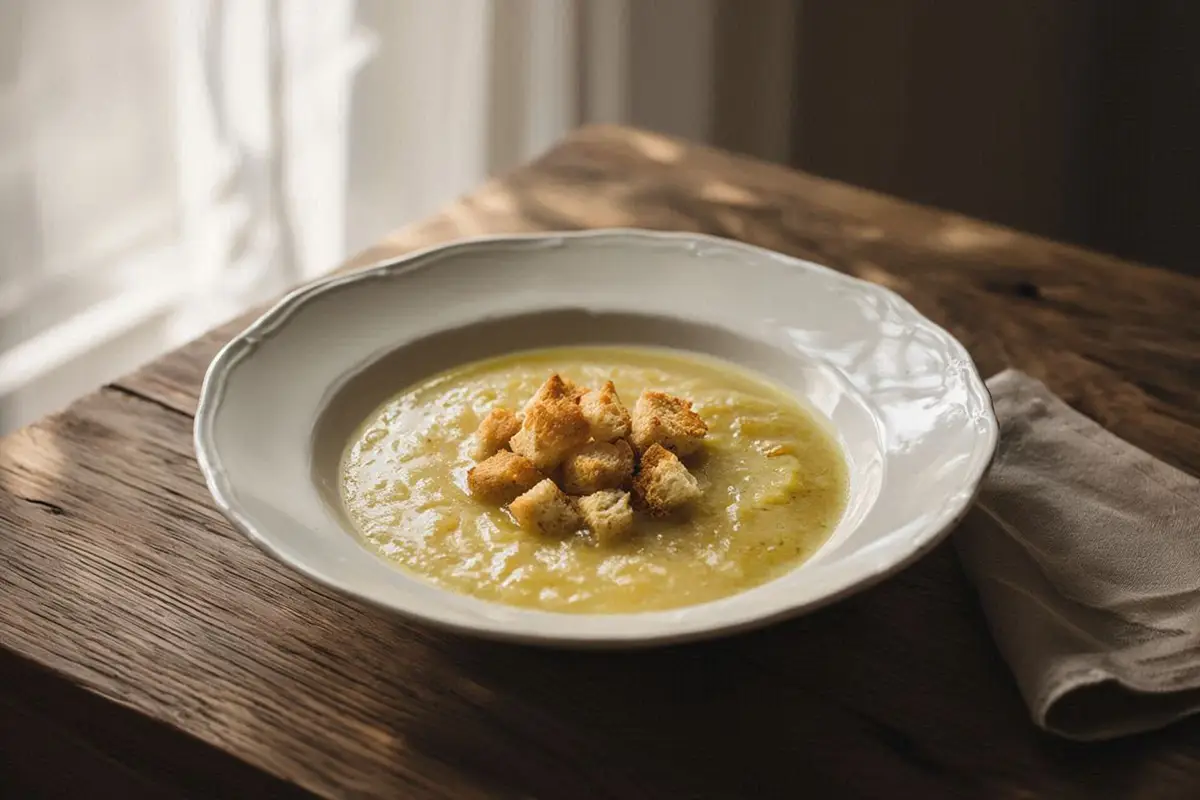
Silky potato and leek soup finished with sour cream and egg yolk, served with golden croutons. The 18th-century French classic that changed European cooking.
Quick Summary
Silky potato and leek soup finished with sour cream and egg yolk, served with golden croutons. The 18th-century French classic that changed European cooking.
Historical recipe
Modernised adaptation of an early 20th‑century source. Not independently kitchen-tested by Attic Recipes. Quantities, temperatures, and food safety guidance have been updated for a contemporary kitchen — results may vary and errors may exist. Nutritional values, where provided, are estimates only and have not been laboratory tested. Always follow current food safety guidelines for your region. If you have a health condition, allergy, or dietary requirement, consult a qualified professional before preparing this recipe.
Use of this recipe is entirely at your own risk and subject to our Terms of Service and Privacy Policy. Attic Recipes accepts no liability for any adverse outcome.
- Dairy
- Eggs
- Gluten
Additional notes
-
Warning
Contains raw egg yolks in the liaison finish. Although the hot soup partially cooks them, the temperature may not reach 71°C (160°F) needed for full pasteurization. Not recommended for pregnant women, young children, the elderly, or immunocompromised individuals.
Use pasteurized egg yolks, or replace the liaison entirely with an additional 100ml of full-fat sour cream stirred in off the heat.
-
Caution
Contains dairy (butter, sour cream). Not suitable for those with lactose intolerance or dairy allergies without substitution.
Replace sour cream with a full-fat coconut cream or dairy-free sour cream. Replace finishing butter with a neutral cold-pressed oil, added off heat.
-
Note
Sodium content will vary significantly depending on the broth used. Commercial bone broths can contain 600–900mg sodium per 500ml. Use unsalted homemade or low-sodium broth and season only at the end.
- 1
Prepare the leeks: Trim the dark green tops and roots. Slice only the white and pale green parts into thin rounds. Rinse thoroughly under cold water — leeks trap sand between their layers.
Tip The dark green tops can be saved for stock — they have excellent flavor. - 2
Sauté the leeks: Melt 40g of butter in a large heavy pot over medium heat. Add the leeks and sauté gently for 8–10 minutes until completely soft, translucent, and slightly golden. Do not rush this step — the leeks form the aromatic base of the entire soup.
Tip A pinch of salt added to the leeks at this stage draws out moisture and speeds softening. - 3
Add potatoes and liquid: Add the potato chunks to the softened leeks. Pour over 1.5 liters of cold bone broth or water. Raise heat to high and bring to a full boil, then reduce to a steady simmer.
Tip Starting with cold liquid draws flavor from the potatoes gradually — this produces a noticeably rounder result than adding hot liquid. - 4
Simmer: Cook uncovered for 20–25 minutes until the potatoes are completely tender and beginning to fall apart.
- 5
Purée: Remove from heat. Mash the potatoes directly in the pot, then pass through a fine sieve or food mill into a clean pot. Do not use an immersion blender — overworking potato starch makes the soup gluey.
Tip A food mill (moulinette) is the traditional and best tool here. It produces a silky, light texture that a blender cannot. - 6
Adjust consistency: Return the puréed soup to medium heat. Add hot bone broth or warm milk a ladleful at a time, stirring, until the soup reaches a pourable but still creamy consistency — thicker than water, lighter than mashed potato.
- 7
Prepare the liaison: In a bowl, whisk the 2 egg yolks into the 400ml of sour cream until completely smooth. Ladle several spoonfuls of hot soup into the bowl, whisking constantly, to temper the mixture. Then pour the tempered liaison back into the pot, stirring gently.
Tip Never add cold sour cream directly to boiling soup — it will curdle. The tempering step is non-negotiable. Do not boil the soup after adding the egg yolks. - 8
Finish with butter: Remove from heat. Drop the cold butter pieces into the soup one at a time, swirling gently until each piece is absorbed. This is the classical French finishing technique (monter au beurre) — it gives the soup its glossy, velvety texture.
- 9
Croutons: While the soup finishes, fry the bread cubes in butter or oil over medium-high heat, turning frequently, until golden and crisp on all sides. Drain on paper towel and season lightly with salt.
- 10
Serve: Ladle the soup into warm bowls. Place a small pile of croutons in the center — they will soften slightly into the soup within a minute, which is the traditional way to serve them.
Nutrition Information per 1 portion (approx. 400ml)
Nutritional values are approximate estimates and may vary based on specific ingredients used, preparation methods, and portion sizes.
Serving Suggestions
Serve as a substantial first course or a light main with crusty bread. Traditionally accompanied by fried croutons or small boiled pasta shapes served separately on a small plate. A small grating of nutmeg over the finished bowl is a period-appropriate addition.
About This Recipe
Potage Parmentier is one of those rare dishes that is simultaneously a historical artifact and a genuinely excellent soup. Named for the 18th-century French pharmacist who spent his career convincing a leprosy-fearing nation that the potato was edible, this soup represents the moment potato cookery arrived at the bourgeois table. The version that appeared in early 20th-century Central European cookbooks had absorbed a regional character — the sour cream and egg yolk liaison is distinctly Central European, not Parisian — but the soul of the dish remains the same: potato and leek, kept as simple as possible, finished with enough butter and cream to make it feel luxurious.
Why It Works
The key technical insight in this recipe is the puréeing method. Potatoes contain large amounts of starch granules that rupture and become sticky when overworked — this is why over-blended mashed potato turns gluey. A food mill or fine sieve cuts the cooked potato into small pieces without shearing the starch, producing a soup that is smooth but still light on the palate.
The liaison — egg yolk whisked into sour cream and tempered into the hot soup — adds body, richness, and a subtle tang that plain cream cannot replicate. The finishing butter (monter au beurre) adds a final layer of gloss and rounds the flavor. Neither step requires skill, only patience and attention to temperature.
Leeks vs. Onions
This recipe calls specifically for leeks, not onions, and the distinction matters. Leeks have a higher water content and a milder, slightly sweeter flavor that dissolves completely into the potato base without any sharpness. Onions would produce a more assertive soup with a lingering savory bite — technically fine, but not this dish. Use the white and pale green parts only; the dark green tops are tough and will not soften properly.
Broth or Water?
Both are correct. A good homemade chicken or veal bone broth transforms this soup into something closer to a restaurant first course. A well-seasoned water version is quieter and, on the right day, more satisfying.
Troubleshooting
Soup turned gluey? The potato was over-processed. Next time, pass through a sieve by hand rather than blending.
Liaison curdled? The soup was too hot when the sour cream was added. Always temper — add hot soup to the cold cream first, not the other way around. And never boil after adding the egg yolks.
Soup too thick after puréeing? Add warm milk or broth a ladle at a time until the right consistency. Adding cold liquid will cool the soup unevenly.
A classic of early 20th century home cooking, preserved and adapted for the modern kitchen.
The Story Behind This Recipe
Historical Context
This soup takes its name from Antoine-Augustin Parmentier (1737–1813), the French pharmacist and agronomist who spent his career convincing a skeptical nation that the potato was fit for human consumption. Before his efforts, France had formally banned potato cultivation in 1748, believing the tuber caused leprosy. Parmentier first encountered potatoes as prison rations during the Seven Years' War — and returned to Paris determined to change their reputation forever. His campaign involved royal dinners, carefully staged publicity stunts, and eventually a treatise published under royal order. By the early 20th century, his name had become synonymous with potato cookery across Central Europe, and this soup appeared in regional cookbooks as a refined first course worthy of any table.
Modern Kitchen Adaptation
The period preparation calls for passing the soup through a fine strainer by hand — a food mill replicates this perfectly and is the recommended modern tool. An immersion blender will work but risks an overly smooth, slightly gluey texture from overworked starch. The egg yolk and sour cream liaison is characteristic of Central European cooking and should not be replaced with plain cream — the subtle tang is part of the flavor profile. Full-fat sour cream (minimum 20% fat) is essential.
This recipe is an independent modern adaptation developed from historical sources in the public domain. It is provided for informational and educational purposes only and does not constitute professional dietary, nutritional, or medical advice. Food preparation involves inherent risks. The reader assumes full responsibility for safe food handling, ingredient sourcing, and adherence to current local food safety guidelines. The site operator accepts no liability for outcomes resulting from the preparation or consumption of this recipe.
One recipe.
Every week.
You Might Also Like
More recipes from the same category
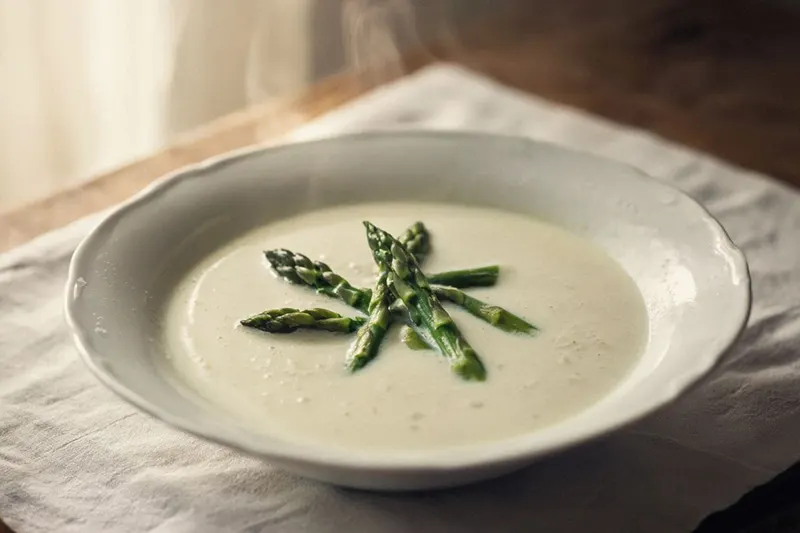
Asparagus Tip Soup
A silky, cream-enriched asparagus soup built on a white roux and finished with tempered egg yolks — an elegant first course from early 20th century cooking.
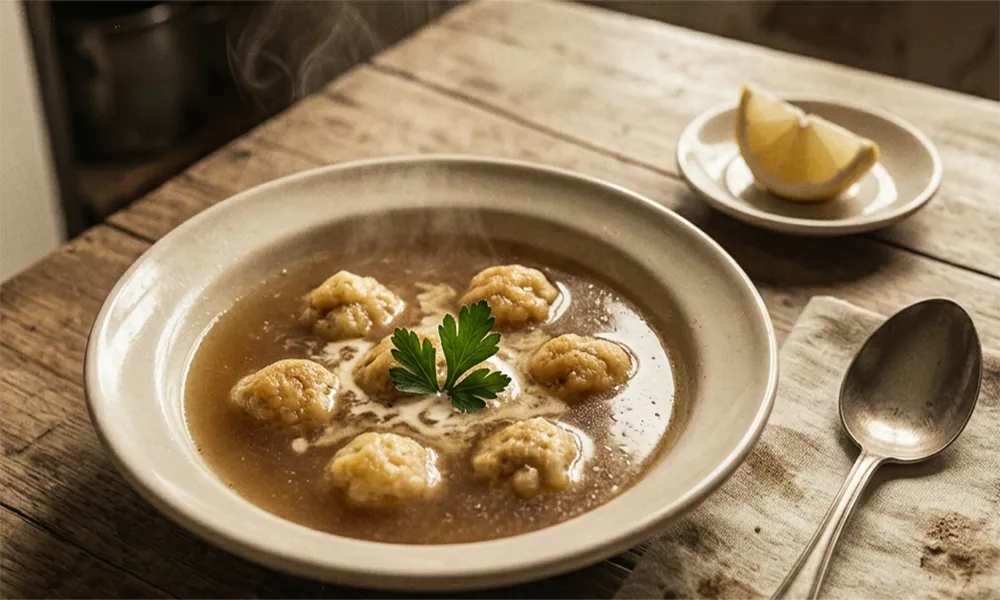
Beef Broth with Stuffed Dough Dumplings
Rich beef bone broth simmered with golden pan-fried dumplings stuffed with seasoned ground beef, finished with a light roux and fresh lemon juice.

Bean Soup Cooked with Beef
White beans and beef shoulder slow-simmered with a bouquet garni, finished in the oven with a paprika-spiced pan roux. A deeply satisfying one-pot meal.