Boiled Potatoes with Horseradish Sauce
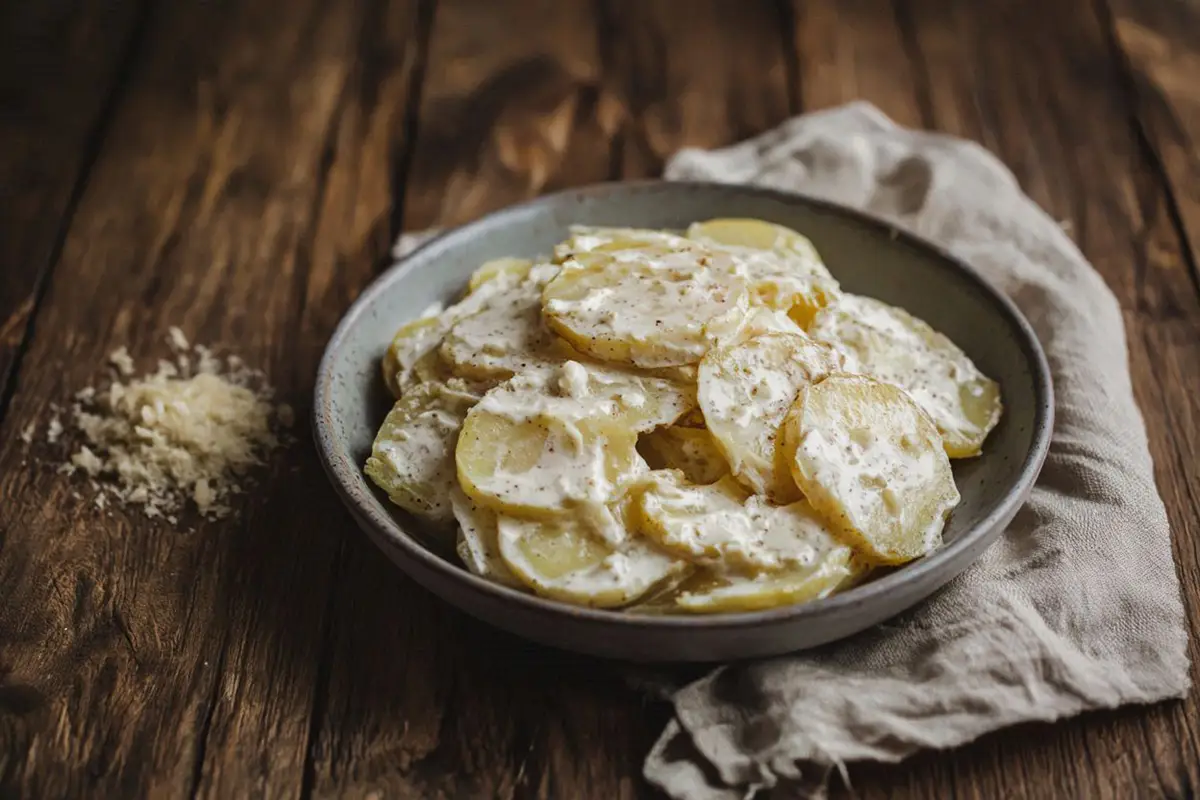
Skin-on boiled potatoes with a white horseradish roux sauce and vinegar — a simple, honest Central European classic.
Quick Summary
Boiled Potatoes with Horseradish Sauce is a Central European classic of skin-on potatoes with a white horseradish roux sauce and a touch of vinegar. It takes about 45 minutes, with fresh horseradish added at the last minute for sharp, bright heat.
Historical recipe
Modernised adaptation of an early 20th‑century source. Not independently kitchen-tested by Attic Recipes. Quantities, temperatures, and food safety guidance have been updated for a contemporary kitchen — results may vary and errors may exist. Nutritional values, where provided, are estimates only and have not been laboratory tested. Always follow current food safety guidelines for your region. If you have a health condition, allergy, or dietary requirement, consult a qualified professional before preparing this recipe.
Use of this recipe is entirely at your own risk and subject to our Terms of Service and Privacy Policy. Attic Recipes accepts no liability for any adverse outcome.
- Gluten
Safety note
Pregnancy and breastfeeding: Horseradish as a condiment in normal food quantities is generally considered safe. However, consuming large amounts of fresh horseradish during pregnancy is not recommended — it contains compounds that may irritate the digestive tract and, in significant quantities, may cause adverse effects. Use a moderate amount and consult your doctor or midwife if unsure.
Use a very small amount of fresh horseradish — a teaspoon or less — stirred into the sauce, which dilutes the concentration significantly.
Additional notes
-
Warning
Not suitable for children under 4 years of age. Fresh horseradish contains mustard oils (allyl isothiocyanates) that can irritate the mucous membranes, stomach, and digestive tract of young children. Keep portions small and monitor tolerance in older children.
For young children, omit the horseradish entirely and serve the potatoes with plain white sauce seasoned with salt and a little parsley.
-
Warning
People with stomach ulcers, gastritis, inflammatory bowel disease (IBD), or other digestive conditions should avoid or limit horseradish, as it can irritate the lining of the digestive tract.
-
Caution
People with kidney disorders or hypothyroidism should be aware that horseradish may worsen these conditions. Consult your doctor before consuming this dish regularly.
-
Caution
Grating fresh horseradish releases strong volatile fumes (allyl isothiocyanate) that will irritate eyes and the respiratory tract. Always grate near an open window, under an extractor fan, or briefly outdoors. Keep away from children while grating.
- 1
Scrub the potatoes thoroughly under cold running water. Place them whole and unpeeled in a large pot, cover with cold salted water, and bring to a boil. Cook over medium heat for 20–25 minutes, or until a knife slides through the centre without resistance.
Tip Starting in cold water ensures even cooking from the inside out. Do not pierce the potatoes before cooking — keeping the skin intact prevents waterlogging. - 2
While the potatoes cook, prepare the sauce. Heat the oil in a saucepan over medium heat. Add the flour and stir constantly with a wooden spoon for 1–2 minutes. The roux should remain pale white — do not allow it to colour.
Tip A white roux gives a clean, neutral flavour that lets the horseradish take centre stage. Pull the pan off the heat briefly if it starts to darken. - 3
Pour in the cold water all at once and immediately whisk vigorously to break up any lumps. Return to medium heat and cook, stirring continuously, until the sauce thickens to a smooth, pourable consistency — about 3–5 minutes. Season with salt.
Tip Using cold water (not hot) into a hot roux helps prevent lumps. If lumps do form, pass the sauce through a fine sieve. - 4
Peel the fresh horseradish root and grate it finely. Stir the grated horseradish into the warm sauce 3–5 minutes before serving. Add vinegar to taste, starting with 1 teaspoon and adjusting. Season again with salt if needed.
Tip Grate horseradish at the last possible moment — it loses pungency quickly once exposed to air. Work near an open window or extractor fan; the fumes are strong. - 5
Drain the cooked potatoes, allow them to cool just enough to handle, then peel and slice into rounds about 1 cm thick. Arrange in a deep serving bowl and pour the warm horseradish sauce over them. Serve immediately.
Nutrition Information per 1 portion (approx. 280g including sauce)
Nutritional values are approximate estimates and may vary based on specific ingredients used, preparation methods, and portion sizes.
Serving Suggestions
Traditionally served as a side dish alongside roasted or boiled meats, sausages, or smoked fish. As a standalone vegetarian main, it pairs well with a simple green salad or pickled vegetables. Also very good alongside boiled eggs for a light supper.
About This Recipe
This is one of the quietest recipes in the Central European kitchen — boiled potatoes, a plain white sauce, and fresh horseradish grated at the last moment. There is nothing to hide behind. What makes it work is the freshness of the horseradish: the moment the root is grated and stirred into the warm sauce, it releases a sharp, clean heat that transforms something simple into something memorable. Use jarred horseradish and the dish is decent. Use fresh and it is completely different.
The recipe is naturally vegan, requires nothing beyond pantry staples and one fresh root, and comes together in under 45 minutes.
Why It Works
The white roux — flour cooked briefly in oil without taking on any colour — creates a neutral, smooth base that carries the horseradish without competing with it. The cold water technique (pouring cold water into a hot roux) produces a lump-free sauce faster and more reliably than adding hot liquid. Vinegar added at the end balances the starchy richness of the sauce and brightens the horseradish’s natural heat.
A Note on Fresh Horseradish
Fresh horseradish root looks unremarkable — a thick, knobbly, brownish root that smells of almost nothing until cut. The moment you grate it, enzymes break down a compound called sinigrin into allyl isothiocyanate: the oil responsible for that sharp, sinus-clearing heat. It dissipates quickly. For this reason, grate the horseradish at the very last minute, stir it into the warm sauce immediately, and serve the dish right away.
If you cannot find fresh horseradish root, look in Eastern European or Russian grocery stores. It is seasonal in some regions and most abundant in autumn.
Food Safety Note
This recipe has been modernised from an early 20th century source. Quantities and food safety guidance have been added for use in a contemporary kitchen. The original recipe has not been independently tested by Attic Recipes. Nutritional values are estimates only.
A classic of early 20th century home cooking, preserved and adapted for the modern kitchen.
The Story Behind This Recipe
Historical Context
Boiled potatoes dressed with a flour-thickened sauce were a staple of Central European home cooking throughout the early 20th century. Horseradish — abundant, inexpensive, and easy to grow — was a key flavouring in this region long before refrigeration made fresh condiments widely available. Its natural antibacterial properties made it a practical as well as flavourful addition to simple dishes. White roux-based sauces (made without cream or butter) were the everyday choice in households that relied on oil or lard rather than dairy.
Modern Kitchen Adaptation
The original recipe does not specify quantities for water, vinegar, or horseradish — these were left to the cook's judgement, as was standard practice in early 20th century recipe writing. Modern quantities have been added for consistency. Fresh horseradish root is strongly preferred; jarred prepared horseradish (packed in vinegar) can be used as a substitute — reduce or omit the added vinegar in that case, as the jar contents are already acidified. If fresh horseradish root is unavailable out of season, look for it in Eastern European grocery stores. Nutrition values are calculated using neutral vegetable oil. If lard is used instead, cholesterol will be approximately 7–10 mg per serving.
This recipe is an independent modern adaptation developed from historical sources in the public domain. It is provided for informational and educational purposes only and does not constitute professional dietary, nutritional, or medical advice. Food preparation involves inherent risks. The reader assumes full responsibility for safe food handling, ingredient sourcing, and adherence to current local food safety guidelines. The site operator accepts no liability for outcomes resulting from the preparation or consumption of this recipe.
One recipe.
Every week.
You Might Also Like
More recipes from the same category
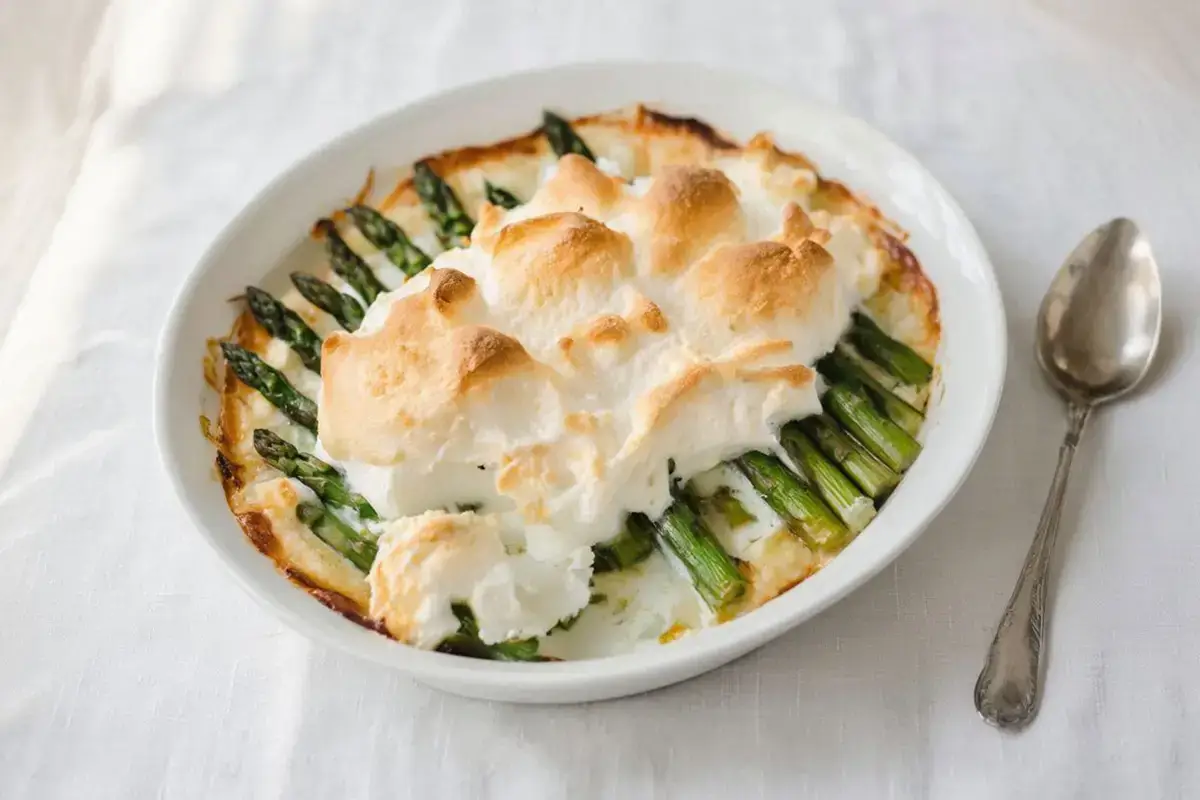
Asparagus Venetian Style
Fresh asparagus baked under a rich egg yolk cream sauce and a golden meringue-cheese topping. An elegant Central European appetizer.
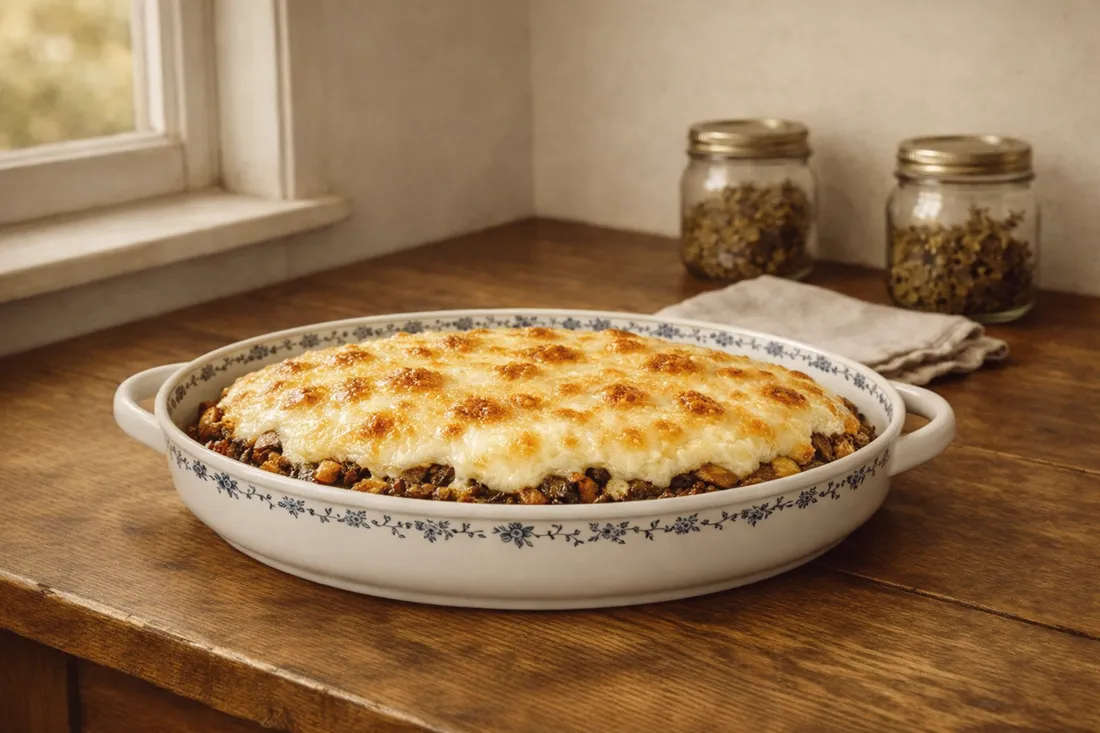
Baked Mushrooms with Hard Cheese and Eggs
Layers of sliced hard-boiled eggs and grated cheese topped with sautéed mushrooms, baked under a rich egg-enriched sour cream topping.
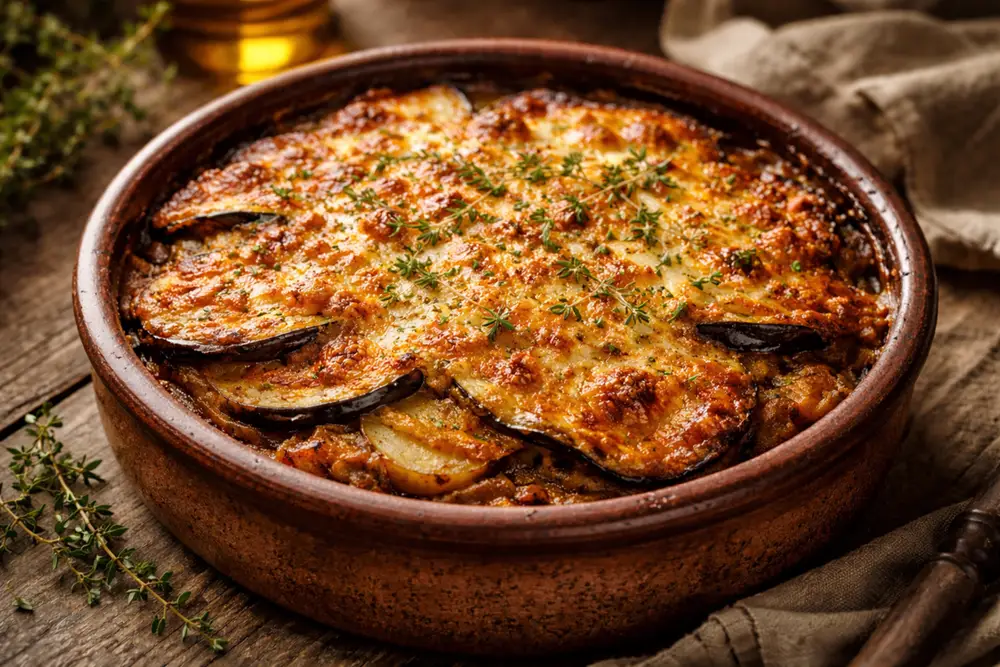
Baked Eggplant with Potatoes
A slow-baked layered casserole of eggplant, parboiled potatoes, golden fried onion, and melted cheese.