Candied Gooseberries
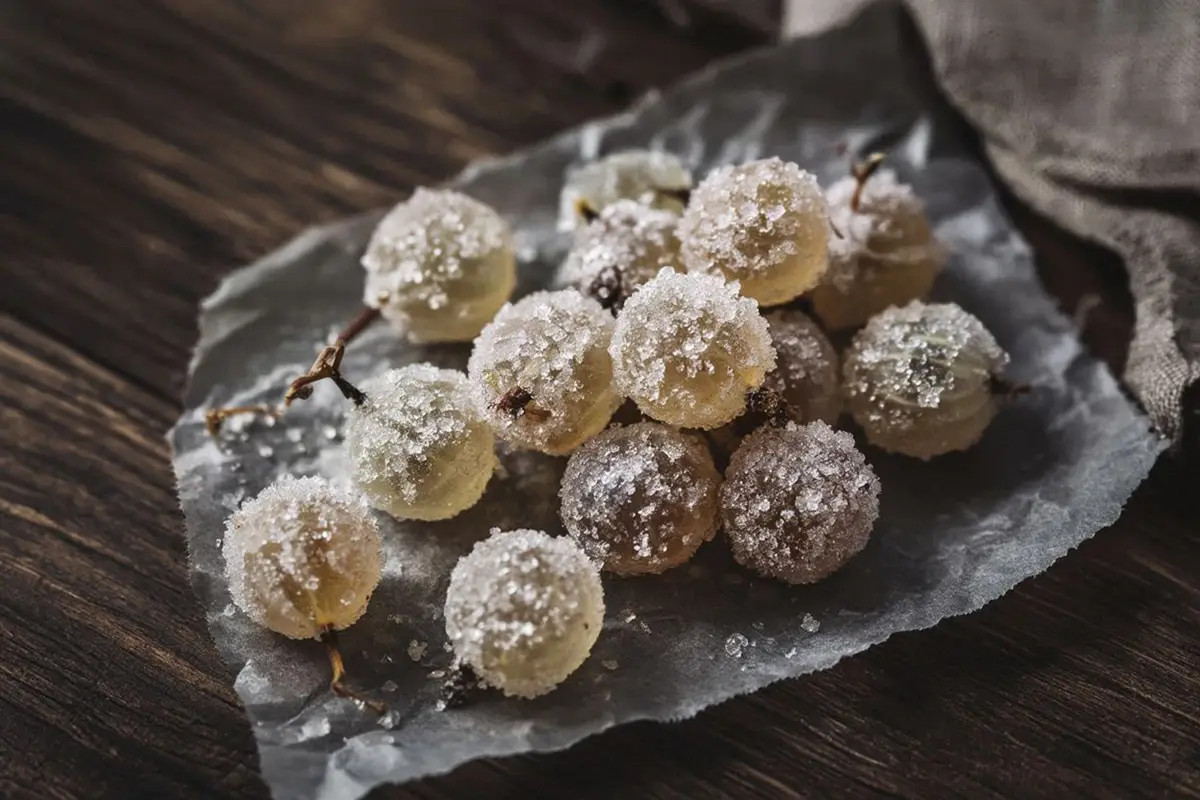
Gooseberries cooked twice in heavy sugar syrup, sun-dried, and rolled in powdered sugar — a patient old confectionery technique for winter storage.
Quick Summary
Gooseberries cooked twice in heavy sugar syrup, sun-dried, and rolled in powdered sugar — a patient old confectionery technique for winter storage.
Historical recipe
Modernised adaptation of an early 20th‑century source. Not independently kitchen-tested by Attic Recipes. Quantities, temperatures, and food safety guidance have been updated for a contemporary kitchen — results may vary and errors may exist. Nutritional values, where provided, are estimates only and have not been laboratory tested. Always follow current food safety guidelines for your region. If you have a health condition, allergy, or dietary requirement, consult a qualified professional before preparing this recipe.
Use of this recipe is entirely at your own risk and subject to our Terms of Service and Privacy Policy. Attic Recipes accepts no liability for any adverse outcome.
Safety note
Boiling sugar syrup reaches temperatures well above 100°C and causes severe burns on contact. Use a long-handled spoon and keep children away from the stove at all times.
Use a candy thermometer with a long probe to avoid leaning over the boiling syrup.
Additional notes
-
Warning
High sugar content (80g per 100g serving). Not suitable for those with diabetes or insulin sensitivity.
Serve in very small portions as a confectionery treat, not a dessert.
-
Note
Store in a cool, dry place only. Humidity will dissolve the sugar coating. If you notice mould or off odours during storage, discard affected fruit and inspect the rest.
- 1
Combine sugar cubes and water in a large pot. Bring to a boil, skimming foam diligently for a clear syrup.
- 2
Test the syrup with a wire loop (cherry-stone size): dip and blow gently — ready when large stable bubbles form. This is soft-ball stage, approximately 112–115°C (234–240°F). A candy thermometer removes all guesswork.
Tip Allow syrup to cool slightly before performing the wire bubble test — never blow on syrup at a full rolling boil. - 3
Reduce to lower heat. Add washed gooseberries (stalks on). Simmer gently for 10 minutes — do not let the skins burst.
- 4
Transfer gooseberries and syrup to a clean enamel pot. Cover and leave in a cool place overnight.
- 5
Next day, bring to a boil again. Skim foam. Cook for 5 minutes.
- 6
Pour off the syrup and reserve. Place gooseberries on a cheesecloth sieve to drain completely — 1–2 hours.
Tip The reserved syrup is excellent in cocktails, lemonade, or spooned over yogurt and ice cream. - 7
Dry in a warm oven (50–60°C / 120–140°F, door slightly ajar) or in direct sun, turning occasionally, until the surface is no longer sticky. In the oven, this typically takes 4–6 hours; in direct sun, allow a full day in warm, dry conditions.
Tip Do not extend oven drying beyond 8 hours at this temperature. If the surface is still sticky after 6 hours, increase to 60°C and check every 30 minutes. Ensure good airflow in both methods. - 8
Roll in sifted powdered sugar until evenly coated. Repeat once more after 30 minutes for a thicker coating.
- 9
Store in flat boxes layered between sheets of parchment paper in a cool, dry place.
Nutrition Information per 100g candied gooseberries
Nutritional values are approximate estimates and may vary based on specific ingredients used, preparation methods, and portion sizes.
Serving Suggestions
Serve as a confectionery treat on their own, on a dessert platter or cheese board, or as decoration for tarts and pavlova. Gift in small boxes as a traditional homemade winter sweet. Use the reserved syrup in cocktails, lemonade, or over vanilla ice cream.
About This Recipe
Not all preserves end in a jar. This one ends in a box — flat, lined with parchment, holding rows of small sugar-dusted spheres that look like something from a confectioner’s window. They are gooseberries, cooked twice in a heavy syrup, patiently dried, and rolled in powdered sugar until each one is pale and frosted. The process takes two days and rewards attention with a confection that keeps for months and tastes like concentrated summer: bright, tart, sweet, a little floral.
Why It Works
The double-cooking method is technique, not inefficiency. The first cooking draws moisture from the fruit and begins infusing the syrup into the flesh. The overnight rest allows the exchange to continue slowly. The second cooking completes it. The result is fruit thoroughly saturated with sugar but still intact — not collapsed. Rushing either cooking by raising the heat will burst the gooseberry skins and leave you with jam rather than whole candied fruit.
The Syrup Test
The original recipe describes a test that predates candy thermometers: a wire bent into a small loop, dipped in boiling sugar, then blown through gently. If the syrup inflates into large stable bubbles rather than popping immediately, it has reached soft-ball stage — approximately 112–115°C. A candy thermometer achieves the same result with less drama. The wire test is worth trying at least once — it connects you directly to the confectioners who wrote these recipes, working without instruments, reading the sugar by eye and breath.
What to Do With the Syrup
The leftover syrup is beautiful — pale pink or golden-green, intensely flavoured, sweet and slightly tart. Do not discard it. It keeps refrigerated for weeks and makes an exceptional addition to sparkling water, cocktails, or spooned over yogurt and vanilla ice cream.
A classic of early 20th century home cooking, preserved and adapted for the modern kitchen.
The Story Behind This Recipe
Historical Context
Candied fruit was a prestige confectionery in 19th and early 20th century Central European households — borrowed from French and Austro-Hungarian pastry traditions and adapted to local fruit. Gooseberries were prized because their firm, tart flesh held up to double-cooking without dissolving. The wire-and-bubble syrup test is an old confectioner's method for gauging sugar concentration without a thermometer. Storing in flat boxes between parchment layers rather than sealed jars reflects an understanding that trapped humidity causes re-stickiness.
Modern Kitchen Adaptation
A candy thermometer removes all guesswork — aim for soft-ball stage at 112–115°C (234–240°F). The 4:1 sugar-to-fruit ratio is intentionally very high; this is what makes the product shelf-stable. Stalks can be left on for a decorative appearance. The reserved syrup keeps refrigerated for weeks.
This recipe is an independent modern adaptation developed from historical sources in the public domain. It is provided for informational and educational purposes only and does not constitute professional dietary, nutritional, or medical advice. Food preparation involves inherent risks. The reader assumes full responsibility for safe food handling, ingredient sourcing, and adherence to current local food safety guidelines. The site operator accepts no liability for outcomes resulting from the preparation or consumption of this recipe.
One recipe.
Every week.
You Might Also Like
More recipes from the same category
Apricot Fruit Paste
Sieved ripe apricots cooked with equal weight sugar and lemon juice, poured into molds and air-dried — from early 20th century Central European kitchens.
Whipped Apricot or Peach Preserve (No-Cook)
A silky, pale fruit spread made by whipping raw apricot or peach puree with sugar - no cooking required.
Blackberry and Cornelian Cherry Marmalade
Rich preserve combining tart cornelian cherries with sweet blackberries, cooked to thick consistency with a traditional two-fruit method.