Carrot Stew
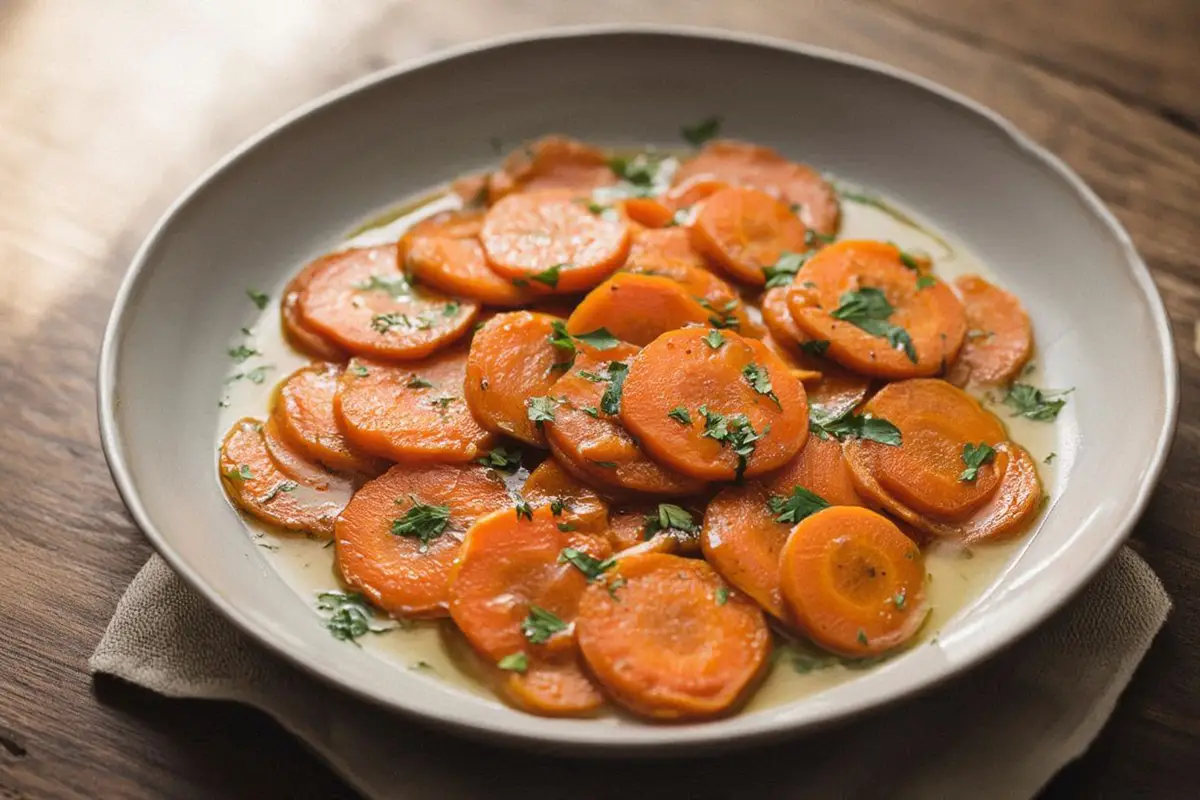
Young carrots slowly braised with onion in a light, lightly sweetened broth — a simple, delicate Central European side dish with a pale, glossy finish.
Quick Summary
Young carrots slowly braised with onion in a light, lightly sweetened broth — a simple, delicate Central European side dish with a pale, glossy finish.
Historical recipe
Modernised adaptation of an early 20th‑century source. Not independently kitchen-tested by Attic Recipes. Quantities, temperatures, and food safety guidance have been updated for a contemporary kitchen — results may vary and errors may exist. Nutritional values, where provided, are estimates only and have not been laboratory tested. Always follow current food safety guidelines for your region. If you have a health condition, allergy, or dietary requirement, consult a qualified professional before preparing this recipe.
Use of this recipe is entirely at your own risk and subject to our Terms of Service and Privacy Policy. Attic Recipes accepts no liability for any adverse outcome.
- Gluten
Additional notes
-
Note
Carrots are high in beta-carotene, which converts to vitamin A in the body. Consuming very large quantities over time can cause carotenemia — a harmless yellowing of the skin. Normal consumption as a side dish poses no concern.
-
Caution
Contains gluten (flour). Those with coeliac disease or gluten intolerance should substitute.
Replace the teaspoon of flour with 1 teaspoon of cornstarch dissolved in a tablespoon of cold water, stirred in during the final simmer.
- 1
Scrape the carrots lightly (do not peel — young carrot skin is thin and flavourful), wash thoroughly, and cut into thin uniform rounds, approximately 3–4mm thick.
Tip Uniform slices are important — they cook evenly and give the finished dish its characteristic appearance. A mandoline makes quick work of 1kg of carrots. - 2
Melt the lard in a wide, heavy-bottomed saucepan over medium heat. Add the finely chopped onions and fry, stirring occasionally, until soft and translucent but not browned — approximately 6–8 minutes. The onion should be soft but not caramelised.
Tip Keep the heat medium-low. The finished dish should be pale — a browned onion will darken both the colour and the flavour in a way that does not suit this delicate preparation. - 3
Add the sliced carrots to the onions. Stir to combine. Add hot broth or water in small amounts — just enough to prevent catching. Cover and braise over low-medium heat, stirring occasionally, until the carrots are completely soft, approximately 20–25 minutes.
Tip Young carrots cook quickly — begin tasting at 18 minutes. The carrots should be fully tender and yielding, not al dente, before the flour goes in. - 4
When the carrots are soft, sprinkle 1 teaspoon of flour evenly over the surface. Stir well and allow to cook for 1–2 minutes, stirring constantly, to remove the raw flour taste.
- 5
Add 1 teaspoon of sugar, salt to taste, and 2–3 tablespoons of bone broth. Stir gently to combine. Simmer uncovered for a further 3–5 minutes until the sauce is lightly glossy and just coating the carrots — not soupy, not dry.
Tip Taste before adding the sugar — very young spring carrots are naturally sweet and may need little or none. More mature market carrots benefit from the full teaspoon. - 6
Serve immediately as a side dish alongside roast meats or sausages.
Nutrition Information per 1 portion (approx. 180g)
Nutritional values are approximate estimates and may vary based on specific ingredients used, preparation methods, and portion sizes.
Serving Suggestions
Classically served alongside roast pork, veal, or grilled sausages. Also works well with poached chicken or as part of a larger vegetable spread. A scattering of fresh flat-leaf parsley added just before serving brightens the colour and adds freshness.
About This Recipe
This is one of the quietest recipes in the Central European vegetable tradition — a single vegetable, two onions, a tablespoon of fat, and enough broth to keep things moving. The result is a pale, lightly glossy side dish that tastes unmistakably of carrot without shouting about it. The small addition of sugar is not sweetness for its own sake; it is calibration, compensating for the natural variability of a vegetable that can taste of honey in spring and of almost nothing in February.
The original recipe gives one of the clearest consistency instructions in the collection: not soupy, not dry. This is the target.
Why It Works
The technique here is deliberate simplicity. Braising the carrots in fat and minimal liquid concentrates their flavour rather than diluting it into cooking water. The teaspoon of flour, sprinkled directly over the soft carrots and cooked briefly before the final liquid is added, creates a light liaison rather than a heavy sauce — just enough to give the braising liquid some body and help it cling to each slice. The final addition of broth loosens the dish to exactly the right consistency without making it soupy.
The onion is kept pale intentionally. A browned onion would add sweetness and depth — but it would also darken the colour and shift the character of the dish toward something more robust than this delicate preparation intends to be.
On Young vs Mature Carrots
The original specifically calls for young carrots, and this matters. Young carrots — thin, sweet, with a higher water content — braise in 18–20 minutes and need little or no added sugar. Mature winter storage carrots are denser, starchier, and less sweet; they need up to 30 minutes and benefit from the full teaspoon of sugar. The dish works with both, but it is at its best in late spring and early summer when young carrots first appear at market.
A classic of early 20th century home cooking, preserved and adapted for the modern kitchen.
The Story Behind This Recipe
Historical Context
This preparation belongs to the Central European főzelék tradition — a single-vegetable braise thickened with a small amount of flour and finished with broth, producing a dish that sits between a side dish and a light stew. The small addition of sugar is a characteristic detail of the region's vegetable cooking, reflecting an awareness that cultivated carrots vary significantly in natural sweetness depending on the season and how long they have been stored. The instruction to keep the dish 'not soupy but not completely dry' is one of the most precisely described consistency standards in period vegetable cookery — a recognition that texture, not just flavour, defines this kind of dish.
Modern Kitchen Adaptation
On carrot selection: young, freshly harvested carrots are sweeter, cook faster (18–20 minutes), and need little or no added sugar. Older, thicker market carrots need the full teaspoon of sugar and up to 30 minutes of braising. On fat: the original uses lard. Butter is the most natural substitute and adds a gentle richness; olive oil gives a lighter result. On sugar: start with half a teaspoon, taste, and adjust — with truly young spring carrots, omit entirely. On broth: a good-quality low-sodium bone broth or vegetable broth both work well.
This recipe is an independent modern adaptation developed from historical sources in the public domain. It is provided for informational and educational purposes only and does not constitute professional dietary, nutritional, or medical advice. Food preparation involves inherent risks. The reader assumes full responsibility for safe food handling, ingredient sourcing, and adherence to current local food safety guidelines. The site operator accepts no liability for outcomes resulting from the preparation or consumption of this recipe.
One recipe.
Every week.
You Might Also Like
More recipes from the same category
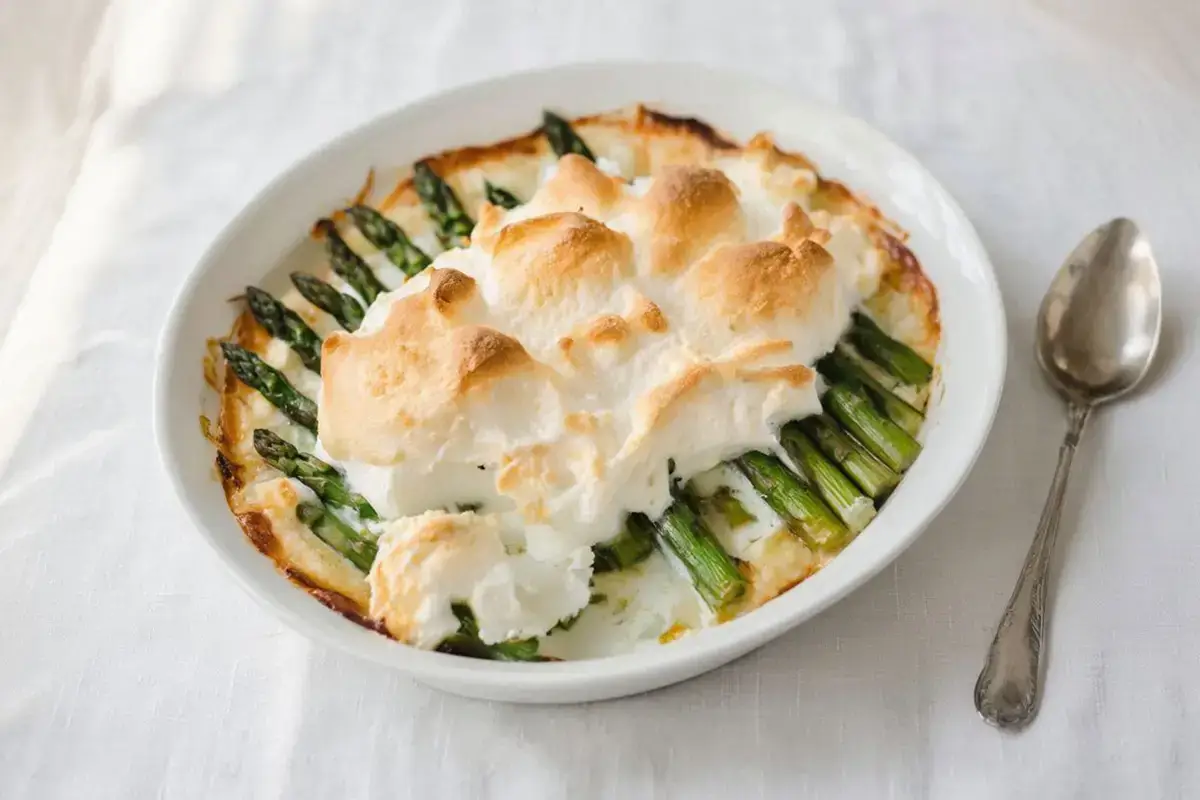
Asparagus Venetian Style
Fresh asparagus baked under a rich egg yolk cream sauce and a golden meringue-cheese topping. An elegant Central European appetizer.
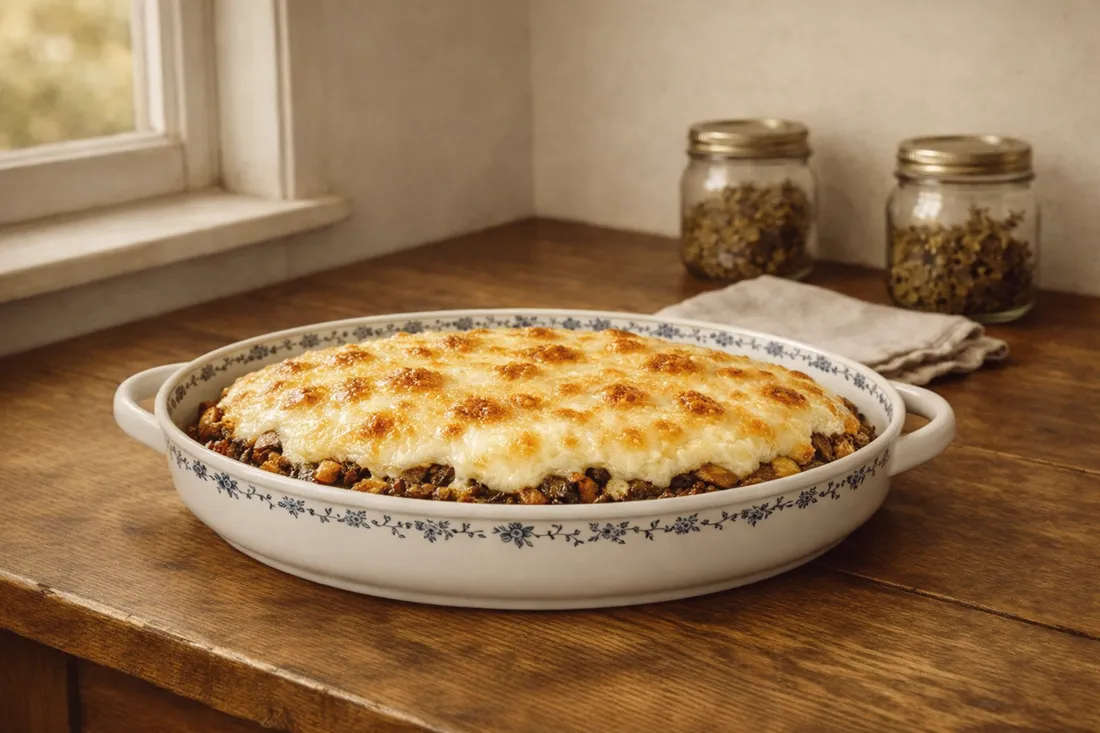
Baked Mushrooms with Hard Cheese and Eggs
Layers of sliced hard-boiled eggs and grated cheese topped with sautéed mushrooms, baked under a rich egg-enriched sour cream topping.
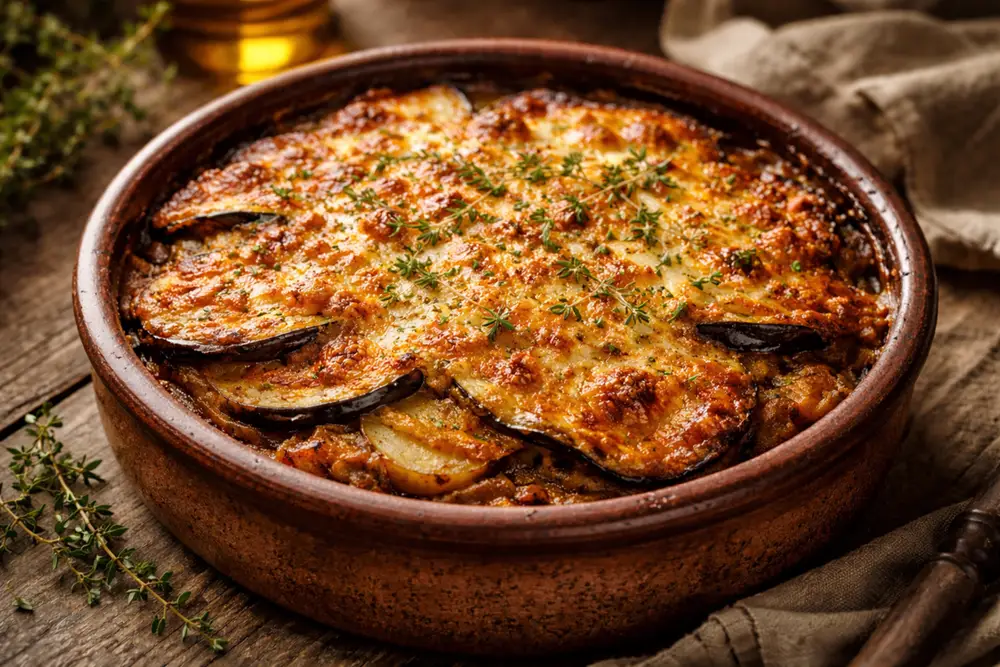
Baked Eggplant with Potatoes
A slow-baked layered casserole of eggplant, parboiled potatoes, golden fried onion, and melted cheese.