Carrot Stew with Tomatoes
Tender carrot strips slow-braised in bone broth with a touch of sugar, finished with tomato purée and parsley — a rich, old-fashioned vegetable stew.

Quick Summary
Tender carrot strips slow-braised in bone broth with a touch of sugar, finished with tomato purée and parsley — a rich, old-fashioned vegetable stew.
This recipe uses Slow-Simmered Tomato Sauce — prepare it in advance if you haven't already.
Historical recipe
Modernised adaptation of an early 20th‑century source. Not independently kitchen-tested by Attic Recipes. Quantities, temperatures, and food safety guidance have been updated for a contemporary kitchen — results may vary and errors may exist. Nutritional values, where provided, are estimates only and have not been laboratory tested. Always follow current food safety guidelines for your region. If you have a health condition, allergy, or dietary requirement, consult a qualified professional before preparing this recipe.
Use of this recipe is entirely at your own risk and subject to our Terms of Service and Privacy Policy. Attic Recipes accepts no liability for any adverse outcome.
- Gluten
Additional notes
-
Note
This recipe uses bone broth, which is not suitable for vegetarians or vegans. Substitute with good-quality vegetable broth for a fully plant-based version with no loss of technique.
-
Note
Contains gluten (flour). For a gluten-free version, substitute with cornstarch — use 1.5 tablespoons in place of 2 tablespoons of plain flour.
- 1
Peel the carrots and cut them into strips roughly 5–6cm long and 1cm wide. Try to keep the pieces uniform so they cook evenly.
- 2
Melt the lard in a wide, heavy-bottomed saucepan or Dutch oven over medium heat. Add the sugar cubes and the carrot strips. Stir to coat the carrots in the fat and sugar.
Tip The sugar cubes will dissolve and begin to caramelise gently around the carrots — this adds depth and a subtle sweetness to the finished stew. - 3
Cover the pan and braise the carrots over medium-low heat, adding the warm bone broth a ladleful at a time whenever the pan starts to dry out. Continue for approximately 30–35 minutes, until the carrots are fully tender and starting to absorb the broth.
Tip 500ml of broth should be sufficient, but add more if needed — the carrots should be braising, not frying. Keep the heat low and the lid on between additions. - 4
Once the carrots are soft, add the finely chopped parsley and sprinkle the flour over the carrots. Stir well and cook over medium heat for 3–4 minutes, stirring continuously, until the flour is lightly browned and no raw flour smell remains.
Tip This in-pan roux thickens the stew and gives it a slightly nutty base note. Don't rush this step — undercooked flour makes the stew taste starchy. - 5
Pour the strained tomatoes over the carrot mixture. Stir to combine. If the stew seems very thick, add an extra cup of broth to loosen it. Season with salt.
- 6
Cover the pan and simmer on the lowest heat setting for 15–20 minutes, until the tomato sauce has thickened and the liquid is almost fully absorbed. The stew should be glossy, thick, and fragrant. Taste and adjust seasoning before serving.
Tip 'End of the stove' in old recipes refers to the cooler, furthest zone from the heat source — replicate this with your lowest burner setting or a heat diffuser.
Nutrition Information per 1 portion (approx. 300g)
Nutritional values are approximate estimates and may vary based on specific ingredients used, preparation methods, and portion sizes.
Serving Suggestions
Serve as a side dish alongside roast pork, boiled beef, or grilled sausages. Also excellent with simply boiled potatoes or egg noodles to soak up the tomato sauce. Leftovers reheat beautifully and thicken further overnight — add a splash of broth when reheating.
About This Recipe
This carrot stew is a reminder that humble vegetables, treated with patience and good technique, can produce something genuinely satisfying. Carrot strips are slowly braised in bone broth with a touch of sugar until completely tender, then brought together with a quick in-pan roux and a full liter of strained tomatoes into a thick, glossy sauce that coats every piece. It is the kind of dish that improves with resting — better the next day, excellent cold from the refrigerator as a spread on bread.
Why It Works
The sequence here is deliberate and each step builds on the last. Starting the carrots in fat and sugar rather than water means they develop flavour before any liquid is added — the sugar caramelises lightly around them, and the fat carries that sweetness into every bite. Adding the broth gradually, as in a risotto, means the carrots absorb rather than simply sit in liquid. The in-pan roux — flour added directly to the soft carrots and cooked before the tomatoes arrive — thickens the sauce from the inside rather than as an afterthought, giving the finished stew a cohesive, almost glazed consistency.
Make-Ahead Notes
This stew keeps well refrigerated for up to 3 days and freezes successfully for up to 2 months. The sauce thickens considerably as it cools — add a splash of broth or water when reheating and stir over gentle heat until loosened. The flavour deepens noticeably after 24 hours.
Variations
With meat: A few strips of smoked bacon or pancetta added with the fat in step 2 turn this into a more substantial main course. Remove and stir back in with the tomatoes.
Sweeter version: An extra sugar cube or a teaspoon of honey added with the tomatoes leans into the natural sweetness of the carrots — a good choice if serving alongside game or duck.
Smoother texture: For a purée rather than a stew, blend the finished dish with a stick blender and pass through a sieve. Serve as a sauce under roast meat.
A classic of early 20th century home cooking, preserved and adapted for the modern kitchen.
The Story Behind This Recipe
Historical Context
Carrot stews enriched with fat, sugar, and a tomato base were a staple of Central European bourgeois and peasant cooking alike in the early 20th century. The technique of braising root vegetables in small additions of broth — rather than simply boiling them — was considered the mark of careful, attentive cooking. Sugar as a deliberate seasoning in savoury vegetable dishes reflects an older culinary sensibility, common across the region before the sharp sweet-savoury division that characterises modern cooking. The instruction to finish the stew at the 'end of the stove' — the coolest part of a wood-fired range — describes a patience-based approach to thickening that modern cooks can replicate on the lowest possible heat.
Modern Kitchen Adaptation
The original calls for lard, which was the default cooking fat of the era. Unsalted butter produces a richer, slightly more refined result; neutral vegetable oil works well for a lighter or vegetarian version. The bone broth can be replaced with good-quality vegetable broth without any loss of technique, though the flavour will be lighter. The sugar cubes of the original are simply granulated sugar — roughly 1.5 teaspoons — and can be adjusted to taste.
This recipe is an independent modern adaptation developed from historical sources in the public domain. It is provided for informational and educational purposes only and does not constitute professional dietary, nutritional, or medical advice. Food preparation involves inherent risks. The reader assumes full responsibility for safe food handling, ingredient sourcing, and adherence to current local food safety guidelines. The site operator accepts no liability for outcomes resulting from the preparation or consumption of this recipe.
One recipe.
Every week.
You Might Also Like
More recipes from the same category

Asparagus Venetian Style
Fresh asparagus baked under a rich egg yolk cream sauce and a golden meringue-cheese topping. An elegant Central European appetizer.
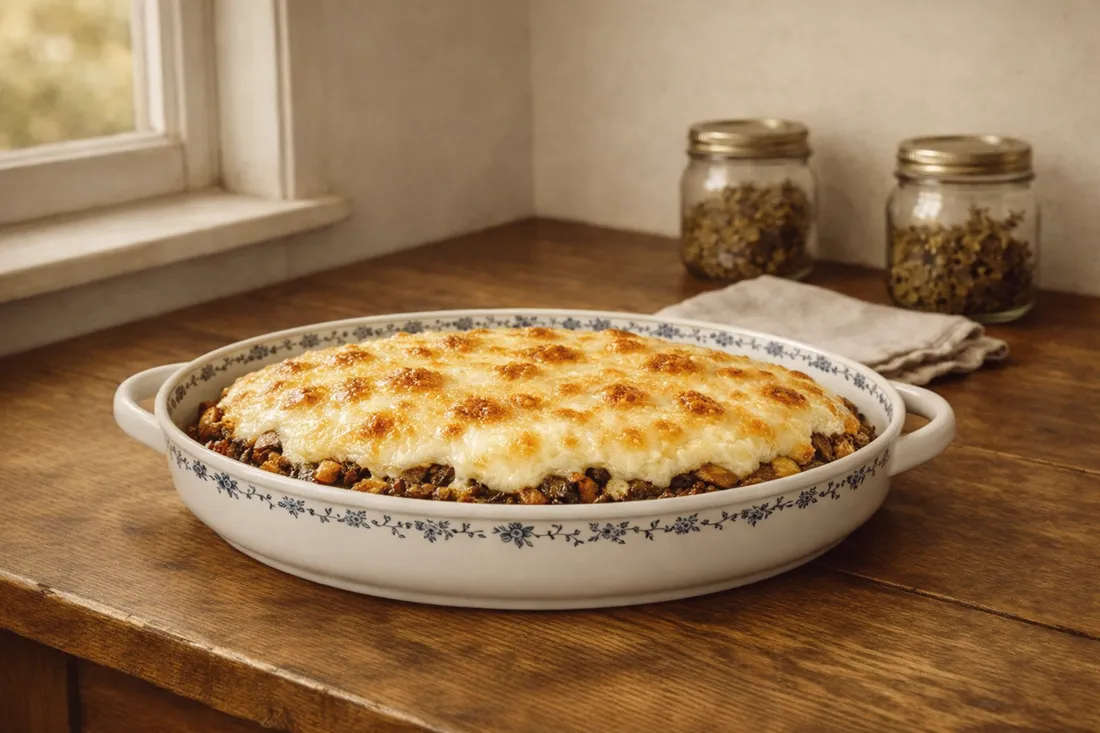
Baked Mushrooms with Hard Cheese and Eggs
Layers of sliced hard-boiled eggs and grated cheese topped with sautéed mushrooms, baked under a rich egg-enriched sour cream topping.
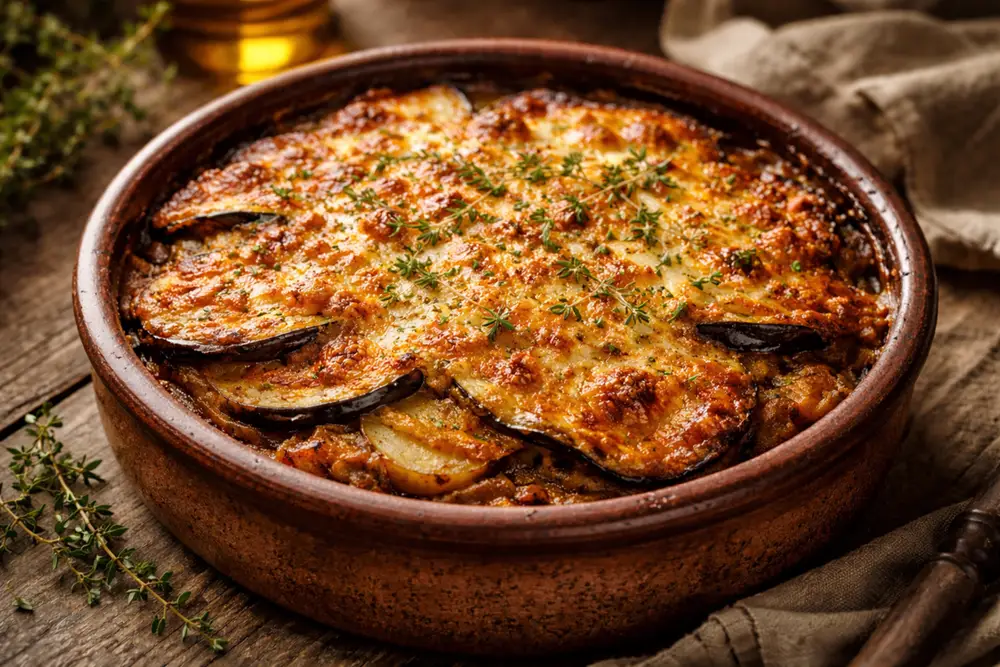
Baked Eggplant with Potatoes
A slow-baked layered casserole of eggplant, parboiled potatoes, golden fried onion, and melted cheese.