Steamed Cauliflower Pudding with Mushrooms
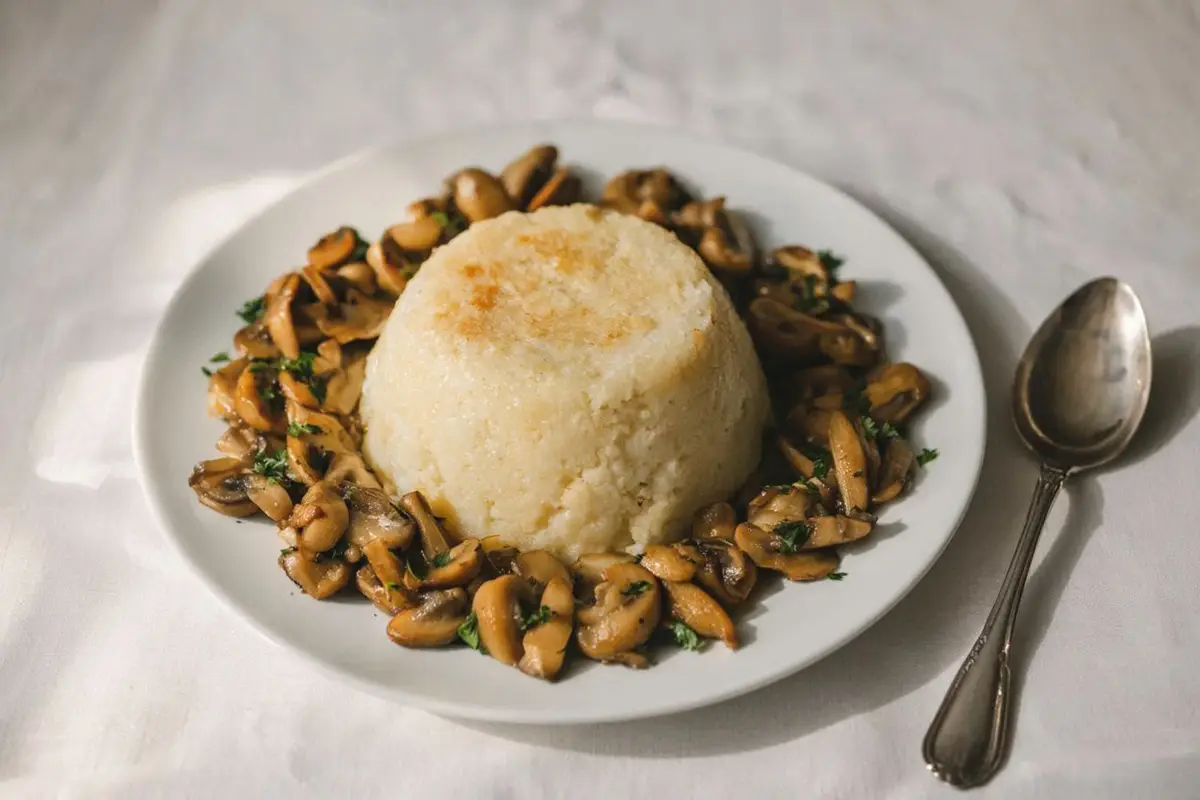
A light, airy steamed pudding of cauliflower and beaten eggs, filled with sautéed mushrooms and garnished with the rest. An elegant Central European appetizer.
Quick Summary
A light, airy steamed pudding of cauliflower and beaten eggs, filled with sautéed mushrooms and garnished with the rest. An elegant Central European appetizer.
Historical recipe
Modernised adaptation of an early 20th‑century source. Not independently kitchen-tested by Attic Recipes. Quantities, temperatures, and food safety guidance have been updated for a contemporary kitchen — results may vary and errors may exist. Nutritional values, where provided, are estimates only and have not been laboratory tested. Always follow current food safety guidelines for your region. If you have a health condition, allergy, or dietary requirement, consult a qualified professional before preparing this recipe.
Use of this recipe is entirely at your own risk and subject to our Terms of Service and Privacy Policy. Attic Recipes accepts no liability for any adverse outcome.
- Dairy
- Eggs
- Gluten
Additional notes
-
Warning
This recipe contains egg yolks and egg whites cooked within the steamed pudding. Ensure the centre of the pudding reaches a safe internal temperature of 71°C (160°F) before serving — verify with a kitchen thermometer. Do not serve undercooked pudding to pregnant women, children under 5, elderly individuals, or immunocompromised persons.
Use commercially pasteurised eggs if serving to vulnerable groups. Insert a thermometer into the centre of the pudding before turning out — if below 71°C (160°F), return to the steamer for a further 10–15 minutes.
-
Note
Contains dairy (butter) and eggs. Gluten is present in the breadcrumbs — use gluten-free breadcrumbs for a gluten-free version. Not suitable for vegans.
- 1
Clean and thinly slice the mushrooms. Melt 70g of butter in a wide saucepan over medium heat. Add the parsley and mushrooms and sauté gently, adding the bone broth gradually to keep the mushrooms moist. Cook until the mushrooms are soft and most of the liquid has evaporated — about 15 minutes. Season with salt. Set aside: you will use 3 tablespoons of the mushrooms in the pudding mixture and reserve the rest for garnish.
Tip Sauté gently — rushing this step produces watery mushrooms. The mushrooms should be tender and fragrant, not steaming in liquid. - 2
Break the cauliflower into florets and boil in well-salted water until completely tender — about 12 to 15 minutes. Drain thoroughly and allow to cool slightly. Separate into small individual florets.
Tip The cauliflower must be fully soft, not al dente. It needs to integrate into the pudding mixture rather than hold its shape. - 3
Beat the softened butter in a large bowl until light and creamy. Add the egg yolks one at a time, beating well after each addition.
- 4
Add the breadcrumbs to the butter and yolk mixture and stir to combine. Add the cauliflower florets and 3 tablespoons of the sautéed mushrooms. Mix gently.
- 5
In a separate clean bowl, beat the egg whites to stiff peaks. Fold them into the cauliflower mixture in three additions, using a large spatula and a gentle folding motion. Work carefully to preserve as much volume as possible.
Tip Do not stir after adding the whites. Fold in wide arcs from the bottom upward. A few white streaks remaining is fine. - 6
Grease a pudding mold or suitable heatproof bowl generously with butter and dust with breadcrumbs, tapping out any excess. Pour the mixture in and smooth the top. Cover tightly with a lid or a double layer of foil secured with string.
Tip See the equipment note below for modern alternatives to a traditional pudding mold. - 7
Steam for 1 hour. To steam on the stovetop: place the mold in a large pot, add boiling water to come halfway up the sides of the mold, cover the pot, and maintain a steady simmer for the full hour, topping up with hot water as needed. To bake in a bain-marie: place the covered mold in a deep baking dish, add boiling water to come halfway up, and bake at 160°C / 140°C fan (320°F) for 1 hour.
Tip Do not let the water boil dry. Check every 20 minutes and add hot water as needed. - 8
Test for doneness by inserting a skewer into the centre — it should come out clean. The internal temperature at the centre should reach 71°C (160°F). Allow the pudding to rest in the mold for 5 minutes before turning out.
- 9
Run a knife around the edge of the mold to loosen. Place a round serving plate over the mold and invert firmly. The pudding should release cleanly. Reheat the reserved mushrooms briefly and arrange them around and over the pudding. Serve warm.
Tip If the pudding sticks, return it to the steamer for 2 minutes — the steam will loosen it.
Nutrition Information per approx. 220g
Nutritional values are approximate estimates and may vary based on specific ingredients used, preparation methods, and portion sizes.
Serving Suggestions
Serve warm as a first course, turned out onto a round plate and surrounded by the reserved sautéed mushrooms. A small amount of the mushroom cooking juices spooned over the top adds richness. Works well as a vegetarian main course with good bread alongside.
About This Recipe
One kilogram of fresh mushrooms, sautéed in butter with parsley and a little broth. Two small cauliflower heads, boiled soft and broken into florets. A base of beaten butter, egg yolks, and breadcrumbs folded together with the cauliflower and a portion of the mushrooms, then lifted with beaten egg whites and steamed for an hour in a covered mold. Turned out onto a plate, surrounded with the reserved mushrooms, and served warm.
It is a dish that requires patience and a little confidence — the steaming hour, the moment of inversion — but it arrives at the table as something genuinely impressive: a domed, golden pudding with a light, airy interior and a rich mushroom garnish.
Why It Works
The structure of this pudding follows the same logic as a soufflé: beaten butter and egg yolks provide richness and binding, beaten egg whites provide lift and lightness, and the steaming environment — enclosed, moist, steady heat — sets the mixture gently without drying it out. Unlike a baked soufflé, a steamed pudding does not collapse when removed from the heat. The hour of steaming is not excessive — it is what produces a set, turnable pudding rather than a soft, spoonable custard.
Reserving most of the mushrooms for garnish rather than incorporating them all into the mixture is a decision about texture as much as presentation. Too many mushrooms inside would weigh down the airy base.
On the Pudding Mold
The original recipe calls for a pudding mold — a covered metal form made specifically for stovetop steaming, standard equipment in early 20th century kitchens. They are still made today but not commonly stocked. Any heatproof bowl with a tight foil cover works equally well. The key requirements are: heatproof material (ceramic, glass, or metal), a tight seal to prevent water from entering, and sides that allow the pudding to release cleanly when inverted.
A ring-shaped or bundt-style pan produces the most elegant presentation — the hole in the centre fills with mushrooms when garnished. Individual ramekins are the most practical for a dinner party, reducing steaming time to 30 to 35 minutes.
Steaming Without a Steamer
Place the covered mold in a large pot. Add enough boiling water to come halfway up the sides of the mold — not higher, or water may seep under the foil. Cover the pot and maintain a steady simmer over medium-low heat for the full hour. Check every 20 minutes and add hot water as needed. The water should never boil dry and should never be at a rolling boil — a calm simmer is the target throughout.
Troubleshooting
Pudding will not turn out: Run a thin knife carefully around the entire edge and shake the mold gently before inverting. If it still sticks, return to the steamer for 2 minutes — steam loosens the surface.
Centre underdone after 1 hour: The water was not at a steady simmer, or the mold was too deep and narrow. Return to the steamer for 15 minutes and test again.
Pudding collapses when turned out: The mixture was overmixed after adding the egg whites, or the egg whites were underbeaten. They must reach true stiff peaks before folding.
A classic of early 20th century home cooking, preserved and adapted for the modern kitchen.
The Story Behind This Recipe
Historical Context
Steamed savoury puddings were a staple of formal Central European home cooking in the late 19th and early 20th centuries, occupying a place on the table between a soufflé and a terrine — lighter than a baked custard, more substantial than an egg dish. The technique of beating butter with egg yolks and folding in stiff egg whites before steaming was considered a refined preparation, associated with accomplished home cooks and festive lunches. Mushrooms, widely foraged across the region, were a natural pairing with the mild, slightly sweet flavour of cauliflower.
Modern Kitchen Adaptation
The original recipe calls for a pudding mold — a lidded metal form designed for stovetop steaming, standard in early 20th century kitchens but uncommon today. Several modern alternatives work equally well. A heatproof ceramic or glass bowl covered tightly with a double layer of foil and secured with string can be steamed on the stovetop in exactly the same way. A ring or bundt-style metal baking pan covered with foil works well in a bain-marie in the oven and produces a particularly elegant presentation when turned out. Individual ramekins covered with foil and steamed or baked in a water bath reduce the steaming time to approximately 30 to 35 minutes and are practical for plated appetizer service. Avoid any mold or bowl with a plastic component — sustained steaming heat will damage it.
This recipe is an independent modern adaptation developed from historical sources in the public domain. It is provided for informational and educational purposes only and does not constitute professional dietary, nutritional, or medical advice. Food preparation involves inherent risks. The reader assumes full responsibility for safe food handling, ingredient sourcing, and adherence to current local food safety guidelines. The site operator accepts no liability for outcomes resulting from the preparation or consumption of this recipe.
One recipe.
Every week.
You Might Also Like
More recipes from the same category
Asparagus Venetian Style
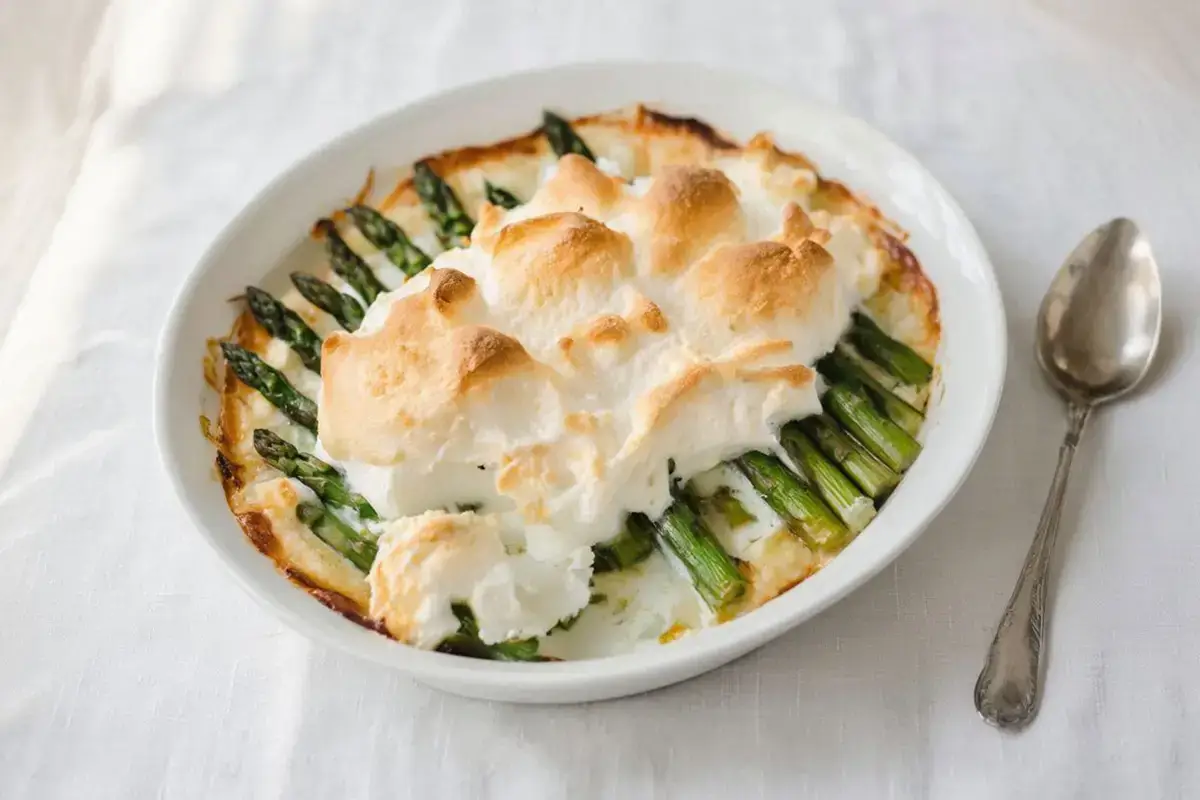
Fresh asparagus baked under a rich egg yolk cream sauce and a golden meringue-cheese topping. An elegant Central European appetizer.
Baked Mushrooms with Hard Cheese and Eggs
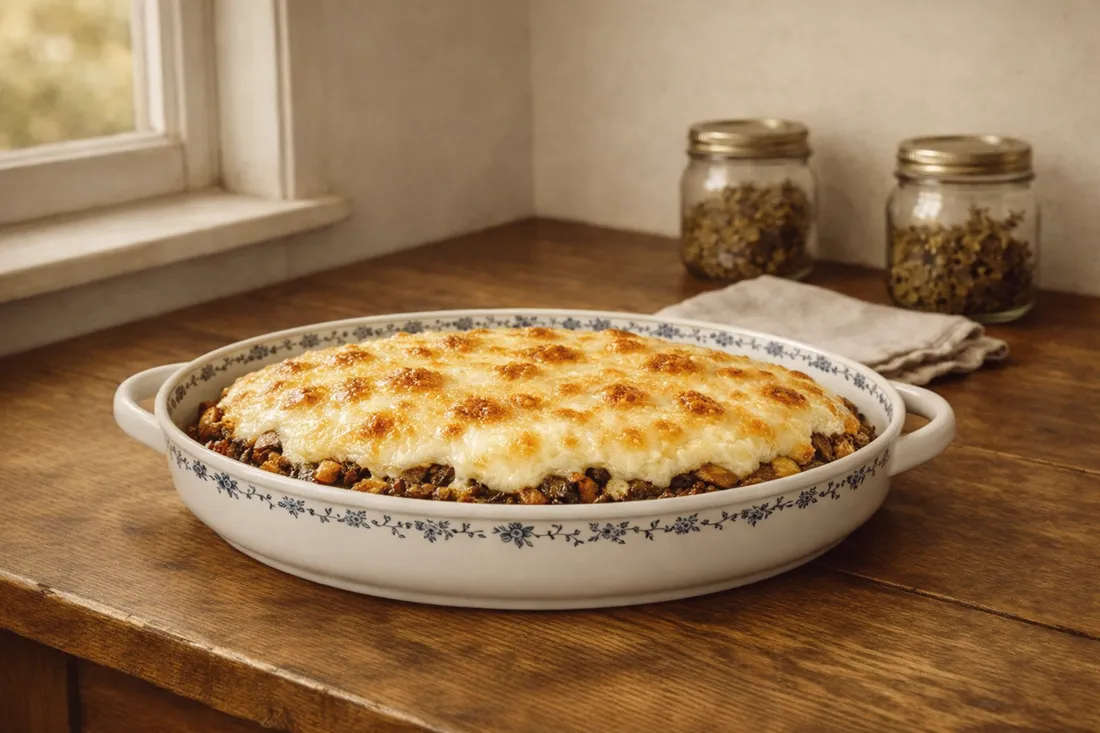
Layers of sliced hard-boiled eggs and grated cheese topped with sautéed mushrooms, baked under a rich egg-enriched sour cream topping.
Baked Eggplant with Potatoes
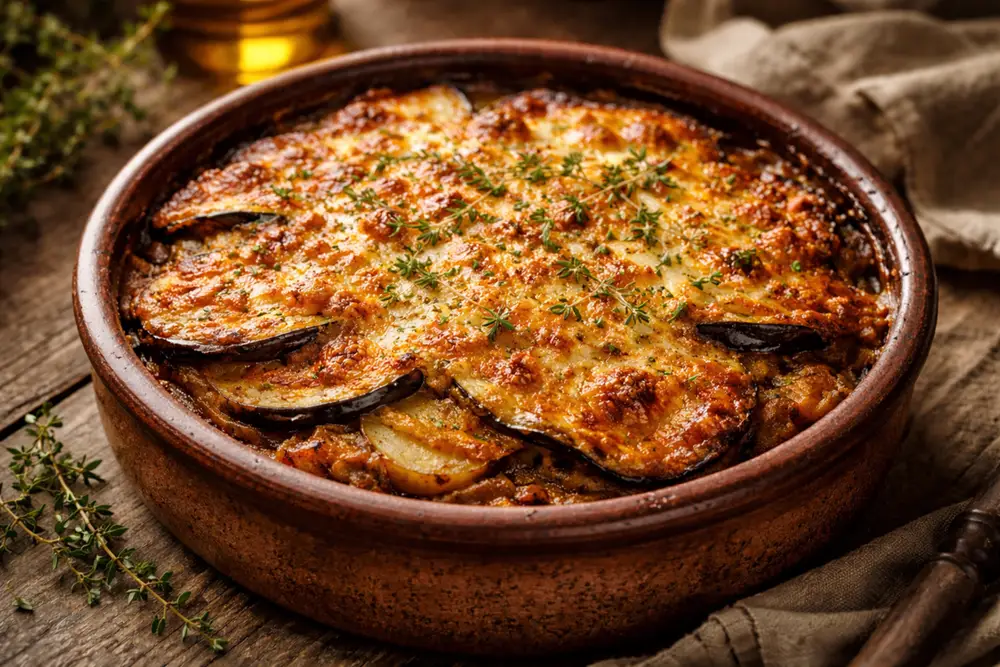
A slow-baked layered casserole of eggplant, parboiled potatoes, golden fried onion, and melted cheese.