Chicken in Walnut Sauce
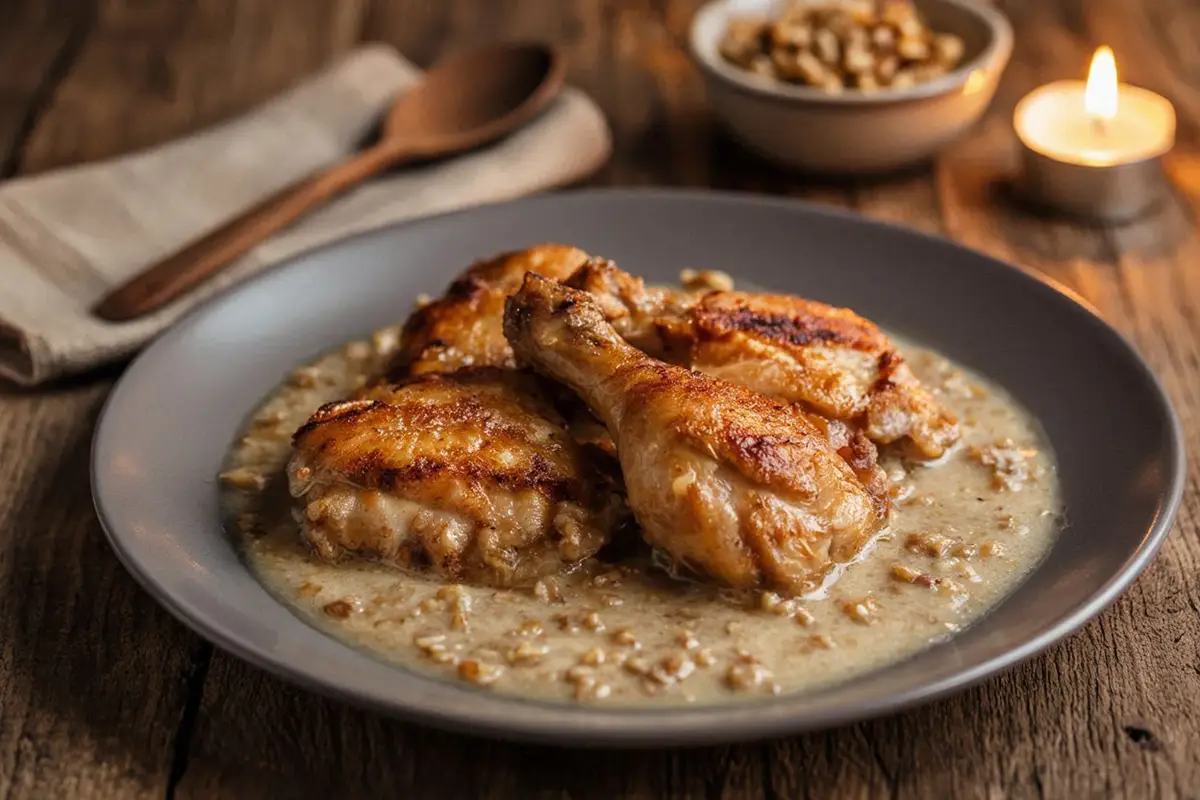
Tender boiled chicken pieces served over a rich, garlicky walnut sauce — a hearty Central European classic with deep, nutty flavor and satisfying weight.
Quick Summary
Tender boiled chicken pieces served over a rich, garlicky walnut sauce — a hearty Central European classic with deep, nutty flavor and satisfying weight.
Historical recipe
Modernised adaptation of an early 20th‑century source. Not independently kitchen-tested by Attic Recipes. Quantities, temperatures, and food safety guidance have been updated for a contemporary kitchen — results may vary and errors may exist. Nutritional values, where provided, are estimates only and have not been laboratory tested. Always follow current food safety guidelines for your region. If you have a health condition, allergy, or dietary requirement, consult a qualified professional before preparing this recipe.
Use of this recipe is entirely at your own risk and subject to our Terms of Service and Privacy Policy. Attic Recipes accepts no liability for any adverse outcome.
- Gluten
- Tree Nuts
Safety note
This recipe contains walnuts — a tree nut and one of the most common causes of severe food allergy and anaphylaxis globally. Walnut allergy affects an estimated 0.2–1.1% of the population and is among the leading causes of fatal allergic reactions. Symptoms can appear within minutes of exposure and range from hives and swelling to anaphylactic shock. Walnut allergy is typically lifelong — fewer than 10% of affected individuals outgrow it. If you are allergic to one tree nut, you may also react to other tree nuts, including hazelnut, cashew, pecan, and pistachio. This dish cannot be made nut-free — walnuts are the primary ingredient of the sauce. ALWAYS disclose the walnut content when serving this dish to others.
There is no safe in-recipe substitution for individuals with walnut or tree nut allergy. The dish should not be served to anyone with a known or suspected tree nut allergy under any circumstances.
Additional notes
-
Warning
Do not wash raw chicken before cooking. Washing raw poultry spreads Salmonella, Campylobacter, and other bacteria from the chicken surface to the sink, surrounding surfaces, and utensils via water splatter — contaminating areas that may not be thoroughly cleaned afterward. Bacteria are destroyed by heat during cooking, not by washing. This guidance is issued by the CDC, NHS, EFSA, and food safety authorities globally.
-
Warning
Chicken must reach an internal temperature of 74°C (165°F) at the thickest part before consumption. Visual checks (juices running clear, meat no longer pink) are not reliably accurate. Use a meat thermometer for certainty, particularly at the bone where heat penetration is slowest.
-
Caution
This is a high-calorie dish — approximately 680 kcal per serving, primarily from the 250g of walnuts in the sauce. Individuals managing caloric intake, obesity, or metabolic conditions should be aware. The fat content is predominantly polyunsaturated (omega-3 ALA), which is nutritionally beneficial, but the overall caloric density is high.
Reduce walnuts to 150g for a lighter sauce with approximately 500 kcal per serving. The flavor will be milder but the sauce remains cohesive.
-
Note
Individuals with birch pollen allergy (hay fever) may experience Oral Allergy Syndrome (OAS) when eating walnuts — mild itching or tingling in the mouth and throat. This is usually milder than primary walnut allergy and may be reduced when walnuts are cooked, as the responsible proteins are heat-sensitive. If you experience these symptoms, consult an allergist before consuming dishes containing walnuts.
- 1
Place the chicken pieces in a large pot and cover with cold salted water. Bring to a boil, then reduce heat and simmer gently for 40–50 minutes until the meat is fully cooked and tender. The internal temperature at the thickest part of the thigh should reach 74°C (165°F). Remove the chicken pieces and set aside to cool. Reserve the poaching broth — it is the liquid base for the sauce.
Tip Do not wash raw chicken before cooking. Washing spreads bacteria (Salmonella, Campylobacter) from the chicken surface to the sink, splashback areas, and surrounding surfaces via water droplets. The heat of cooking is what eliminates bacteria — not washing. This applies to all poultry. - 2
While the chicken cools, prepare the walnut sauce. Mix the crushed garlic thoroughly into the finely ground walnuts and set aside.
- 3
Heat the lard or oil in a saucepan over medium heat. Add the finely chopped shallot and sauté for 3–4 minutes until soft and translucent. Add the flour and stir well, cooking for 1–2 minutes to form a light roux.
Tip The roux should turn pale golden — not dark. A dark roux will give a bitter flavor that competes with the walnuts. - 4
Add the walnut and garlic mixture to the roux. Stir well and fry together for 2–3 minutes, stirring constantly, until the walnuts are fragrant and lightly toasted in the fat.
Tip Watch the heat carefully here — ground walnuts burn quickly. Medium heat and constant stirring are essential. - 5
Gradually ladle in the reserved chicken broth, stirring constantly to prevent lumps. Begin with 400ml and add more if the sauce is too thick. Bring to a gentle simmer and cook, stirring frequently, for 8–10 minutes until the sauce is thick, smooth, and coats the back of a spoon. Season with salt to taste. Remove from heat and allow to cool to room temperature — the sauce thickens further as it cools.
- 6
Once the chicken has cooled enough to handle, pan-fry the pieces in a little lard or oil over medium-high heat for 3–4 minutes per side until golden brown and lightly crisped on the outside. This final step adds textural contrast to the soft walnut sauce.
Tip Pat the chicken pieces very dry before frying — surface moisture will prevent browning and cause oil to splatter. - 7
Spread the walnut sauce on a serving dish or individual plates. Arrange the fried chicken pieces on top and serve immediately.
Nutrition Information per ¼ chicken with walnut sauce (approx. 350g total)
Nutritional values are approximate estimates and may vary based on specific ingredients used, preparation methods, and portion sizes.
Pro Tips
- The walnut sauce can be made 1–2 days ahead and refrigerated. It thickens significantly when cold — thin with a little warm chicken stock when reheating over low heat.
- If the sauce is too thick after cooling, whisk in warm broth a tablespoon at a time until the desired consistency is reached.
- This dish is traditionally served at room temperature in some regional variations, with the sauce spread cold and the chicken placed on top. Both warm and room-temperature versions are good.
Serving Suggestions
Serve with boiled or roasted potatoes, polenta, broad egg noodles, or thick slices of crusty bread to absorb the walnut sauce. The sauce is substantial enough to serve as a meal on its own over noodles without the chicken for a vegetarian variation (use vegetable stock). A small green salad with lemon vinaigrette cuts through the richness of the walnut sauce.
About This Recipe
Chicken in Walnut Sauce is a dish of quiet power. A whole chicken is poached in salted water until tender, the pieces are briefly pan-fried until golden, and then arranged over a thick, garlic-scented walnut sauce built on the poaching broth. The sauce is the dish — 250 grams of finely ground walnuts cooked into a roux with the cooking liquid produce something dense, rich, and deeply savory in a way that no cream- or butter-based sauce quite replicates. This is not a light weeknight recipe. It is the kind of dish that sits at the center of a table and is the reason the meal was prepared.
Why It Works
The roux base — flour cooked in fat before the liquid is added — gives the sauce structural stability that ground nuts alone cannot provide. Without the roux, walnut sauces tend to separate or turn grainy as they cool. The roux binds the sauce and keeps it smooth as it thickens. Cooking the walnut and garlic mixture directly in the roux fat, before the broth is added, toasts the walnuts lightly and opens up their flavor compounds in a way that simply adding ground walnuts to liquid does not achieve. The reserved chicken poaching broth carries dissolved gelatin and flavor from the chicken itself, creating a sauce that is self-contained and deeply flavored without any additional stock or seasoning beyond salt.
A Note on Calories
This dish is nutritionally dense and worth being honest about. The 250g of walnuts in this recipe contribute approximately 1,650 calories to the full recipe — around 410 calories per serving from the walnuts alone, before the chicken and cooking fat are accounted for. The estimated total is approximately 680 calories per serving.
This is not a reason to avoid the dish. The fat in walnuts is predominantly polyunsaturated — rich in omega-3 alpha-linolenic acid (ALA), which is associated with cardiovascular benefit, not harm. Walnuts contain significant amounts of vitamin E, magnesium, copper, and antioxidant polyphenols. This is calorie-dense food, but not nutritionally empty food.
That said: this is a dish for a main meal, not an everyday light supper. If you want to reduce the caloric load, 150g of walnuts produces a noticeably thinner but still very good sauce at approximately 500 calories per serving.
On Shallot vs. Onion
A shallot has been chosen as the specification for a considered reason: the flavor of shallot is milder, sweeter, and more delicate than standard yellow or red onion, and it dissolves more completely into the sauce during cooking, leaving no sharp onion presence that might compete with the walnuts. If you prefer standard onion, use half a small yellow onion — but cook it gently until completely soft before adding the flour.
On Not Washing Chicken
Washing raw poultry does not remove bacteria — it spreads them. Salmonella, Campylobacter, and other pathogens present on raw chicken surface are destroyed by the heat of cooking, not by water. Washing spreads contaminated water droplets to the sink, surrounding surfaces, and utensils. Pat the chicken dry with paper towels if needed, and rely on proper internal cooking temperature — 74°C (165°F) — to ensure safety. This guidance is consistent across the CDC, NHS, EFSA, and all major food safety authorities.
Make-Ahead Notes
The walnut sauce is an excellent make-ahead component. Prepare it up to 2 days ahead, cover, and refrigerate. It will thicken substantially when cold — reheat gently over low heat with a splash of warm chicken stock, stirring to restore the right consistency. The chicken can be poached ahead and refrigerated; fry just before serving. Do not fry the chicken in advance — it loses its crust quickly.
A classic of early 20th century home cooking, preserved and adapted for the modern kitchen.
The Story Behind This Recipe
Historical Context
Walnut-based sauces for poultry are documented across a wide band of Central European, Caucasian, and Eastern Mediterranean culinary traditions. The technique of building a sauce on a flour-and-fat roux, then enriching it with ground nuts and cooking liquid, appears consistently in early 20th century Central European household cookbooks. Walnuts were widely cultivated across the region and were a practical, high-calorie ingredient available year-round in dried form, making this kind of sauce an economical way to transform a single boiled chicken into a substantial dish. The combination of garlic and walnuts as a sauce base predates this region's culinary documentation considerably.
Modern Kitchen Adaptation
The quantity of 250g walnuts has been preserved as specified — this is the quantity that produces the characteristic density of this dish. A shallot has been used in place of onion for a milder, more balanced flavor that does not overpower the walnuts. No quantity was given for the chicken broth in the original formulation — standard sauce consistency has been used as the guide (400–500ml). Raw chicken should not be washed before cooking — see the food safety note in Step 1 and the safety warnings below.
This recipe is an independent modern adaptation developed from historical sources in the public domain. It is provided for informational and educational purposes only and does not constitute professional dietary, nutritional, or medical advice. Food preparation involves inherent risks. The reader assumes full responsibility for safe food handling, ingredient sourcing, and adherence to current local food safety guidelines. The site operator accepts no liability for outcomes resulting from the preparation or consumption of this recipe.
One recipe.
Every week.
You Might Also Like
More recipes from the same category
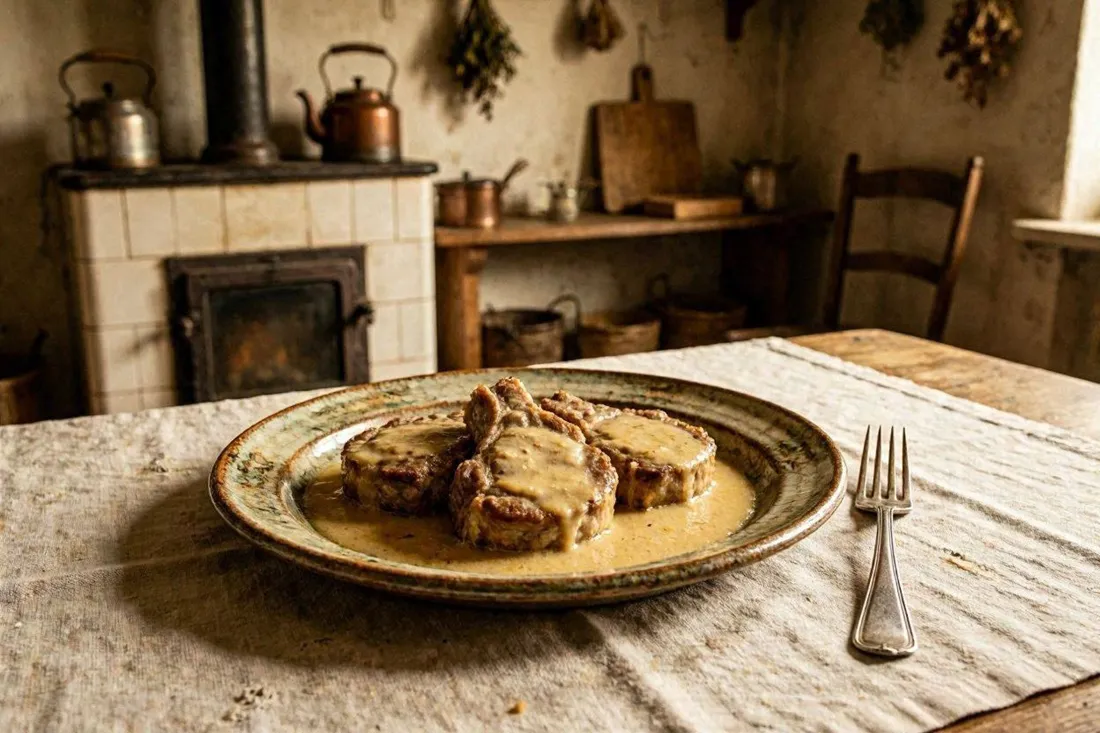
Braised Pork Chops in White Wine and Sour Cream Sauce
Pork loin chops braised with onion, carrot, parsley root, and celery root in white wine, then finished with a strained sour cream sauce.
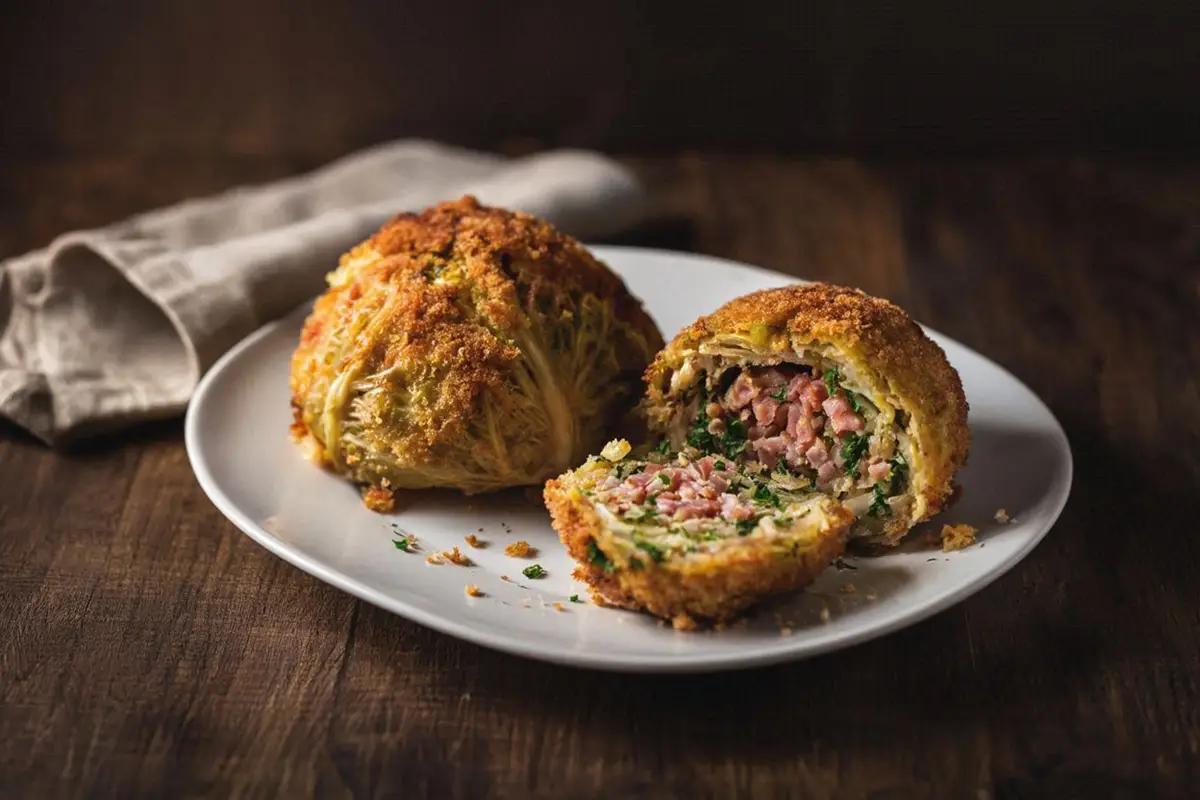
Breaded Savoy Cabbage Stuffed with Ham
Tender young savoy cabbage heads filled with ground ham, fried onion, and herbs, breaded and pan-fried until golden. A hearty Central European classic.
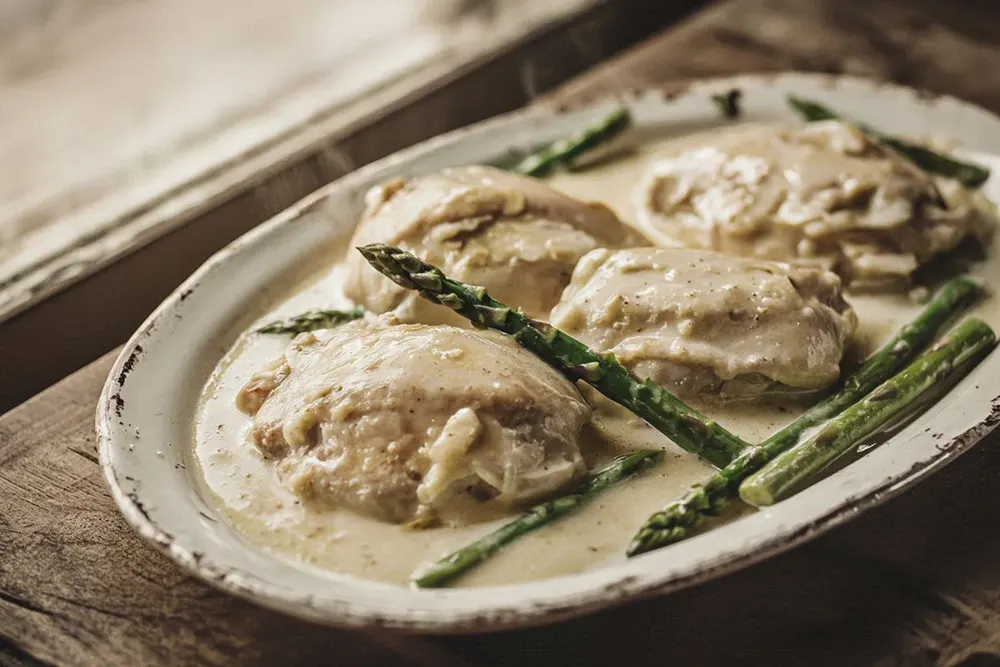
Chicken in Asparagus Sauce
A whole chicken poached in spiced broth, then finished in a silky velouté enriched with egg yolks and cream, garnished with tender asparagus tips.