Chicken White Meat Pure
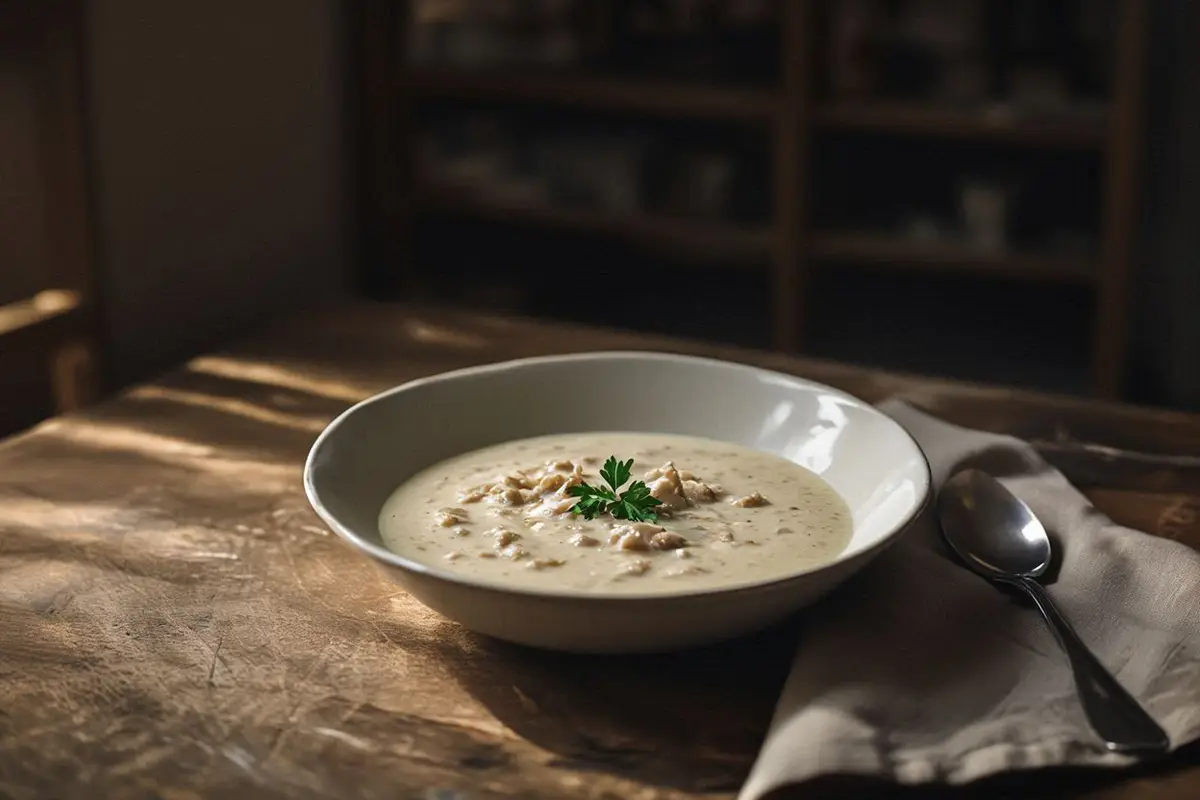
Minced boiled chicken breast folded into a silky velouté sauce made from the cooking broth — a Central European classic.
Quick Summary
Minced boiled chicken breast folded into a silky velouté sauce made from the cooking broth — a Central European classic.
Historical recipe
Modernised adaptation of an early 20th‑century source. Not independently kitchen-tested by Attic Recipes. Quantities, temperatures, and food safety guidance have been updated for a contemporary kitchen — results may vary and errors may exist. Nutritional values, where provided, are estimates only and have not been laboratory tested. Always follow current food safety guidelines for your region. If you have a health condition, allergy, or dietary requirement, consult a qualified professional before preparing this recipe.
Use of this recipe is entirely at your own risk and subject to our Terms of Service and Privacy Policy. Attic Recipes accepts no liability for any adverse outcome.
- Celery
- Dairy
- Gluten
Additional notes
-
Warning
Do not wash raw chicken before cooking. Washing raw poultry spreads Salmonella, Campylobacter, and other bacteria from the chicken surface to the sink, surrounding surfaces, and utensils via water splatter. Bacteria are destroyed by heat during cooking — not by washing. This guidance is consistent across the CDC, NHS, EFSA, and all major food safety authorities globally.
-
Warning
Chicken must reach an internal temperature of 74°C (165°F) at the thickest part before consumption. Visual checks — juices running clear, meat no longer pink — are not reliably accurate. Use a meat thermometer for certainty.
-
Note
If using butter, this dish contains dairy. If using lard, it is dairy-free. Confirm with guests before serving.
- 1
Remove giblets from the chicken and pat dry with paper towels. Do not wash raw poultry — see the food safety note in the safety warnings. Cut into pieces, keeping the breasts whole. Place all pieces in a large pot, add 3 liters of cold water and salt, and bring to a boil.
- 2
Once boiling, add the bunch of soup greens, the peeled potato, the whole onion, and peppercorns. Reduce heat and continue cooking at a gentle simmer until the meat is fully tender, about 45–50 minutes. The internal temperature at the thickest part of the breast should reach 74°C (165°F).
- 3
Remove the white meat (breasts) from the pot. Discard skin and bones, then chop the meat very finely. Combine with the finely minced white onion and set aside. Strain and reserve the broth.
Tip The finer the chop, the smoother the final dish. A sharp knife or a quick pulse in a food processor both work well. - 4
In a saucepan over medium heat, melt 2 tablespoons of fat. Add the flour and stir constantly for 1–2 minutes to form a pale roux. Gradually ladle in warm chicken broth, stirring continuously, until you have a smooth, pourable sauce.
Tip Use hot broth to prevent lumps. Add it slowly at first, whisking well after each addition. - 5
Add the minced chicken and onion mixture into the sauce. Stir well to combine, season with salt and pepper to taste, and serve warm.
Nutrition Information per 1 portion (approx. 300g)
Nutritional values are approximate estimates and may vary based on specific ingredients used, preparation methods, and portion sizes.
Serving Suggestions
Serve over boiled white rice, soft polenta, or with thick slices of crusty bread to soak up the sauce. A simple green salad on the side keeps the meal balanced.
About This Recipe
Chicken White Meat Pure is a quietly confident dish — no bold spices, no shortcuts. The chicken is boiled low and slow until the broth turns golden and the meat is tender enough to fall apart. The breast meat is then finely chopped, combined with raw minced onion, and stirred into a sauce made from the same broth thickened with fat and flour. The result is something between a thick fricassee and a ragout: rich, cohesive, and deeply satisfying.
What makes this dish work is the economy of the technique. One pot produces both the ingredient and the sauce base. Nothing is discarded, nothing is wasted.
Why It Works
The roux — fat cooked briefly with flour before liquid is added — creates a stable, smooth sauce that can absorb the chicken broth without breaking. Chicken broth, especially one made from a whole bird with vegetables, carries natural gelatin and flavour compounds that a plain water-based sauce cannot replicate. The raw minced white onion added at the end contributes a mild sharpness that lifts the richness of the sauce without overpowering it.
Make-Ahead Notes
The broth and cooked meat can be prepared a day in advance and refrigerated separately. The sauce is best made fresh just before serving, but the whole assembled dish reheats gently on the stovetop with a splash of reserved broth to restore consistency.
A classic of early 20th century home cooking, preserved and adapted for the modern kitchen.
The Story Behind This Recipe
Historical Context
Boiling whole birds and using the broth as a base for a second sauce was a cornerstone of Central European household cooking in the early 20th century. Nothing was wasted — the broth became the foundation of the dish itself. Dishes like this one, sometimes called 'pure' or 'purée' in old recipe collections, sat between a ragout and a thick fricassee, using flour-thickened broth as the binder rather than cream.
Modern Kitchen Adaptation
Lard was the traditional fat of choice and still gives the best flavour, but unsalted butter is a seamless substitute. The potato and greens cooked in the broth are not part of the final dish — they serve purely to enrich the stock. They can be reserved and used in another preparation.
This recipe is an independent modern adaptation developed from historical sources in the public domain. It is provided for informational and educational purposes only and does not constitute professional dietary, nutritional, or medical advice. Food preparation involves inherent risks. The reader assumes full responsibility for safe food handling, ingredient sourcing, and adherence to current local food safety guidelines. The site operator accepts no liability for outcomes resulting from the preparation or consumption of this recipe.
One recipe.
Every week.
You Might Also Like
More recipes from the same category
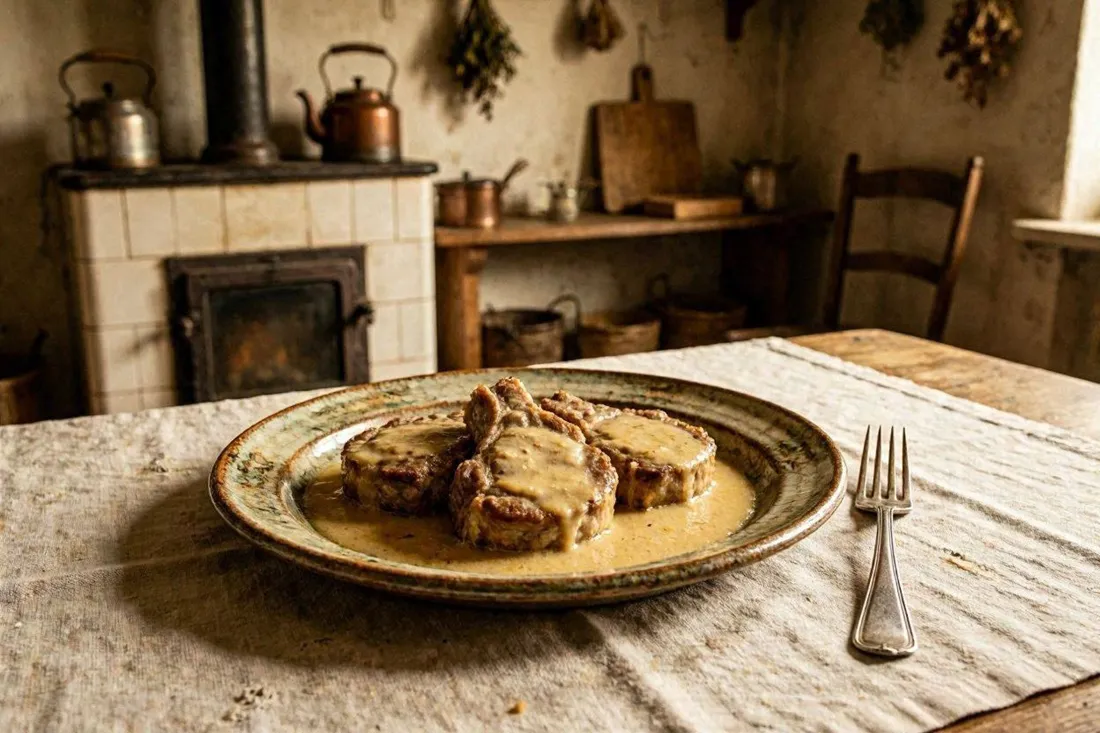
Braised Pork Chops in White Wine and Sour Cream Sauce
Pork loin chops braised with onion, carrot, parsley root, and celery root in white wine, then finished with a strained sour cream sauce.
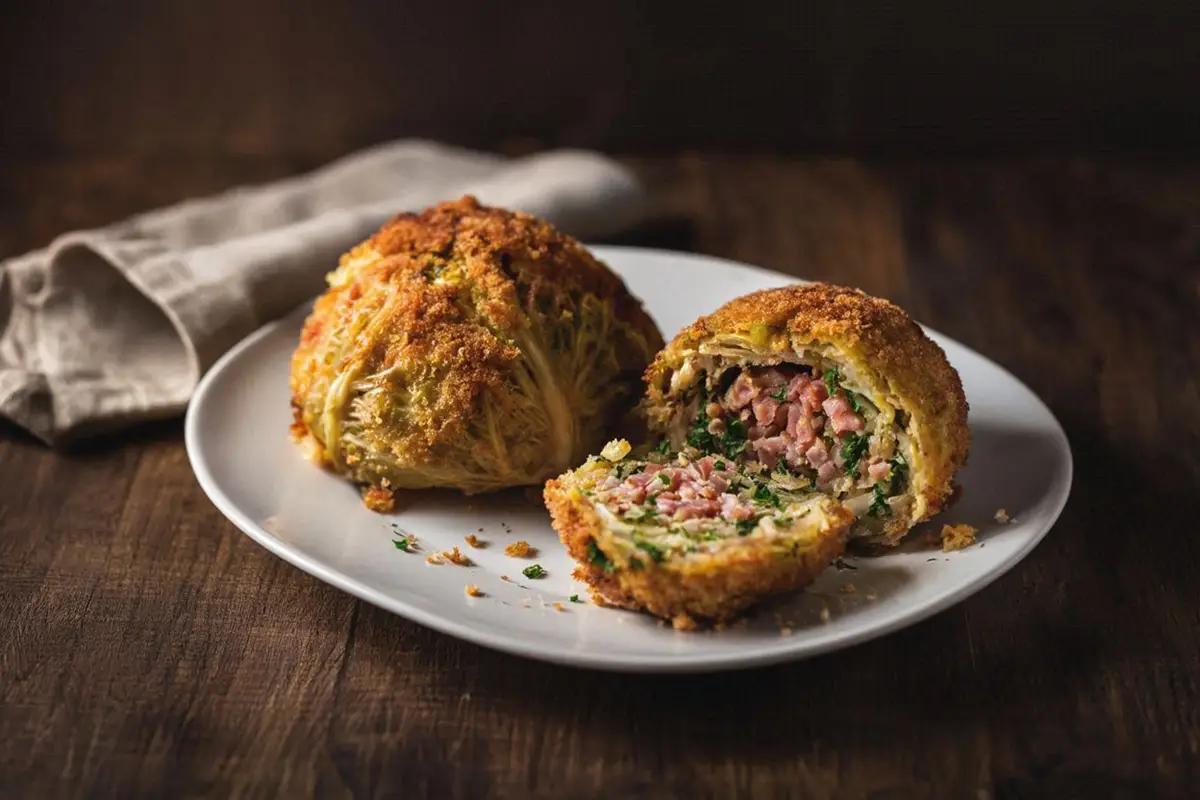
Breaded Savoy Cabbage Stuffed with Ham
Tender young savoy cabbage heads filled with ground ham, fried onion, and herbs, breaded and pan-fried until golden. A hearty Central European classic.
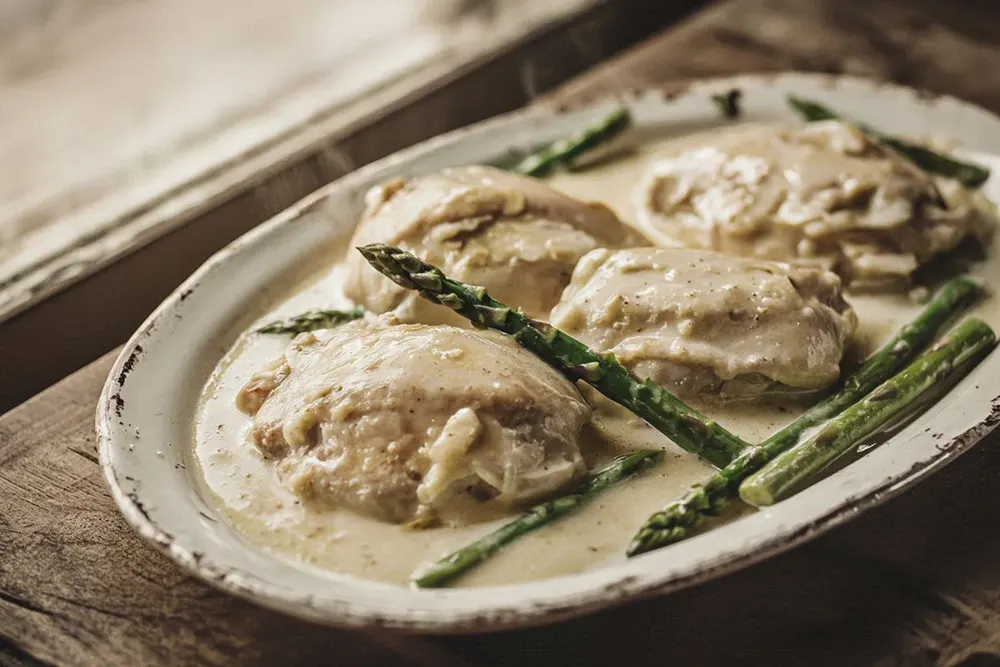
Chicken in Asparagus Sauce
A whole chicken poached in spiced broth, then finished in a silky velouté enriched with egg yolks and cream, garnished with tender asparagus tips.