Cold Fish in Tomato and Beetroot Sauce
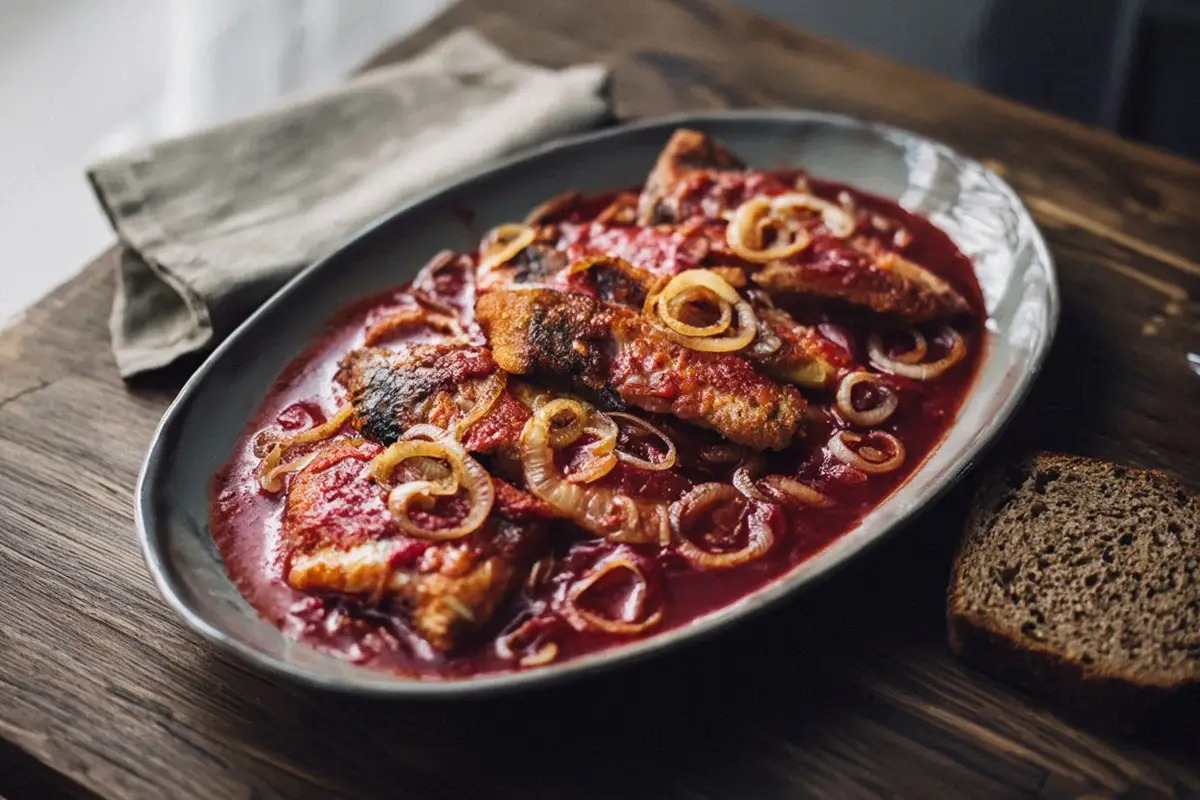
Fried carp or catfish marinated for hours in a vivid sauce of grated beetroot, root vegetables, and tomato. A Central European cold appetizer.
Quick Summary
Fried carp or catfish marinated for hours in a vivid sauce of grated beetroot, root vegetables, and tomato. A Central European cold appetizer.
Historical recipe
Modernised adaptation of an early 20th‑century source. Not independently kitchen-tested by Attic Recipes. Quantities, temperatures, and food safety guidance have been updated for a contemporary kitchen — results may vary and errors may exist. Nutritional values, where provided, are estimates only and have not been laboratory tested. Always follow current food safety guidelines for your region. If you have a health condition, allergy, or dietary requirement, consult a qualified professional before preparing this recipe.
Use of this recipe is entirely at your own risk and subject to our Terms of Service and Privacy Policy. Attic Recipes accepts no liability for any adverse outcome.
- Celery
- Fish
- Gluten
Safety note
This dish is served cold after extended refrigerator resting. The fish must be fully cooked through before the sauce is added — internal temperature must reach 63°C (145°F) at the thickest part. Do not serve undercooked fish.
Check the thickest piece with a thermometer before arranging in the serving dish. The fish should flake easily and be opaque throughout.
Additional notes
-
Warning
Contains fish (carp or catfish) — one of the 14 major allergens under EU Regulation 1169/2011 and a FALCPA-listed allergen. Fish allergy can cause severe reactions including anaphylaxis. Always disclose the fish content when serving this dish to others.
There is no in-recipe substitution that eliminates this allergen. Do not serve to anyone with a known or suspected fish allergy.
-
Warning
Cold fish dishes carry a higher risk of foodborne illness if not handled correctly. The dish must be refrigerated within 2 hours of cooking and consumed within 24–36 hours.
Do not leave the assembled dish at room temperature for more than 2 hours before refrigerating. Discard any leftovers after 36 hours.
-
Caution
Contains gluten (all-purpose flour for dredging). Not suitable for those with celiac disease or gluten intolerance.
Substitute with rice flour or a gluten-free flour blend for dredging — both give a comparable crust.
-
Note
Raw beetroot stains surfaces, clothing, and cutting boards intensely. Use gloves when grating and work on a washable surface.
- 1
Salt the fish pieces and set aside for 10–15 minutes. Pat dry, then dredge thoroughly in flour on all sides.
Tip Patting the fish dry before flouring gives you a crispier crust that holds up better once the sauce is poured over. - 2
Heat a generous amount of neutral oil in a wide frying pan over medium-high heat. Fry the fish pieces until golden and crispy on both sides — internal temperature should reach 63°C (145°F) at the thickest part. Work in batches — do not crowd the pan. Remove and arrange in a single layer in a deep serving dish.
Tip The crust does not need to be thick — just enough to protect the fish during the long marinade. A light, even dredge in flour is sufficient. - 3
In the same oil used to fry the fish, add the sliced onions and fry over medium heat until soft and light golden — approximately 10–12 minutes. Do not let them brown deeply. Remove from the oil and spread evenly over the fried fish in the serving dish.
Tip Frying the onions in the fish oil is intentional — it picks up the flavor left in the pan and ties the onion layer to the fish. - 4
In a separate saucepan, heat 3–4 tablespoons of fresh oil over medium heat. Add the grated beetroot and grated root vegetables (carrot, parsley root, celeriac). Fry, stirring regularly, until everything is completely soft — approximately 12–15 minutes.
Tip Raw beetroot takes time to soften fully. Keep the heat at medium and be patient — undercooked beetroot will remain sharp and fibrous in the finished sauce. - 5
Pour in 500ml of tomato juice. Add sugar and salt to taste. Stir well and simmer together for 5–8 minutes until the sauce is unified and slightly reduced.
- 6
Pour the hot beetroot and tomato sauce evenly over the fish and onion layer. The sauce should cover the fish generously — the fish needs liquid to absorb over the resting period.
- 7
Allow the dish to cool to room temperature, then refrigerate for 4–5 hours minimum before serving. The fish will absorb the sauce and the flavors will deepen significantly.
Tip This dish is best made the evening before serving. Overnight resting gives a noticeably more developed flavor. - 8
Serve cold directly from the dish. Do not reheat.
Nutrition Information per 1 portion (approx. 200g fish + sauce)
Nutritional values are approximate estimates and may vary based on specific ingredients used, preparation methods, and portion sizes.
Serving Suggestions
Serve cold as a first course with thick slices of crusty white bread or dark rye bread. A spoonful of sour cream or horseradish alongside is a traditional accompaniment. This dish also works well as part of a cold spread alongside pickled vegetables and cured meats.
About This Recipe
This is a dish built entirely around patience. Fried fish — golden, crispy, salted — is layered with caramelized onions and buried under a vivid sauce of grated beetroot, root vegetables, and tomato. Then it rests. Four to five hours minimum, overnight ideally. In that time, the fish absorbs the sauce, the crust softens into something silky, and the flavors fold into each other completely. Served cold, it is one of those dishes that tastes like it took far more effort than it did.
Why It Works
The two-stage frying — fish first, then onions in the same oil — builds layers of flavor from a simple base. The fish leaves behind proteins and fat in the pan that the onions absorb as they soften, creating a caramelized layer that bridges the fried fish and the sauce poured over it.
Raw beetroot, grated and fried until completely soft before the tomato juice is added, loses its sharp earthiness and becomes sweet and mellow. The tomato provides acidity; the pinch of sugar balances it. The result is a sauce that is earthy, bright, and complex — and that penetrates the fish deeply during the long rest.
Choosing Your Fish
Carp: The most traditional choice and the best for this dish. Dense, fatty flesh that absorbs the sauce beautifully without falling apart. If you can source a whole carp from a fishmonger and have it cut to order, this is the way to go.
Catfish: An excellent substitute — firm, mild, and well suited to long marinating. Widely available and often sold pre-cut.
Avoid: Delicate white fish (sole, sea bass, tilapia) — they will disintegrate during the 4–5 hour rest. The fish needs structure to survive the marinade.
Make-Ahead Notes
This dish is specifically designed to be made ahead — it is not optional. The minimum rest is 4–5 hours; overnight gives a noticeably better result. Make it the evening before your meal, refrigerate, and serve directly from the dish the next day.
It keeps well for up to 36 hours refrigerated. The flavor continues to develop over time.
Serving Ideas
- As a first course with dark rye bread or crusty white bread
- As part of a cold spread alongside pickled peppers, olives, and cured meats
- With a spoonful of sour cream or fresh horseradish on the side
- As a light lunch the following day with a simple green salad
A classic of early 20th century home cooking, preserved and adapted for the modern kitchen.
The Story Behind This Recipe
Historical Context
Cold marinated fish dishes were a staple of Central European tables throughout the early 20th century — practical, make-ahead, and well suited to warm-weather entertaining. The combination of beetroot, root vegetables, and tomato as a marinade base is distinctly regional, producing a sauce that is at once earthy, sharp, and sweet. Freshwater fish such as carp and catfish were the everyday choice — widely available, affordable, and well suited to this style of long, slow absorption.
Modern Kitchen Adaptation
Carp is the most traditional choice and produces the best result — its firm, fatty flesh holds up well to the long marinade without falling apart. Catfish is an excellent substitute. Avoid delicate white fish such as sole or sea bass, which will disintegrate during the resting period. For the tomato component, use a good-quality plain tomato juice — not passata, not crushed tomatoes. The fish needs a thinner liquid to absorb rather than a thick coating.
This recipe is an independent modern adaptation developed from historical sources in the public domain. It is provided for informational and educational purposes only and does not constitute professional dietary, nutritional, or medical advice. Food preparation involves inherent risks. The reader assumes full responsibility for safe food handling, ingredient sourcing, and adherence to current local food safety guidelines. The site operator accepts no liability for outcomes resulting from the preparation or consumption of this recipe.
One recipe.
Every week.
You Might Also Like
More recipes from the same category
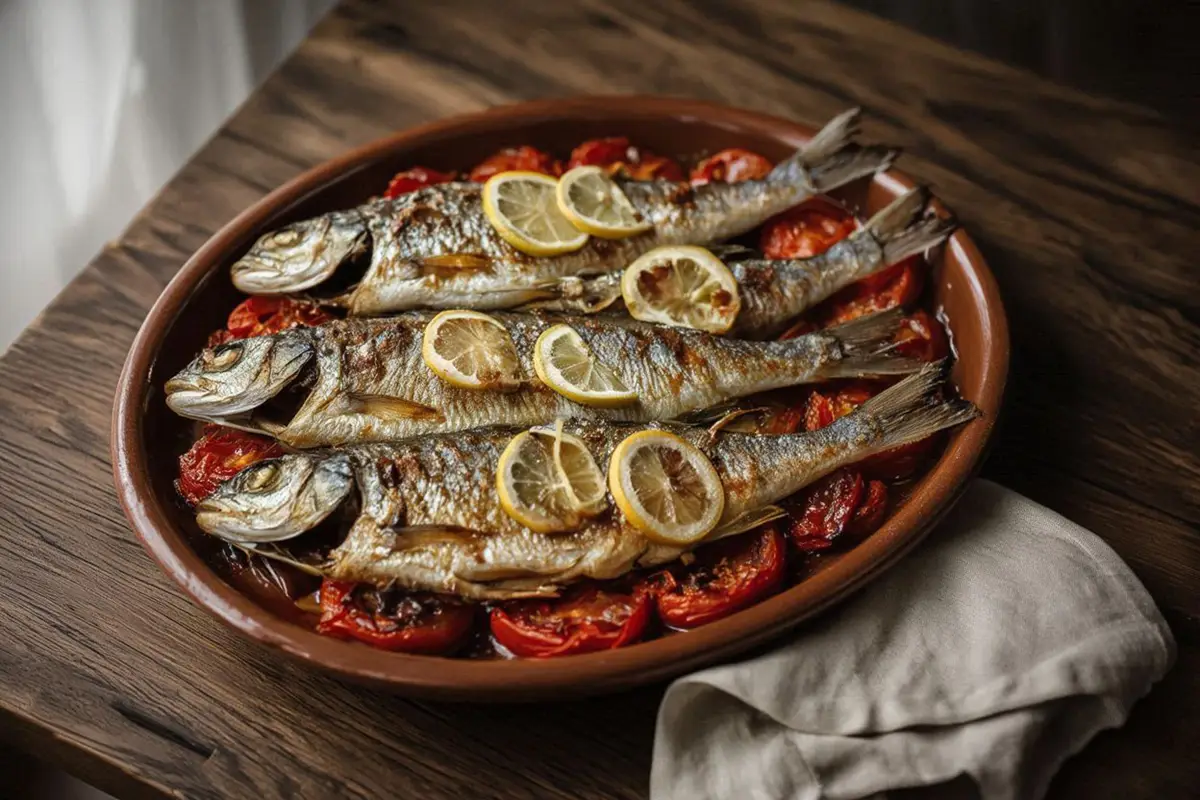
Baked Fish with Tomatoes
Whole fish baked over ripe tomatoes with generous olive oil and lemon — a simple, fragrant Central European oven dish.
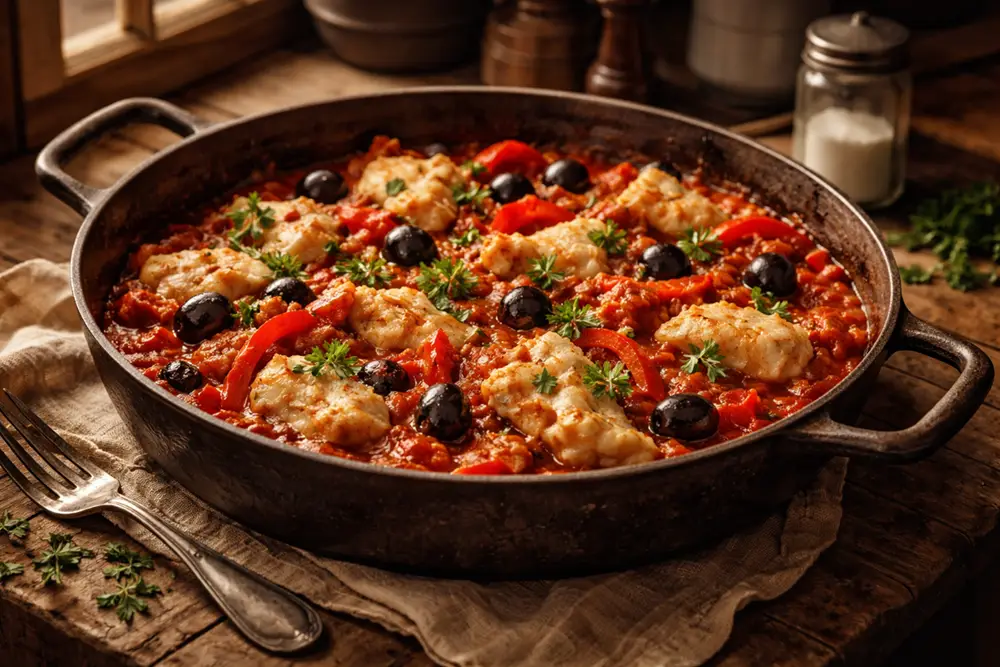
Cod with Tomatoes, Peppers and Black Olives
Salt cod braised with fresh tomatoes, red onion, garlic, bell peppers and black olives in olive oil.
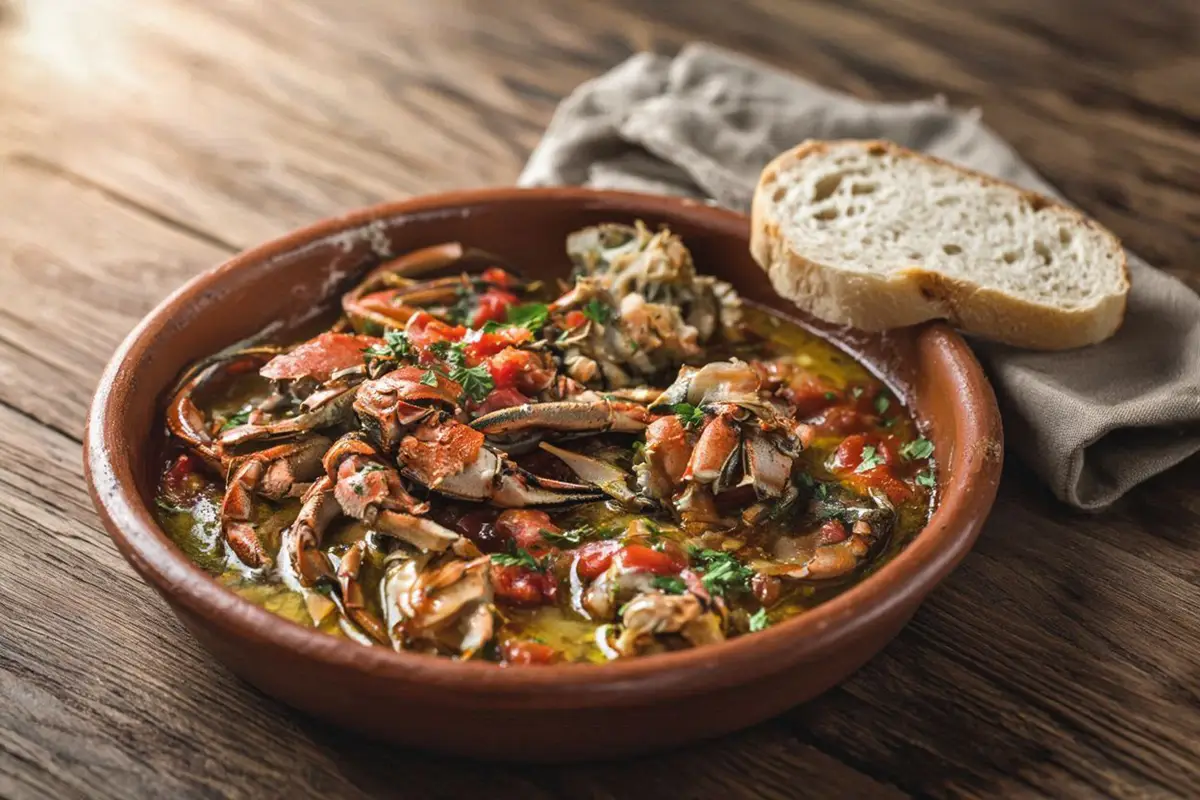
Dalmatian Sea Crabs in White Wine and Tomato
Adriatic spider crabs sautéed with olive oil, garlic, and parsley, simmered in Dalmatian white wine and tomato until the sauce reduces to a glossy concentrate.