Cooked Melon Kept for Winter
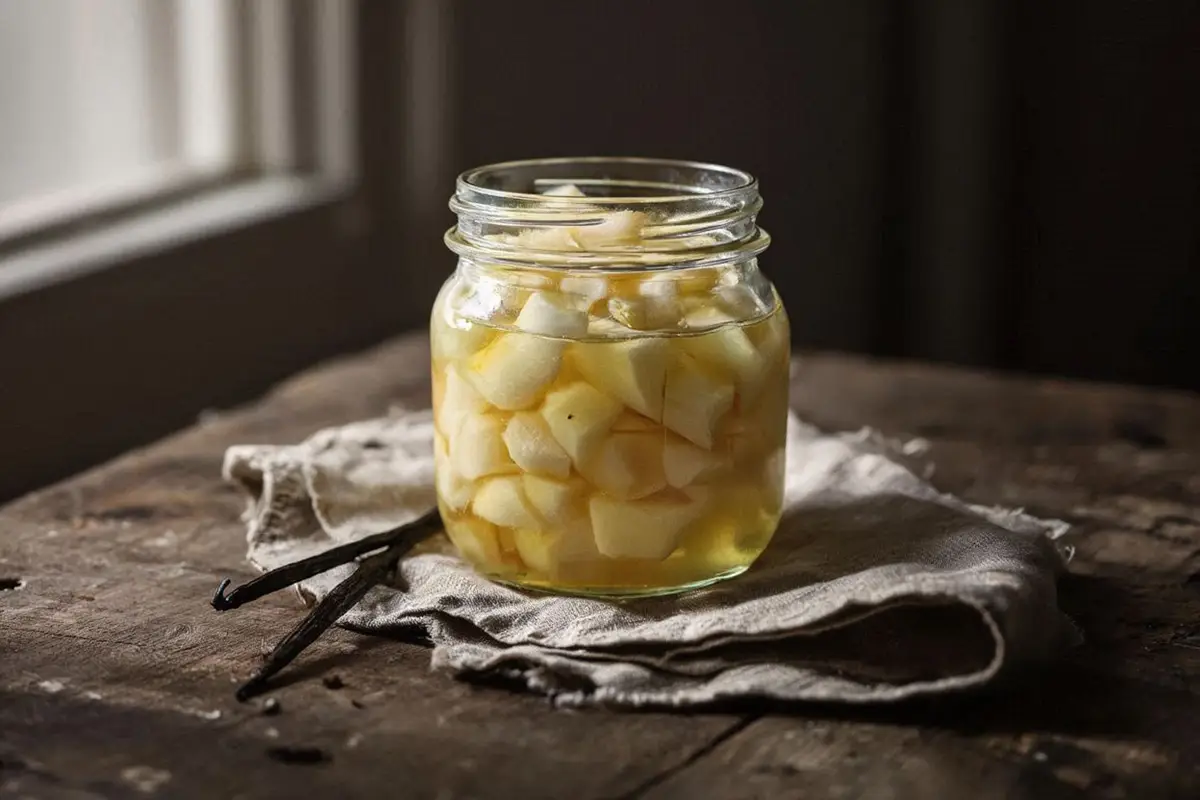
Firm melon slices packed in vanilla syrup and steam-processed for 10 hours, then rested four days before a final boil.
Quick Summary
Firm melon slices packed in vanilla syrup and steam-processed for 10 hours, then rested four days before a final boil.
Historical recipe
Modernised adaptation of an early 20th‑century source. Not independently kitchen-tested by Attic Recipes. Quantities, temperatures, and food safety guidance have been updated for a contemporary kitchen — results may vary and errors may exist. Nutritional values, where provided, are estimates only and have not been laboratory tested. Always follow current food safety guidelines for your region. If you have a health condition, allergy, or dietary requirement, consult a qualified professional before preparing this recipe.
Use of this recipe is entirely at your own risk and subject to our Terms of Service and Privacy Policy. Attic Recipes accepts no liability for any adverse outcome.
Safety note
This recipe uses a water-bath (open boiling water) method, not a pressure canner. Water-bath processing cannot reliably eliminate Clostridium botulinum spores in low-acid foods. Melon is a low-acid fruit (pH typically 6.0–6.5). Standard food safety guidance from the USDA and NCHFP specifies that low-acid foods must be processed in a pressure canner to reach 116°C (240°F) — the temperature required to destroy botulinum spores. Water-bath canning only reaches 100°C (212°F). This recipe is documented as a historical technique. If you process this recipe using water-bath only, refrigerate all jars after the second processing and consume within 2 weeks. Do not store at room temperature long-term unless a pressure canner is used.
Use a pressure canner rated for preserves (10–15 PSI, processing time per manufacturer guidance for fruit in syrup) to achieve safe ambient storage. Alternatively, treat as a refrigerator preserve only and consume within 2 weeks.
Additional notes
-
Warning
Ten hours of active steaming requires monitoring — do not leave unattended for extended periods. Check water levels every 30–60 minutes and top up with boiling water as needed. Allowing the pot to boil dry will crack the jars.
Set a timer for every 45 minutes as a reminder to check water levels.
-
Warning
Do not use soft or ripe melons — they will dissolve during the 10-hour steam and the preserve will fail entirely. The fruit must be hard and firm before processing.
Use a firm late-season melon (casaba or similar inodorus variety) chosen underripe. If unavailable, wax gourd (Benincasa hispida) from an Asian grocery store is a functional substitute.
-
Caution
High sugar content (42g per 100g serving). Not suitable for those with diabetes or insulin sensitivity.
Serve in small portions as a dessert or accompaniment.
-
Note
Ensure jars are fully sterilized before packing. Check seals carefully after both processing stages — lids should be concave and firm. Refrigerate any unsealed jars and consume within one week. Discard if syrup appears fermented, cloudy, or jar shows pressure when opened.
- 1
Choose very firm, hard melons. Peel, remove seeds, rinse, and cut into thin slices. The firmness of the raw fruit is critical — this preserve cannot be made with soft or fully ripe melon.
- 2
Pack the melon slices tightly into clean sterilized jars, pressing them down firmly.
- 3
Measure the water capacity of each filled jar by filling with water and measuring the amount used. This gives you the precise volume of syrup needed.
- 4
Prepare the syrup: combine 1kg of sugar per 1 liter of measured water with the split vanilla pod in a saucepan. Bring to a boil, skimming foam until the syrup is clear. Remove from heat and cool completely.
- 5
Pour the cold syrup over the packed melon slices, filling the jars completely. Seal the jars tightly.
- 6
Place the sealed jars on a rack or trivet in a large stockpot. Fill with water to come at least two-thirds up the sides of the jars. Bring to a steady simmer and steam-process for 10 hours, maintaining a consistent low simmer throughout. Top up with boiling water every 30–60 minutes to maintain the water level.
Tip The 10-hour steaming time is not an error — it is the time required for the sugar syrup to slowly penetrate the dense melon flesh through osmosis. Do not shorten significantly. If needed, this can be split into two 5-hour sessions on consecutive days, keeping the jars sealed between sessions. - 7
Remove the jars carefully with jar lifter tongs. Leave undisturbed in a cool place for 4 days. During this rest, the sugar continues to slowly penetrate the melon flesh and the concentration gradient equalizes.
- 8
After 4 days, return the sealed jars to the water bath and bring to a boil again for a final processing. Remove, cool completely, and store in a cool dark place.
Tip Check seals after each processing stage — lids should be concave and firm. Any lid that flexes has not sealed; refrigerate and consume within one week.
Nutrition Information per 100g melon with syrup
Nutritional values are approximate estimates and may vary based on specific ingredients used, preparation methods, and portion sizes.
Serving Suggestions
Serve cold in winter as a dessert — the translucent, syrup-saturated pieces are visually beautiful. Alongside thick yogurt or clotted cream. On a dessert platter with other winter preserves and dried fruit. Use the vanilla syrup as a flavoring for hot drinks or drizzled over ice cream.
About This Recipe
Ten hours is a long time to tend a pot. This recipe asks for exactly that — a full working day of steady, low simmering, the jars sitting in their water bath while the sugar slowly works its way into the dense flesh of the melon. It is one of the more unusual preservation techniques in the Central European early 20th century kitchen, and also one of the most logical once you understand what it is doing. This is not standard water-bath canning. It is candying in a sealed jar.
Why It Works
Sugar moves into fruit tissue through osmosis — slowly, along a concentration gradient, from the high-sugar syrup into the lower-sugar flesh. For a soft fruit like a berry or a ripe apricot, this process happens quickly. For dense, firm-fleshed melon, it takes time. The ten hours of gentle steaming maintains the temperature needed to keep the process active while the sealed jar prevents the syrup from boiling away. The four-day rest between the first and second processing is equally deliberate — after the initial ten hours, the outer layers of the fruit are saturated but the interior is still equilibrating. Four days allows the gradient to equalize before the second boiling locks the result in place.
Why Hard Melons
The recipe is specific: hard melons. Not ripe, not sweet-smelling, not yielding to the thumb — hard. Soft, ripe melon flesh has already broken down its cellular structure in the ripening process. Steam it for ten hours in sugar syrup and you will have melon soup. The firm-fleshed late-season varieties of the inodorus group — casaba and its relatives, grown across Central Europe for centuries precisely for their density and keeping quality — are the natural choice. Choose them underripe, when the flesh still resists pressure completely. If these are not available, wax gourd (Benincasa hispida) from an Asian grocery store is a workable modern substitute with comparable density, though it is a different plant entirely.
A classic of early 20th century home cooking, preserved and adapted for the modern kitchen.
The Story Behind This Recipe
Historical Context
This recipe describes a technique that is essentially steam-candying in a sealed jar — designed specifically for dense, low-moisture fruit that cannot be adequately preserved by standard short water-bath canning. The 10-hour steaming time reflects the slow osmotic process by which concentrated sugar syrup displaces the water content of very firm fruit tissue. Similar techniques appear in Central European cookbooks of the early 20th century for preserving hard-fleshed fruit such as unripe quinces and firm pears. The hard melons called for in this preparation were most likely a locally grown late-season variety harvested before full ripeness — firm-fleshed cultivars of Cucumis melo var. inodorus (the winter melon group, which includes casaba and related varieties) were widely grown across Central Europe and were prized precisely for their density and long keeping quality. The four-day rest between the first and second cooking is deliberate — it allows the sugar concentration gradient to equalize before the final processing seals the result.
Modern Kitchen Adaptation
The most appropriate modern choice is a firm late-season melon of the inodorus group — casaba, honeydew, or similar — chosen when still noticeably underripe, with flesh that feels hard and shows no give when pressed. These are the varieties closest to what this technique was originally developed for. Fully ripe melon of any variety will not survive the 10-hour steam. If a firm melon is unavailable, wax gourd (Benincasa hispida) from an Asian grocery store is a functional substitute — its flesh is extremely dense and low in natural sugar — but it is not the historically intended fruit. A large stockpot with a canning rack on the bottom to keep jars off direct heat is the correct equipment. Ensure the water level never drops below the halfway point on the jars during processing.
This recipe is an independent modern adaptation developed from historical sources in the public domain. It is provided for informational and educational purposes only and does not constitute professional dietary, nutritional, or medical advice. Food preparation involves inherent risks. The reader assumes full responsibility for safe food handling, ingredient sourcing, and adherence to current local food safety guidelines. The site operator accepts no liability for outcomes resulting from the preparation or consumption of this recipe.
One recipe.
Every week.
You Might Also Like
More recipes from the same category
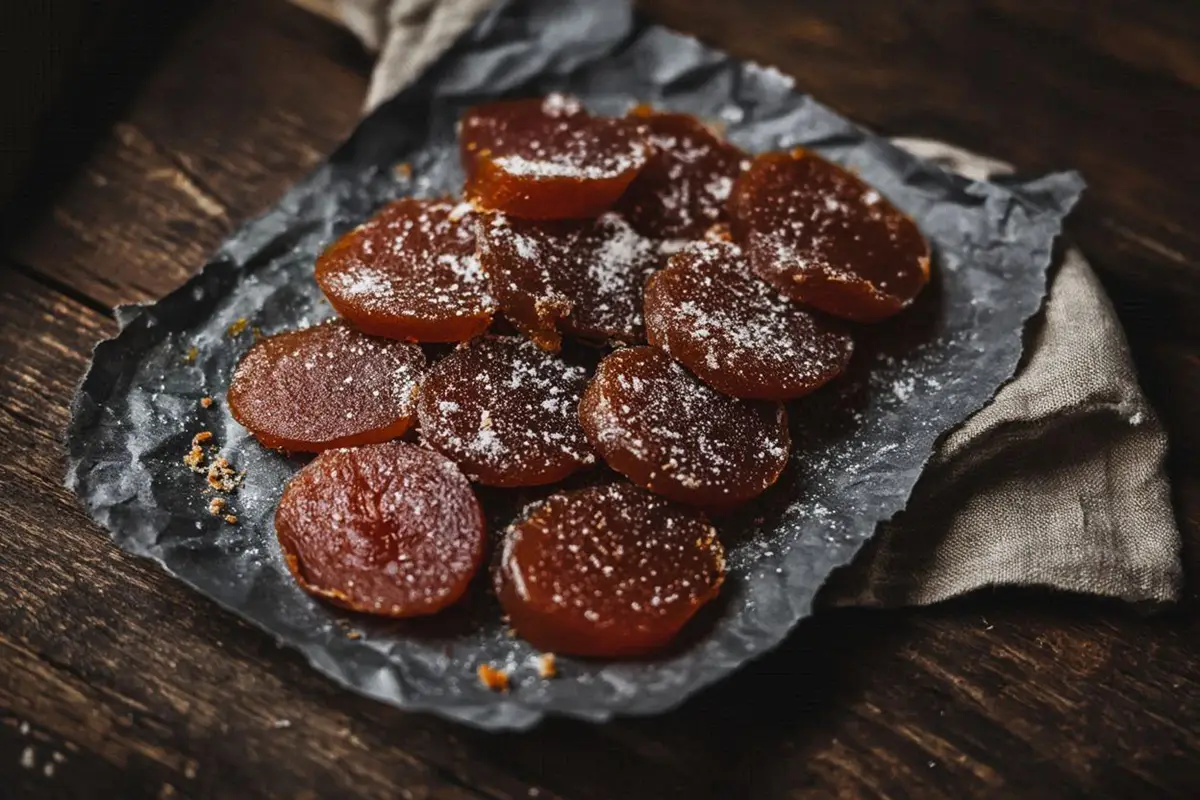
Apricot Fruit Paste
Sieved ripe apricots cooked with equal weight sugar and lemon juice, poured into molds and air-dried — from early 20th century Central European kitchens.
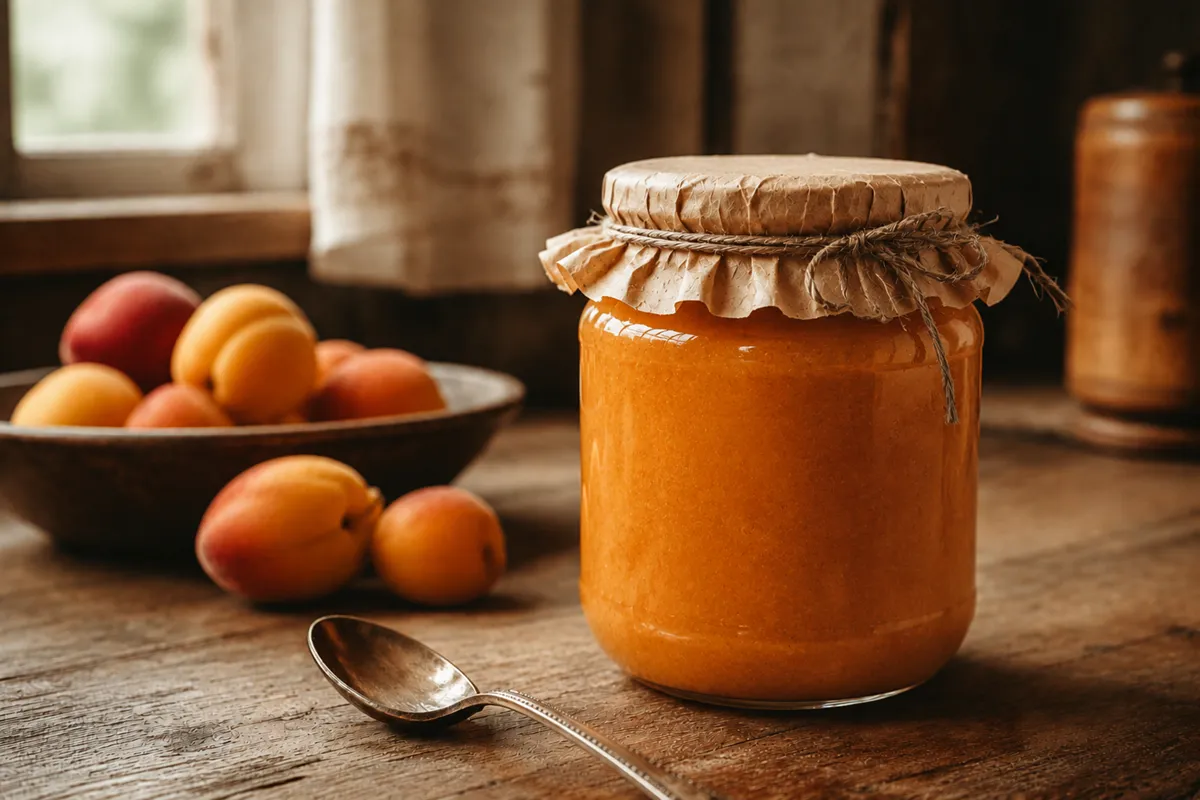
Whipped Apricot or Peach Preserve (No-Cook)
A silky, pale fruit spread made by whipping raw apricot or peach puree with sugar - no cooking required.
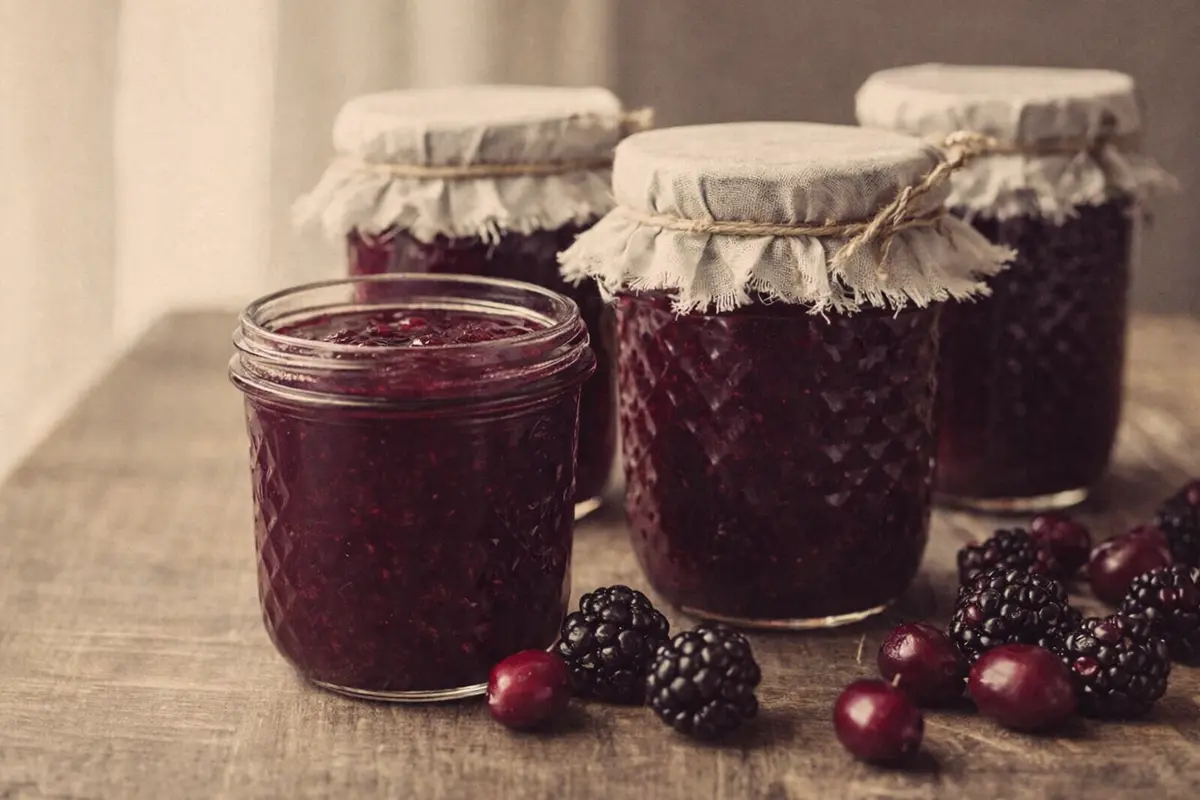
Blackberry and Cornelian Cherry Marmalade
Rich preserve combining tart cornelian cherries with sweet blackberries, cooked to thick consistency with a traditional two-fruit method.