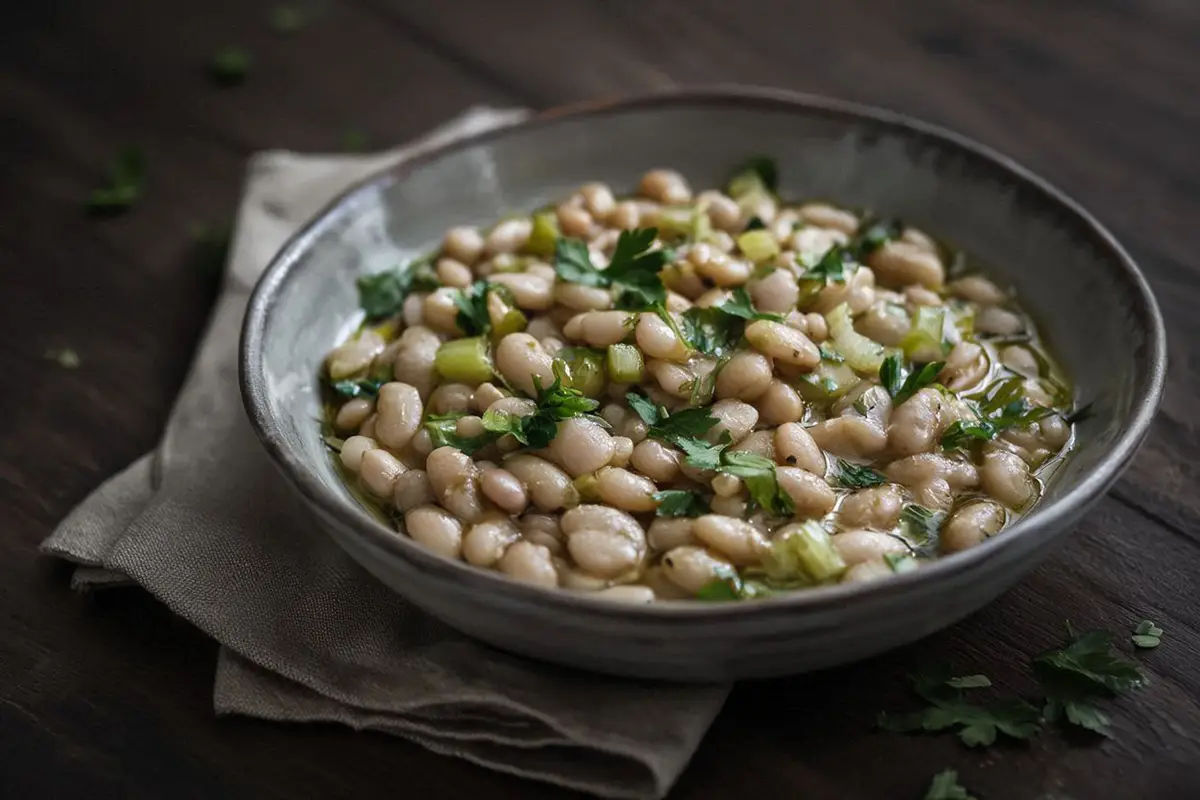
Dalmatian White Bean Salad
A traditional Dalmatian bean salad with slowly emulsified olive oil, mellowed red onion, fresh herbs, and a bright wine vinegar finish.
Quick Summary
A traditional Dalmatian bean salad with slowly emulsified olive oil, mellowed red onion, fresh herbs, and a bright wine vinegar finish.
Historical recipe
Modernised adaptation of an early 20th‑century source. Not independently kitchen-tested by Attic Recipes. Quantities, temperatures, and food safety guidance have been updated for a contemporary kitchen — results may vary and errors may exist. Nutritional values, where provided, are estimates only and have not been laboratory tested. Always follow current food safety guidelines for your region. If you have a health condition, allergy, or dietary requirement, consult a qualified professional before preparing this recipe.
Use of this recipe is entirely at your own risk and subject to our Terms of Service and Privacy Policy. Attic Recipes accepts no liability for any adverse outcome.
- Celery
- Sulphites
Additional notes
-
Note
Sulphites are present only if wine vinegar is used. If serving to individuals with sulphite sensitivity or allergy, substitute fresh lemon juice — the flavor result is equally good.
Use lemon juice in place of wine vinegar to make this recipe sulphite-free.
-
Note
Contains celery (leaf celery), one of the 14 major allergens under EU Regulation 1169/2011. Can be omitted — the salad remains complete with parsley alone.
Omit leaf celery for a celery-free version.
-
Note
High fiber content (10g per serving). Those unaccustomed to high-legume diets may experience digestive discomfort. Increasing legume intake gradually is advisable. Soaking and discarding the soaking water, as specified, reduces the oligosaccharides that contribute to gas.
- 1
Soak the white beans overnight in cold water. In the morning, discard the soaking water and replace with fresh cold water. For best results, use soft water — filtered water, or water that has been boiled with a pinch of baking soda, cooled, and poured off the sediment. Cook the beans over medium heat until completely tender but still holding their shape. Drain and allow to cool completely.
Tip Hard tap water can toughen bean skins. Boiling the water with a small pinch of baking soda softens it and helps the beans cook evenly — the difference is noticeable. - 2
Finely chop the red onion. Place it in a bowl and cover with cold water. Repeat 2–3 times, draining each time. This removes the sharp volatile compounds that would otherwise overpower the salad.
Tip Do not skip the washing step. The difference in flavor is significant. - 3
Combine the cooled, drained beans and the washed onion in a large bowl. Add the olive oil a little at a time, stirring constantly with a wooden spoon after each addition, until all the oil is fully incorporated and the beans are evenly coated.
Tip The gradual addition of oil is the key technique here — it creates a loose emulsion that clings to the beans rather than pooling at the bottom. - 4
Add the chopped parsley, leaf celery, salt, black pepper, and sweet paprika. Stir gently to combine. If using hot pepper, add it now.
- 5
Finally, add the wine vinegar or lemon juice a little at a time, stirring constantly. Taste and adjust seasoning. Serve at room temperature.
Tip The acid is added last to preserve the color of the herbs and prevent the beans from firming up before the oil is fully incorporated.
Nutrition Information per 1 portion (approx. 200g)
Nutritional values are approximate estimates and may vary based on specific ingredients used, preparation methods, and portion sizes.
Serving Suggestions
Excellent alongside grilled fish, roasted lamb, or as part of a cold spread. Also works as a light lunch with good bread. Serve at room temperature, never cold from the refrigerator, which mutes the olive oil flavor.
About This Recipe
This is one of the most quietly authoritative dishes in the Adriatic repertoire — a white bean salad that requires no heat, no special equipment, and almost no skill, yet rewards precision and patience with a result that is far more than the sum of its parts. The technique of emulsifying the olive oil directly into the beans rather than making a separate vinaigrette is the defining step, and it produces a salad with a body and cohesion that a simple pour-and-toss method never achieves.
Why It Works
Dried white beans, when soaked overnight and cooked in soft water, develop a skin that is tender but intact — the exact condition needed to absorb oil without turning mushy. Adding oil gradually while stirring creates a loose emulsion: the starchy surface of each bean acts as an emulsifier, binding the fat into a coating rather than allowing it to pool. The acid — vinegar or lemon juice — is deliberately added last, after the oil is fully incorporated, because acid denatures the surface starches that make this emulsification possible. The onion-washing technique is equally deliberate: it removes the harsh sulfur compounds while leaving the allium flavor intact, so the onion rounds the salad rather than dominating it.
Notes on the Water
The instruction to use soft water is not a quaint historical detail. Hard water contains calcium and magnesium ions that bond with pectin in bean cell walls, preventing them from softening properly. Soft water — or water from which hardness has been removed — allows the beans to cook evenly and develop the smooth, creamy interior the recipe depends on. If your tap water is noticeably hard, the baking soda method (boil, cool, decant the sediment) is worth the small effort.
A classic of early 20th century home cooking, preserved and adapted for the modern kitchen.
The Story Behind This Recipe
Historical Context
Bean salads of this type were a staple of the Adriatic coast and wider Central European households throughout the early 20th century. The emphasis on soft water for cooking and the careful emulsification of oil into the beans rather than dressing them separately reflects a culinary tradition shaped by resourcefulness and an intimate understanding of local ingredients. The fruity, low-acidity olive oil of the eastern Adriatic coast was prized precisely because it could carry a dish this simple.
Modern Kitchen Adaptation
The technique remains entirely practical today. Any high-quality extra-virgin olive oil with a fruity, mild profile works well. The instruction to use soft water is not superstition — hard water does affect bean texture, and the baking soda method is still used by serious cooks. If sulphites are a concern, substitute lemon juice for the wine vinegar — the result is brighter and equally good.
This recipe is an independent modern adaptation developed from historical sources in the public domain. It is provided for informational and educational purposes only and does not constitute professional dietary, nutritional, or medical advice. Food preparation involves inherent risks. The reader assumes full responsibility for safe food handling, ingredient sourcing, and adherence to current local food safety guidelines. The site operator accepts no liability for outcomes resulting from the preparation or consumption of this recipe.
One recipe.
Every week.
You Might Also Like
More recipes from the same category
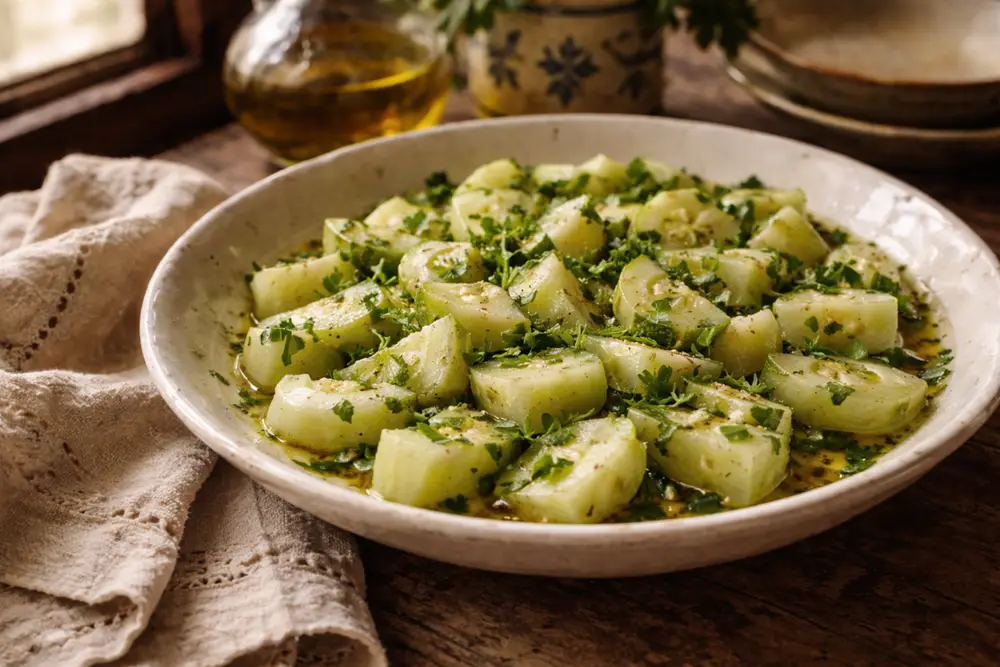
Boiled Zucchini Salad
A simple salad of boiled young zucchini, peeled and seeded, tossed warm with fresh parsley, oil, and vinegar.
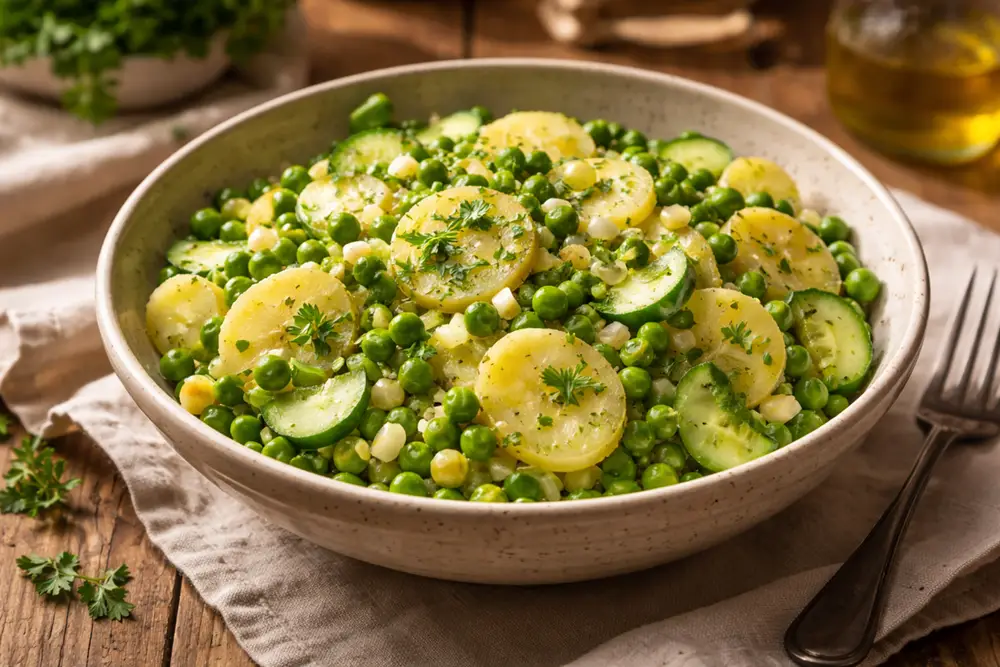
Mixed Salad with Peas
A hearty Central European potato and pea salad with cucumber, onion, and a clean oil-and-vinegar dressing, finished with fresh parsley.
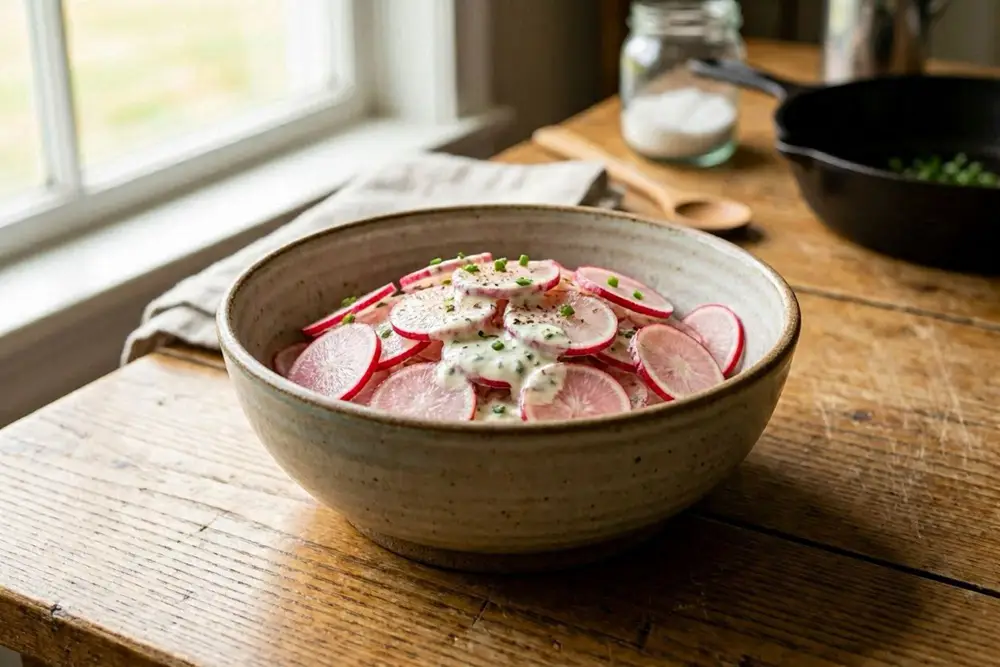
Radish Salad with Sour Cream
Thinly sliced fresh radishes dressed with sour cream and oil, sharpened with lemon and white pepper.