Dalmatian Grape Cheese (Mantala)
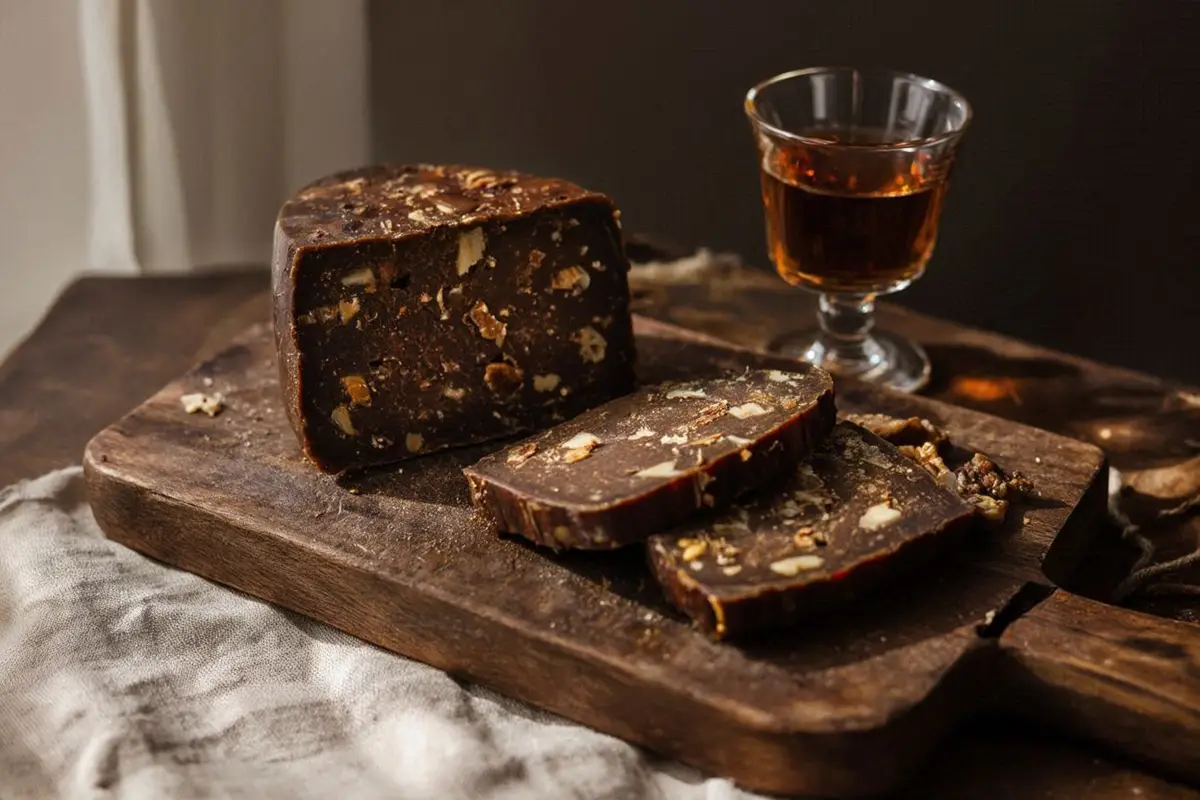
Sweet wine reduced and thickened with semolina, sugar, walnuts, figs, and raisins — the traditional Mantala of Dubrovnik.
Quick Summary
Sweet wine reduced and thickened with semolina, sugar, walnuts, figs, and raisins — the traditional Mantala of Dubrovnik.
Historical recipe
Modernised adaptation of an early 20th‑century source. Not independently kitchen-tested by Attic Recipes. Quantities, temperatures, and food safety guidance have been updated for a contemporary kitchen — results may vary and errors may exist. Nutritional values, where provided, are estimates only and have not been laboratory tested. Always follow current food safety guidelines for your region. If you have a health condition, allergy, or dietary requirement, consult a qualified professional before preparing this recipe.
Use of this recipe is entirely at your own risk and subject to our Terms of Service and Privacy Policy. Attic Recipes accepts no liability for any adverse outcome.
- Gluten
- Tree Nuts
- Sulphites
Safety note
The mixture becomes extremely thick and very hot during the final cooking stage — it can cause severe burns if it spatters. Use a long-handled wooden spoon and stir carefully at all times. Keep children away from the stove during the semolina cooking stage.
Use a deep, wide pot to minimize spattering.
Additional notes
-
Warning
Contains walnuts — a tree nut and one of the 14 major allergens under EU Regulation 1169/2011 and a FALCPA-listed allergen. Always disclose the walnut content when serving this to others. Walnut allergy can cause severe reactions including anaphylaxis.
Omit walnuts entirely for a nut-free version — the mantala is structurally complete without them.
-
Warning
Contains sulphites from sweet wine or grape must. Sulphites are one of the 14 major allergens under EU Regulation 1169/2011. Individuals with sulphite sensitivity may experience reactions. Most alcohol and sulphites reduce during the extended cooking, but trace amounts remain.
Use fresh grape must (šira) rather than wine — must has lower sulphite content than finished wine.
-
Caution
High sugar content (52g per 80g serving). Not suitable for those with diabetes or insulin sensitivity in large quantities.
Serve in very thin slices as a confectionery treat.
-
Note
Do not leave the pot unattended after semolina is added — the mixture scorches quickly. Ensure the finished cheese is thoroughly dry before wrapping or storing — residual moisture will cause mold. If surface mold appears during drying, cut away generously and discard the affected portion.
- 1
Pour the sweet wine or grape must through a fine strainer into a large, wide pot. Bring to a boil over medium-high heat and cook, stirring occasionally, until reduced by half — approximately 500ml remains. This takes 30–40 minutes. Skim any foam that rises.
Tip A wide pot gives more surface area for evaporation and speeds up the reduction. - 2
While the wine reduces, finely chop the walnuts and dried figs. Measure the raisins. Squeeze the orange juice. Set aside together.
- 3
When the wine has reduced by half, add the semolina in a slow, steady stream, stirring constantly with a long-handled wooden spoon. Do not stop stirring — the mixture will thicken quickly and will scorch if left unattended.
Tip Pour the semolina with one hand while stirring continuously with the other. Lumps that form at this stage are very difficult to break up later. - 4
Add the sugar and continue stirring over medium heat until fully dissolved and incorporated.
- 5
Add the walnuts, figs, raisins, and orange juice. Stir well to distribute evenly throughout the mass.
- 6
Continue cooking and stirring over medium heat for approximately 15–20 minutes, until the mixture is very thick and falls from the spoon in heavy, reluctant drops rather than flowing freely.
Tip This is physical work — the mixture becomes very thick and resistant. A firm grip on a long-handled spoon is essential. Keep the heat at medium — too high and the bottom will scorch. - 7
Line a small loaf tin or deep container with a clean wet cloth (cotton or linen). Pour the hot mass in immediately and smooth the surface.
- 8
Leave to cool completely at room temperature. Once set and hardened, lift out using the cloth, peel the cloth away carefully, and place the cheese on a clean wooden board.
- 9
Dry in a well-ventilated, draughty spot for 2–3 days, turning once or twice, until the surface is completely firm and no longer tacky. The mantala is ready when it holds its shape cleanly and slices without crumbling. Do not cover while drying and do not refrigerate until fully dry — moving air prevents surface mold. If mold appears on the surface during drying, cut it away generously and discard the affected piece; do not consume mold-affected mantala.
Tip A kitchen window left slightly open or a shaded outdoor spot with airflow both work well.
Nutrition Information per 80g slice
Nutritional values are approximate estimates and may vary based on specific ingredients used, preparation methods, and portion sizes.
Serving Suggestions
Serve sliced thin as part of a Christmas or festive dried fruit and nut platter. Alongside rakija or a small glass of Prošek as a traditional welcome. On a cheese board with aged hard cheeses and fresh walnuts. With strong black coffee as an afternoon sweet. Wrap pieces in parchment as a traditional homemade gift.
About This Recipe
Mantala is not a recipe you make quickly or casually. It begins with a liter of sweet wine and ends, two or three days later, with a dense, dark, fragrant slab that slices cleanly and keeps for weeks. Between those two points lies reduction, stirring, patience, and the particular satisfaction of watching something liquid become something solid — not through heat alone, but through time and air. Despite its name, there is no dairy in it. The word cheese refers to texture: firm, moldable, sliceable.
Why It Works
Reducing the wine by half before adding the semolina concentrates both sugar and flavor — the finished mantala tastes of grape in a way that no unreduced wine ever could. The semolina absorbs the remaining liquid completely as it cooks, creating a dense, sliceable mass once cooled and dried. The walnuts, figs, and raisins are not decorative: their natural sugars, oils, and moisture content all contribute to the texture and keeping quality of the finished cheese.
The Wine
Fresh grape must (šira) is available at wineries and farmers’ markets during harvest season and produces the most authentic result — it has a sweetness and grape intensity that no finished wine quite replicates. Out of season, a good Prošek, Muscat, or other late-harvest sweet wine is the right choice. Avoid grape juice from concentrate — it lacks the body and complexity of reduced must or wine.
The Semolina Step
Adding semolina to boiling liquid requires full attention. Pour it in a slow, steady stream while stirring constantly — stop for even a moment and lumps will form that are very difficult to break up later. From this point, the cooking is sustained stirring over medium heat until the mass falls from the spoon in heavy drops rather than flowing freely. This is physical work. A long-handled wooden spoon and a firm grip are required.
Drying and Serving
The mantala comes out of the mold soft and needs two to three days of air drying to reach its proper firm, sliceable texture. A draughty kitchen, an open window, or a shaded outdoor spot all work. Do not cover while drying — air circulation is what keeps the surface from molding. Slice it thin — it is rich, and a little goes far. Serve alongside rakija, a glass of Prošek, or strong black coffee. Put it on the Christmas table next to dried figs and walnuts.
A classic of early 20th century home cooking, preserved and adapted for the modern kitchen.
The Story Behind This Recipe
Historical Context
Mantala is one of the most distinctively Dalmatian of all preserved sweets — rooted in the culture of the grape harvest and the practical need to use grape must before it fermented. The name likely derives from Venetian culinary influence that shaped Dalmatian coastal cuisine for centuries; similar preparations exist across the Adriatic under various names. In the Dubrovnik region and on the Pelješac peninsula, mantala was traditionally prepared in autumn when fresh šira was available, and kept through winter to be served at Christmas alongside dried fruit, rakija, and other festive foods. The use of semolina as the thickening agent — rather than flour or starch used in related preparations elsewhere — is characteristic of the Dalmatian version and gives the finished cheese its particular dense, slightly grainy texture.
Modern Kitchen Adaptation
Fresh grape must (šira) is available at wineries and farmers' markets during harvest season and produces the most authentic result. Out of season, Prošek, Muscat, or another late-harvest sweet wine is the closest substitute. The walnut, fig, and raisin quantities in this recipe are small by design — they serve as accents within a predominantly semolina and sugar mass. Increase walnuts to 30–40g if you prefer a more prominent nut presence. Slice thinly with a sharp knife — the cheese becomes easier to cut cleanly after 2–3 days of drying.
This recipe is an independent modern adaptation developed from historical sources in the public domain. It is provided for informational and educational purposes only and does not constitute professional dietary, nutritional, or medical advice. Food preparation involves inherent risks. The reader assumes full responsibility for safe food handling, ingredient sourcing, and adherence to current local food safety guidelines. The site operator accepts no liability for outcomes resulting from the preparation or consumption of this recipe.
One recipe.
Every week.
You Might Also Like
More recipes from the same category
Apricot Fruit Paste
Sieved ripe apricots cooked with equal weight sugar and lemon juice, poured into molds and air-dried — from early 20th century Central European kitchens.
Whipped Apricot or Peach Preserve (No-Cook)
A silky, pale fruit spread made by whipping raw apricot or peach puree with sugar - no cooking required.
Blackberry and Cornelian Cherry Marmalade
Rich preserve combining tart cornelian cherries with sweet blackberries, cooked to thick consistency with a traditional two-fruit method.