Dalmatian Sea Crabs in White Wine and Tomato
Adriatic spider crabs sautéed with olive oil, garlic, and parsley, simmered in Dalmatian white wine and tomato until the sauce reduces to a glossy concentrate.
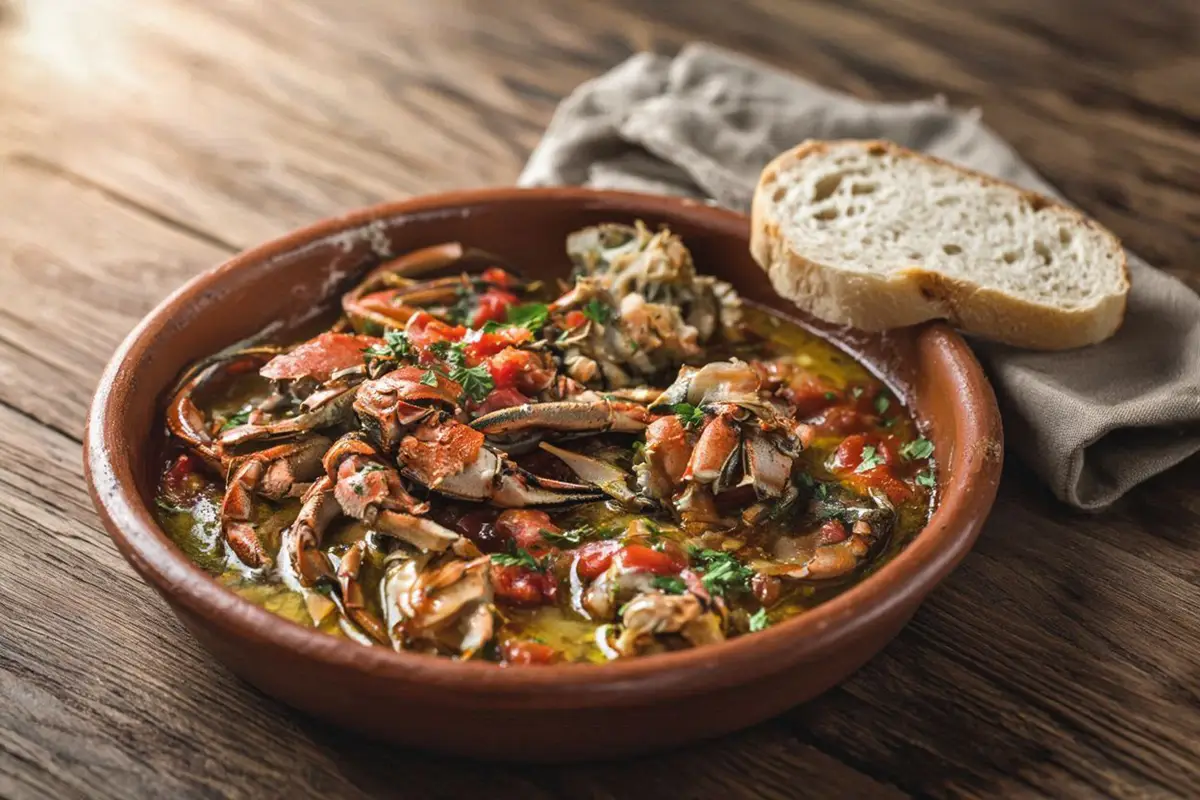
Quick Summary
Adriatic spider crabs sautéed with olive oil, garlic, and parsley, simmered in Dalmatian white wine and tomato until the sauce reduces to a glossy concentrate.
This recipe uses Slow-Simmered Tomato Sauce — prepare it in advance if you haven't already.
Historical recipe
Modernised adaptation of an early 20th‑century source. Not independently kitchen-tested by Attic Recipes. Quantities, temperatures, and food safety guidance have been updated for a contemporary kitchen — results may vary and errors may exist. Nutritional values, where provided, are estimates only and have not been laboratory tested. Always follow current food safety guidelines for your region. If you have a health condition, allergy, or dietary requirement, consult a qualified professional before preparing this recipe.
Use of this recipe is entirely at your own risk and subject to our Terms of Service and Privacy Policy. Attic Recipes accepts no liability for any adverse outcome.
- Crustaceans
- Sulphites
Safety note
This recipe contains crab — a crustacean shellfish and one of the 14 major allergens under EU Regulation 1169/2011 and a FALCPA-listed allergen. Crustacean allergy can cause severe reactions including anaphylaxis within minutes of exposure. Always disclose the shellfish content when serving this dish to others. There is no in-recipe substitution that eliminates this allergen.
Do not serve to anyone with a known or suspected crustacean or shellfish allergy.
Safety note
Crabs must reach an internal temperature of 63°C (145°F) before consumption. Discard any crab that smells strongly of ammonia before or after cooking — this indicates spoilage. Do not consume raw or undercooked crab.
When in doubt, cook for an additional 3–5 minutes. Properly cooked crab meat is white and opaque throughout.
Additional notes
-
Warning
Remove and discard the grey feathery gills (dead man's fingers) before eating. They run in two rows inside the shell cavity and are easy to identify. They are not toxic but are indigestible.
-
Caution
Contains sulphites (white wine). One of the 14 major allergens under EU Regulation 1169/2011. Individuals with sulphite sensitivity may experience reactions. Most sulphites reduce during the open simmer, but trace amounts remain.
Substitute with a dry, unoaked white grape juice combined with a teaspoon of white wine vinegar for acidity.
-
Note
Adriatic spider crabs (rakovica / Maja squinado) are subject to seasonal fishing restrictions in Croatia. The closed season runs from June 1 to November 30. Outside the Adriatic region, brown crab, Dungeness, or blue swimmer crab are widely available year-round.
- 1
Bring a large pot of generously salted water to a rolling boil. Add the live crabs and cook for 12–15 minutes depending on size. The crabs are done when the shells are vivid red throughout and the meat is white and opaque — internal temperature should reach 63°C (145°F). Remove and allow to cool completely before cleaning.
Tip Salting the water well is important — this is the only opportunity to season the crab meat itself. - 2
Clean the crabs: press the top shell firmly with the heel of your hand — it breaks easily. Lift and remove the shell entirely. Pull away the grey feathery gills (dead man's fingers) and discard. Remove the crab meat from the body, working carefully with your fingers. Crack the claws and extract the meat.
Tip Work over a bowl to catch any juices released during cleaning — these can be added to the pot with the wine for extra flavor. - 3
Pour the olive oil into a wide, heavy-bottomed pot and heat over medium heat. Add the chopped onion, parsley, and garlic. Fry gently, stirring regularly, until the onion is soft and fragrant — remove from heat before it turns yellow. The onion should remain pale and sweet.
Tip Keep the heat moderate and be patient. Browned onion would overpower the delicate crab. - 4
Add the cleaned crab meat to the pot. Stir to combine with the onion mixture and allow to fry together gently for 3–4 minutes.
- 5
Add the tomatoes and stir through. Cook for 2–3 minutes until the tomato begins to soften into the oil.
- 6
Pour in the white wine. Stir once to combine. Reduce heat to a low simmer and cook uncovered until all the liquid has evaporated and only the olive oil with a small amount of concentrated juice remains — approximately 15–20 minutes.
Tip Do not rush the reduction. The finished dish should be moist and glossy, not dry — remove from heat when a small amount of concentrated, deeply flavored juice remains in the oil. - 7
Taste and adjust salt. Serve immediately with crusty bread or polenta.
Nutrition Information per 1 portion (approx. 120g crab meat + sauce)
Nutritional values are approximate estimates and may vary based on specific ingredients used, preparation methods, and portion sizes.
Serving Suggestions
Serve with thick slices of crusty white bread or soft polenta to absorb the concentrated olive oil and tomato sauce. A simple green salad dressed with lemon and olive oil alongside. This dish is complete as it is — no side starch is necessary if the bread is good.
About This Recipe
This is Dalmatian cooking at its most direct. Four crabs, olive oil, one clove of garlic, a glass of white wine, some tomato. The technique is simple — boil, clean, fry briefly, reduce — and the result is a concentrated, deeply savory sauce that tastes entirely of the sea. Nothing is added that does not belong. Nothing is removed that is needed.
Spider crabs (Maja squinado, known as rakovica or grancigula along the coast) were the everyday crab of the Adriatic — plentiful, sweet-fleshed, and familiar to every fishing family. A dish this simple survives because it works.
Why It Works
The sequence matters here. The onion, garlic, and parsley are fried in olive oil until soft but not colored — pale, sweet, fragrant. The crab goes in next and fries briefly to develop a little color before the tomato and wine arrive. The final reduction concentrates everything: the sweetness of the crab, the acidity of the tomato, the mineral quality of the wine, all held together in good olive oil.
The instruction to stop cooking before the onion yellows is specific and intentional. Browned aromatics would create a heavier, more aggressive flavor base that would overpower the delicate crab meat. The soffritto should be gentle.
Cleaning Spider Crabs
Spider crabs look intimidating but are straightforward to clean once you understand the structure. The shell breaks easily under firm hand pressure. Inside, the grey feathery gills — called dead man’s fingers — run in two rows and must be discarded entirely before eating. The body meat is sweet and fine; the claw meat is denser and slightly richer.
On the Wine
A dry, unoaked Dalmatian white is the natural choice — Pošip from Korčula, Grk from Lumbarda, or Maraština from the mainland coast. These wines have a natural salinity and mineral dryness that suits Adriatic seafood. Pošip is now internationally available and worth seeking out both for cooking and for serving alongside. A crisp Vermentino or Fiano from southern Italy is an excellent substitute.
Make-Ahead Notes
The crabs can be boiled and cleaned up to several hours ahead and refrigerated until needed. The sauce should be made fresh — the reduction takes only 15–20 minutes and the dish is best served immediately.
A classic of early 20th century home cooking, preserved and adapted for the modern kitchen.
The Story Behind This Recipe
Historical Context
This recipe is a direct expression of the Dalmatian coastal kitchen of the early 20th century — minimal ingredients, quality olive oil, local wine, and whatever the sea offered that day. Spider crabs (rakovica) were abundant, inexpensive, and familiar to every household along the Adriatic. The technique — boil, clean, fry briefly with aromatics, reduce in wine — is the same method used across the Dalmatian islands today, with almost no variation. Some recipes earn their longevity.
Modern Kitchen Adaptation
Spider crabs (Maja squinado) are the most authentic choice along the Adriatic coast. In other markets, substitute with any firm, sweet crab — brown crab, Dungeness, or blue swimmer crab all work well with this technique. For the wine, use a dry, unoaked Dalmatian white if possible — Pošip or Grk from the islands of Korčula and Vis are the traditional choices and are increasingly available internationally. Avoid oaked or aromatic whites — they compete with the crab.
This recipe is an independent modern adaptation developed from historical sources in the public domain. It is provided for informational and educational purposes only and does not constitute professional dietary, nutritional, or medical advice. Food preparation involves inherent risks. The reader assumes full responsibility for safe food handling, ingredient sourcing, and adherence to current local food safety guidelines. The site operator accepts no liability for outcomes resulting from the preparation or consumption of this recipe.
One recipe.
Every week.
You Might Also Like
More recipes from the same category
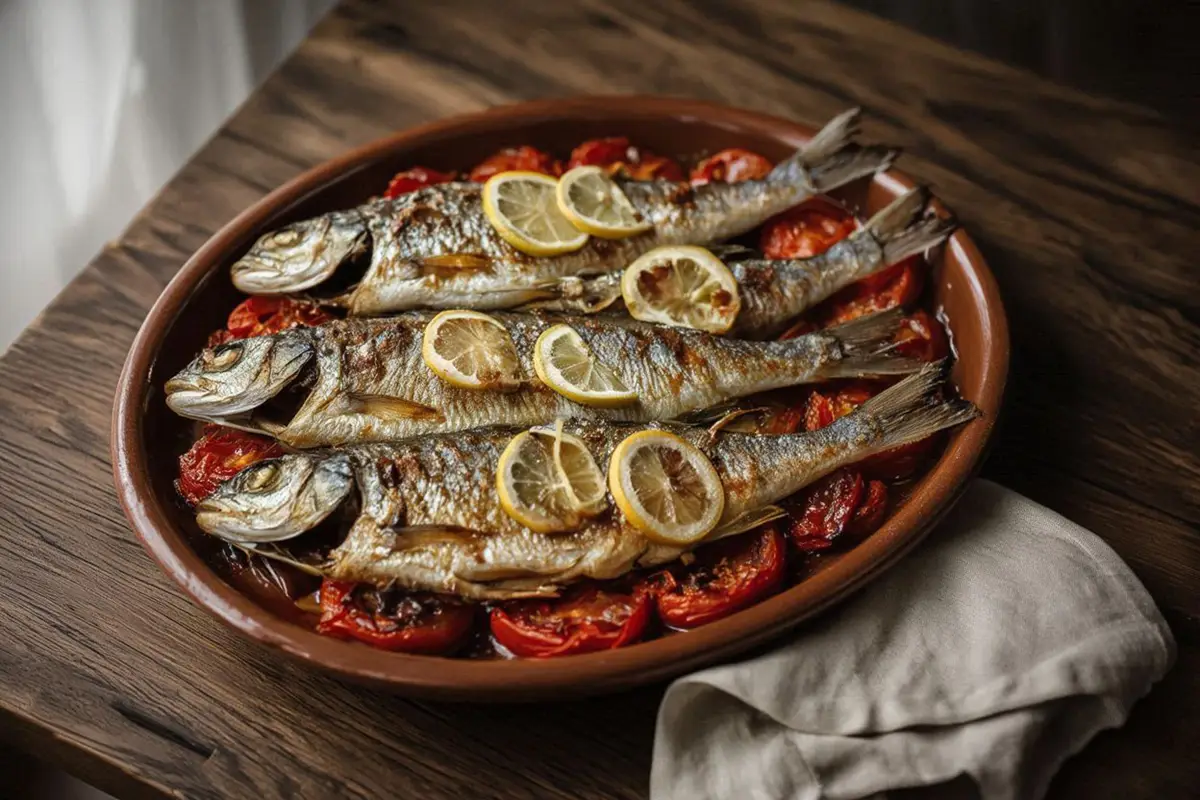
Baked Fish with Tomatoes
Whole fish baked over ripe tomatoes with generous olive oil and lemon — a simple, fragrant Central European oven dish.
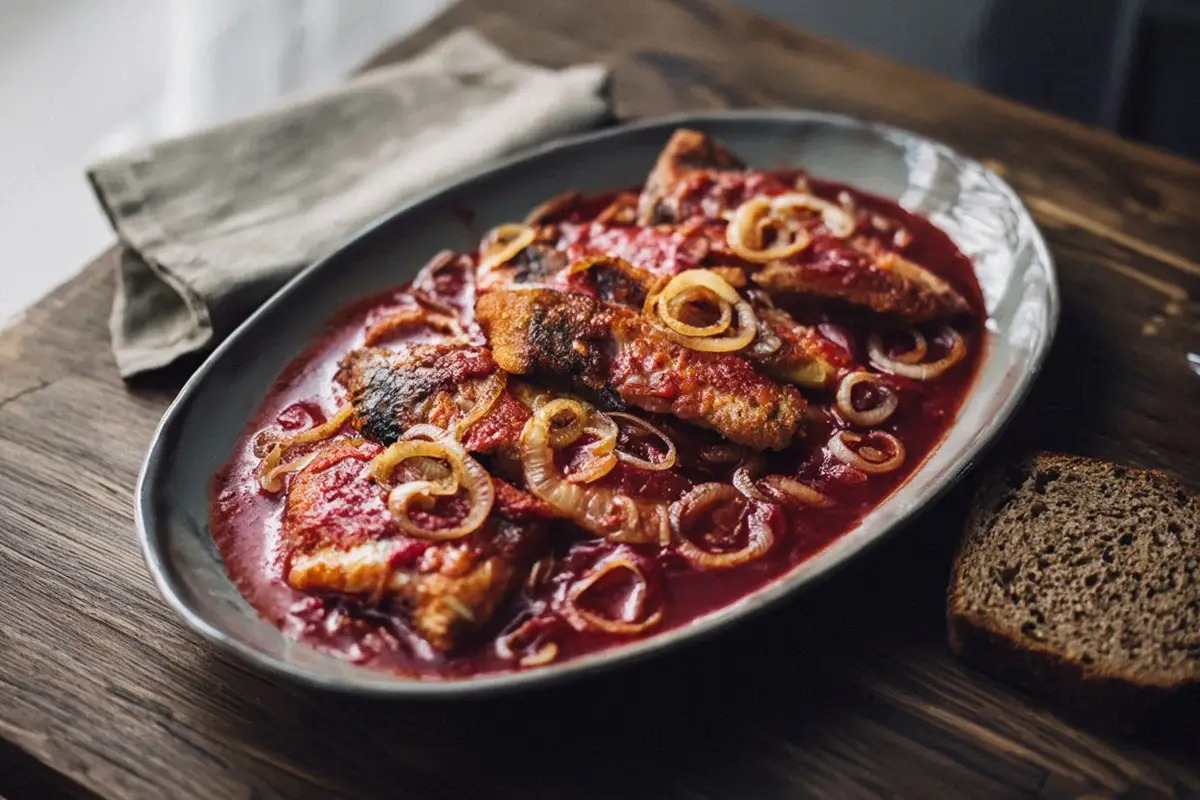
Cold Fish in Tomato and Beetroot Sauce
Fried carp or catfish marinated for hours in a vivid sauce of grated beetroot, root vegetables, and tomato. A Central European cold appetizer.
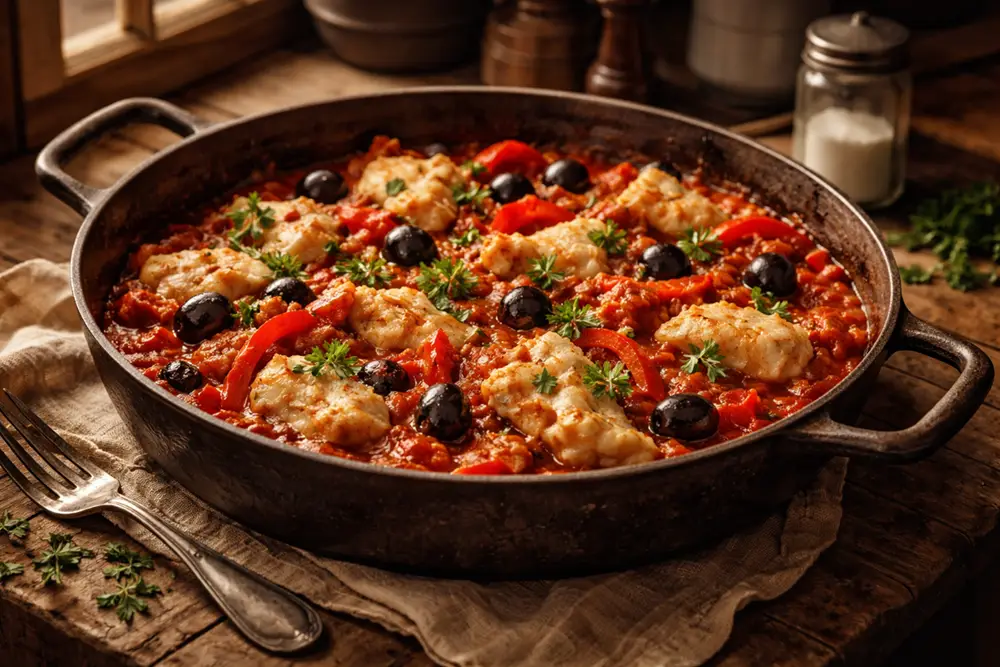
Cod with Tomatoes, Peppers and Black Olives
Salt cod braised with fresh tomatoes, red onion, garlic, bell peppers and black olives in olive oil.