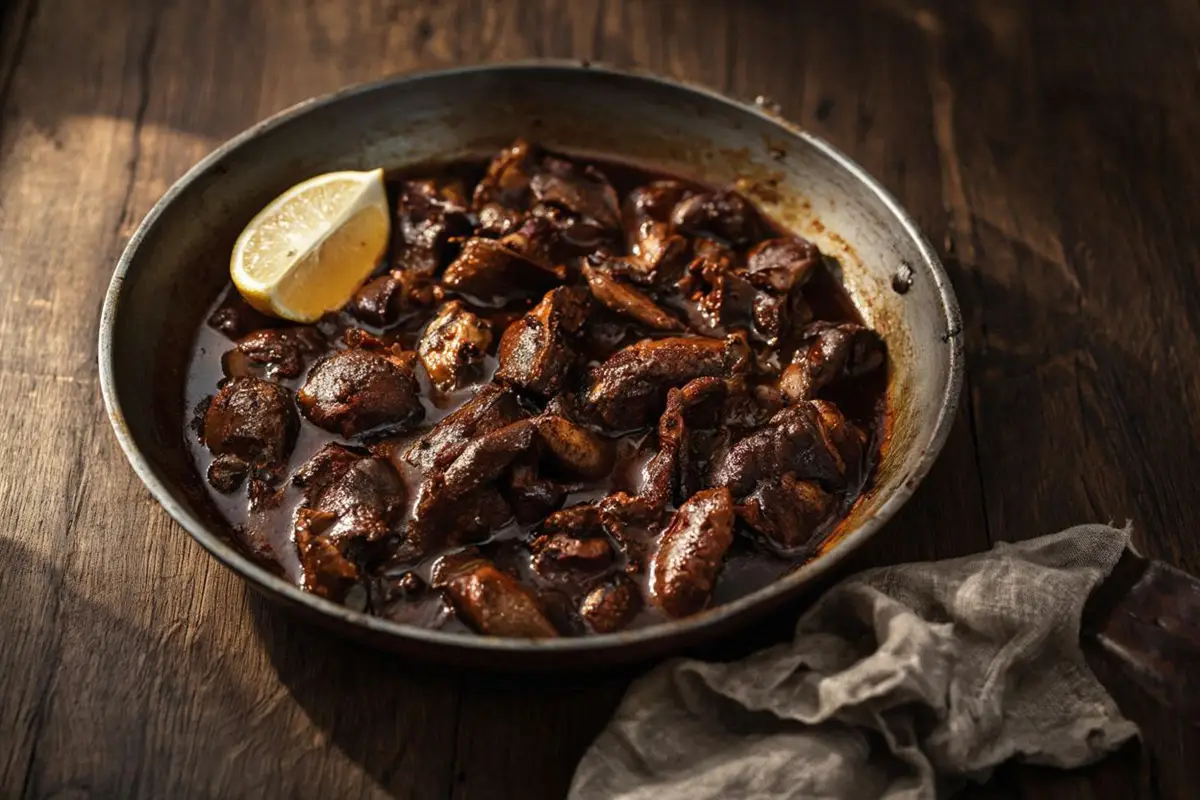
Fried Chicken Livers and Gizzards in White Wine
Tender chicken livers and gizzards braised with leeks, sweet paprika, and dry white wine. A Central European giblet stew ready in 30 minutes.
Quick Summary
Tender chicken livers and gizzards braised with leeks, sweet paprika, and dry white wine. A Central European giblet stew ready in 30 minutes.
Historical recipe
Modernised adaptation of an early 20th‑century source. Not independently kitchen-tested by Attic Recipes. Quantities, temperatures, and food safety guidance have been updated for a contemporary kitchen — results may vary and errors may exist. Nutritional values, where provided, are estimates only and have not been laboratory tested. Always follow current food safety guidelines for your region. If you have a health condition, allergy, or dietary requirement, consult a qualified professional before preparing this recipe.
Use of this recipe is entirely at your own risk and subject to our Terms of Service and Privacy Policy. Attic Recipes accepts no liability for any adverse outcome.
- Gluten
- Sulphites
Safety note
Chicken livers and gizzards must reach an internal temperature of 74°C (165°F) throughout. Undercooked poultry offal carries Salmonella and Campylobacter risk. Do not serve pink or translucent liver. Use a meat thermometer to verify doneness.
A thermometer probe inserted into the thickest gizzard piece is the most reliable check.
Additional notes
-
Warning
Exceptionally high cholesterol: approximately 755mg per serving — more than twice the 300mg daily recommended limit. Individuals with cardiovascular disease, high LDL cholesterol, or on cholesterol-lowering medication should limit portion size or avoid this dish.
Reduce gizzard ratio and increase leeks for a lower-cholesterol version. Substitute half the liver with chicken breast.
-
Warning
Very high purine content. Organ meats are among the highest dietary sources of purines. Individuals with gout or hyperuricemia should avoid or strictly limit this dish.
Replace gizzards with mushrooms for a lower-purine variation that retains earthy depth.
-
Caution
Contains alcohol (white wine). The 15-minute high-heat simmer retains approximately 40–45% of the original alcohol. Not suitable for children or those avoiding alcohol.
Replace wine with unsalted chicken stock and an extra squeeze of lemon juice.
-
Note
Excellent source of Vitamin A, B12, iron, and folate from liver. These micronutrients are significantly higher than in standard muscle meat.
- 1
Prepare the gizzards: Slice each gizzard in half and remove any remaining yellow membrane or grit. Rinse livers under cold water and pat dry. Trim any green bile duct tissue — this is important to avoid bitterness.
Tip Dry livers sear better and will not steam in the pan. - 2
Fry the leeks: Heat the lard or oil in a wide, heavy pan over medium heat. Add the finely chopped leeks and sauté for 6–8 minutes until soft and translucent.
Tip Leeks should be completely soft before adding the meat — they form the sauce base. - 3
Add the giblets: Add the gizzards first. Stir to coat with the leeks and fat. Cook for 5 minutes, then add the livers. Season with sweet paprika and a pinch of salt. Add a small splash of water if the pan looks dry. Cook for approximately 10 minutes total, stirring occasionally.
Tip Gizzards need slightly longer cooking than livers — adding them first ensures even texture. - 4
Thicken: Sprinkle the flour over the mixture and stir well to coat. Cook for 1–2 minutes to eliminate the raw flour taste.
- 5
Deglaze: Pour in the white wine and a squeeze of fresh lemon juice. Increase heat to high and stir to lift any browned bits from the pan.
Tip The high heat during this final simmer keeps the liver tender rather than rubbery. - 6
Final simmer: Cook uncovered on high heat for no longer than 15 minutes. The sauce should thicken and reduce. All giblets must reach an internal temperature of 74°C (165°F). Taste and adjust salt, pepper, and lemon juice.
- 7
Serve immediately with mashed potatoes or pilaf.
Nutrition Information per 1 portion (approx. 300g with sauce)
Nutritional values are approximate estimates and may vary based on specific ingredients used, preparation methods, and portion sizes.
Serving Suggestions
Serve over creamy mashed potatoes or a simple pilaf. A small green salad with vinegar dressing cuts through the richness. Crusty bread to mop the sauce is highly recommended.
About This Recipe
Chicken livers and gizzards braised in wine with leeks is one of the most practical and deeply flavored dishes in the Central European giblet repertoire. What the original cooks lacked in premium cuts, they compensated for in technique — the deliberate high-heat final simmer keeps the liver silky rather than grainy, while the leeks dissolve into a sauce that needs no cream to feel rich. This is a 30-minute dish that punches well above its price point.
Why It Works
Liver is almost entirely protein and fat with virtually no connective tissue — which means it cooks fast and goes rubbery quickly if overdone. The sequence here is deliberate: gizzards go in first (they need longer), livers follow, and the entire dish finishes on high heat for a maximum of 15 minutes. The flour added before the wine creates a light liaison — not a heavy gravy, but enough body to coat the pieces and carry the paprika and lemon.
The leeks, rather than onion, are the period-appropriate choice. They soften more completely, contribute a mild sweetness that balances the liver’s bitterness, and essentially disappear into the sauce.
Getting the Gizzards Right
Gizzards are the most misunderstood part of this dish. The inner yellow membrane must be removed — it is tough, rubbery, and does not soften with cooking. Run your thumb along the cavity, grip the lining, and pull. Rinse under cold water. Slice each cleaned gizzard into 2–3 pieces so they cook at the same rate as the liver.
Troubleshooting
Sauce too thin? Allow an extra 3–4 minutes on high heat uncovered. The flour needs time to hydrate and thicken.
Liver turned grainy or dry? It overcooked. For the next batch, remove livers from the pan after 8 minutes and return them only for the final 2 minutes of the wine simmer.
Bitter aftertaste? A green bile duct was left on one of the livers. Trim any green or dark-green tissue before cooking — even a small piece can flavor the entire batch.
A classic of early 20th century home cooking, preserved and adapted for the modern kitchen.
The Story Behind This Recipe
Historical Context
Offal cookery was central to early 20th-century Central European households, where nothing from a slaughtered animal was wasted. Giblets — livers, gizzards, hearts — were considered a delicacy rather than a byproduct, and wine-braised liver dishes appeared regularly on middle-class tables as affordable yet sophisticated weekday meals.
Modern Kitchen Adaptation
A dry, slightly oxidized aged white wine was the period-appropriate choice for this dish. A modern dry white such as Welschriesling, Grüner Veltliner, or a simple dry Chardonnay replicates the character well. Avoid sweet or fruity wines — they clash with the liver's natural bitterness. The lard can be replaced with a neutral oil without significantly affecting the result.
This recipe is an independent modern adaptation developed from historical sources in the public domain. It is provided for informational and educational purposes only and does not constitute professional dietary, nutritional, or medical advice. Food preparation involves inherent risks. The reader assumes full responsibility for safe food handling, ingredient sourcing, and adherence to current local food safety guidelines. The site operator accepts no liability for outcomes resulting from the preparation or consumption of this recipe.
One recipe.
Every week.
You Might Also Like
More recipes from the same category
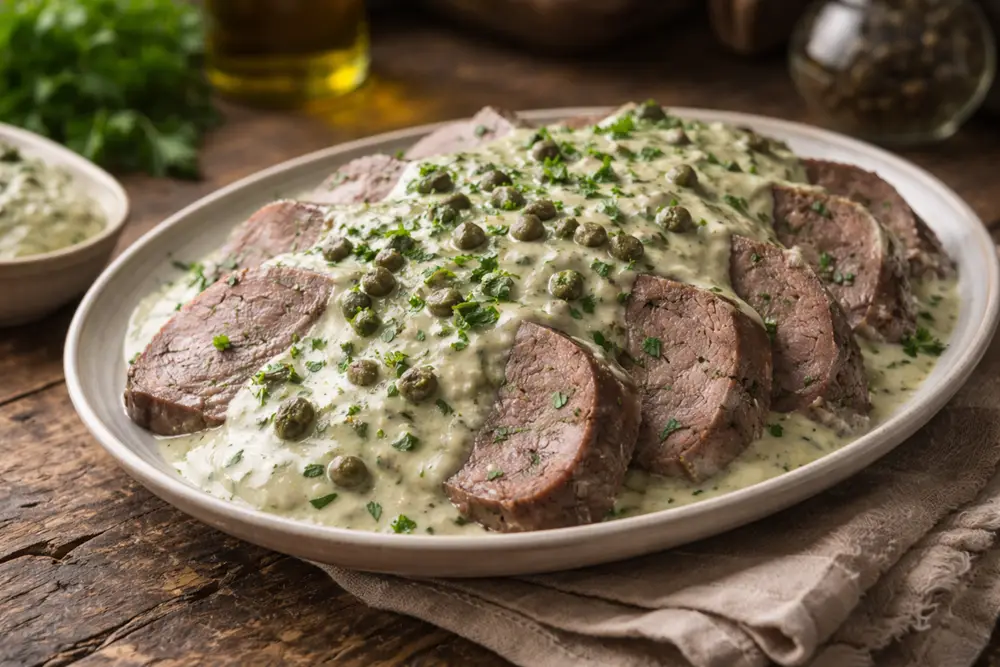
Baked Tongue in Green Sauce
Beef tongue braised with herbs, larded with bacon and roasted until golden, served in a green sauce of capers, anchovy, parsley and sour cream.
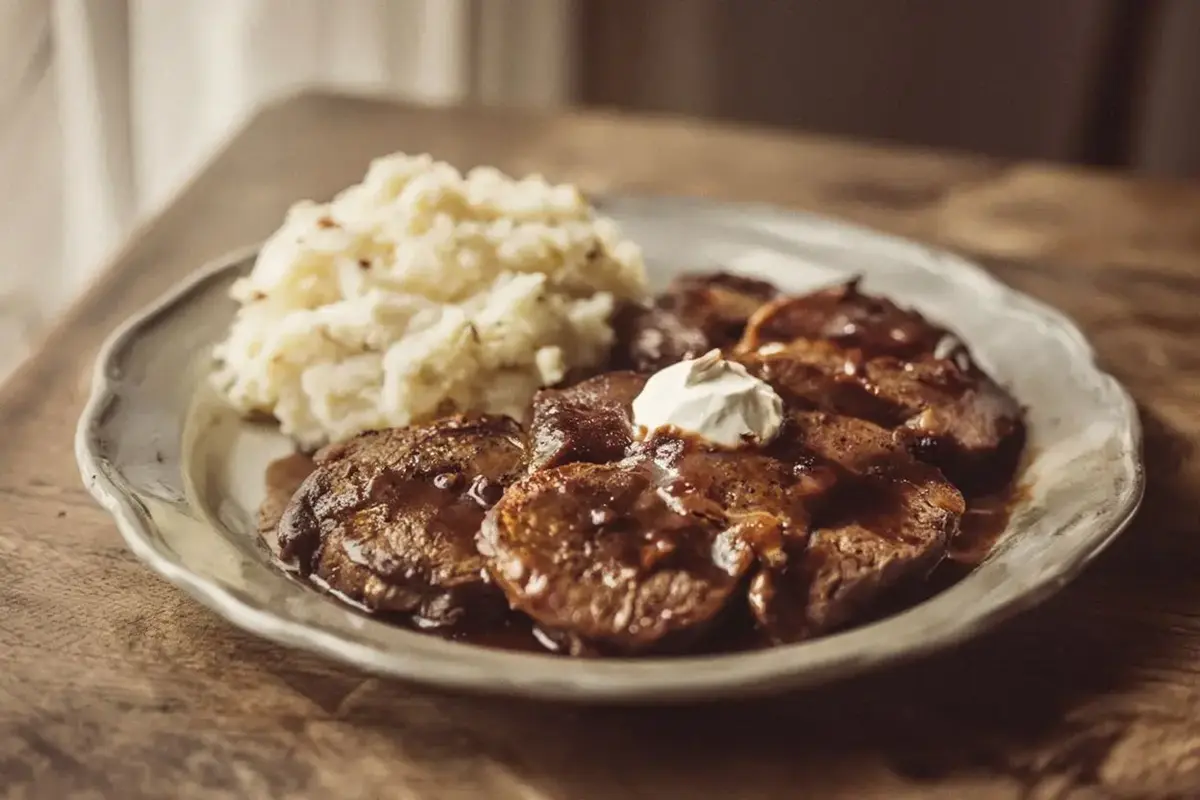
Beef Kidney with Wine
Beef kidney marinated in red wine, braised with herbs, finished with sour cream. Tender, rich, and deeply flavored.
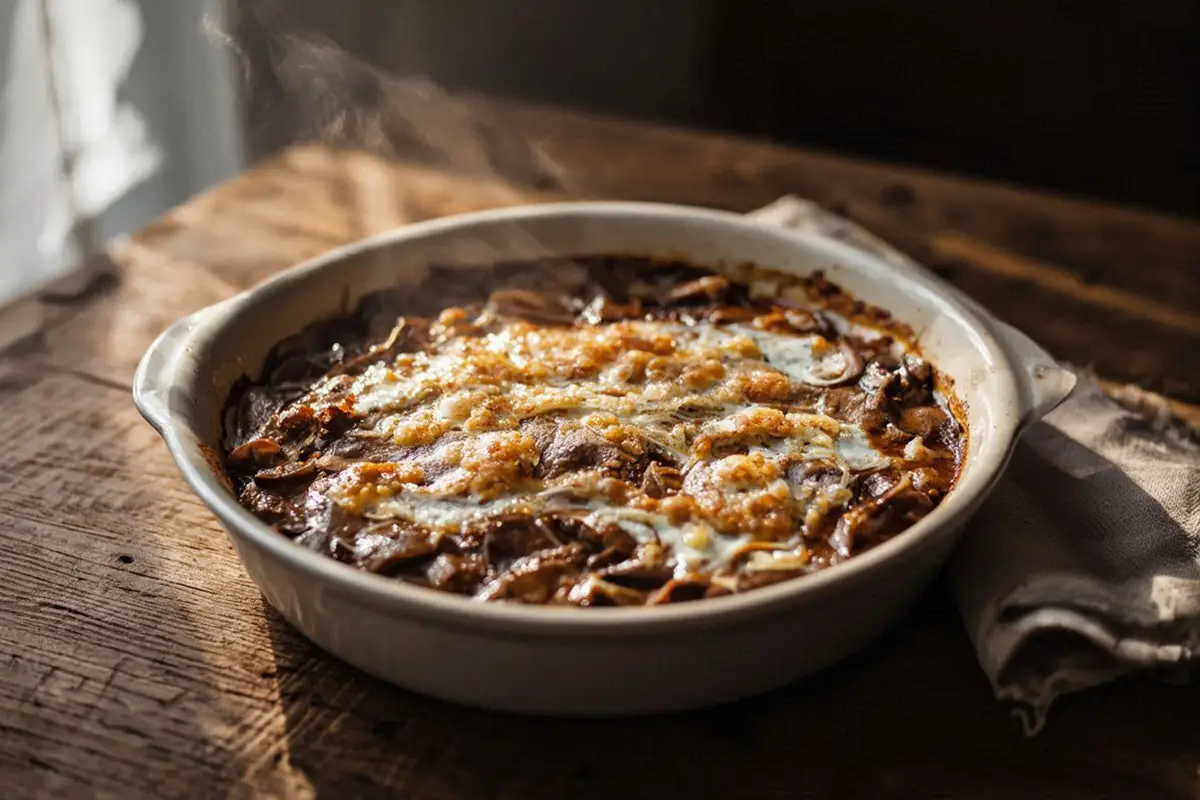
Beef Tongue in Mushroom Sauce
Tender sliced beef tongue layered in a rich dark mushroom sauce, finished with sour cream, Parmesan, and a golden oven crust.