Frog Risotto (Risotto di Rane)
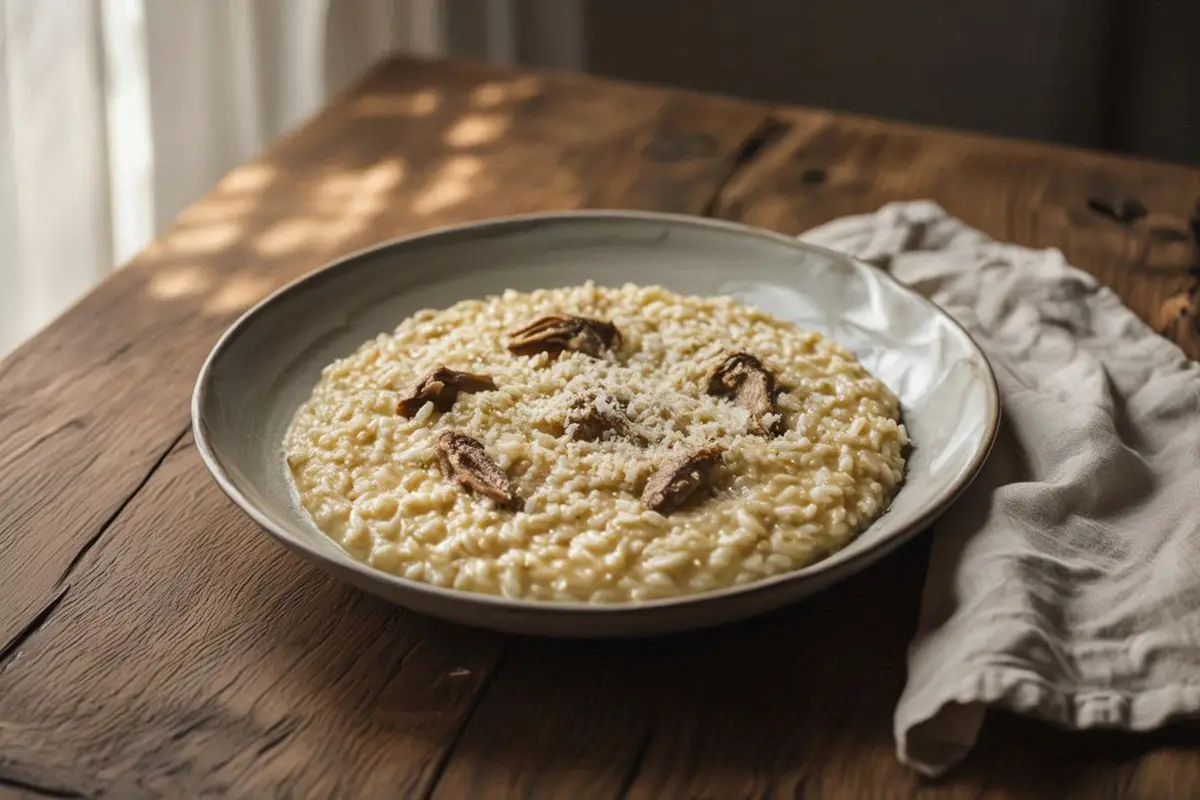
A rich pureed frog broth with tomato and aromatic vegetables, used as the cooking base for a deeply flavored Central European risotto.
Quick Summary
A rich pureed frog broth with tomato and aromatic vegetables, used as the cooking base for a deeply flavored Central European risotto.
Historical recipe
Modernised adaptation of an early 20th‑century source. Not independently kitchen-tested by Attic Recipes. Quantities, temperatures, and food safety guidance have been updated for a contemporary kitchen — results may vary and errors may exist. Nutritional values, where provided, are estimates only and have not been laboratory tested. Always follow current food safety guidelines for your region. If you have a health condition, allergy, or dietary requirement, consult a qualified professional before preparing this recipe.
Use of this recipe is entirely at your own risk and subject to our Terms of Service and Privacy Policy. Attic Recipes accepts no liability for any adverse outcome.
- Celery
- Dairy
Safety note
Frog legs must be sourced from reputable suppliers only. Wild-caught frogs may carry Salmonella, parasites, and in tropical regions, exposure to chytrid fungus — a pathogen catastrophic to amphibian populations. Never use frogs caught from unknown or polluted water sources.
Purchase farm-raised frog legs from a licensed supplier or fishmonger. Farm-raised frogs are raised on controlled diets and regularly tested for pathogens.
Additional notes
-
Warning
Frog legs must be cooked to an internal temperature of 74°C (165°F). As with all poultry-adjacent proteins, undercooked frog meat presents a risk of Salmonella and bacterial contamination. The long braising step (25–30 minutes at a steady simmer) in this recipe is sufficient — verify with a probe thermometer if uncertain.
-
Caution
Contains dairy (butter, Parmesan) and celery — a regulated allergen under EU Regulation 1169/2011. Always declare to guests with dairy or celery allergies.
Omit Parmesan and substitute olive oil for butter for a dairy-free version.
-
Note
Wild harvesting of frogs for food is regulated or prohibited in many European countries due to population decline. Always verify the sourcing of your frog legs — look for farm-raised product certified by a recognized aquaculture body.
- 1
Tenderize the frog legs: Bring a pot of water to a full boil. Dip the frog legs in the boiling water for no more than 30 seconds, then immediately transfer to a bowl of cold water. This brief thermal shock keeps the meat tender. Drain and pat dry.
Tip This technique prevents the muscle fibres from contracting too tightly during the subsequent sauté. Do not exceed 30 seconds or you begin to cook rather than merely condition the meat. - 2
Build the broth base: In a wide, heavy pot, heat the oil over medium heat. Add the onions, garlic, carrots, celery, and basil. Fry, stirring occasionally, until softened and golden — about 10 minutes.
- 3
Brown the frogs: Add the frog legs to the pot. Stir and cook until they turn golden brown on all sides — about 8–10 minutes.
- 4
Add tomatoes and simmer: Add the chopped tomatoes and stir to combine. Pour in enough water to cover everything generously. Season with salt. Bring to a simmer and cook gently until the frog meat is fully tender and falling from the bone — about 25–30 minutes. Internal temperature must reach 74°C (165°F).
- 5
Puree: Remove the frog legs from the pot. Pull the meat from the bones and set aside. Puree the remaining broth and vegetables thoroughly using a stick blender or food mill until smooth. This is the risotto broth. Keep it hot.
Tip Strain through a fine sieve after blending for a silkier broth. The pureeing step is what gives this risotto its distinctive deep, savory base — do not skip it. - 6
Make the risotto: In a separate wide pan, melt the butter over medium heat. Add the rice and stir for 2–3 minutes until the grains are translucent at the edges and coated in butter. Begin adding the hot frog broth one ladleful at a time, stirring constantly and allowing each addition to be fully absorbed before adding the next. Continue until the rice is al dente and the risotto has a flowing, creamy consistency — about 18–20 minutes.
Tip Keep the broth at a low simmer throughout. Cold broth added to the rice will arrest the cooking and result in an uneven texture. - 7
Finish: Stir the reserved frog meat into the risotto in the final 2 minutes of cooking to warm through. Remove from heat, stir in the grated Parmesan, and serve immediately in warmed shallow bowls.
Nutrition Information per 1 portion (approx. 400g)
Nutritional values are approximate estimates and may vary based on specific ingredients used, preparation methods, and portion sizes.
Serving Suggestions
Serve immediately in warmed wide, shallow bowls. A simple green salad and a glass of chilled dry white wine complement the dish. Additional freshly grated Parmesan at the table is expected.
About This Recipe
Frog risotto is one of the more unusual dishes in the Central European early 20th century repertoire — a preparation that makes complete sense once you understand that wetland regions rich in freshwater frogs were also rice-growing country, and that the frogs were simply another ingredient from the same landscape. The genius of this particular method is the pureed broth: rather than using the frog legs merely as a protein element, the entire flavor of the braised frogs, vegetables, and tomatoes is extracted into a rich liquid that becomes the risotto’s cooking medium, producing something far more complex and satisfying than a standard broth-based risotto.
Why It Works
The brief hot-cold thermal shock at the beginning — no more than 30 seconds — is a technique worth understanding. Frog muscle is delicate and prone to seizing and toughening when hit with sudden sustained heat. The rapid immersion in boiling water followed immediately by cold water gently denatures the outermost layer of protein without beginning the cooking process, resulting in meat that remains tender even through the subsequent browning and braising. The pureed broth is the other key technique: by blending the aromatics, tomatoes, and cooking liquid into a single smooth base, you create a medium that coats each grain of rice with flavor rather than simply hydrating it.
Modern Kitchen Notes
- The bones: Do not discard the carcasses after removing the meat. Return them to the blender with the broth for maximum flavor extraction before straining.
- Risotto consistency: The finished risotto should flow slowly when the pan is tilted — if it holds its shape like a mound, it is too dry. Add a final ladleful of hot broth or water and stir vigorously.
- The Parmesan: Added off the heat only. Parmesan added to a boiling risotto will become grainy and stringy rather than creamy.
- Timing: Risotto cannot be made in advance. Have your guests seated before you begin the final 20 minutes of rice cooking.
A classic of early 20th century home cooking, preserved and adapted for the modern kitchen.
The Story Behind This Recipe
Historical Context
Frog risotto belongs to a tradition of rice dishes built on pureed meat and vegetable broth rather than plain stock — a technique that extracts maximum flavor from inexpensive ingredients and transforms them into something considerably more refined. Frogs were a widely available freshwater ingredient across Central Europe in the early 20th century, particularly in regions with rice cultivation and wetland habitats, and appeared regularly on both peasant and middle-class tables. The technique of briefly shocking frog legs in hot then cold water before cooking reflects a precise observation about the delicacy of amphibian muscle tissue — practical food science preserved in culinary tradition long before it had scientific vocabulary.
Modern Kitchen Adaptation
Fresh frog legs are available from specialist fishmongers and Asian food suppliers; frozen frog legs (almost always farm-raised) are widely available and perform well in this recipe — thaw overnight in the refrigerator before use. If frog legs are unavailable, chicken wings prepared the same way produce a similar rich, gelatinous broth, though the flavor is noticeably different. The four large onions in the broth base are intentional — they puree into the liquid and give it body and sweetness without remaining as a visible element in the finished risotto.
This recipe is an independent modern adaptation developed from historical sources in the public domain. It is provided for informational and educational purposes only and does not constitute professional dietary, nutritional, or medical advice. Food preparation involves inherent risks. The reader assumes full responsibility for safe food handling, ingredient sourcing, and adherence to current local food safety guidelines. The site operator accepts no liability for outcomes resulting from the preparation or consumption of this recipe.
One recipe.
Every week.
You Might Also Like
More recipes from the same category

Mushroom and Rice Rolls
Crispy breaded rolls of earthy mushrooms and rice, bound with egg and parsley — a classic Central European side served alongside roast meats.

Layered Polenta with Parmesan and Scrambled Eggs
Firm polenta layered with grated hard cheese and soft scrambled eggs. A Central European home dish that turns humble cornmeal into a rich, satisfying meal.

Rice Steaks with Mushroom Sauce
Crispy fried rice patties seasoned with pepper, served with a rich, creamy dried mushroom sauce — a satisfying Central European vegetarian main.