Imperial Goose Liver with Truffles
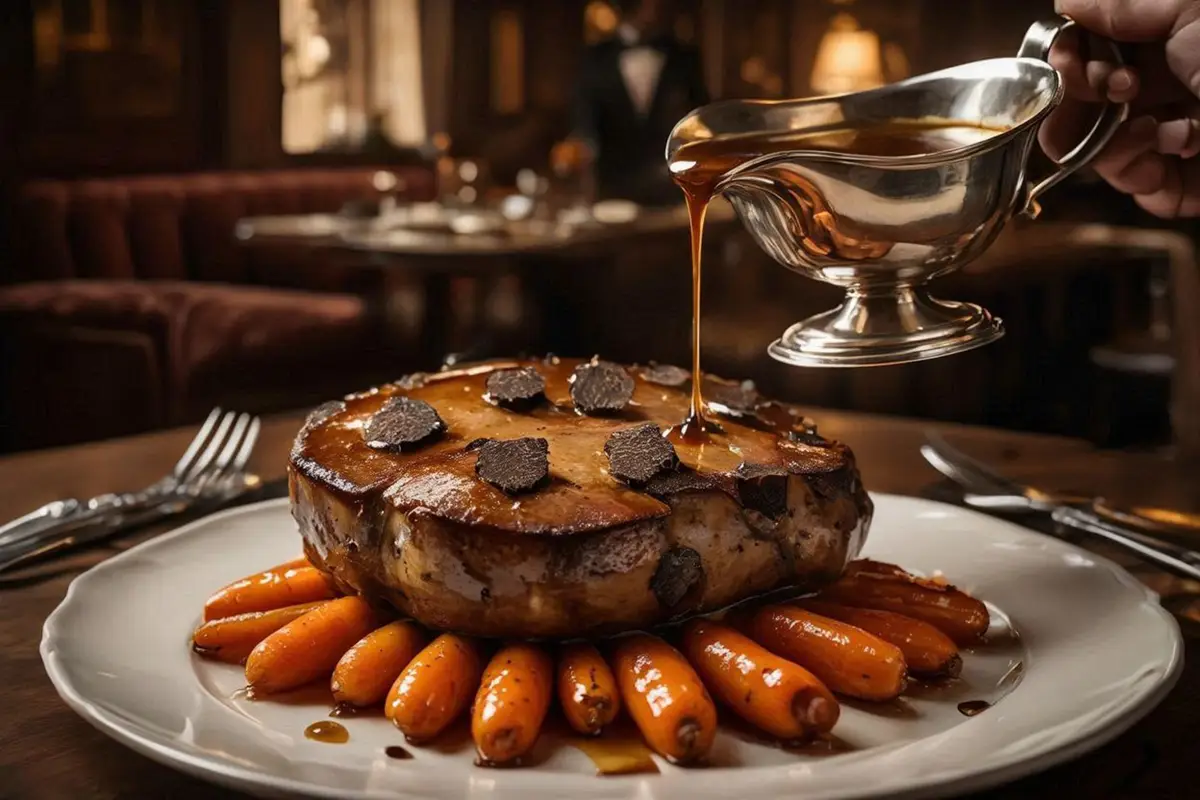
A decadent high-society dish: whole goose foie gras studded with black truffles, braised in Madeira wine and rich veal stock.
Quick Summary
A decadent high-society dish: whole goose foie gras studded with black truffles, braised in Madeira wine and rich veal stock.
Historical recipe
Modernised adaptation of an early 20th‑century source. Not independently kitchen-tested by Attic Recipes. Quantities, temperatures, and food safety guidance have been updated for a contemporary kitchen — results may vary and errors may exist. Nutritional values, where provided, are estimates only and have not been laboratory tested. Always follow current food safety guidelines for your region. If you have a health condition, allergy, or dietary requirement, consult a qualified professional before preparing this recipe.
Use of this recipe is entirely at your own risk and subject to our Terms of Service and Privacy Policy. Attic Recipes accepts no liability for any adverse outcome.
- Dairy
- Gluten
- Sulphites
Safety note
Goose liver must reach an internal temperature of 74°C (165°F) at the centre before serving. Organ meat carries a higher risk of bacterial contamination than muscle meat. Do not serve undercooked foie gras. The mi-cuit technique (54°C internal temperature) is below the food-safe threshold for organ meats and is not recommended in this preparation.
Use a probe thermometer inserted into the centre of the liver at the end of braising to verify temperature.
Safety note
Goose liver is highly perishable organ meat. Source only from a certified, regulated supplier. Keep refrigerated at all times and begin preparation the same day as purchase. Both soaking baths (water and milk) must be kept refrigerated — do not soak at room temperature.
If fresh foie gras is unavailable, vacuum-sealed pasteurized foie gras from a reputable producer is a safe alternative.
Additional notes
-
Warning
Extremely high cholesterol: 515mg per 100g serving — well above the recommended daily limit of 300mg. Not suitable for individuals with hypercholesterolemia, cardiovascular disease, or on a low-cholesterol diet.
Reduce portion size to 50–60g per person and serve strictly as an appetizer.
-
Warning
Very high purine content. Organ meats are among the highest dietary sources of purines. Individuals with gout or hyperuricemia should avoid this dish entirely.
-
Warning
The Madeira wine added at the finishing stage is not fully cooked and retains significant alcohol. Not suitable for children, pregnant women, or those avoiding alcohol.
Replace the finishing Madeira with a good-quality white grape juice reduced with a splash of apple cider vinegar for acidity.
-
Note
Contains pork products (bacon, pork rinds). Not suitable for those who do not consume pork for religious or dietary reasons. Contains gluten (roux) and dairy (milk soaking bath, butter) — declare to guests with these allergies.
- 1
Soak the liver: Place the whole goose liver in cold water for 2 hours in the refrigerator. Drain, then submerge in fresh cold milk for another 2 hours, also refrigerated. This draws out blood and impurities and lightens the color of the liver.
Tip Do not soak at room temperature. Keep both soaking baths refrigerated throughout. - 2
Stud with truffles: Pat the liver dry with a clean cloth. Using a small, sharp knife, make small incisions across the surface and insert the truffle cubes into each hole.
- 3
Bard the liver: Wrap the entire liver in thin strips of bacon, overlapping slightly. This protects the delicate fat from rendering too quickly during braising.
- 4
Build the braising base: In a deep, close-fitting saucepan, layer the pork rinds, carrot, onion, parsley, coarse pepper, and any truffle trimmings.
- 5
Braise: Place the liver on top of the vegetables. Pour in 100ml of Madeira and all of the stock. Cover tightly and braise in the oven at 150°C conventional (130°C fan-assisted) for 45 minutes. The internal temperature must reach 74°C (165°F).
- 6
Rest the liver: Remove the liver from the pan and place in a warm covered bowl. Keep warm while you make the sauce.
- 7
Make the sauce: Strain the braising liquid through a fine sieve, pressing the vegetables to extract all juices. In a clean saucepan, make a roux with the butter and flour. Gradually whisk in the strained liquid and cook until smooth and thickened.
- 8
Finish and serve: Remove the bacon from the liver. Return the liver to the sauce and warm gently on very low heat for 10 minutes — do not boil. Remove the liver, stir the remaining 100ml of Madeira into the hot sauce, and serve immediately.
Nutrition Information per 100g (approximately 1/7 of yield)
Nutritional values are approximate estimates and may vary based on specific ingredients used, preparation methods, and portion sizes.
Serving Suggestions
Serve with thinly sliced toasted brioche or country bread and a small green salad. A glass of the same Madeira used in cooking makes the ideal pairing. This dish is rich enough to serve as a main course in small portions.
About This Recipe
This is one of the most ambitious preparations in the early twentieth century Central European repertoire — a whole fattened goose liver, studded with black truffles, wrapped in bacon, and slowly braised in Madeira wine and rich stock until the fat is trembling and the sauce is glossy. It belongs to a moment when French grand cuisine and local ingredient traditions were meeting in the kitchens of the urban upper class, and the results were extraordinary.
Why It Works
The double soak — first in water, then in milk — is not optional decoration. Water draws out blood; milk pulls residual bitterness and lightens the color of the liver from deep red to pale ivory. The bacon barding serves as a fat shield: it melts slowly during braising, basting the liver continuously while preventing the delicate outer layer from seizing in the heat. The Madeira added at the very end, off the heat, preserves its fruit and complexity rather than cooking it into flatness.
Kitchen Notes: Triflame
In early twentieth century Central European cookbooks, the word triflame or trifle sometimes appears in recipes calling for a luxury aromatic ingredient used to stud or garnish meat. The context — small cubes inserted into a goose liver, paired with Madeira — confirms these are black truffles, the French truffe, adapted phonetically into local written form. This kind of linguistic borrowing by ear was common in an era when French culinary terms were entering the region’s cooking vocabulary through cookbooks, hotel kitchens, and aristocratic households rather than formal culinary training.
A classic of early 20th century home cooking, preserved and adapted for the modern kitchen.
The Story Behind This Recipe
Historical Context
This preparation is a hallmark of the grand cuisine era, when the richness of fattened goose liver was matched with the earthy depth of Madeira wine and the luxury of black truffles. The combination reflects the influence of French technique on Central European aristocratic cooking of the early twentieth century, filtered through the kitchens of the region's urban upper class. In early 20th century Central European cookbooks, black truffles were sometimes rendered phonetically as 'triflame' or 'trifle' — a borrowing from the French truffe adapted by ear into local written form. This kind of linguistic borrowing was common in an era when French culinary terms were entering the region's cooking vocabulary through cookbooks, hotel kitchens, and aristocratic households rather than formal culinary training.
Modern Kitchen Adaptation
Fresh foie gras is available from specialist suppliers and some quality butchers. The 4-hour soaking process — first in water, then in milk — remains standard practice and is essential for the final color and flavor. Keep all soaking refrigerated at all times. If Madeira is unavailable, a dry Marsala or a good-quality dry sherry is the closest substitute. The full 45-minute braise at 150°C produces the traditional firmer, fully-cooked style specified here — the liver must reach 74°C (165°F) at the centre.
This recipe is an independent modern adaptation developed from historical sources in the public domain. It is provided for informational and educational purposes only and does not constitute professional dietary, nutritional, or medical advice. Food preparation involves inherent risks. The reader assumes full responsibility for safe food handling, ingredient sourcing, and adherence to current local food safety guidelines. The site operator accepts no liability for outcomes resulting from the preparation or consumption of this recipe.
One recipe.
Every week.
You Might Also Like
More recipes from the same category
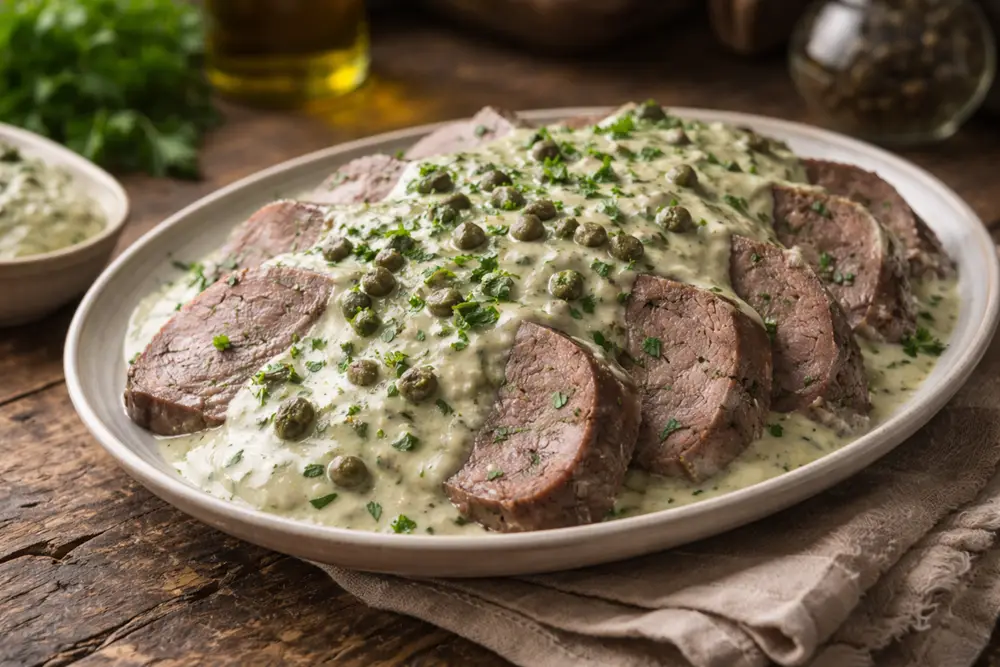
Baked Tongue in Green Sauce
Beef tongue braised with herbs, larded with bacon and roasted until golden, served in a green sauce of capers, anchovy, parsley and sour cream.
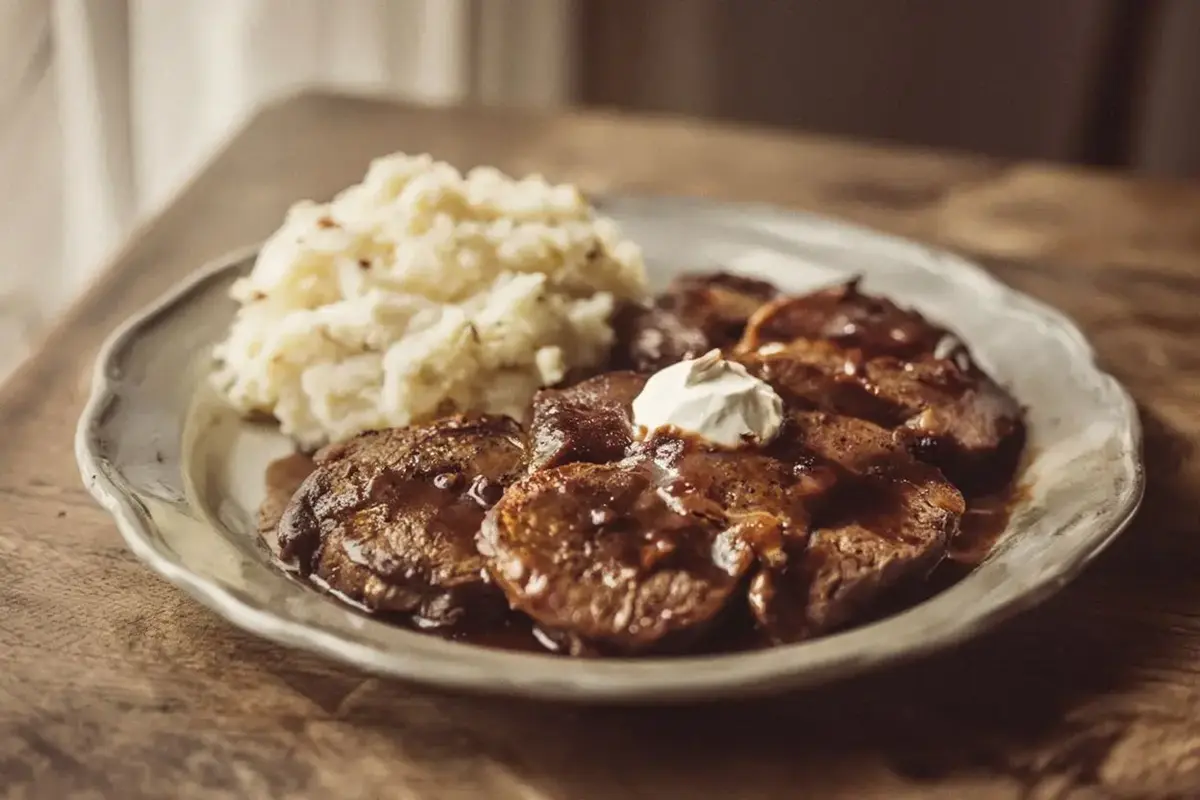
Beef Kidney with Wine
Beef kidney marinated in red wine, braised with herbs, finished with sour cream. Tender, rich, and deeply flavored.
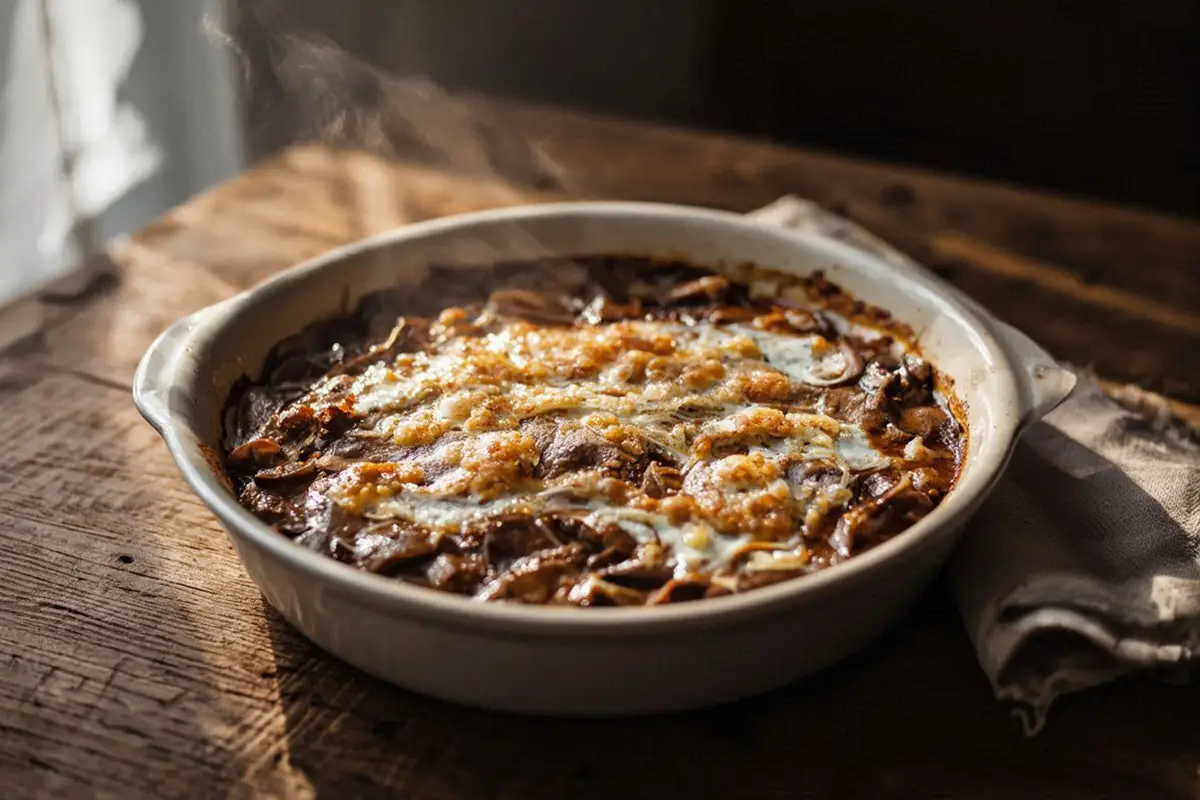
Beef Tongue in Mushroom Sauce
Tender sliced beef tongue layered in a rich dark mushroom sauce, finished with sour cream, Parmesan, and a golden oven crust.