Green Bean Fluff
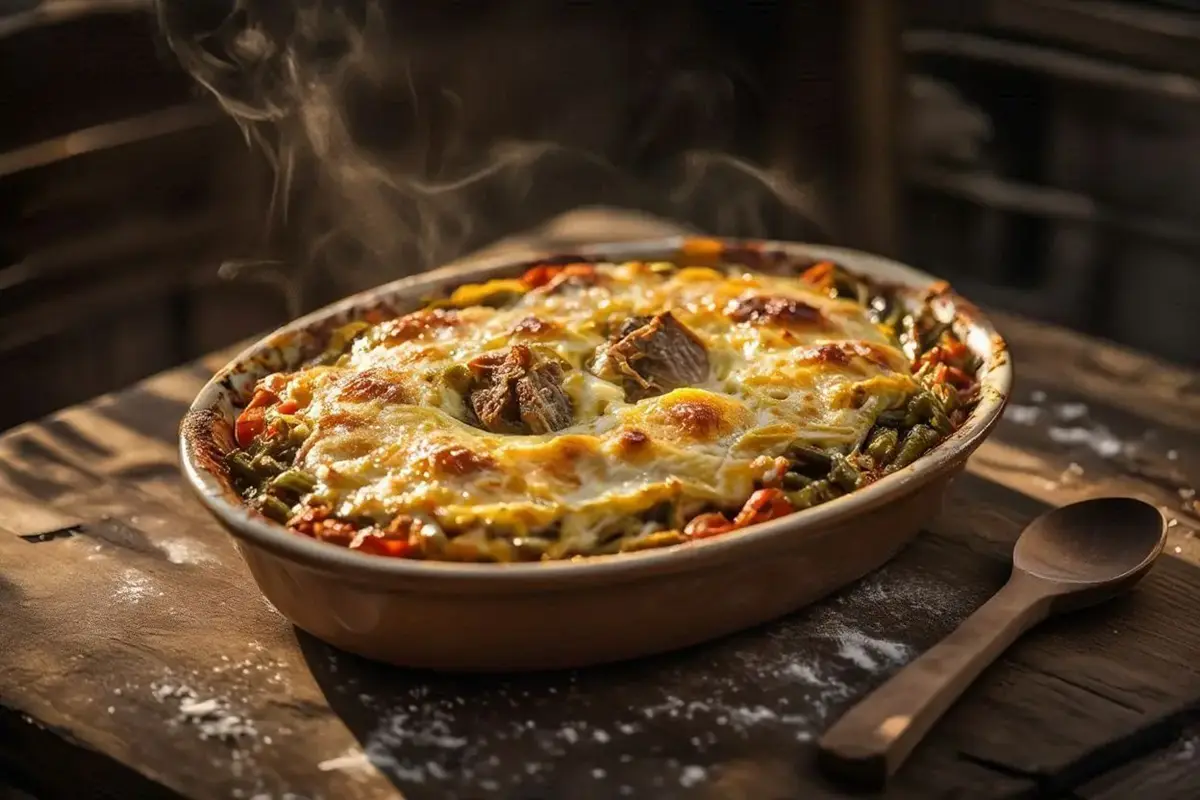
Traditional layered casserole with tender lamb, green beans, tomatoes, and a creamy lemon-sour cream topping.
Quick Summary
Traditional layered casserole with tender lamb, green beans, tomatoes, and a creamy lemon-sour cream topping.
Historical recipe
Modernised adaptation of an early 20th‑century source. Not independently kitchen-tested by Attic Recipes. Quantities, temperatures, and food safety guidance have been updated for a contemporary kitchen — results may vary and errors may exist. Nutritional values, where provided, are estimates only and have not been laboratory tested. Always follow current food safety guidelines for your region. If you have a health condition, allergy, or dietary requirement, consult a qualified professional before preparing this recipe.
Use of this recipe is entirely at your own risk and subject to our Terms of Service and Privacy Policy. Attic Recipes accepts no liability for any adverse outcome.
- Celery
- Dairy
- Eggs
- Gluten
Additional notes
-
Warning
Lamb must reach an internal temperature of 74°C (165°F) before serving. Check at the thickest piece before removing from oven.
Use a meat thermometer inserted into the center of the largest piece — not touching bone.
-
Caution
The sour cream topping contains raw egg yolks that cook during baking. Pregnant women, young children, elderly, and immunocompromised individuals should ensure the dish is fully baked and the topping has set completely before eating.
-
Caution
Early versions of this recipe were written for large-scale cooking — quantities suggest a celebration batch. This recipe uses 1.5 kg for 6–8 servings. Do not scale up without recalculating all other ingredients.
Original: Original says 'put in oven to finish baking' — wood stove temperature unknown, modern ovens at 180°C for 45–60 minutes give excellent results
- 1
Wash and trim green beans. Cut each bean in half crosswise. Place in a bowl, sprinkle with approximately 1 tsp salt, and let sit for 15–20 minutes.
Original “Clean, wash and cut a kilogram of green long beans in half, not lengthwise. Place them in a bowl beforehand, salt them and leave them to soak a little.”
Tip Salting draws out moisture and seasons the beans from the inside. - 2
Cut lamb into 5–6 cm pieces. Pat completely dry with paper towels, season with salt, and dredge lightly in flour, shaking off excess.
Original “Take lamb breast meat, wash it, cut it into pieces, salt it, roll it in flour.”
Tip Dry meat browns much better — wet meat steams instead of searing. - 3
Heat 2–3 tablespoons of fat in a large skillet over medium-high heat. Fry lamb pieces on all sides until golden but only half-cooked inside, about 4–5 minutes per side. Remove to a plate.
Original “Fry it on both sides, but only until the meat is half-fried. Then take it out on a plate.”
Tip Fry in batches — overcrowding drops the pan temperature and prevents browning. - 4
In the same pan, drain excess fat if needed, leaving about 3 tablespoons. Add chopped onion and sauté until softened, about 5 minutes. Add garlic and sliced green peppers, cook another 3–4 minutes.
Original “In the same fat fry a head of finely chopped onion, a few cloves of garlic, green peppers cut into thin rings.”
Tip Lamb fat adds excellent flavor — keep it if there is not too much. - 5
Season the onion mixture with black pepper and red pepper flakes. Stir well and remove from heat.
Original “Sprinkle with a little pepper, red pepper flakes, mix everything, then move the saucepan to the end of the stove.”
- 6
In a separate pot, bring 1 liter of water to a boil. Add 1 tablespoon butter, chopped parsley, and celery leaves.
- 7
Rinse the salted green beans and add to the boiling water. Cook until tender but still with slight bite — about 8–10 minutes for fresh, 5–6 for frozen. Drain well.
Tip Do not overcook — beans will continue cooking in the oven. - 8
Preheat oven to 180°C / 160°C fan (350°F). Grease a large casserole dish.
- 9
Layer the casserole: start with half the drained green beans on the bottom. Add half the sautéed onion-pepper mixture. Layer half the sliced tomatoes.
Tip Spread each layer evenly for consistent cooking. - 10
Repeat: remaining green beans, remaining onion mixture, remaining tomatoes. Arrange the half-cooked lamb pieces on top.
- 11
Whisk together sour cream, egg yolks, and lemon juice until smooth. Season with a pinch of salt.
Tip Room temperature egg yolks mix more easily and produce a smoother sauce. - 12
Pour the sour cream mixture evenly over the entire casserole, covering the meat and letting it drip between the pieces.
- 13
Cover with aluminum foil and bake for 45 minutes. Remove foil and bake a further 15–20 minutes until the top is golden brown and lamb is fully tender. Internal temperature of lamb should reach 74°C (165°F).
Tip A fork should slide easily into the lamb when done. - 14
Rest for 10 minutes before serving. Serve hot with crusty bread.
Nutrition Information per 1 portion (approx. 350g)
Nutritional values are approximate estimates and may vary based on specific ingredients used, preparation methods, and portion sizes.
Pro Tips
- Lamb breast is fatty — drain excess fat after browning to prevent greasiness
- The lemon juice in the topping is essential — it cuts through the richness cleanly
- Do not skip the half-cooking step for the meat — it ensures tender lamb without drying out vegetables
- Fresh green beans give best texture, but frozen work well — reduce parboiling time by 3–4 minutes
- Can substitute lamb with beef chuck or pork shoulder
Serving Suggestions
Serve as a main course with thick slices of bread, a simple cucumber and tomato salad, and a glass of medium-bodied red wine. Leftovers improve the next day as flavors meld — reheat covered at 150°C.
About This Recipe
Green Bean Fluff is a layered casserole built on a simple logic: half-cook the lamb first so it finishes at the same time as the vegetables, layer everything with tomatoes and peppers, pour a lemon-sour cream topping over it all, and let the oven do the rest. The topping puffs slightly as it bakes — that is where the name comes from, borrowed from the German Auflauf.
Early sources list 4 kg of lamb for this dish — enough to feed twenty people, almost certainly a large-batch celebration recipe. This version uses 1.5 kg for a practical household portion — all other ratios follow from that.
Why It Works
The half-cooking step for the lamb is the key move. Fully raw lamb layered into a casserole would need significantly longer oven time, which would turn the green beans to mush. Half-browned in a hot pan, then finished in the oven, the lamb stays tender and the vegetables hold their texture.
The lemon juice in the topping is not optional. Sour cream and egg yolks baked without acid produces something rich but flat. The lemon cuts through the fat and makes every other flavor sharper.
On the Original Quantity
The 4 kg figure appears in early sources but is not a practical household guide — almost certainly a large-batch celebration quantity. This version uses 1.5 kg. All proportions have been recalculated accordingly.
A classic of early 20th century home cooking, preserved and adapted for the modern kitchen.
The Story Behind This Recipe
Historical Context
This dish belongs to the layered casserole tradition common across Central and Eastern Europe in the early 20th century — related to moussaka, gratin, and Auflauf. The name 'fluff' derives from the German Auflauf, referring to the slightly puffed, soufflé-like topping that forms when the egg-cream mixture bakes. The layering technique and sour cream topping reflect the meeting of multiple culinary traditions in one practical, generous dish.
Modern Kitchen Adaptation
Early versions of this recipe give no oven temperature beyond 'put in oven to finish baking' — written for a wood stove. Modern ovens at 180°C / 160°C fan for approximately 1 hour give consistent results. The foil covering prevents the topping from burning while the meat finishes. Lamb can be substituted with beef chuck or pork shoulder if unavailable. Lard is the historically correct fat; butter or neutral oil are suitable modern alternatives.
This recipe is an independent modern adaptation developed from historical sources in the public domain. It is provided for informational and educational purposes only and does not constitute professional dietary, nutritional, or medical advice. Food preparation involves inherent risks. The reader assumes full responsibility for safe food handling, ingredient sourcing, and adherence to current local food safety guidelines. The site operator accepts no liability for outcomes resulting from the preparation or consumption of this recipe.
One recipe.
Every week.
You Might Also Like
More recipes from the same category
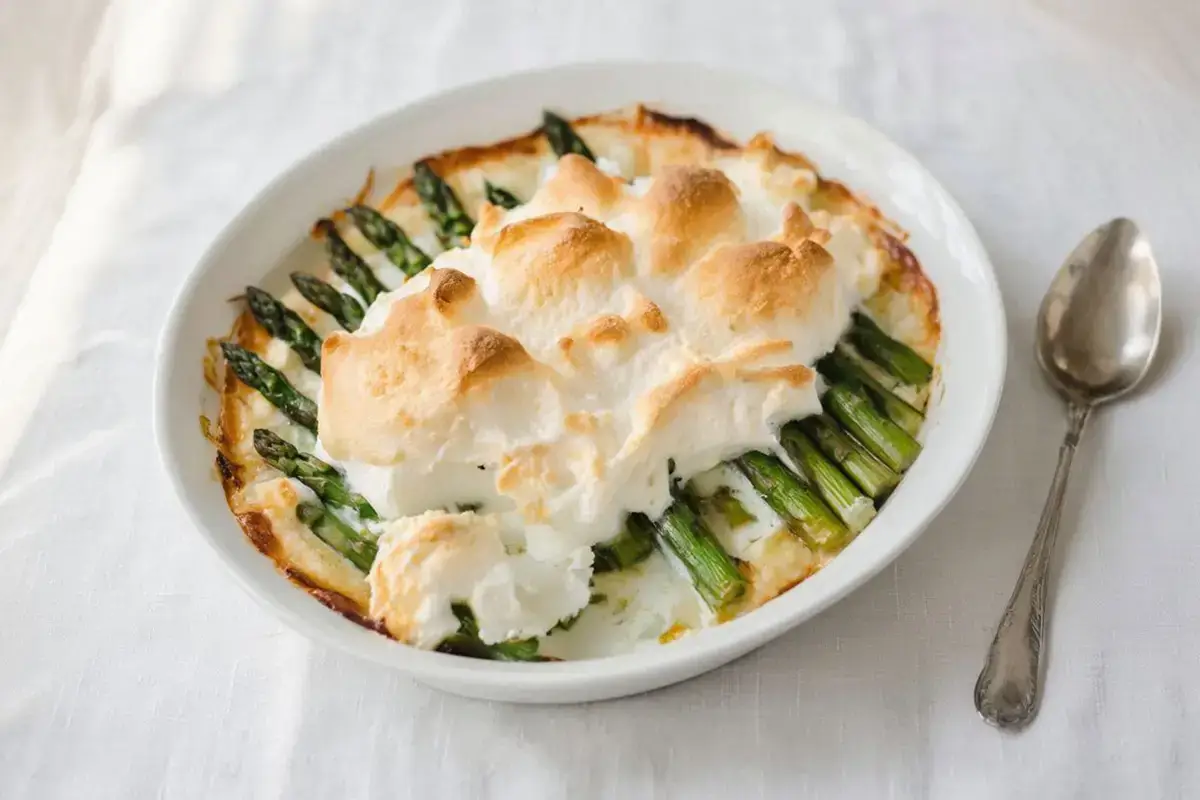
Asparagus Venetian Style
Fresh asparagus baked under a rich egg yolk cream sauce and a golden meringue-cheese topping. An elegant Central European appetizer.
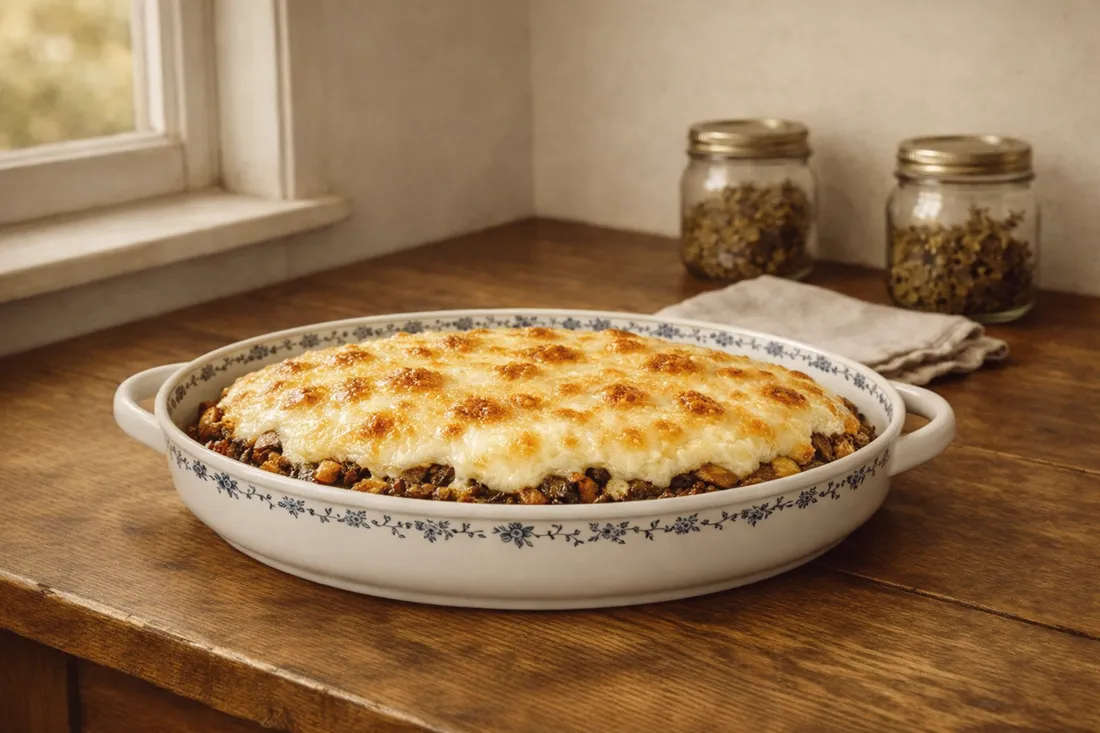
Baked Mushrooms with Hard Cheese and Eggs
Layers of sliced hard-boiled eggs and grated cheese topped with sautéed mushrooms, baked under a rich egg-enriched sour cream topping.
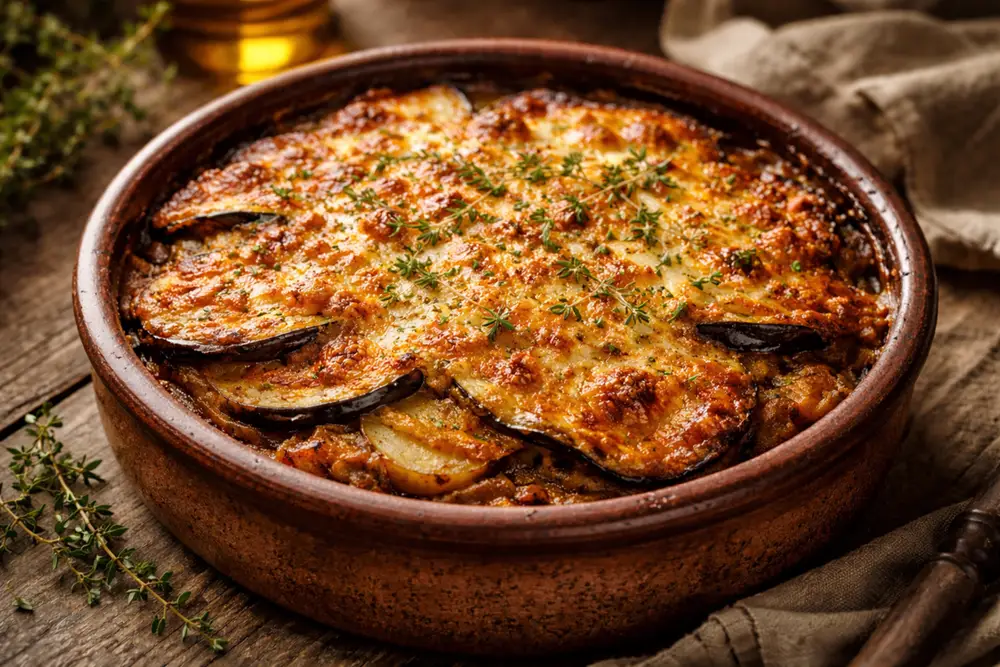
Baked Eggplant with Potatoes
A slow-baked layered casserole of eggplant, parboiled potatoes, golden fried onion, and melted cheese.