Lamb Liver and Lung Soup with Egg Yolk and Sour Cream
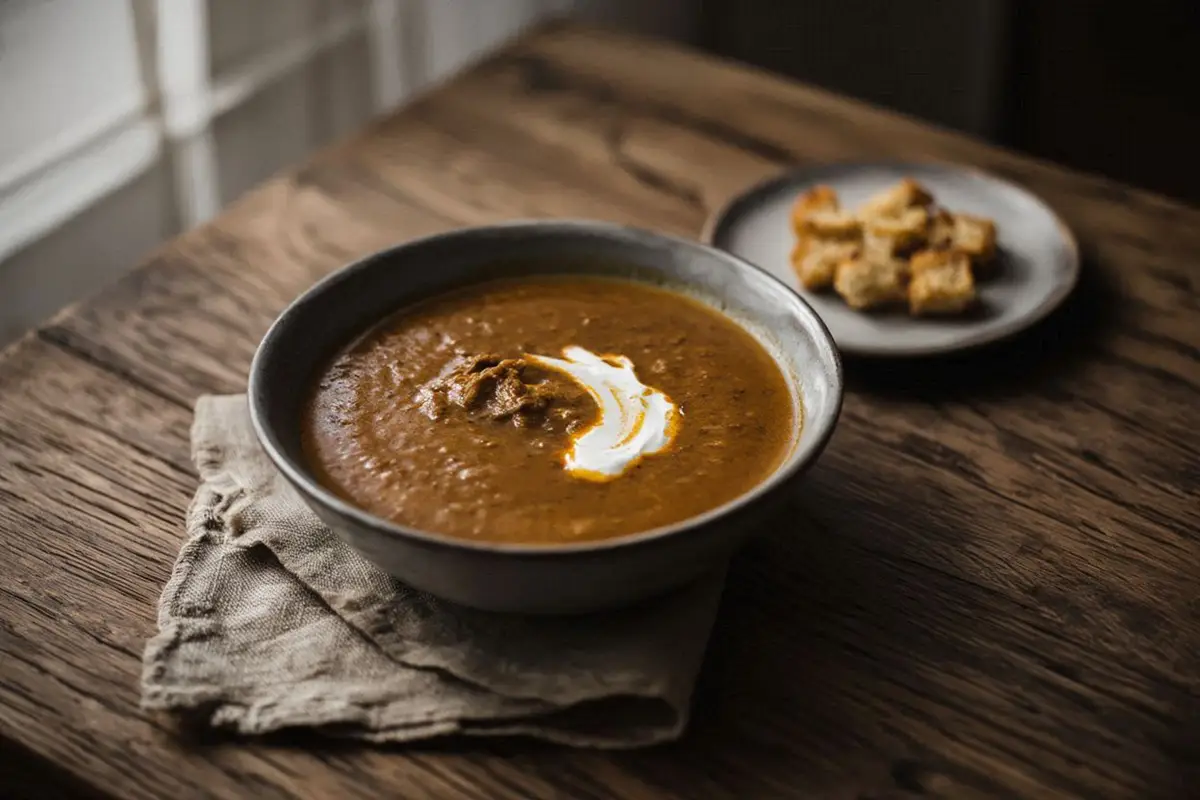
A rich Central European offal soup made from lamb liver and lungs, ground fine, finished with a velvety egg yolk and sour cream liaison and crispy croutons.
Quick Summary
A rich Central European offal soup made from lamb liver and lungs, ground fine, finished with a velvety egg yolk and sour cream liaison and crispy croutons.
Historical recipe
Modernised adaptation of an early 20th‑century source. Not independently kitchen-tested by Attic Recipes. Quantities, temperatures, and food safety guidance have been updated for a contemporary kitchen — results may vary and errors may exist. Nutritional values, where provided, are estimates only and have not been laboratory tested. Always follow current food safety guidelines for your region. If you have a health condition, allergy, or dietary requirement, consult a qualified professional before preparing this recipe.
Use of this recipe is entirely at your own risk and subject to our Terms of Service and Privacy Policy. Attic Recipes accepts no liability for any adverse outcome.
- Celery
- Dairy
- Eggs
- Gluten
Safety note
Lamb lungs (bela džigerica) are ILLEGAL for sale as human food in the United States under USDA regulation 9 CFR 310.16 (ban in effect since 1971). US readers must not attempt to purchase or use lamb lungs for this recipe.
US readers: prepare this soup with 500g lamb liver only, or substitute 150g lamb heart for a closer textural result. The soup remains excellent without the lungs.
Safety note
All offal must reach an internal temperature of 74°C (165°F). Undercooked liver and lungs carry Salmonella, E. coli, and Campylobacter risk. The 40–45 minute simmer is the minimum — verify with a meat thermometer before removing from the broth.
Additional notes
-
Warning
Very high cholesterol: approximately 485mg per serving — approaching or exceeding the 300mg daily recommended limit. Individuals with cardiovascular disease, high cholesterol, or on cholesterol-lowering medication should limit portion size or frequency.
Reduce offal quantity and increase broth volume for a lighter version.
-
Warning
Contains raw egg yolks in the liaison. Although tempered with hot broth, the temperature may not reach full pasteurization (71°C / 160°F). Not recommended for pregnant women, young children, the elderly, or immunocompromised individuals.
Use pasteurized egg yolks, or replace the raw yolk liaison with an additional 2 tablespoons of sour cream stirred in off the heat.
-
Warning
High purine content. Organ meats — particularly liver — are among the highest dietary sources of purines. Individuals with gout or hyperuricemia should avoid or strictly limit this dish.
Replace offal with chicken thigh meat for a low-purine variation that retains the broth's depth.
-
Caution
Celeriac is used whole in the broth and removed before serving, but celery allergens transfer to the broth during cooking. Not safe for individuals with celery allergy even though no celeriac pieces appear in the finished soup.
-
Caution
Contains dairy (butter, sour cream) and gluten (flour in the roux).
Replace flour with cornstarch slurry. Replace sour cream with a dairy-free alternative. Replace butter with lard or neutral oil.
- 1
Prepare the offal: Trim the lamb liver of any green bile duct tissue and tough connective tissue. Rinse liver and lungs under cold running water. Place both in a large pot.
Tip Any green tissue on the liver must be removed completely — even a small amount will make the entire soup bitter. - 2
Build the broth: Add the whole carrot, parsley root, celeriac, and whole unpeeled red onion to the pot. Cover with 2 liters of cold water. Bring to a boil, skimming any foam that rises. Reduce to a gentle simmer and cook for 40–45 minutes until both the liver and lungs are completely tender and reach an internal temperature of 74°C (165°F).
Tip Lungs take longer than liver to become tender — they are done when they offer no resistance when pierced with a knife and feel soft throughout. Verify with a meat thermometer. - 3
Remove and rest: Using a slotted spoon, remove the liver and lungs from the broth. Set aside to cool slightly. Strain the broth through a fine sieve and discard the vegetables. Return the clear broth to the pot.
- 4
Grind: Pass the cooled liver, lungs, and hard-boiled eggs through a meat grinder (medium plate) into a bowl. The mixture should be uniformly fine with no large pieces.
Tip A food processor can substitute for a meat grinder — pulse in short bursts to avoid turning the mixture into a paste. - 5
Make the roux: In a small saucepan, melt the butter or lard over medium heat. Add the flour and stir constantly for 2–3 minutes until the roux turns golden brown and smells nutty — a blond roux.
- 6
Combine: Whisk the roux into the strained broth over medium heat. Add the ground liver, lung, and egg mixture. Stir well to combine. Bring to a gentle simmer and cook for 10 minutes, stirring occasionally.
- 7
Prepare the liaison: In a bowl, whisk together the 2 raw egg yolks, 4 tablespoons of sour cream, and the juice of one lemon until smooth. Slowly ladle several spoonfuls of hot soup into the bowl, whisking constantly to temper the mixture.
Tip Do not skip tempering — adding cold liaison directly to hot soup will curdle the eggs immediately. Ladle at least 3–4 spoonfuls of hot soup into the bowl before returning the mixture to the pot. - 8
Finish: Pour the tempered liaison back into the pot, stirring gently. Heat through over low heat until the soup thickens slightly — do not boil. Boiling after adding the egg yolks will cause the liaison to curdle and the soup to separate. Taste and adjust salt.
- 9
Fry the croutons: While the soup finishes, fry the bread cubes in neutral oil over medium-high heat, turning frequently, until golden and crisp on all sides. Drain on paper towel.
- 10
Serve: Ladle the soup into warm bowls. Serve the croutons on a separate small plate alongside — they are added to the bowl by each diner, not pre-soaked in the soup.
Nutrition Information per 1 portion (approx. 380ml)
Nutritional values are approximate estimates and may vary based on specific ingredients used, preparation methods, and portion sizes.
Serving Suggestions
Serve as a substantial first course or a light main. The croutons served on a separate plate is the traditional and correct presentation — it allows each diner to add them gradually, controlling how much they soften. Dark rye bread alongside.
About This Recipe
This soup is built on a principle that early 20th-century cooks took for granted: when you slaughter a lamb, you use everything. The “black liver” — tamna, krvava jetra — and the “white liver” — bela, sunđerasta pluća — were cooked together, ground fine with hard-boiled eggs, and returned to their own cooking broth. The result is a soup of unusual depth and texture, finished with a classical Central European liaison of egg yolk, sour cream, and lemon that transforms a thrifty peasant dish into something refined enough for a proper table.
Why It Works
Grinding the cooked offal with hard-boiled eggs is the technical key to this recipe. The eggs act as a binder and a softener — their fat and protein integrate with the ground liver and lung, producing a smoother, more cohesive texture than ground offal alone would give. The lung contributes a lighter, slightly spongy character that prevents the soup from becoming too heavy with the richness of liver alone.
The lemon in the liaison is not optional. Liver and lemon have a long culinary relationship — the acid cuts the iron-rich bitterness of the organ meat and makes the sour cream taste brighter and less fatty. Add all of it.
Understanding the Offal
Lamb liver (crna džigerica): Dark, dense, blood-rich. Strong flavor, high in iron, Vitamin A, and B12. Must be trimmed carefully of all green bile duct tissue before cooking.
Lamb lungs (bela džigerica): Pale, spongy, mild. Much lighter in flavor than liver — they contribute texture and body to the ground mixture without dominating. Widely available in EU and most Asian markets. Illegal for commercial sale in the United States since 1971.
Together, they produce a more balanced, less aggressively “livery” soup than liver alone.
For US Readers
Lamb lungs cannot legally be purchased for human consumption in the United States. The soup works with 500g of lamb liver alone — the flavor will be more intense and the texture denser. For a closer approximation to the original, replace the lungs with 150g of diced lamb heart, which has a milder, more muscular character that moderates the liver’s dominance.
Troubleshooting
Soup turned bitter? A bile duct was left on the liver. Trim any green or dark-green tissue before cooking — even a fragment flavors the entire pot.
Liaison curdled? The soup was boiling when the mixture was added, or the mixture was not tempered first. Always ladle hot soup into the cold liaison bowl, not the other way around.
Ground mixture too coarse? Pass through the grinder a second time, or finish in a food processor with a few short pulses.
A classic of early 20th century home cooking, preserved and adapted for the modern kitchen.
The Story Behind This Recipe
Historical Context
The distinction between 'black' and 'white' liver — crna and bela džigerica — was standard butcher's terminology across Central Europe in the early 20th century. Black liver referred to the dark, blood-rich liver; white liver to the pale, spongy lungs. Both were considered equally valuable parts of a slaughtered animal, and their combination in soups and stews was a hallmark of spring and autumn lamb cookery, when whole animals were processed and nothing was wasted. The egg yolk and sour cream liaison, added off the heat at the final moment, reflects a classical Central European finishing technique that elevated a peasant offal soup into something suitable for a middle-class table.
Modern Kitchen Adaptation
Lamb lungs are legal and available in EU, UK, and most Asian and Latin American markets. They are illegal for sale as human food in the United States (USDA ban since 1971). For US readers, the soup can be prepared with lamb liver only — increase liver to 500g and reduce cooking time slightly. The flavor will be richer and more intense without the lighter, milder character the lungs contribute. A small amount of diced lamb heart (150g) is a closer textural substitute than liver alone. Lard is the historically correct fat for the roux; butter is an acceptable modern alternative.
This recipe is an independent modern adaptation developed from historical sources in the public domain. It is provided for informational and educational purposes only and does not constitute professional dietary, nutritional, or medical advice. Food preparation involves inherent risks. The reader assumes full responsibility for safe food handling, ingredient sourcing, and adherence to current local food safety guidelines. The site operator accepts no liability for outcomes resulting from the preparation or consumption of this recipe.
One recipe.
Every week.
You Might Also Like
More recipes from the same category
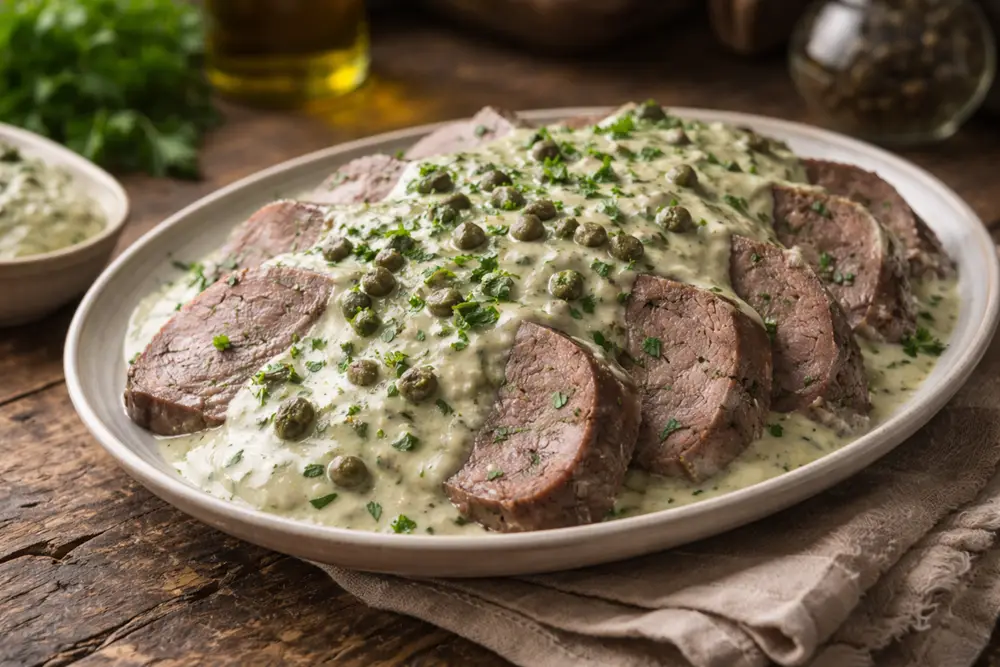
Baked Tongue in Green Sauce
Beef tongue braised with herbs, larded with bacon and roasted until golden, served in a green sauce of capers, anchovy, parsley and sour cream.
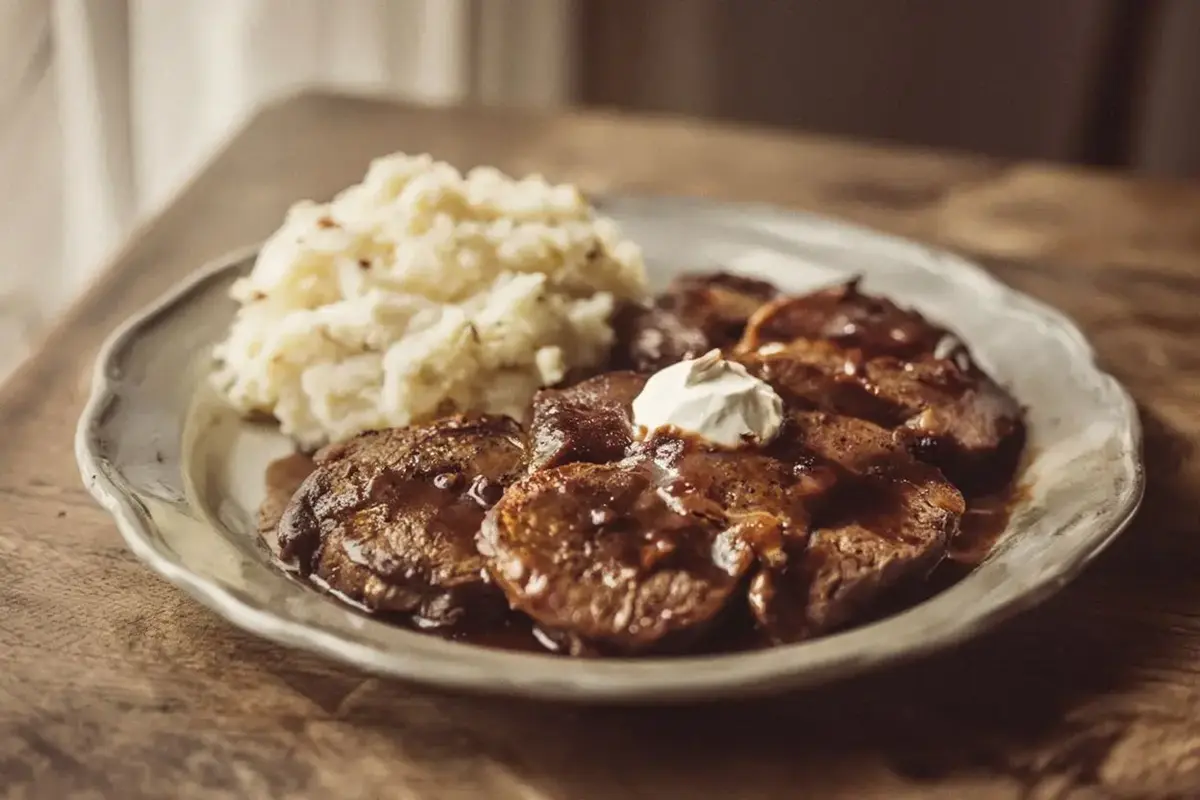
Beef Kidney with Wine
Beef kidney marinated in red wine, braised with herbs, finished with sour cream. Tender, rich, and deeply flavored.
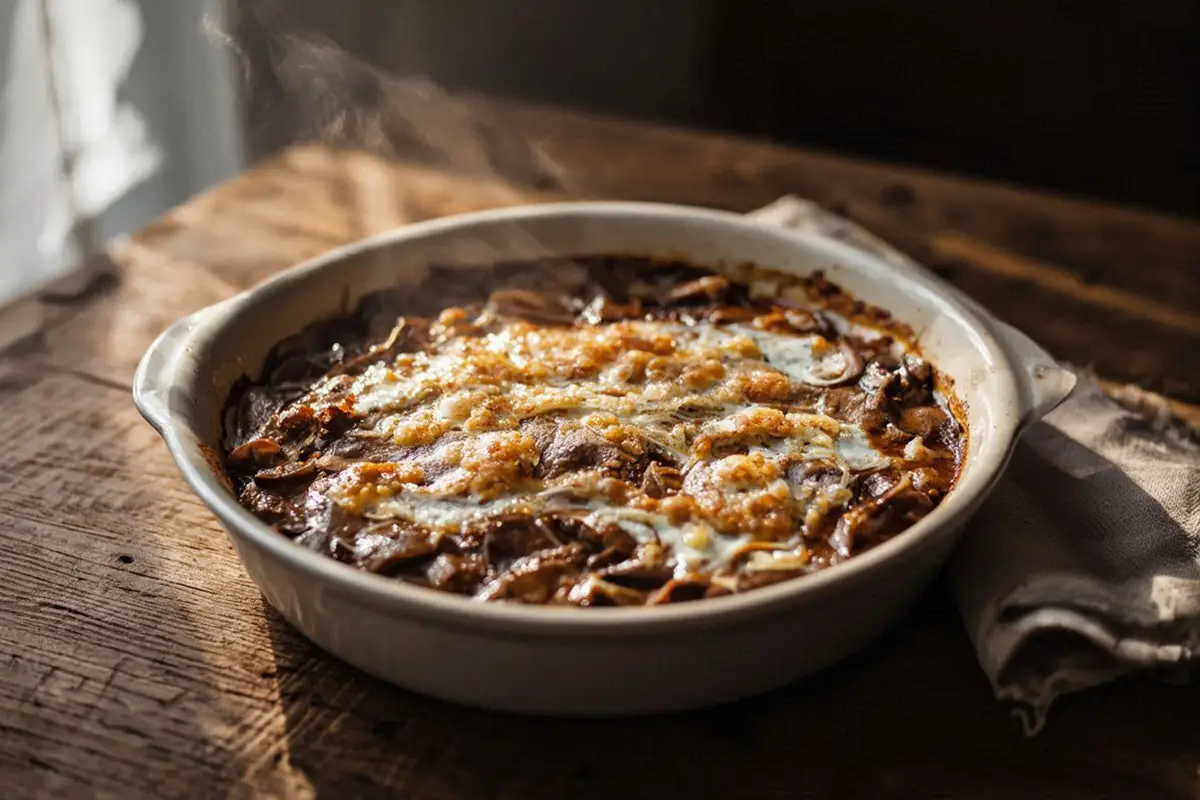
Beef Tongue in Mushroom Sauce
Tender sliced beef tongue layered in a rich dark mushroom sauce, finished with sour cream, Parmesan, and a golden oven crust.