Larded Beef Roast with Pearl Onions and Wine Sauce
A larded, wine-marinated beef roast braised low and slow with veal feet for natural body in the sauce, finished with pearl onions and carrots.
Quick Summary
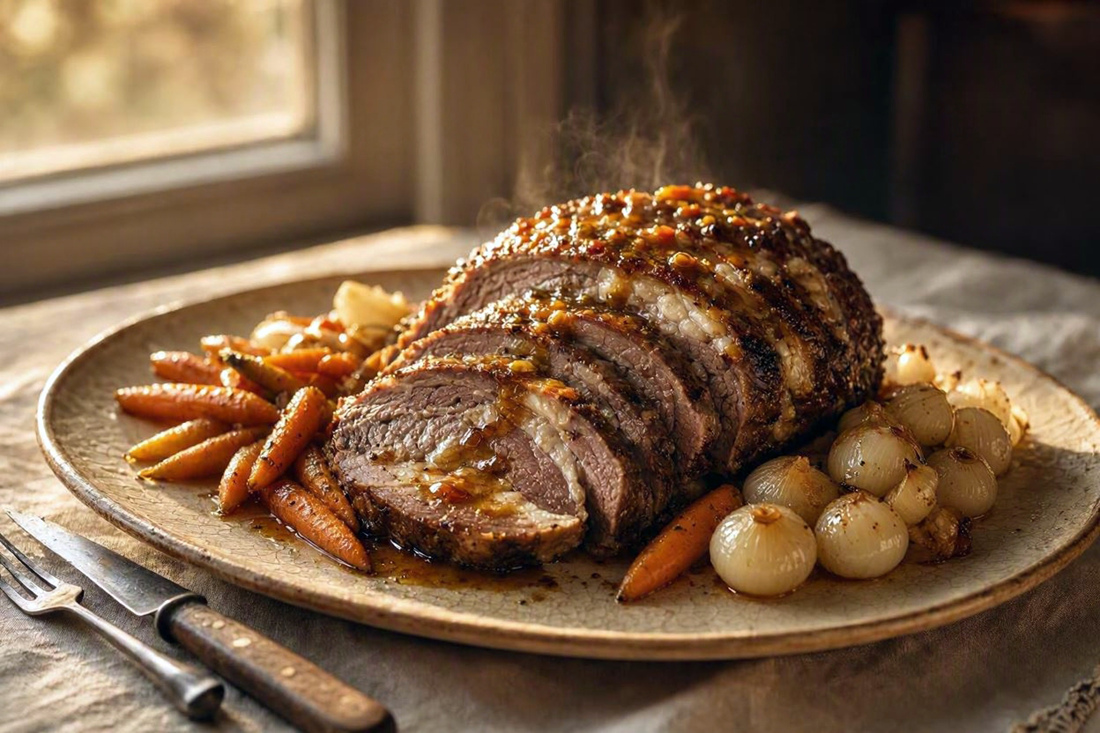
This beef roast is larded with pork fat, marinated overnight in white wine, then braised for hours with veal feet, which give the sauce its natural body. Pearl onions and carrots round it out. Most of the time is hands-off simmering.
This recipe uses How Veal Was Divided: A Guide to Traditional Butchery Cuts — prepare it in advance if you haven't already.
Historical recipe
Modernised adaptation of an early 20th‑century source. Not independently kitchen-tested by Attic Recipes. Quantities, temperatures, and food safety guidance have been updated for a contemporary kitchen — results may vary and errors may exist. Nutritional values, where provided, are estimates only and have not been laboratory tested. Always follow current food safety guidelines for your region. If you have a health condition, allergy, or dietary requirement, consult a qualified professional before preparing this recipe.
Use of this recipe is entirely at your own risk and subject to our Terms of Service and Privacy Policy. Attic Recipes accepts no liability for any adverse outcome.
- Sulphites
Additional notes
-
Note
High in saturated fat per serving due to the larding fat, cubed fatback, and marbled beef. Those managing cholesterol or heart health — particularly older adults — may want to trim visible fat or reduce the larding and fatback amounts.
- 1
Lard the beef roast with the pork fatback strips, threading them through with a larding needle, or tying them around the outside. Tie the roast with kitchen twine.
- 2
Season the meat with the 1 tsp of salt and 1/2 tsp of ground pepper, then place it in a container with the crushed peppercorns and bay leaf. Pour 500ml of the wine over the meat, covering it as much as possible.
- 3
Refrigerate and let it marinate for at least 8 hours, or up to 24 hours in a cold room or the refrigerator.
- 4
Cut the 125g of dry-cured pork fatback into cubes and render it in a large, deep pot over medium heat, stirring occasionally.
- 5
Remove the meat from the marinade, reserving the liquid, and pat it dry. Lower it into the pot and sear on all sides in the rendered fat.
- 6
Add the 150g of carrots and 110g of chopped onion to the pot.
- 7
Add the 2 veal feet to the reserved marinade liquid along with the remaining 200ml of wine, then pour this into the pot with the meat.
- 8
Bring to a simmer, cover, and cook for at least 3 hours, until the meat is about half-tender.
Tip Check occasionally and top up with a little water or stock if the liquid reduces too much before the meat is done. - 9
Add the 10 pearl onions and continue simmering, covered, until the meat is fully fork-tender, another 45 minutes to 1 hour.
- 10
Remove the meat from the pot, untie the twine, and place it on a serving platter.
- 11
Remove the veal feet from the pot and take the meat off the bones. Arrange it around the beef roast along with the cooked carrots and pearl onions. Spoon some of the braising liquid over everything and let the dish rest a few minutes so the sauce loosely sets.
- 12
Serve on a warmed platter with the remaining braising liquid alongside as a sauce, and eat from warmed plates.
Nutrition Information per 1 serving (approx 300g meat with garnish and sauce)
Nutritional values are approximate estimates and may vary based on specific ingredients used, preparation methods, and portion sizes.
Serving Suggestions
Serve with crusty bread, mashed potatoes, or buttered noodles to soak up the sauce. A simple green salad helps balance the richness.
About This Recipe
This is a long, multi-stage roast built for a slow afternoon: a lean cut of beef is larded with fat, marinated overnight in wine, seared, and then braised for hours with veal feet, which slowly release enough natural gelatin to give the finished sauce real body without any flour or cornstarch involved.
Pearl onions go in partway through cooking so they hold their shape, while the deboned meat from the veal feet becomes part of the garnish rather than being discarded — nothing here goes to waste.
Why It Works
Lean leg cuts have very little internal fat, so larding threads fat directly through the muscle to keep it moist over hours of cooking rather than relying on the surface alone. Veal feet are almost pure collagen and connective tissue, which breaks down into gelatin over a long simmer — this is what gives the braising liquid its glossy, slightly clingy texture once it’s spooned over the meat, rather than a thin, watery pan sauce.
Modern Kitchen Tips
- No larding needle? Tying thin strips of fatback or bacon around the outside of the roast gets you most of the way there.
- Can’t find veal feet? A few sheets of bloomed gelatin stirred into the finished liquid gives a similar body to the sauce.
- Judge doneness by tenderness, not the clock — depending on the cut, it may need more or less time than the estimate here.
- The braising liquid can be strained and reduced further on its own if you want a thicker sauce to serve alongside.
A classic of early 20th century home cooking, preserved and adapted for the modern kitchen.
The Story Behind This Recipe
Historical Context
Larding a lean roast with strips of pork fat was a common way to keep leaner cuts moist through long cooking in home kitchens of the early 20th century, before fattier, marbled cuts were as readily available. Veal feet were valued for the natural gelatin they released into a braising liquid, giving the sauce body without any thickener — a technique that predates commercial gelatin becoming a pantry staple. Serving braised dishes like this one on a warmed platter, with warmed plates, reflected how quickly a gelatin-rich sauce could firm up and lose its glossy texture once it cooled.
Modern Kitchen Adaptation
The cut specified in the traditional method, 'kapak', refers to a specific, tender flat muscle from the leg with no exact English equivalent; a well-trimmed eye of round or top round roast works as a substitute. A larding needle isn't common in most modern kitchens — tying strips of fatback or bacon around the outside of the roast gives a similar, if less evenly distributed, effect. Veal feet can be hard to find; substituting bloomed gelatin sheets or powder stirred into the finished braising liquid recreates a similar body in the sauce, though the flavor will be milder without the long-simmered bone and connective tissue. Salt, pepper, carrot, onion, and both wine amounts were not specified in the traditional method and have been estimated here as reasonable starting points.
This recipe is an independent modern adaptation developed from historical sources in the public domain. It is provided for informational and educational purposes only and does not constitute professional dietary, nutritional, or medical advice. Food preparation involves inherent risks. The reader assumes full responsibility for safe food handling, ingredient sourcing, and adherence to current local food safety guidelines. The site operator accepts no liability for outcomes resulting from the preparation or consumption of this recipe.
One recipe.
Every week.
You Might Also Like
More recipes you'll enjoy
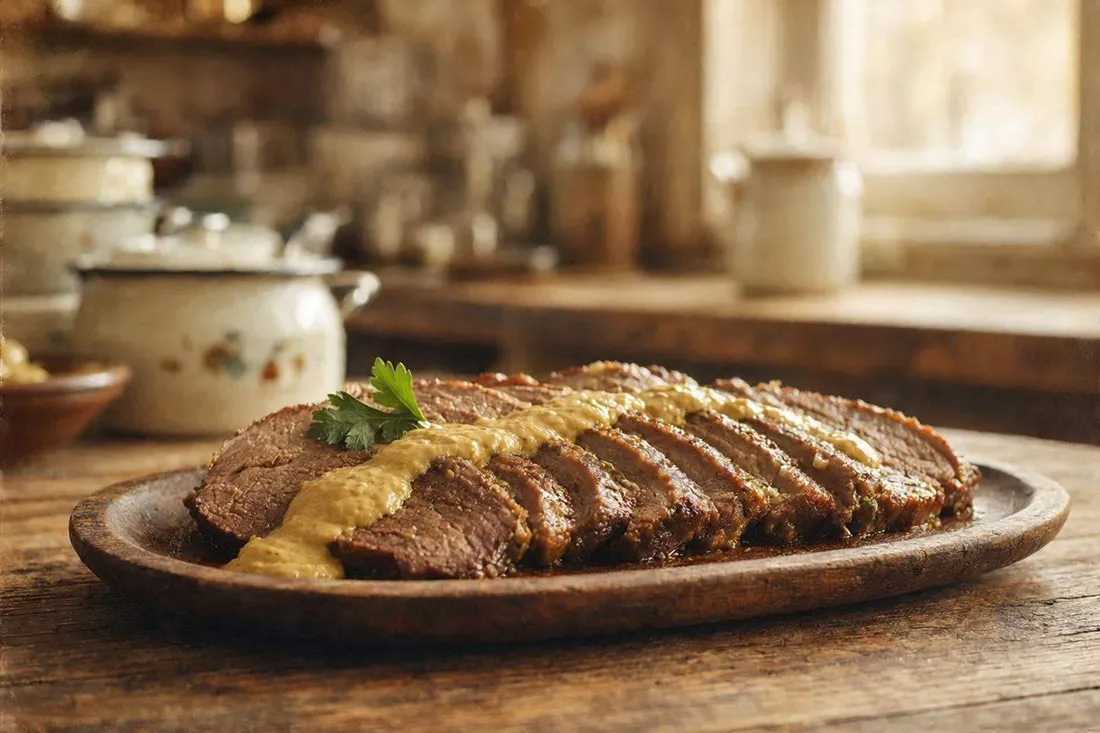
Braised Beef Topside in Mustard Sauce
A lean cut from the leg, slow-braised with onion, garlic, and bacon, then sliced and served in a smooth mustard and lemon sauce.
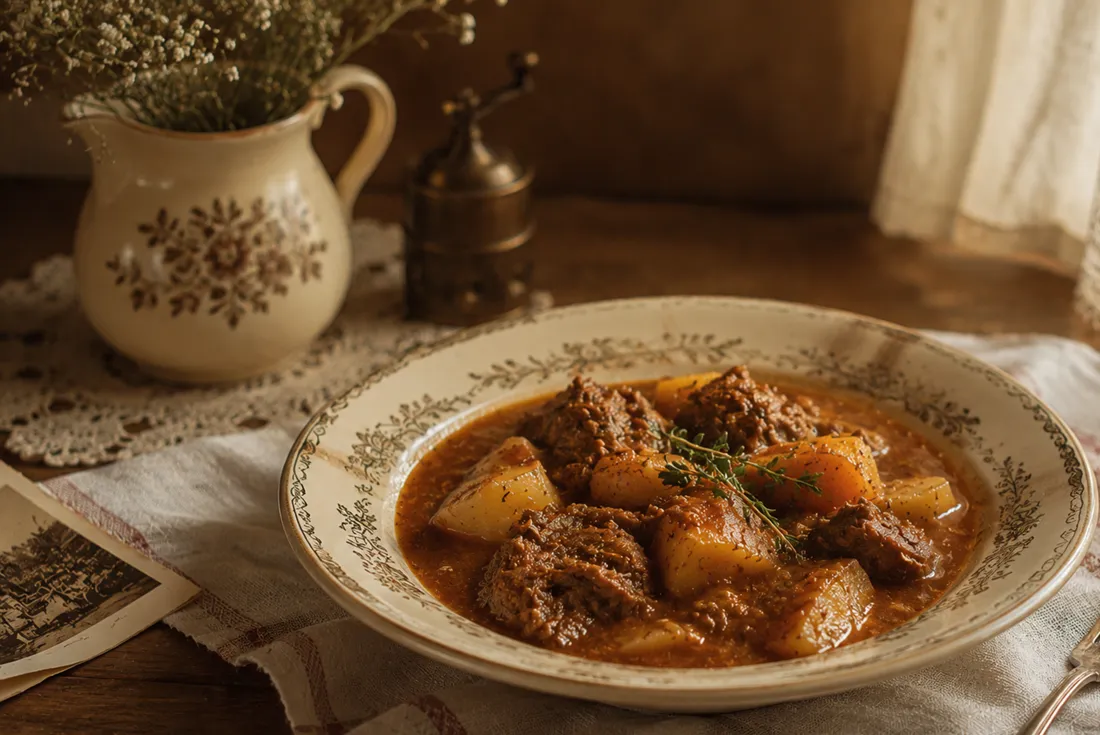
Mutton and Potato Stew
Mutton shoulder and breast seared in lard, thickened with a light roux, and simmered with potatoes, herbs, and bay leaf until tender and rich.
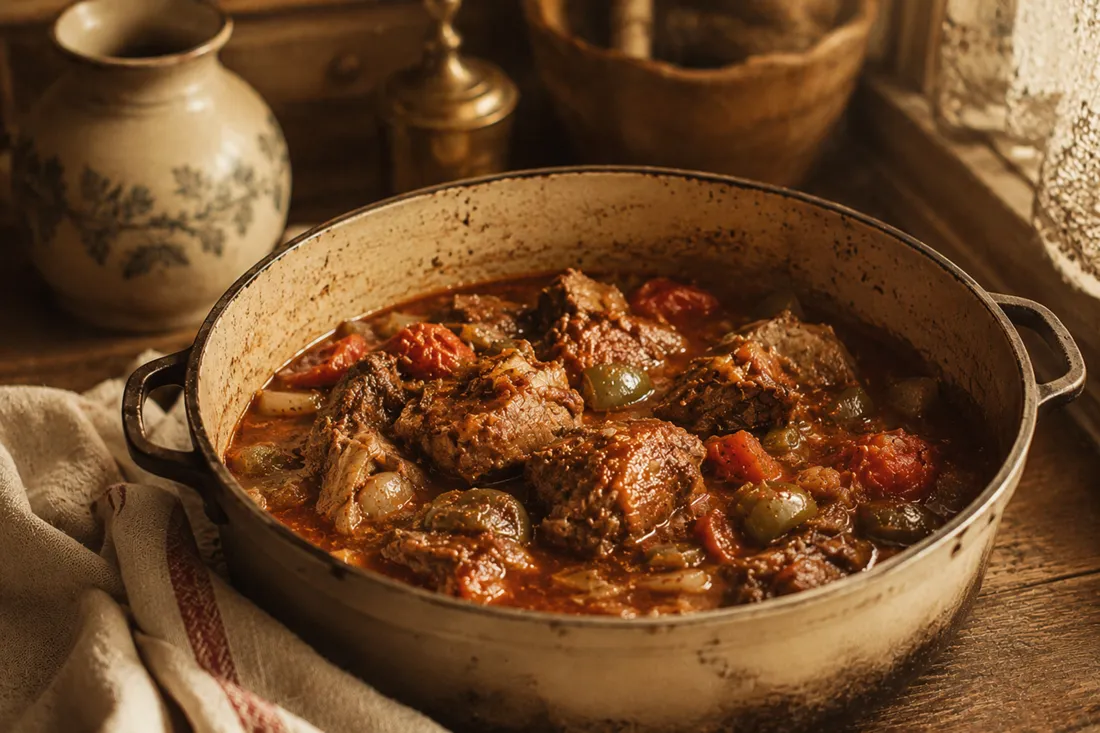
One-Pot Lamb Stew with Tomatoes and Peppers
Tender lamb slow-simmered with onion, sweet paprika, tomatoes, and mild green peppers into a rich, saucy one-pot stew.