Leeks Like Asparagus — Warm or Cold with Breadcrumbs and Egg
Tender boiled leek hearts served two ways: warm with buttered breadcrumbs, or cold with parsley, oil, and lemon. Simple, elegant, and entirely forgotten.
Quick Summary
Tender boiled leek hearts served two ways: warm with buttered breadcrumbs, or cold with parsley, oil, and lemon. Simple, elegant, and entirely forgotten.
Historical recipe
Modernised adaptation of an early 20th‑century source. Not independently kitchen-tested by Attic Recipes. Quantities, temperatures, and food safety guidance have been updated for a contemporary kitchen — results may vary and errors may exist. Nutritional values, where provided, are estimates only and have not been laboratory tested. Always follow current food safety guidelines for your region. If you have a health condition, allergy, or dietary requirement, consult a qualified professional before preparing this recipe.
Use of this recipe is entirely at your own risk and subject to our Terms of Service and Privacy Policy. Attic Recipes accepts no liability for any adverse outcome.
- Dairy
- Eggs
- Gluten
Additional notes
-
Caution
Contains eggs (hard-boiled garnish) and dairy (butter, warm version). Not suitable for those with relevant allergies without substitution.
For a vegan version: omit eggs, replace butter with olive oil for the breadcrumbs. The cold version with oil and lemon is naturally dairy-free — simply omit the egg garnish.
-
Caution
Contains gluten (breadcrumbs, warm version). Not suitable for those with celiac disease or gluten sensitivity.
Replace breadcrumbs with finely crushed gluten-free crackers or toasted ground almonds — both produce a similar golden crunchy topping.
- 1
Prepare the leeks: Trim the roots and remove all dark green leaves — use only the white and very pale yellow parts. Cut into equal pieces, roughly 6–8cm long. Wash thoroughly under cold running water, separating the layers slightly to rinse out any trapped soil.
Tip Uniform length pieces cook evenly and present beautifully — this dish is as much about presentation as flavor. - 2
Boil: Bring a wide pot of well-salted water to a rolling boil. Add the leek pieces and cook for 8–12 minutes until completely tender when pierced with a knife — they should offer no resistance. Do not undercook.
Tip Leeks treated like asparagus must be genuinely tender, not al dente. The comparison to asparagus in the original recipe refers to the elegance of presentation, not the texture. - 3
Drain and cool: Transfer the leeks carefully to a colander. Let them drain thoroughly — at least 5 minutes. Press gently to remove excess water without crushing the pieces.
- 4
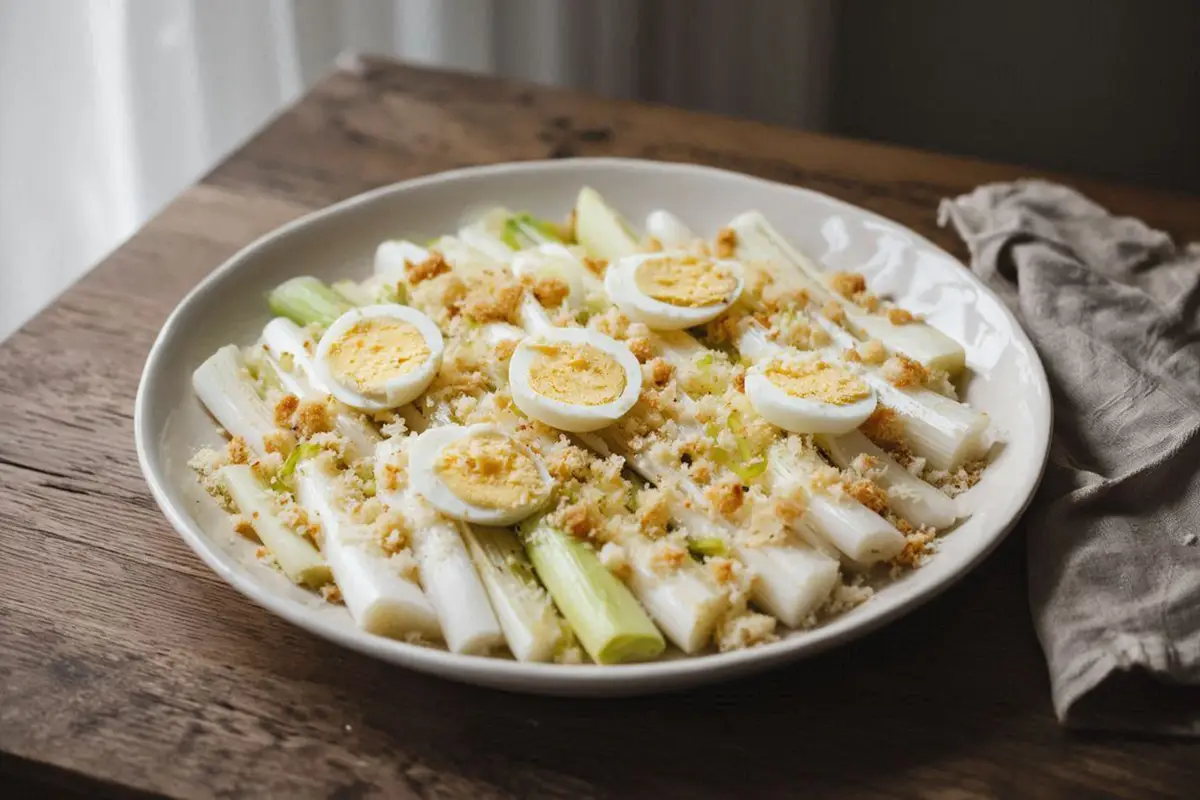
Arrange: Place the drained leeks in a serving dish, arranged neatly in a single layer, parallel — in the manner of asparagus.
- 5
Warm version — fried breadcrumbs: Melt the butter in a small pan over medium heat. Add the breadcrumbs and fry, stirring constantly, until golden and crisp. Scatter immediately over the warm leeks. Slice or crumble the hard-boiled eggs over the top and serve at once.
Tip Breadcrumbs burn quickly once they start to color — keep stirring and remove from heat the moment they are golden. - 6
Cold version — lemon and parsley: Allow the leeks to cool completely. Gently squeeze each piece lightly to remove any remaining water (the original recipe calls this 'juicing'). Separate the layers slightly with your fingers ('picking'). Arrange in the serving dish. Whisk the oil and lemon juice together, pour over the leeks, and scatter the chopped parsley on top. Garnish with the sliced hard-boiled eggs.
Tip The cold version improves after 15–20 minutes of resting — the leeks absorb the dressing and the parsley softens slightly.
Nutrition Information per 1 portion (approx. 150g, warm version with breadcrumbs)
Nutritional values are approximate estimates and may vary based on specific ingredients used, preparation methods, and portion sizes.
Serving Suggestions
Warm version: serve alongside roasted meat, grilled fish, or as part of a multi-dish lunch. Cold version: serves equally well as a light vegetable side or as a standalone vegetarian appetizer for 2. Both versions are complete as written — no sauce needed.
About This Recipe
In early 20th-century Central European households, asparagus was a luxury. Leeks were not. This recipe closes that gap with a simple act of presentation: boil the white hearts of a bunch of leeks, arrange them like asparagus on a serving dish, and treat them with the same respect — warm with golden buttered breadcrumbs and hard-boiled egg, or cold with oil, lemon, and parsley. The result is a dish that is quietly elegant, genuinely delicious, and almost entirely absent from modern cooking. Vegetarians can serve the cold version as a standalone appetizer for two.
Why It Works
The white part of a leek, properly boiled and drained, has a sweetness and tenderness that genuinely rivals asparagus. The key is the cooking: leeks must be completely tender — not al dente — and thoroughly drained before dressing. Underdrained leeks pool water in the dish and turn the breadcrumbs soggy or dilute the dressing into something watery and flat.
The two versions are not interchangeable variations — they are distinct dishes that suit different occasions. The warm version with butter and breadcrumbs is rich and comforting, a natural side for roasted or braised meat. The cold version with oil and lemon is sharper, brighter, and lighter — a proper salad that stands alone.
The Juicing and Picking Step
The original recipe instructs to “juice” and “pick” the leeks before dressing the cold version. This means: lightly squeeze each piece to expel trapped cooking water, then gently separate the layers with your fingers to loosen the texture. It takes thirty seconds per piece and makes a significant difference — the result is a more open, salad-like structure that absorbs the dressing rather than sitting on top of it.
Presentation
The asparagus comparison is not only culinary — it is visual. Arrange the leek pieces parallel in a single layer on a wide, shallow dish. The hard-boiled egg, sliced into neat rounds and laid across the top, provides the color contrast that makes this a presentable dish rather than a pile of boiled vegetables. The effort is minimal; the effect is considerable.
A classic of early 20th century home cooking, preserved and adapted for the modern kitchen.
The Story Behind This Recipe
Historical Context
The comparison of leeks to asparagus was deliberate and socially meaningful in early 20th-century Central European cooking. Asparagus — particularly white asparagus — was an expensive, prestigious vegetable available only briefly in spring and primarily to wealthier households. Preparing leeks 'like asparagus' was a way of bringing the same presentation and elegance to an affordable, year-round vegetable. The two serving methods — warm with butter and breadcrumbs, cold with oil and lemon — mirror exactly the classical ways of serving asparagus in the same period.
Modern Kitchen Adaptation
The 'juicing and picking' described in the cold version is simply a light squeeze to remove water and a gentle separation of the leek layers to create a looser, more salad-like texture. Do not skip this step for the cold version — undrained leeks will pool water in the dish and dilute the dressing. The hard-boiled egg garnish is not decorative only — the egg yolk, broken into the dressing, enriches and emulsifies it naturally. Lard is the historically correct fat for the breadcrumb version; butter is used here as a modern alternative.
This recipe is an independent modern adaptation developed from historical sources in the public domain. It is provided for informational and educational purposes only and does not constitute professional dietary, nutritional, or medical advice. Food preparation involves inherent risks. The reader assumes full responsibility for safe food handling, ingredient sourcing, and adherence to current local food safety guidelines. The site operator accepts no liability for outcomes resulting from the preparation or consumption of this recipe.
One recipe.
Every week.
You Might Also Like
More recipes from the same category
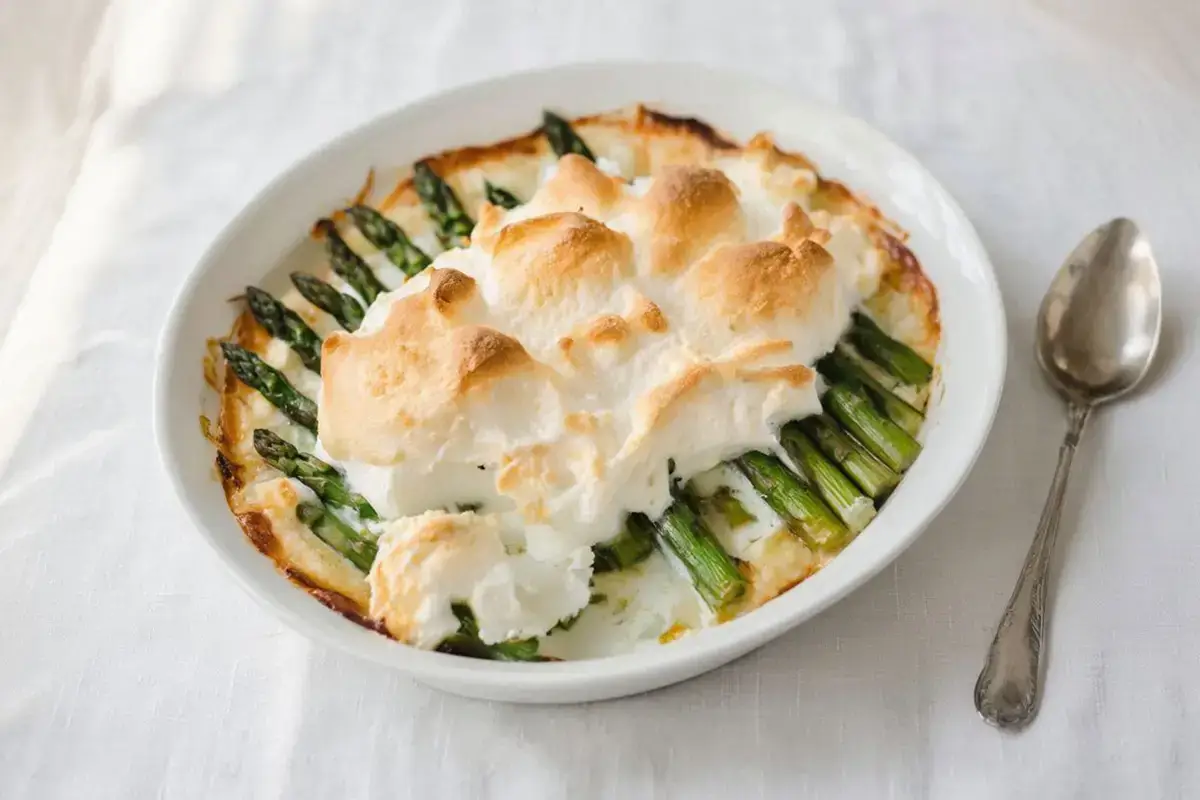
Asparagus Venetian Style
Fresh asparagus baked under a rich egg yolk cream sauce and a golden meringue-cheese topping. An elegant Central European appetizer.
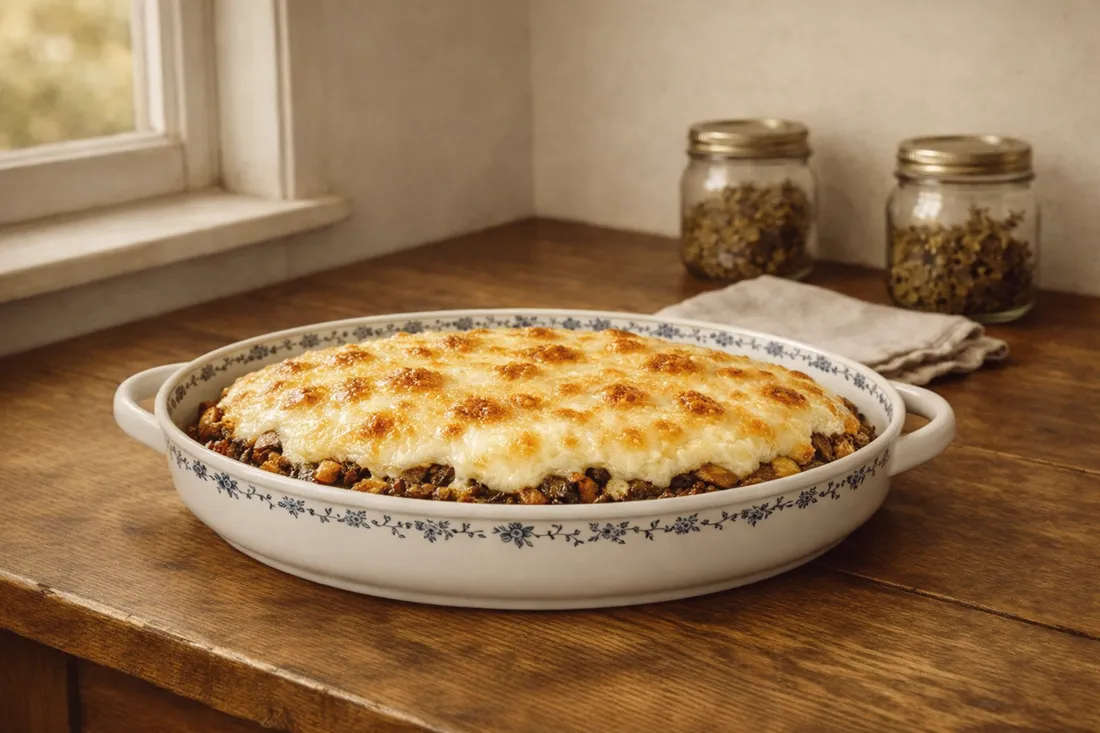
Baked Mushrooms with Hard Cheese and Eggs
Layers of sliced hard-boiled eggs and grated cheese topped with sautéed mushrooms, baked under a rich egg-enriched sour cream topping.
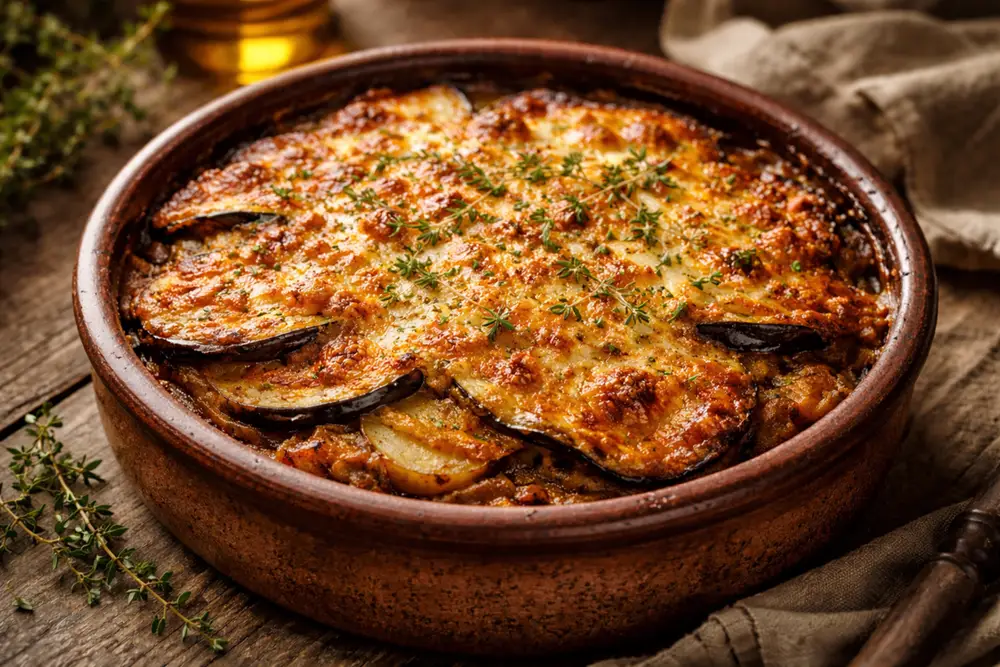
Baked Eggplant with Potatoes
A slow-baked layered casserole of eggplant, parboiled potatoes, golden fried onion, and melted cheese.