Leg of Lamb in Green Sauce
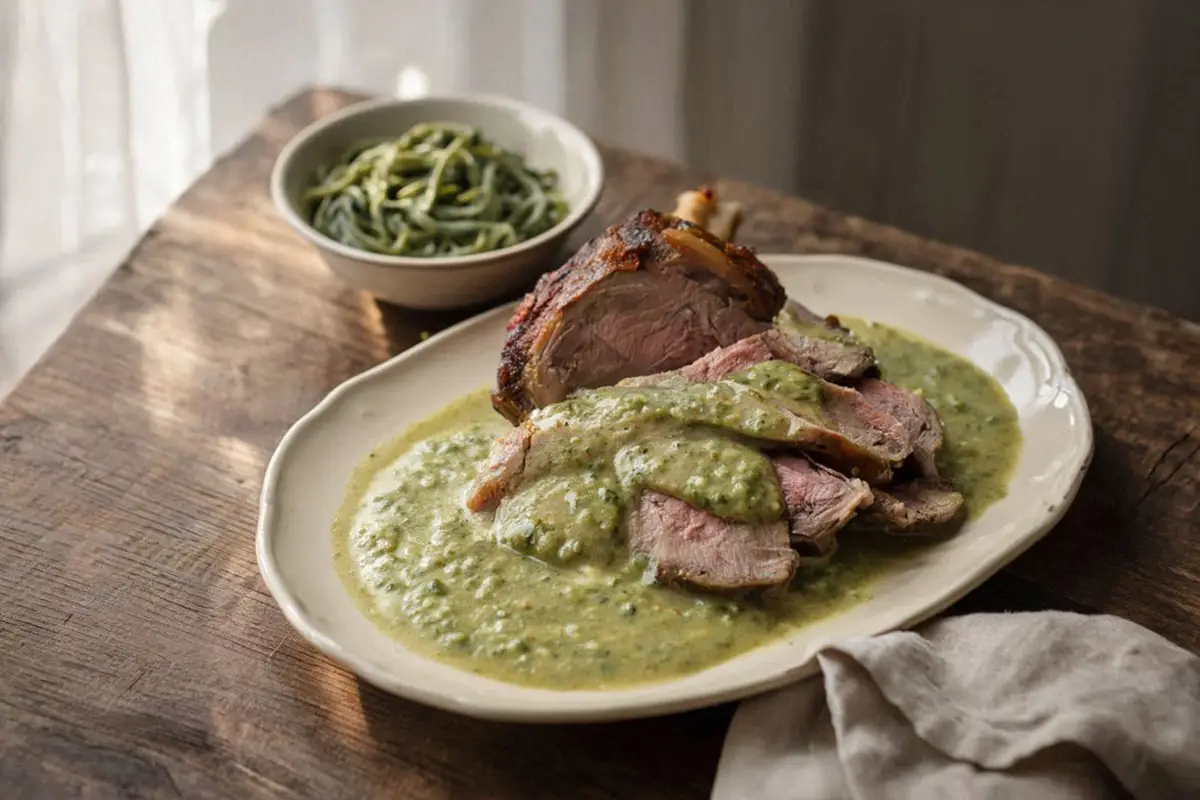
Slow-roasted leg of lamb with a silky green sauce of pureed root vegetables, sour apple, mustard and sour cream. A refined Central European Sunday roast.
Quick Summary
Slow-roasted leg of lamb with a silky green sauce of pureed root vegetables, sour apple, mustard and sour cream. A refined Central European Sunday roast.
Historical recipe
Modernised adaptation of an early 20th‑century source. Not independently kitchen-tested by Attic Recipes. Quantities, temperatures, and food safety guidance have been updated for a contemporary kitchen — results may vary and errors may exist. Nutritional values, where provided, are estimates only and have not been laboratory tested. Always follow current food safety guidelines for your region. If you have a health condition, allergy, or dietary requirement, consult a qualified professional before preparing this recipe.
Use of this recipe is entirely at your own risk and subject to our Terms of Service and Privacy Policy. Attic Recipes accepts no liability for any adverse outcome.
- Celery
- Dairy
- Gluten
- Mustard
Additional notes
-
Warning
Lamb must reach an internal temperature of at least 72°C (160°F) for medium, or 80°C (175°F) for well-done as this recipe requires. Do not rely on time alone — use a meat thermometer inserted into the thickest part away from the bone.
An instant-read thermometer is the only reliable method. Bone-in legs vary significantly in thickness and cook unevenly without monitoring.
-
Caution
This recipe contains mustard (slačica). Mustard is one of the 14 major EU allergens. This dish is not suitable for individuals with mustard allergies.
Omit mustard entirely — the apple and lemon provide sufficient sharpness without it. The sauce character changes slightly but remains balanced.
-
Caution
This recipe contains sour cream. Individuals with dairy allergies or lactose intolerance should exercise caution. The sour cream can be omitted — the sauce is complete and flavourful without it, though slightly less rich.
-
Note
Lamb has a naturally higher fat content than veal or chicken. The visible surface fat should be trimmed before roasting if a leaner dish is preferred. The nutritional values above reflect a moderate trim.
- 1
Wash and pat dry the leg of lamb. Season generously with salt on all sides. Place in a deep casserole or roasting pan with the lard and 100ml of water.
- 2
Roast at 180°C / 160°C fan (350°F), basting the leg frequently with the pan juices — every 20–25 minutes. After the first 30 minutes, when the surface has begun to colour, add all the chopped root vegetables and onion to the casserole. Add the bay leaf, allspice grains, peppercorns, and a little more water if the pan is getting dry.
Tip The vegetables should sit around the lamb, not under it. They will soften and absorb the roasting juices throughout the cook, forming the base of the sauce. - 3
Continue roasting for a total of 2.5–3 hours, until the meat is completely tender and pulls easily from the bone. Internal temperature should reach 80–85°C (175–185°F) for well-done, which this recipe requires for the vegetables to properly soften alongside.
Tip Basting is not optional here — it is what makes the sauce. Each baste adds roasting juices back to the vegetables, building flavour in the sauce base. - 4
Remove the lamb from the casserole and set aside to rest, loosely covered with foil. Remove and discard the bay leaf and allspice grains from the pan.
- 5
Transfer all the vegetables and their juices from the casserole into a blender or use a hand blender directly in the pan. Purée until completely smooth. If the purée is very thick, loosen with a small splash of warm water. Set aside.
- 6
In a saucepan over medium heat, melt the tablespoon of lard. Add the flour and stir continuously until the roux turns golden brown — about 3–4 minutes. Add the sugar and stir for 30 seconds.
Tip The sugar caramelises slightly in the roux and balances the acidity of the apple and lemon in the finished sauce. Do not skip it. - 7
Add the vegetable purée to the roux gradually, stirring constantly to combine. Add the grated sour apple and stir well. Bring to a gentle boil and simmer for 5 minutes until the sauce is smooth and thickened.
- 8
Remove from heat. Stir in the mustard, lemon juice, and sour cream. Taste and adjust seasoning — salt, lemon, or a pinch more sugar as needed. Do not return to the boil after adding the sour cream.
Tip Add mustard off heat — brief cooking is fine but prolonged boiling dulls its sharpness. The balance of this sauce is sweet (apple/sugar), sharp (lemon/mustard), and creamy (sour cream) — taste carefully. - 9
Carve the rested lamb and arrange on a serving platter. Pour the green sauce generously over the meat and serve immediately with spinach noodles.
Nutrition Information per 1 portion (approx. 175g lamb + sauce)
Nutritional values are approximate estimates and may vary based on specific ingredients used, preparation methods, and portion sizes.
Serving Suggestions
Serve with spinach noodles (zeleni rezanci) as the original specifies — their mild bitterness and colour are a deliberate match for the sauce. Alternatively, serve with buttered egg noodles or mashed potatoes. A simple salad of sliced tomatoes or cucumber dressed with vinegar rounds the meal cleanly.
About This Recipe
A leg of lamb roasted long and slow, then served with a sauce built entirely from what the pan gives you — the vegetables, the juices, the fat — this is economical cooking at its most elegant. The green sauce is the surprise: pureed root vegetables enriched with roux, sharpened with sour apple and mustard, finished with sour cream. It tastes complex and considered, and it comes almost entirely from things that were already in the pan.
Why It Works
Roasting the vegetables alongside the lamb for the full duration means they absorb every drop of meat juice, rendered fat, and caramelised fond from the pan. Pureeing them produces a sauce base with more depth than any broth-based alternative could provide — the lamb has essentially seasoned the sauce from the inside out. The roux adds body and a slight nuttiness from the browned flour, while the sugar caramelises briefly in the hot fat, creating a mild sweetness that the apple and lemon then balance. The sour cream, added strictly off heat, gives the final sauce a velvety texture and a gentle tang without any dairy heaviness.
On Slačica
Slačica is the South Slavic word for mustard — from slačiti, to make bitter or pungent. In the early twentieth century Central European kitchen, slačica referred to a sharp, pungent yellow mustard of the type common across Austro-Hungarian households. A good Dijon or a sharp yellow mustard is the closest modern equivalent. Its role here is not as a dominant flavour but as a final sharpener — a single teaspoon that brings the whole sauce into focus.
Troubleshooting
Sauce is too thick: Thin with warm water a tablespoon at a time after pureeing, before or after the roux stage.
Sauce is too thin: Return to low heat and reduce gently for 5–8 minutes before adding the mustard and sour cream.
Sauce tastes flat: Add more lemon juice first, then taste. If still flat, add a small pinch of salt and a few drops more mustard. The balance of this sauce depends on the acidity — when in doubt, add lemon.
Lamb surface too pale: The basting should produce a deep golden colour by the end. If the surface is still pale at the 2-hour mark, increase oven temperature to 200°C / 180°C fan (400°F) for the final 20 minutes uncovered.
A classic of early 20th century home cooking, preserved and adapted for the modern kitchen.
The Story Behind This Recipe
Historical Context
Roast leg of lamb finished with a vegetable-purée sauce was a standard centrepiece of the Sunday table across Central European middle-class households in the early twentieth century. The sauce technique — roasting the aromatics alongside the meat, then pureeing them into a roux base — is an efficient and flavourful method that wastes nothing from the roasting pan. The addition of slačica (mustard) and sour apple to the sauce reflects a characteristically Central European approach to lamb: the natural richness and gaminess of the meat is balanced by sharp, acidic elements rather than complemented by the herb-forward sauces common in French or Mediterranean traditions. Spinach noodles as an accompaniment were a refined and fashionable side dish in this period, their green colour echoing the sauce.
Modern Kitchen Adaptation
The original recipe does not specify the weight of the lamb, oven temperature, or the quantity of water for roasting. A 2kg bone-in leg is used as the standard modern portion for 6 servings. Oven temperature of 180°C / 160°C fan (350°F) is the modern equivalent for a long, basted roast of this type. The water quantity for roasting is set at 100ml initially, topped up as needed — period cooks judged this by eye. The allspice (najgevirc) is confirmed as mirisna paprika (Pimenta dioica), not black pepper — it is removed before pureeing. Sour cream quantity uses the middle of the stated range (3 tablespoons). The mustard (slačica) is a sharp yellow or Dijon mustard — the traditional slačica of this period was a pungent, grain-free yellow mustard.
This recipe is an independent modern adaptation developed from historical sources in the public domain. It is provided for informational and educational purposes only and does not constitute professional dietary, nutritional, or medical advice. Food preparation involves inherent risks. The reader assumes full responsibility for safe food handling, ingredient sourcing, and adherence to current local food safety guidelines. The site operator accepts no liability for outcomes resulting from the preparation or consumption of this recipe.
One recipe.
Every week.
You Might Also Like
More recipes from the same category
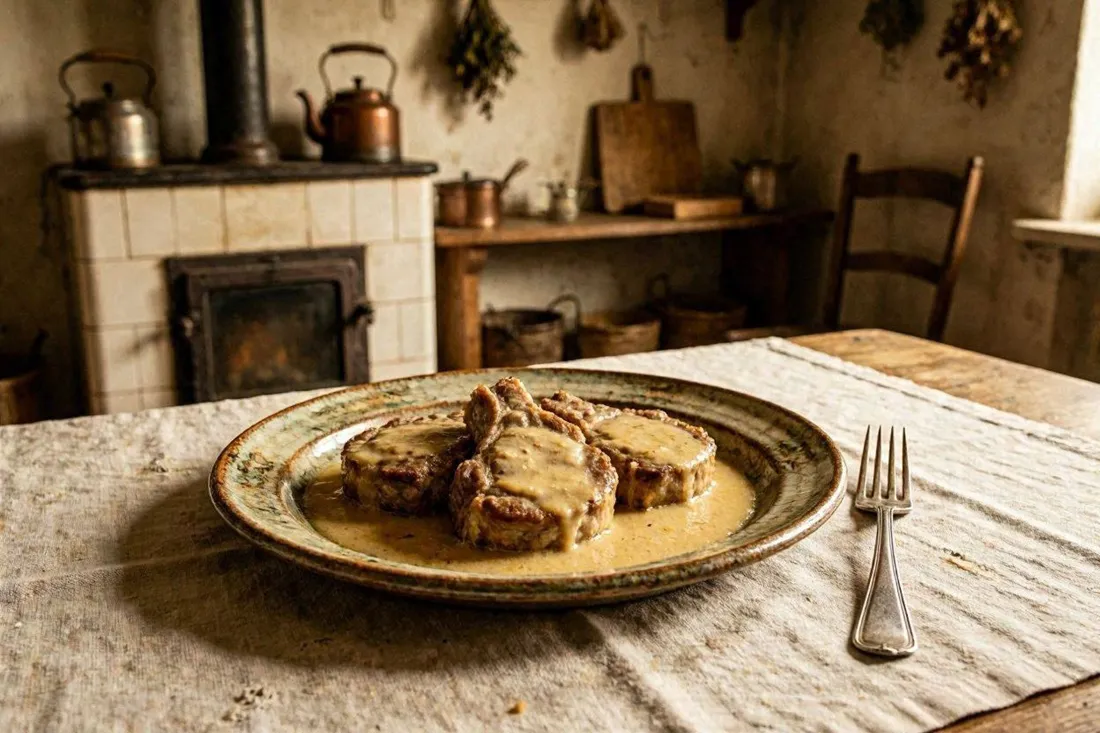
Braised Pork Chops in White Wine and Sour Cream Sauce
Pork loin chops braised with onion, carrot, parsley root, and celery root in white wine, then finished with a strained sour cream sauce.
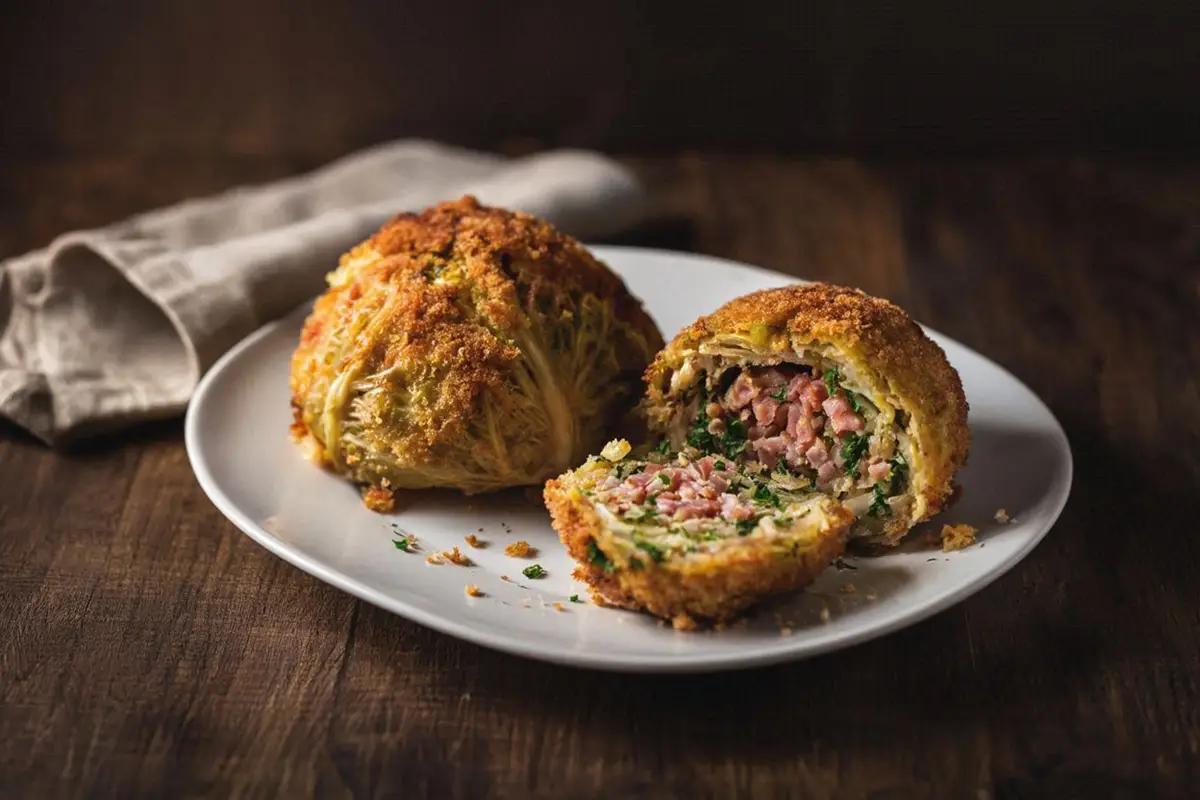
Breaded Savoy Cabbage Stuffed with Ham
Tender young savoy cabbage heads filled with ground ham, fried onion, and herbs, breaded and pan-fried until golden. A hearty Central European classic.
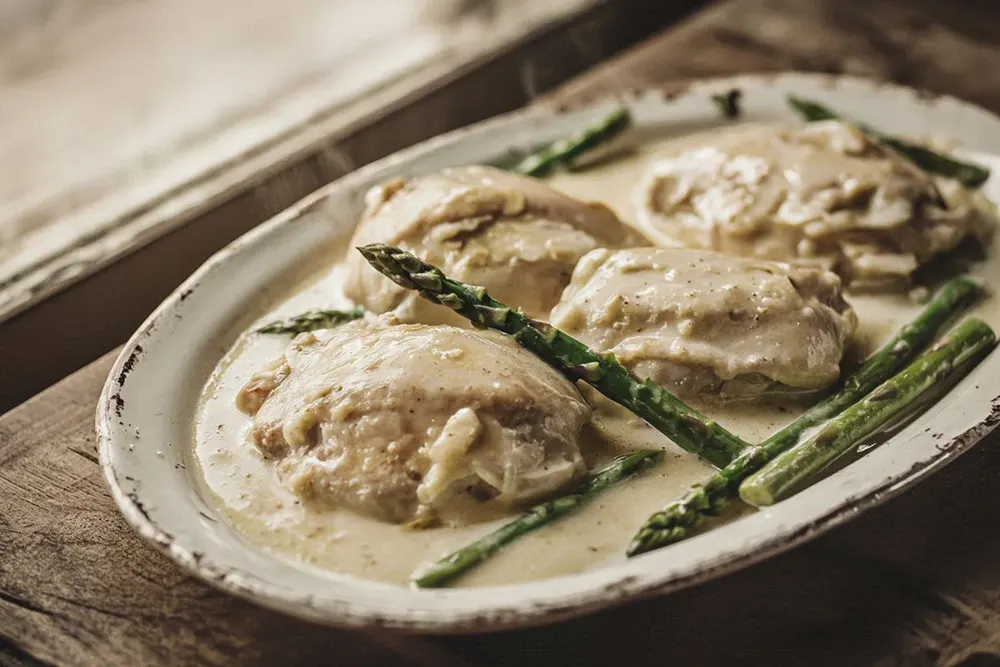
Chicken in Asparagus Sauce
A whole chicken poached in spiced broth, then finished in a silky velouté enriched with egg yolks and cream, garnished with tender asparagus tips.