Lenten Spinach and Rice Casserole
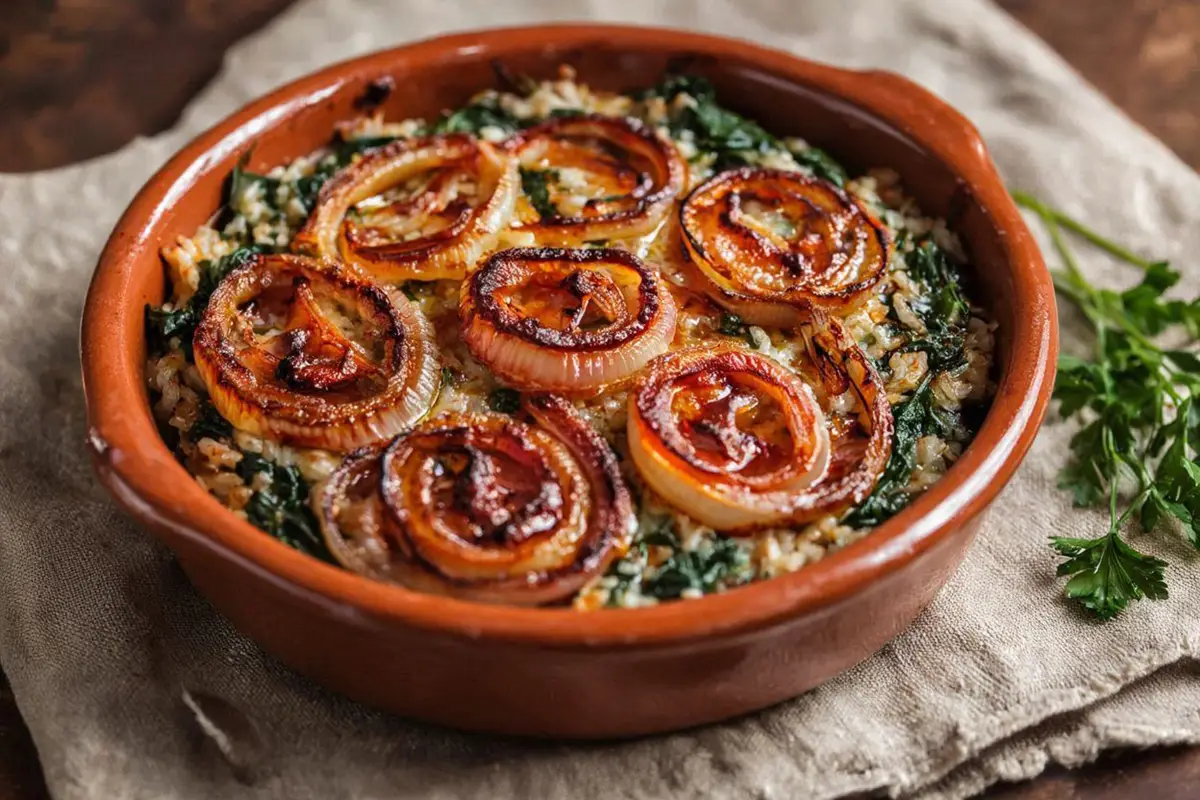
A hearty meatless casserole of spinach, leeks, rice, and vegetables topped with golden onion rings and a paprika-flour roux — a Central European Lenten dish.
Quick Summary
A hearty meatless casserole of spinach, leeks, rice, and vegetables topped with golden onion rings and a paprika-flour roux — a Central European Lenten dish.
Historical recipe
Modernised adaptation of an early 20th‑century source. Not independently kitchen-tested by Attic Recipes. Quantities, temperatures, and food safety guidance have been updated for a contemporary kitchen — results may vary and errors may exist. Nutritional values, where provided, are estimates only and have not been laboratory tested. Always follow current food safety guidelines for your region. If you have a health condition, allergy, or dietary requirement, consult a qualified professional before preparing this recipe.
Use of this recipe is entirely at your own risk and subject to our Terms of Service and Privacy Policy. Attic Recipes accepts no liability for any adverse outcome.
- Gluten
Additional notes
-
Warning
Do not serve this dish — or any spinach-containing food — to babies under 6 months of age. Spinach is naturally high in nitrates, which can interfere with oxygen transport in young infants and cause methemoglobinemia ('blue baby syndrome').
For babies aged 6–12 months, consult your paediatrician before introducing spinach. Commercially prepared baby foods are nitrate-monitored; home-prepared spinach dishes are not.
-
Warning
People with kidney stones or kidney disease should be aware that spinach is high in oxalates, which can contribute to calcium oxalate stone formation. Consult your doctor or dietitian if you have a history of kidney stones before consuming this dish regularly.
Boiling spinach separately and discarding the cooking water reduces oxalate content somewhat, though not completely.
-
Warning
Pregnant women: spinach is nutritious and generally safe during pregnancy, but should be thoroughly washed to reduce the risk of listeria and other bacterial contamination. Cook the spinach fully — do not use raw spinach in this dish.
-
Caution
Spinach is high in histamine. Individuals sensitive to histamine may experience itching, skin reactions, or digestive discomfort. If you have a known histamine intolerance, consume in small portions and monitor your response.
-
Caution
Rice left in a warm, partially cooked state can support the growth of Bacillus cereus, a heat-resistant bacteria. Do not leave the assembled casserole at room temperature for more than 2 hours before baking. Refrigerate leftovers promptly and reheat thoroughly to 74°C (165°F) before eating.
- 1
Wash the spinach thoroughly under cold running water. Drain well, then squeeze out excess water with your hands. Chop finely and set aside.
Tip Removing as much water as possible from the spinach prevents the casserole from becoming watery. - 2
Heat 3 tablespoons of oil in a large saucepan or deep skillet over medium heat. Add the sliced onion strips and fry until softened and beginning to turn golden, about 5–7 minutes. Add the sliced leeks and continue frying for another 3–4 minutes. Season with salt, a teaspoon of sweet paprika, and black pepper.
- 3
Add the chopped spinach to the pan and stir well to combine with the onion and leeks. Fry together for 3–4 minutes until the spinach is wilted and any remaining moisture has cooked off.
- 4
Add the cubed potatoes, diced tomatoes, chopped green pepper, parsley, and rinsed rice. Stir everything together and fry briefly for 2–3 minutes.
Tip The rice goes in raw at this stage — it will finish cooking in the oven. - 5
Pour in 200–300ml of lukewarm water to just cover the mixture. Stir, bring to a gentle simmer, and cook for 10 minutes until the potatoes are partially cooked and most of the liquid has been absorbed. The mixture should be moist but not soupy.
- 6
Preheat your oven to 180°C / 160°C fan (350°F). Transfer the spinach and vegetable mixture into a casserole dish or deep baking pan and spread evenly.
- 7
Cut the remaining whole onions into thick rings (about 1cm wide). Arrange the rings in a single layer over the top of the casserole to cover the surface completely.
- 8
In a small pan, heat the remaining 1–2 tablespoons of oil over medium heat. Add the teaspoon of flour and a pinch of paprika. Stir constantly for about 1 minute until the flour is lightly toasted and fragrant. Immediately pour this roux evenly over the onion rings.
Tip Work quickly — the roux will thicken fast. Pour it as soon as it turns lightly golden and smells nutty. - 9
Bake uncovered in the preheated oven for 25–30 minutes, until the top is golden, the onion rings are soft, and the potatoes are fully tender when pierced with a knife. If the top browns too quickly, loosely cover with foil for the last 10 minutes.
- 10
Remove from the oven and allow to rest for 5–10 minutes before serving. Serve warm or at room temperature.
Nutrition Information per 1 portion (approx. 300g)
Nutritional values are approximate estimates and may vary based on specific ingredients used, preparation methods, and portion sizes.
Pro Tips
- Squeeze the spinach as dry as possible — excess moisture makes the casserole watery
- The rice is added raw and absorbs cooking liquid in the oven — do not pre-cook it
- Add water gradually; the mixture should be moist but not soupy before going into the oven
- If you can't find good ripe tomatoes, 2 tablespoons of tomato paste dissolved in the water works well
- The dish reheats beautifully — add a splash of water, cover with foil, and warm in the oven at 160°C / 140°C fan (320°F)
- Leftovers keep refrigerated for up to 3 days
Serving Suggestions
Serve warm as a main course with crusty bread. Also very good at room temperature, making it suitable for packed lunches or potluck meals. A crisp cucumber salad dressed with vinegar alongside balances the richness of the roux. For non-fasting occasions, a spoonful of sour cream or a yogurt sauce pairs well.
About This Recipe
This is a traditional Lenten casserole — built entirely from vegetables, oil, and a simple flour roux, with no meat, eggs, or dairy. Spinach, leeks, onions, rice, and potatoes are cooked together on the stovetop first, then transferred to a baking dish and topped with thick onion rings and a quick paprika-scented roux. The oven does the rest: the top turns golden, the rice finishes cooking, and the whole dish comes together into something far more satisfying than its simple ingredients suggest.
The recipe is naturally vegan, and just as good cold as it is warm — a practical quality that reflects its origins in a fasting tradition that valued dishes capable of lasting through a day.
Why It Works
Frying the vegetables before baking builds a flavour base that water alone cannot replicate. The raw rice absorbs the cooking liquid as it bakes, binding the casserole together without any added thickener. The flour-and-oil roux poured over the onion ring topping sets in the oven to form a light crust that seals in moisture while adding a faint nuttiness from the toasted flour.
Food Safety Note
This recipe has been modernised from an early 20th century source. Oven temperatures, water quantities, and food safety guidance have been added for use in a contemporary kitchen. The original recipe has not been independently tested by Attic Recipes. Nutritional values are estimates only. Always use your judgement and follow current food safety guidelines for your region.
Make-Ahead Notes
The stovetop base (through Step 5) can be prepared up to 24 hours in advance and refrigerated. Assemble the casserole with the onion ring topping and roux just before baking. Do not leave the assembled, unbaked casserole at room temperature for extended periods — see safety note on rice above.
Leftovers reheat well. Cover with foil and warm in a 160°C / 140°C fan (320°F) oven until heated through, or microwave individual portions.
A classic of early 20th century home cooking, preserved and adapted for the modern kitchen.
The Story Behind This Recipe
Historical Context
Meatless vegetable casseroles built around spinach, rice, and alliums were a staple of Central European fasting cookery in the early 20th century. During Lenten periods and Orthodox fasting days — which could account for over 100 days per year in devout households — cooks developed a full repertoire of posna (fasting) dishes that were satisfying without meat or dairy. The onion ring topping and flour-thickened oil roux served as both a crust and a sauce, a practical technique that required no animal fat.
Modern Kitchen Adaptation
The original recipe gives no oven temperature, as wood-fired ovens of the era operated by feel. For a modern oven, 180°C / 160°C fan (350°F) produces the correct result: a gently baked casserole with a golden top rather than a hard crust. The amount of water is deliberately unspecified in the original — add just enough to barely cover the mixture before transferring to the oven. The dish is naturally vegan and suitable for gluten-free preparation if the flour in the roux is replaced with a certified gluten-free alternative such as rice flour or cornstarch.
This recipe is an independent modern adaptation developed from historical sources in the public domain. It is provided for informational and educational purposes only and does not constitute professional dietary, nutritional, or medical advice. Food preparation involves inherent risks. The reader assumes full responsibility for safe food handling, ingredient sourcing, and adherence to current local food safety guidelines. The site operator accepts no liability for outcomes resulting from the preparation or consumption of this recipe.
One recipe.
Every week.
You Might Also Like
More recipes from the same category
Asparagus Venetian Style
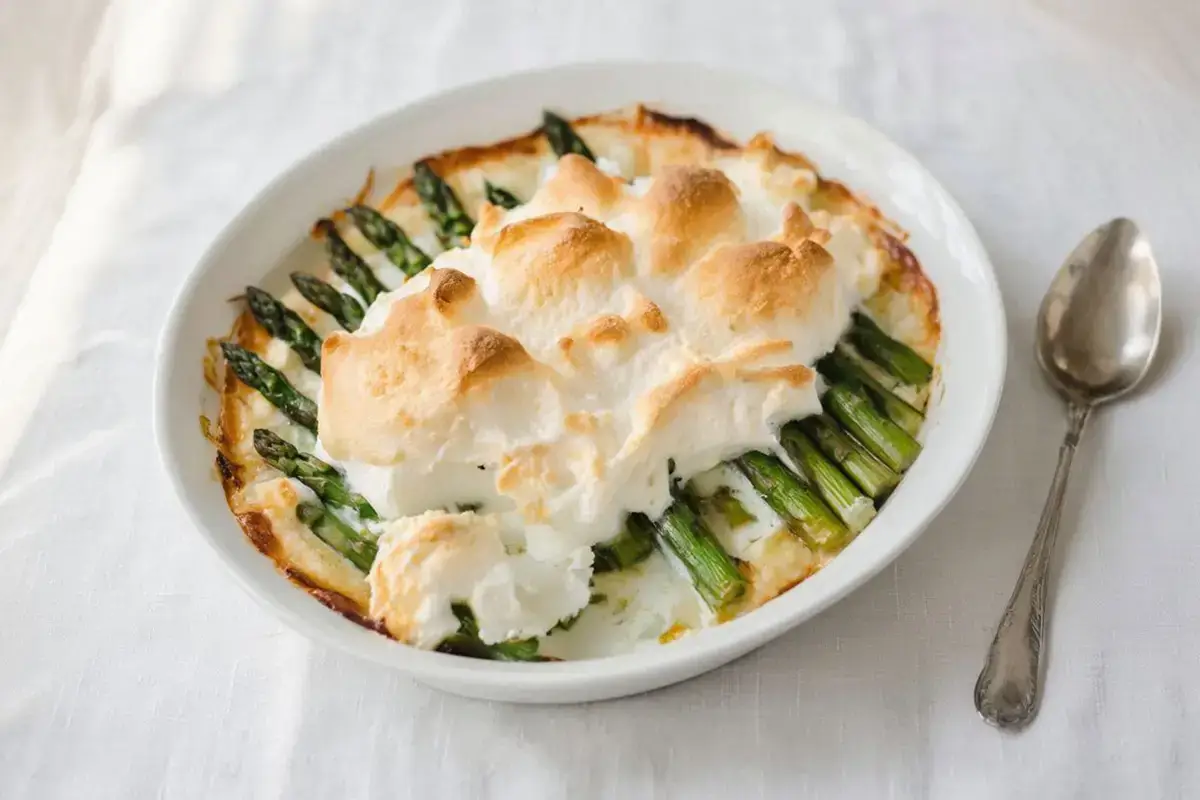
Fresh asparagus baked under a rich egg yolk cream sauce and a golden meringue-cheese topping. An elegant Central European appetizer.
Baked Mushrooms with Hard Cheese and Eggs
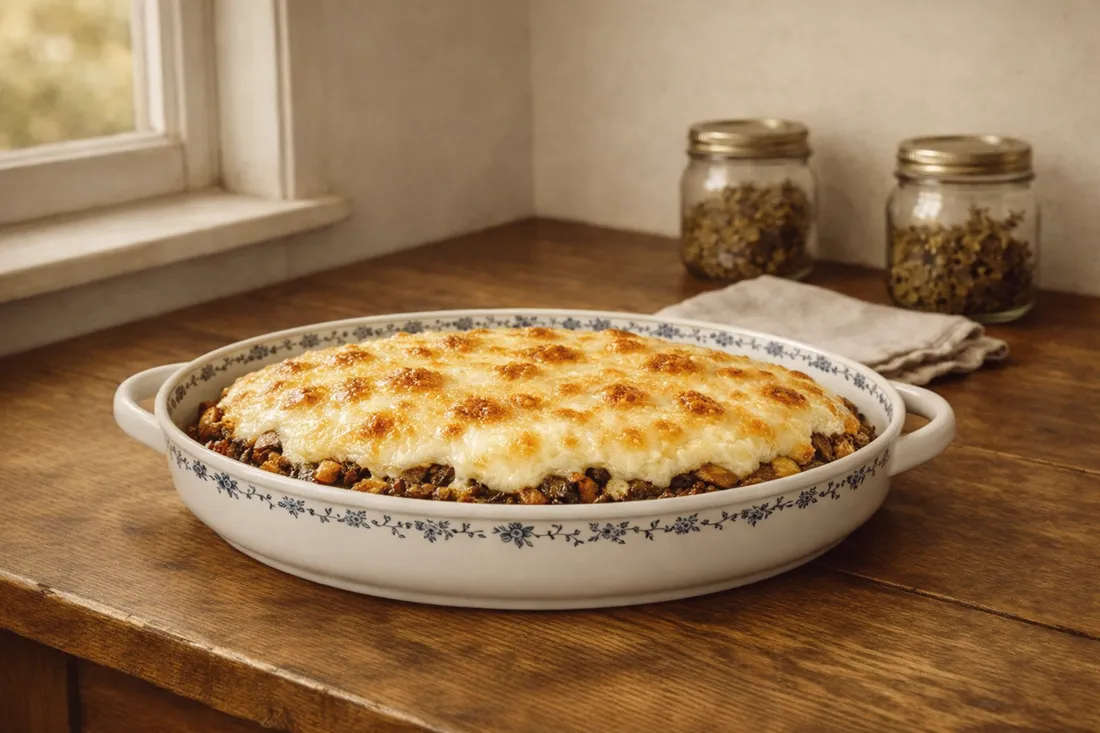
Layers of sliced hard-boiled eggs and grated cheese topped with sautéed mushrooms, baked under a rich egg-enriched sour cream topping.
Baked Eggplant with Potatoes
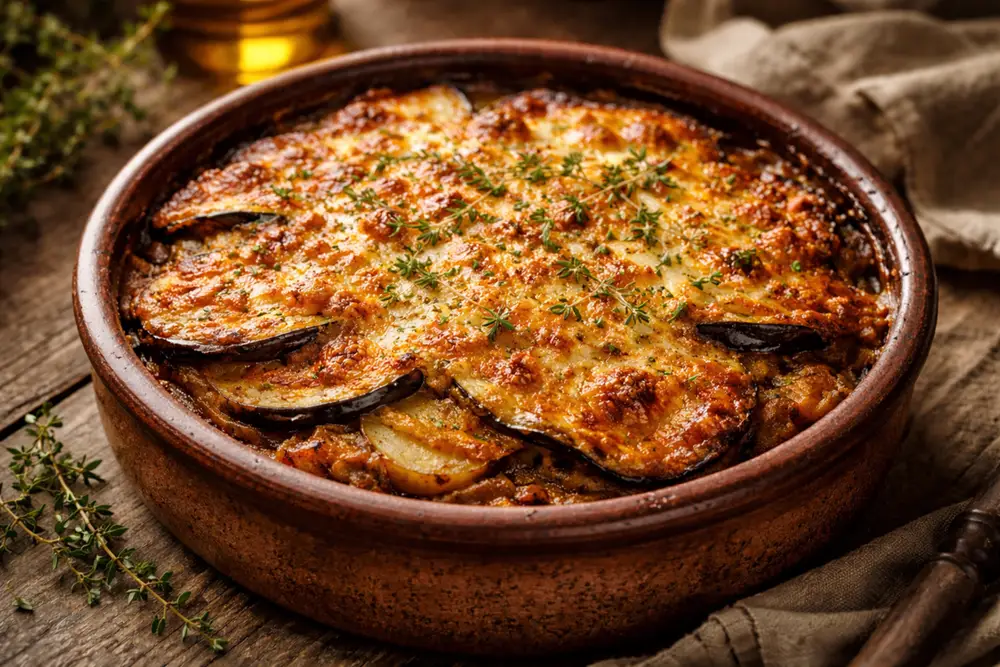
A slow-baked layered casserole of eggplant, parboiled potatoes, golden fried onion, and melted cheese.