Mashed Broad Beans with Salted Herring
A bold Central European appetizer of pureed broad beans and finely chopped salted herring, shaped into a savory loaf and finished with oil and lemon.
Quick Summary
A bold Central European appetizer of pureed broad beans and finely chopped salted herring, shaped into a savory loaf and finished with oil and lemon.
Historical recipe
Modernised adaptation of an early 20th‑century source. Not independently kitchen-tested by Attic Recipes. Quantities, temperatures, and food safety guidance have been updated for a contemporary kitchen — results may vary and errors may exist. Nutritional values, where provided, are estimates only and have not been laboratory tested. Always follow current food safety guidelines for your region. If you have a health condition, allergy, or dietary requirement, consult a qualified professional before preparing this recipe.
Use of this recipe is entirely at your own risk and subject to our Terms of Service and Privacy Policy. Attic Recipes accepts no liability for any adverse outcome.
- Fish
Additional notes
-
Warning
Salted herring is very high in sodium. Individuals with hypertension, kidney disease, or on sodium-restricted diets should consume this dish with caution or avoid it entirely.
Soak herring fillets in cold water or milk for up to 2 hours before using to reduce sodium content significantly.
-
Caution
Broad beans (fava beans) can trigger a serious reaction called favism in individuals with G6PD deficiency, a genetic condition more common in people of Mediterranean, Middle Eastern, and African descent. Symptoms include hemolytic anemia.
Substitute with white beans or cannellini beans, which carry no favism risk and produce a similarly creamy puree.
-
Caution
Raw onion in significant quantities may cause digestive discomfort. The raw onion component can be reduced or briefly sweated in oil before mixing for a milder result.
-
Note
This dish is naturally gluten-free as written. Verify that any accompaniments such as bread or crackers are also gluten-free if serving to guests with celiac disease or gluten sensitivity.
- 1
If using dried broad beans, soak them overnight in cold water. Drain and rinse before cooking.
Tip Fresh or frozen broad beans can be used and will significantly reduce cooking time to 15–20 minutes. - 2
Place the soaked beans in a pot with 3 of the onions (halved or quartered) and cover with cold water. Bring to a gentle simmer and cook until the beans are completely soft — about 40 to 45 minutes for soaked dried beans.
Tip Cook gently, not at a rolling boil. This keeps the beans intact and easier to puree. - 3
While the beans cook, prepare the herring. Rinse the fillets thoroughly under cold running water to remove excess salt. Pat dry and finely chop into small pieces.
Tip Taste a small piece after rinsing. If still very salty, soak the fillets in cold water or milk for 30 minutes before chopping. - 4
Finely chop the remaining 2 raw onions.
- 5
Drain the cooked beans, discard the cooked onions, and pass the beans through a fine-mesh sieve or food mill to produce a smooth puree. A blender or food processor also works well.
Tip The original recipe calls for straining the final mixture — starting with a smooth bean puree makes this much easier. - 6
Combine the bean puree, chopped herring, and raw chopped onion in a bowl. Add oil and lemon juice gradually, mixing well after each addition, until the mixture reaches a firm but spreadable consistency.
- 7
Taste and season with salt only if needed. Pass the entire mixture through a sieve one more time for a smoother, more refined texture.
- 8
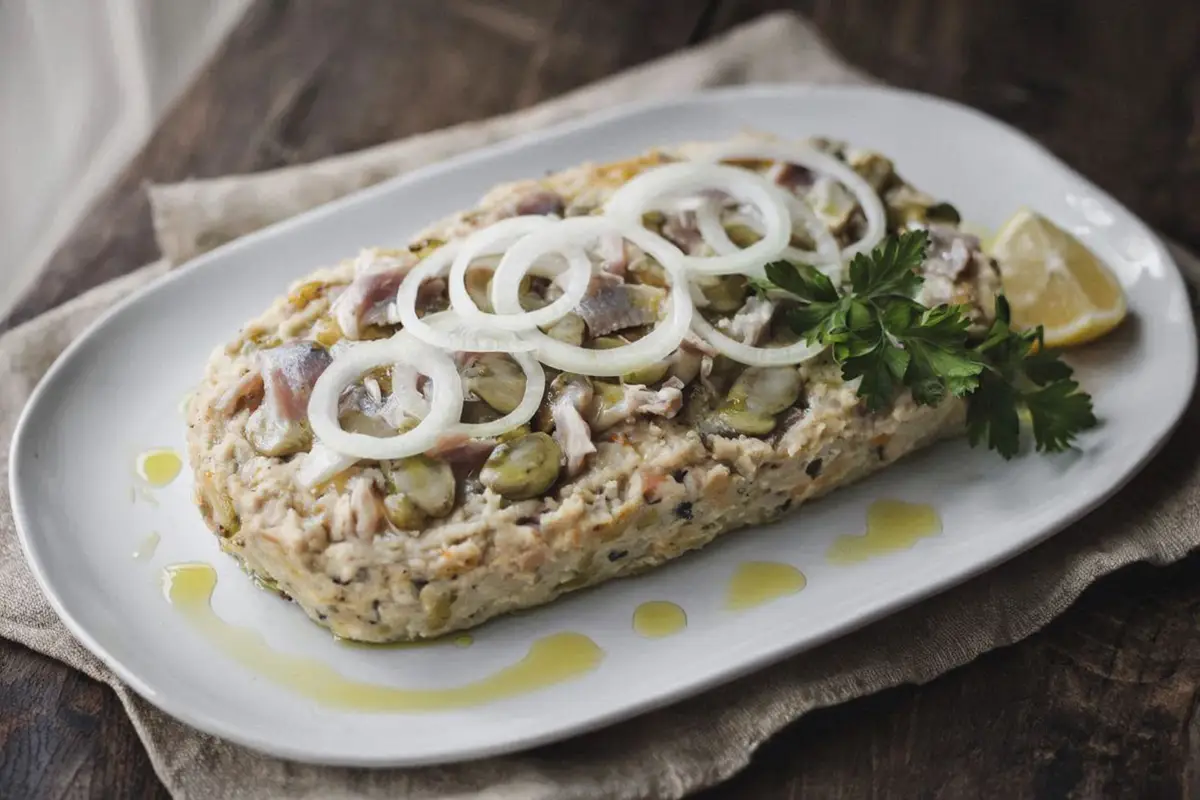
Transfer to a long plate and shape into a compact loaf using a spatula or wet hands. Drizzle generously with oil. Serve at room temperature or lightly chilled.
Tip Chilling for 30 minutes helps the loaf hold its shape when slicing.
Nutrition Information per approx. 120g
Nutritional values are approximate estimates and may vary based on specific ingredients used, preparation methods, and portion sizes.
Serving Suggestions
Serve on a long plate as written, with dark rye bread or thin crackers alongside. Works well as part of a cold appetizer spread. A few thin slices of raw onion and a wedge of lemon on the side complement the dish. Best served at room temperature.
About This Recipe
This is a dish built entirely on pantry staples — dried broad beans, salted herring, onion, oil, and lemon. Simple ingredients that, when combined with care, produce something far more interesting than the sum of their parts: a firm, savory loaf with the creamy richness of pureed beans cut through by the sharp, salty character of the herring and the bite of raw onion. It is served cold or at room temperature, shaped on a long plate, and finished with a drizzle of oil.
Dishes like this one sit at the intersection of several Central and Eastern European culinary traditions, where preserved fish and legumes were reliable winter staples long before refrigeration.
Why It Works
Broad beans produce a particularly dense, starchy puree — denser than chickpeas or white beans — which gives the loaf enough body to hold its shape without any binders. The raw onion provides sharpness and texture against the smooth base. The herring does not just add saltiness; its fat and umami character permeate the entire mixture, making it taste cured and complex in a way that fresh fish never could.
The final pass through a sieve is a refinement step that makes the difference between a rustic mash and something you’d be happy to put in front of guests. It takes two minutes and is worth it.
On the Onion Quantity
Five small onions sounds like a lot — and by modern standards it is. Early 20th century brown onions were typically much smaller than what is sold in supermarkets today, closer in size to shallots. Calibrate to the onions you have: if they are large, use fewer.
On Sourcing the Herring
Salted herring is the correct ingredient here and is not interchangeable with smoked herring, pickled herring in vinegar, or matjes herring. Look for it in Eastern European, Jewish, or Scandinavian grocery stores, typically sold whole in brine or vacuum-packed as fillets. Rinse it well — the salt level varies considerably between brands.
A classic of early 20th century home cooking, preserved and adapted for the modern kitchen.
The Story Behind This Recipe
Historical Context
Dishes combining legumes with preserved or salted fish have deep roots across Central and Eastern Europe, where both ingredients were reliable pantry staples through winter months. Broad beans were a common field crop across the region well into the 20th century, and salted herring was one of the most widely available and affordable preserved proteins. This combination — mashed, seasoned, and shaped — reflects a practical and resourceful approach to appetizer-making that appears across multiple culinary traditions of the period.
Modern Kitchen Adaptation
The original recipe specifies no soaking step for the beans, reflecting an era when dried legumes were a kitchen constant and cooks understood preparation intuitively. The instruction to cook the beans gently with onion is preserved exactly. The quantity of onion — 5 small heads total — is faithful to the original, which calls for 2–3 heads for cooking and 2 heads for mixing. Early 20th century brown onions were considerably smaller than modern varieties, closer in size to shallots; the recipe has been calibrated accordingly. Use fewer onions if yours are large. The straining step is interpreted as passing through a sieve for texture, not discarding liquid.
This recipe is an independent modern adaptation developed from historical sources in the public domain. It is provided for informational and educational purposes only and does not constitute professional dietary, nutritional, or medical advice. Food preparation involves inherent risks. The reader assumes full responsibility for safe food handling, ingredient sourcing, and adherence to current local food safety guidelines. The site operator accepts no liability for outcomes resulting from the preparation or consumption of this recipe.
One recipe.
Every week.
You Might Also Like
More recipes from the same category
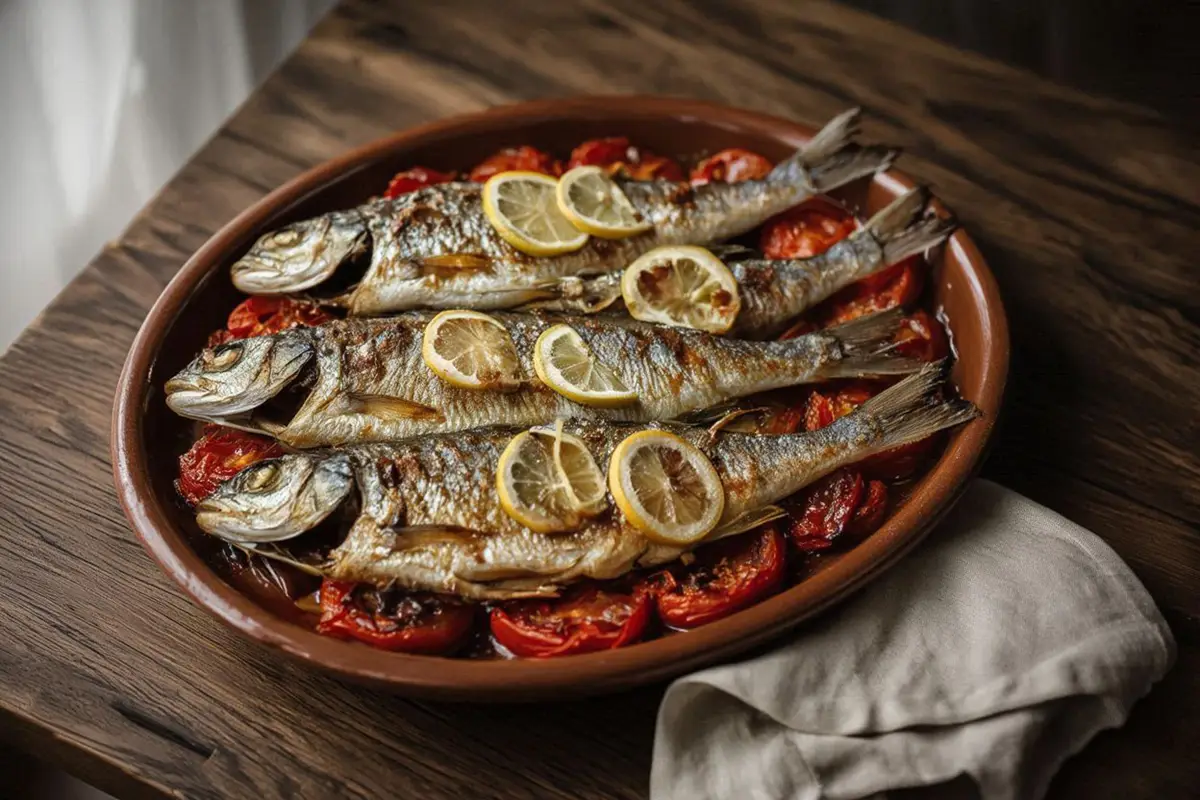
Baked Fish with Tomatoes
Whole fish baked over ripe tomatoes with generous olive oil and lemon — a simple, fragrant Central European oven dish.
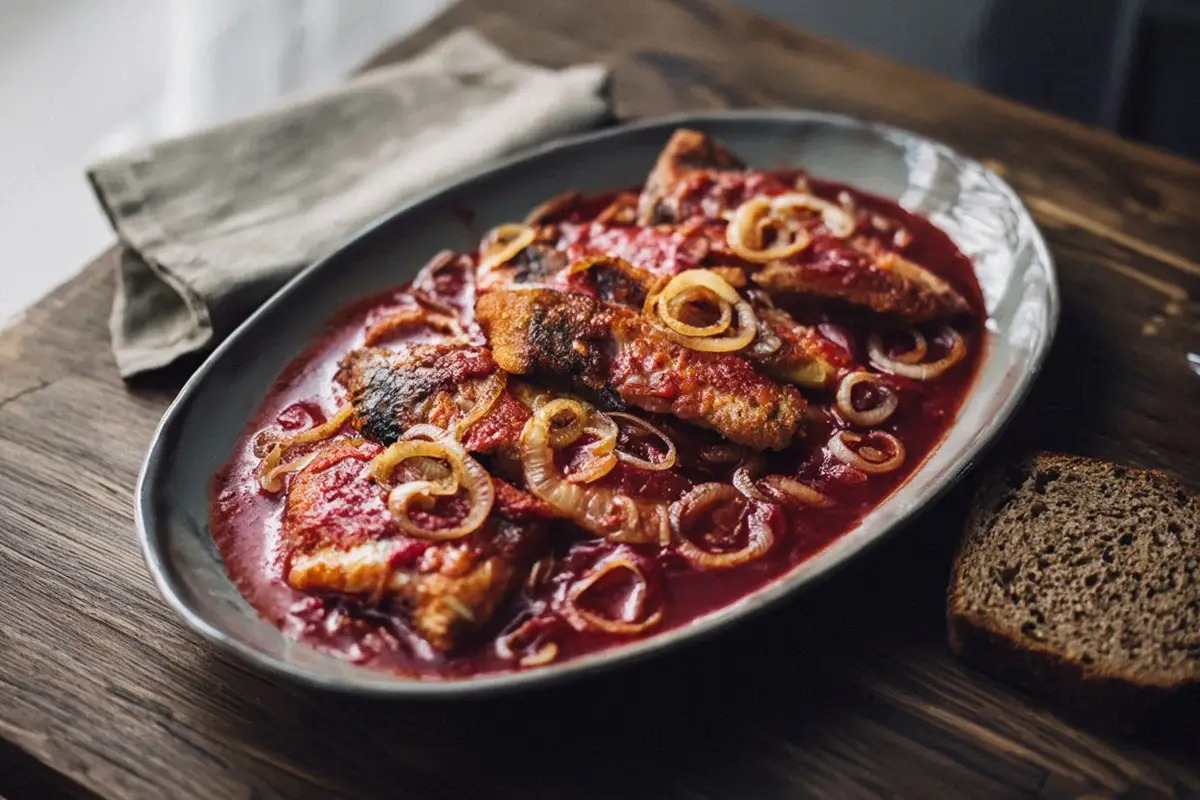
Cold Fish in Tomato and Beetroot Sauce
Fried carp or catfish marinated for hours in a vivid sauce of grated beetroot, root vegetables, and tomato. A Central European cold appetizer.
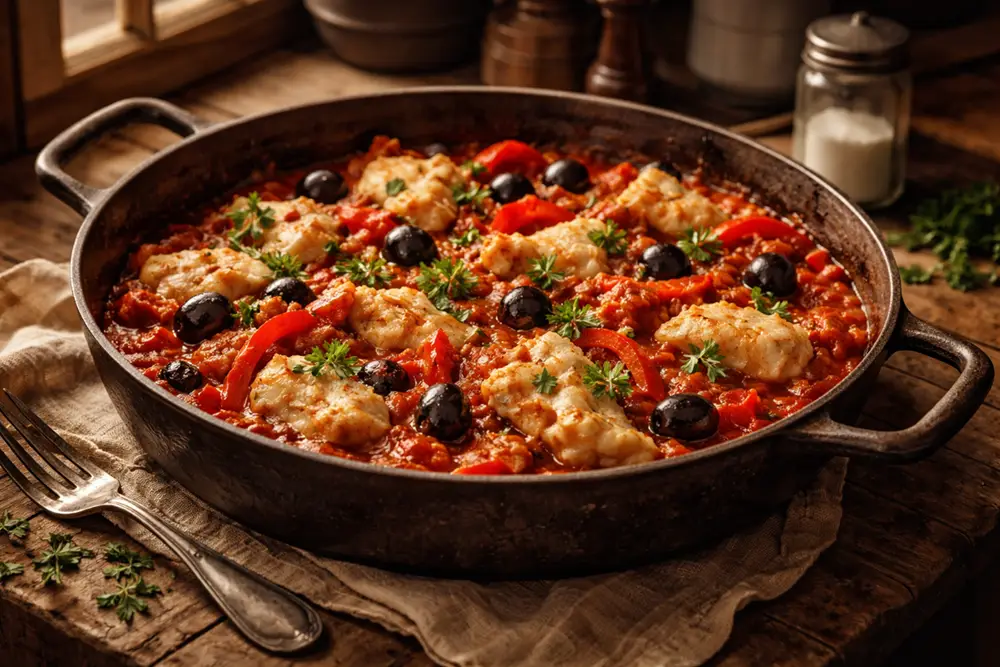
Cod with Tomatoes, Peppers and Black Olives
Salt cod braised with fresh tomatoes, red onion, garlic, bell peppers and black olives in olive oil.