Mushroom Sauce with White Wine
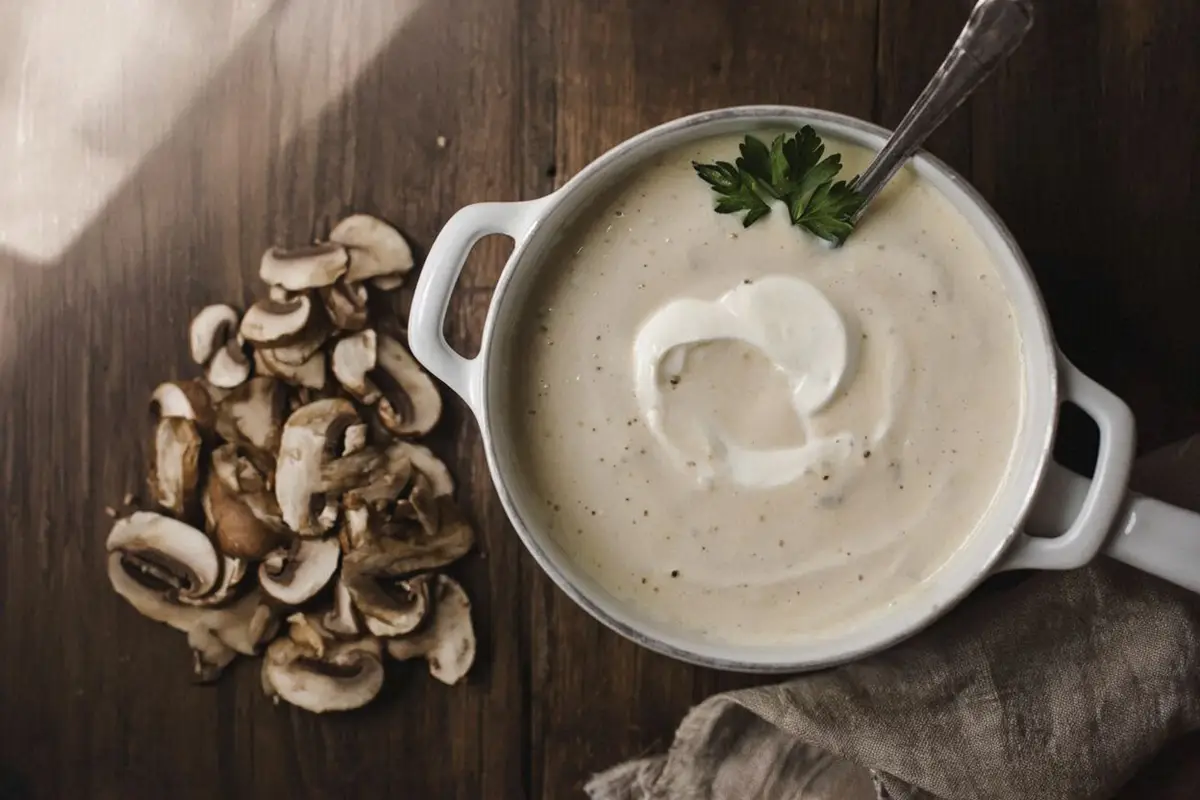
A silky Central European mushroom sauce with white wine, zapraška roux, and sour cream — works equally well with fresh or dried mushrooms.
Quick Summary
A silky Central European mushroom sauce with white wine, zapraška roux, and sour cream — works equally well with fresh or dried mushrooms.
Historical recipe
Modernised adaptation of an early 20th‑century source. Not independently kitchen-tested by Attic Recipes. Quantities, temperatures, and food safety guidance have been updated for a contemporary kitchen — results may vary and errors may exist. Nutritional values, where provided, are estimates only and have not been laboratory tested. Always follow current food safety guidelines for your region. If you have a health condition, allergy, or dietary requirement, consult a qualified professional before preparing this recipe.
Use of this recipe is entirely at your own risk and subject to our Terms of Service and Privacy Policy. Attic Recipes accepts no liability for any adverse outcome.
- Dairy
- Gluten
- Sulphites
Additional notes
-
Caution
This recipe contains sour cream (dairy). Individuals with lactose intolerance or dairy allergy should not consume this sauce as written.
Substitute full-fat coconut cream for a dairy-free version with a slightly different but pleasant flavor profile. Oat-based crème fraîche alternatives also work well structurally.
-
Caution
Sour cream will split (curdle) if added to the sauce while it is still over high heat or if the sauce is brought to a boil after the sour cream is incorporated. Always add sour cream off the heat or over the lowest possible flame, stirring constantly.
Use crème fraîche instead of sour cream — it is significantly more heat-stable and can withstand gentle simmering without splitting.
-
Note
Wild-foraged mushrooms should never be used in this recipe unless you are fully certain of their identification. Toxic mushroom species can cause severe illness. Always use commercially grown mushrooms from a reliable source, or verified dried mushrooms from a reputable supplier.
-
Note
The white wine in this recipe reduces significantly during cooking. The finished sauce contains only trace amounts of alcohol. However, individuals avoiding all alcohol for religious, medical, or personal reasons should substitute the wine with an equal amount of additional stock plus 1 tsp of white wine vinegar for acidity.
- 1
If using dried mushrooms: place them in a bowl, cover with lukewarm water, and leave covered for 20–30 minutes until fully swollen and pliable. Drain, discard the soaking water, and cut into thin strips. Use in exactly the same way as fresh mushrooms from this point forward.
Tip Dried mushrooms produce a significantly more intense flavor than fresh. If substituting dried for fresh, the sauce will be noticeably richer and darker in color — this is correct. - 2
Melt the butter in a small saucepan over medium heat. Add the finely chopped onion and parsley and sauté gently for 4–5 minutes until the onion is soft and translucent but not browned.
- 3
Add the sliced mushrooms to the pan and sauté, stirring occasionally, until they have released their moisture and are semi-soft — about 6–8 minutes. Do not rush this stage; the mushrooms should cook down significantly in volume.
Tip If the pan gets too dry before the mushrooms soften, add a small splash of water rather than more butter. - 4
Pour in the white wine and stir to deglaze the pan. Cook for 2–3 minutes, allowing the wine to reduce by about half and the alcohol to cook off.
- 5
Sprinkle the tablespoon of flour evenly over the mushroom mixture. Stir well to coat and cook, stirring constantly, for 1–2 minutes until the flour turns light golden — this is the zapraška. Do not let it burn.
Tip The zapraška must cook for the full 1–2 minutes to eliminate the raw flour taste. It should smell nutty, not powdery. - 6
Gradually pour in the stock or water, stirring constantly to prevent lumps. Bring to a gentle simmer and cook for 8–10 minutes, stirring occasionally, until the sauce thickens to a coating consistency. Season with salt.
- 7
Pass the sauce through a fine-mesh strainer, pressing lightly on the solids to extract all the liquid. Discard the solids or reserve them as a spread for bread. Return the strained sauce to the pan over low heat.
Tip Straining produces a smooth, refined sauce. If you prefer a rustic, chunky texture, skip this step — the flavor is identical. - 8
Remove the pan from the heat. Stir in the sour cream and mix until fully incorporated and smooth. Do not return to high heat after adding sour cream — it will split. Taste and adjust salt. Serve immediately.
Nutrition Information per approx. 120ml (¼ of recipe)
Nutritional values are approximate estimates and may vary based on specific ingredients used, preparation methods, and portion sizes.
Pro Tips
- If the sauce over-thickens on standing, thin it with a tablespoon of warm stock or water at a time — do not add cold liquid directly, which can cause the sour cream to curdle.
- For a richer sauce, substitute crème fraîche for sour cream — it is more heat-stable and less likely to split if accidentally overheated.
- The mushroom solids removed during straining are highly flavored and make an excellent spread on toast or rye bread with a pinch of salt and extra parsley.
Serving Suggestions
Classically served over roasted or pan-fried chicken, pork schnitzel, or beef. Equally excellent over egg noodles (spätzle), boiled potatoes, or gnocchi. Works as a filling for crêpes or as a topping for grilled polenta. A small drizzle of additional sour cream on top before serving adds a pleasant visual and flavor contrast.
About This Recipe
Mushroom Sauce with White Wine is a quietly essential recipe — the kind that appears in variations across every Central European kitchen tradition, each slightly different, all built on the same logic. Sautéed mushrooms, onion, and parsley are deglazed with white wine, thickened with a lightly toasted flour roux (zapraška), simmered in stock until silky, strained smooth, and finished with sour cream. The result is a sauce of real depth and elegance, ready in under 40 minutes, that works over almost anything.
Why It Works
The zapraška — flour cooked briefly in fat before the liquid is added — is the structural backbone of the sauce. Cooking the flour before adding liquid gelatinizes the starch gradually rather than all at once, which produces a smoother, more stable sauce with no raw flour taste. The white wine adds acidity that cuts through the richness of the butter and sour cream and lifts the earthy flavor of the mushrooms. Straining the finished sauce removes the mushroom and onion solids and concentrates the liquid into something more refined than a simple sauté.
Fresh vs. Dried Mushrooms
Both options are genuinely good — but they produce noticeably different results.
Fresh mushrooms give a lighter, cleaner sauce with a mild earthy flavor. Button mushrooms are the most neutral; cremini (chestnut) mushrooms add more depth; portobello gives a richer, meatier result. Any single variety or combination works.
Dried mushrooms — particularly dried porcini or mixed wild mushroom blends — produce a significantly more intense, darker, and more complex sauce. The flavor is noticeably stronger. If using dried mushrooms, 50g is the correct quantity and it is not equivalent to 500g fresh in volume — it is equivalent in flavor, or stronger.
For a middle ground: use 400g fresh mushrooms plus 15–20g dried porcini (soaked and drained) for the depth of dried with the texture of fresh.
On the Straining Step
Straining before adding sour cream is worth following if you want a smooth, restaurant-style result — the sauce becomes glossy and uniform, with the mushroom flavor fully extracted into the liquid. If you prefer a more rustic texture with visible mushroom pieces, simply skip the straining and stir in the sour cream directly. The flavor is identical; only the texture differs.
Make-Ahead Notes
The sauce can be prepared up to the end of step 6 (after straining, before sour cream) and refrigerated for up to 2 days or frozen for up to 1 month. Reheat gently over low heat, then stir in the sour cream off the heat just before serving. Do not freeze after adding sour cream — it will split on thawing.
A classic of early 20th century home cooking, preserved and adapted for the modern kitchen.
The Story Behind This Recipe
Historical Context
Mushroom sauces thickened with a flour-and-fat roux (zapraška in the regional tradition, Einbrenn in German and Austro-Hungarian cooking) were fundamental to early 20th century Central European home cooking. The technique of building a sauce in stages — sautéing aromatics, deglazing with wine, thickening with flour, then finishing with a dairy enrichment — is characteristic of the Austro-Hungarian culinary school that influenced households across the entire region. Dried mushrooms were a common pantry staple for extending fresh ingredients across seasons when fresh mushrooms were unavailable.
Modern Kitchen Adaptation
No quantity was given for the butter, liquid, or wine in this recipe; standard culinary proportions for a sauce of this type have been applied throughout. The straining step is optional for modern cooks who prefer a chunkier texture. Sour cream is added off the heat to prevent splitting — this is not specified in the recipe but is recommended by modern food science.
This recipe is an independent modern adaptation developed from historical sources in the public domain. It is provided for informational and educational purposes only and does not constitute professional dietary, nutritional, or medical advice. Food preparation involves inherent risks. The reader assumes full responsibility for safe food handling, ingredient sourcing, and adherence to current local food safety guidelines. The site operator accepts no liability for outcomes resulting from the preparation or consumption of this recipe.
One recipe.
Every week.
You Might Also Like
More recipes from the same category
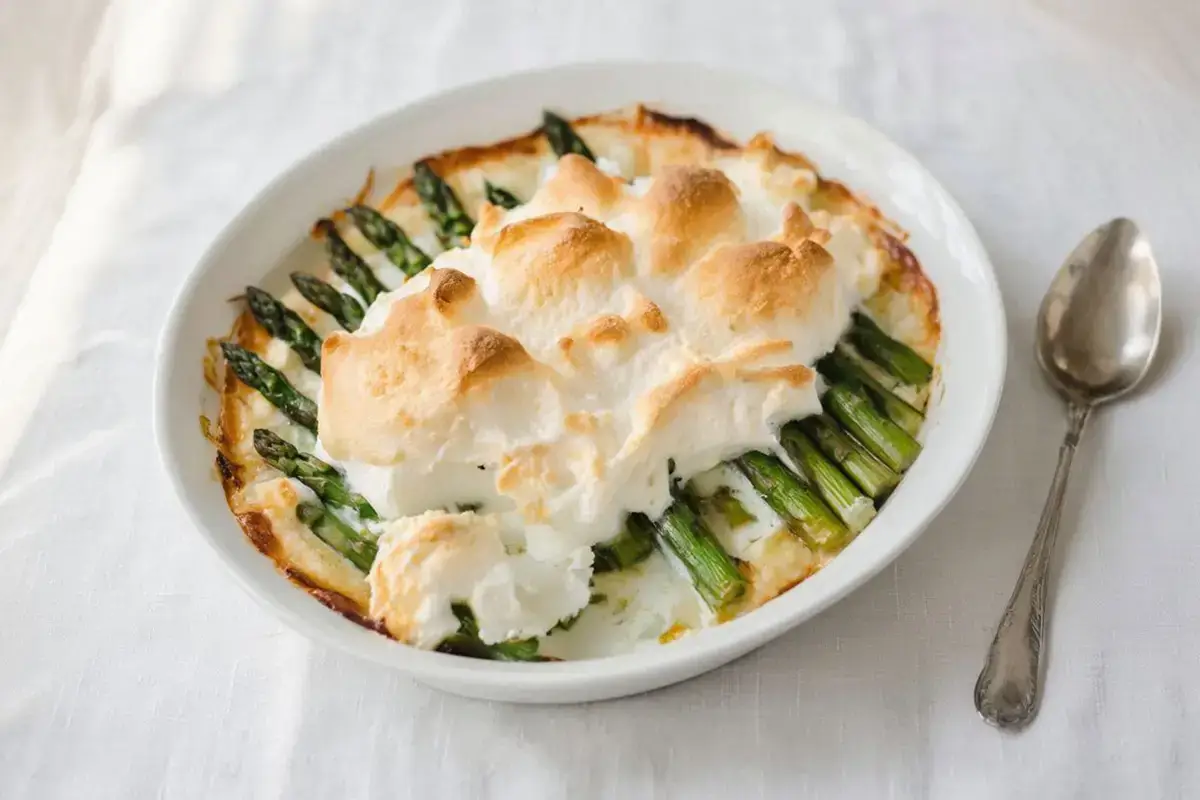
Asparagus Venetian Style
Fresh asparagus baked under a rich egg yolk cream sauce and a golden meringue-cheese topping. An elegant Central European appetizer.
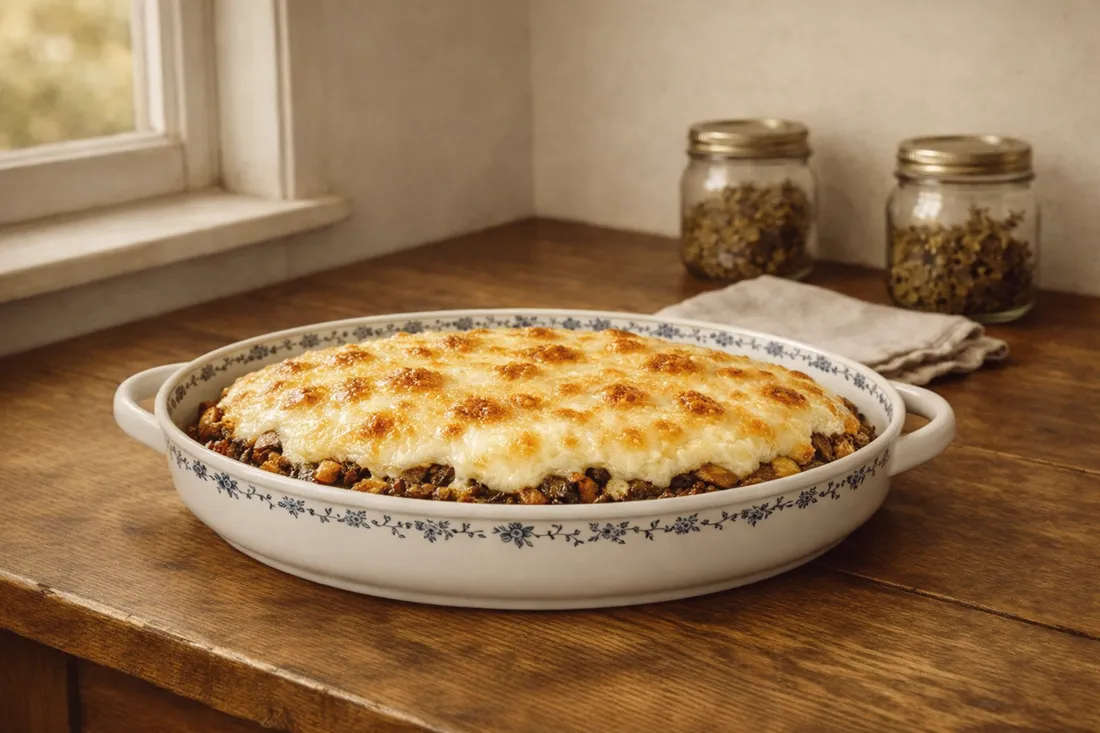
Baked Mushrooms with Hard Cheese and Eggs
Layers of sliced hard-boiled eggs and grated cheese topped with sautéed mushrooms, baked under a rich egg-enriched sour cream topping.
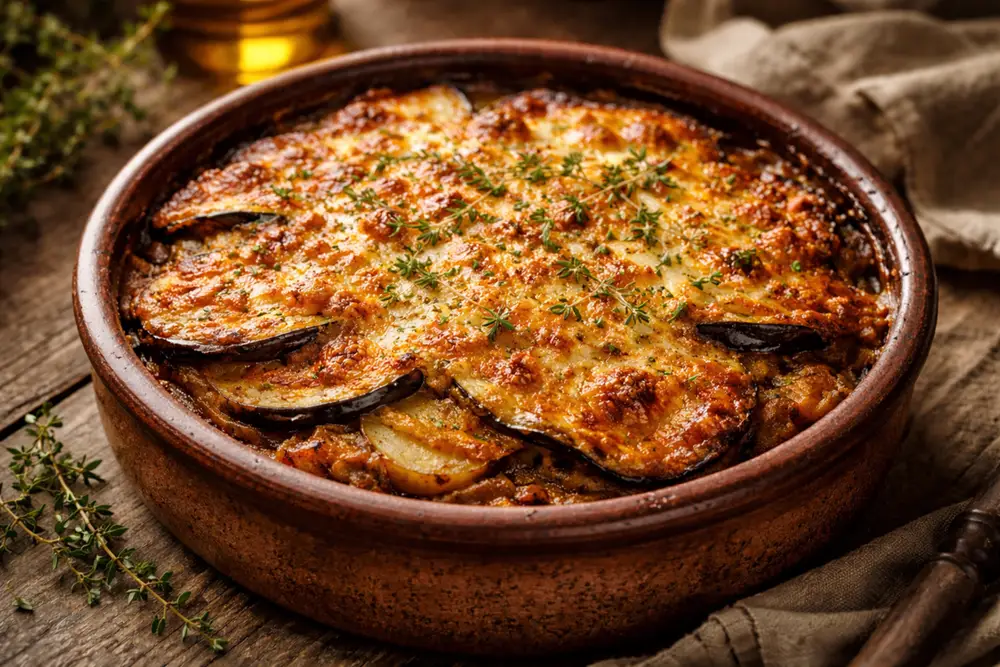
Baked Eggplant with Potatoes
A slow-baked layered casserole of eggplant, parboiled potatoes, golden fried onion, and melted cheese.