Pears in Cognac and Rum
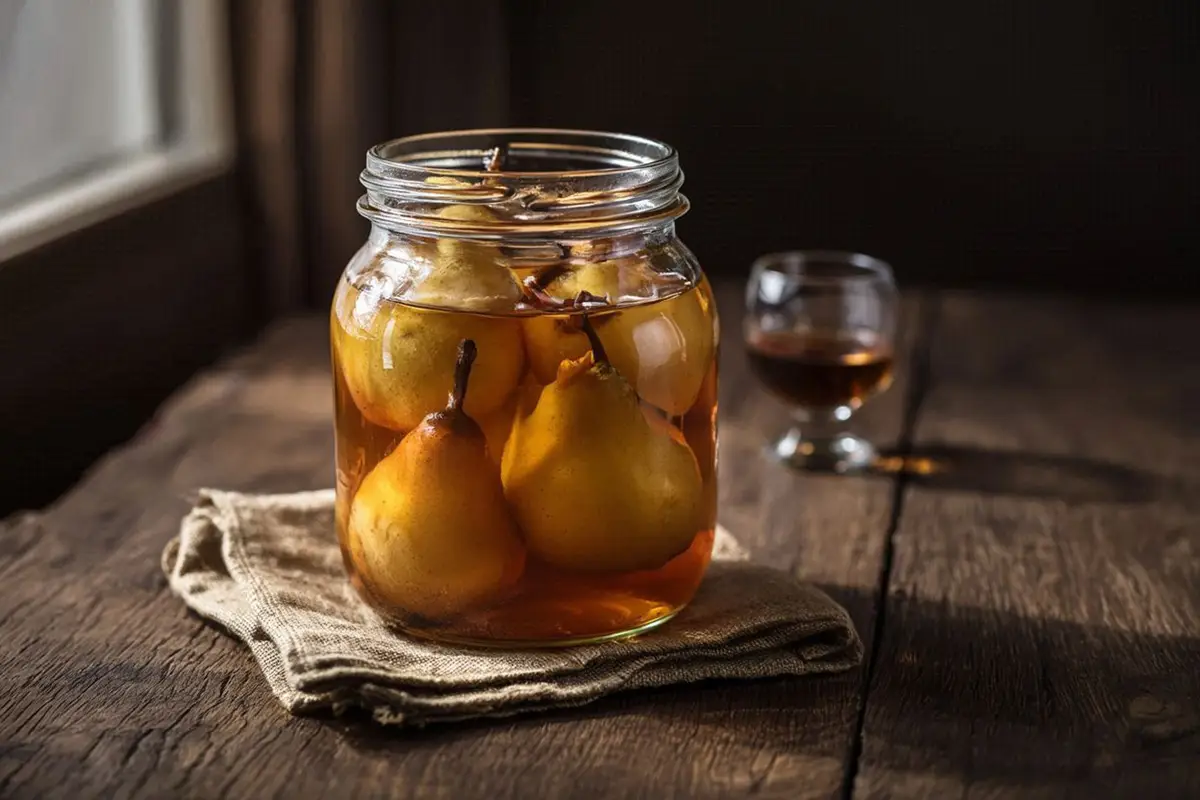
Whole pears blanched, steeped overnight in syrup, then preserved in a thickened cognac and rum syrup and pasteurized.
Quick Summary
Whole pears blanched, steeped overnight in syrup, then preserved in a thickened cognac and rum syrup and pasteurized.
Historical recipe
Modernised adaptation of an early 20th‑century source. Not independently kitchen-tested by Attic Recipes. Quantities, temperatures, and food safety guidance have been updated for a contemporary kitchen — results may vary and errors may exist. Nutritional values, where provided, are estimates only and have not been laboratory tested. Always follow current food safety guidelines for your region. If you have a health condition, allergy, or dietary requirement, consult a qualified professional before preparing this recipe.
Use of this recipe is entirely at your own risk and subject to our Terms of Service and Privacy Policy. Attic Recipes accepts no liability for any adverse outcome.
Safety note
If the syrup shows signs of fermentation, cloudiness, or the jar is under pressure when opened, discard without tasting. Risk of botulism in improperly sealed preserves.
Ensure proper pasteurization and verified seal before long-term storage.
Additional notes
-
Warning
Pasteurize at exactly 80°C for 5 minutes. Do not allow the water to reach a full boil — boiling drives off the alcohol and aroma and may crack the jars.
Use a kitchen thermometer to maintain a steady 80°C throughout the pasteurization.
-
Warning
This preserve contains alcohol (cognac and rum). Not suitable for children or those avoiding alcohol.
Omit spirits for an alcohol-free version; compensate with water-bath processing at 85°C for 20 minutes.
-
Caution
Check seals after cooling. Lids must be firm and concave. Any lid that flexes has not sealed — refrigerate and consume within one week.
-
Caution
Use only firm, undamaged pears. Soft or bruised fruit will break down during blanching and steeping.
- 1
Peel the pears carefully, keeping them whole.
- 2
Bring a large pot of water to a full boil. Lower the peeled pears into the boiling water and cook for 5–7 minutes depending on their firmness — they should be just tender when pierced with a skewer but not soft. Remove with a slotted spoon and drain in a colander.
- 3
Combine the sugar and water in a clean saucepan. Bring to a boil and cook for at least 25 minutes to produce a light syrup.
Tip 25 minutes of cooking will reduce and concentrate the syrup somewhat — this is intentional. The pears will still absorb it during the overnight rest, and the reduction gives the final syrup more body. - 4
Arrange the drained pears in a porcelain or glass bowl. Pour the boiling syrup over the pears immediately. Leave uncovered at room temperature for 24 hours — the pears will absorb the syrup and the syrup will draw out some of the pear's own juice.
- 5
The next day, drain the syrup from the pears back into a saucepan. Return to the heat and boil until the syrup is noticeably thicker — it should coat the back of a spoon. Remove from heat.
- 6
Add the cognac and rum to the hot syrup off the heat. Stir to combine. Do not return to the boil after adding the spirits.
- 7
Pack the pears carefully into clean sterilized jars. Pour the cognac-rum syrup over the fruit until the syrup sits 2 cm above the top of the pears.
- 8
Seal the jars with hermetic lids or parchment paper tied tightly with string.
- 9
Place the sealed jars in a water bath. Using a kitchen thermometer, maintain the water at exactly 80°C for 5 minutes. Do not allow it to reach a full boil. Remove jars and leave to cool completely undisturbed.
- 10
Store in a cool, dark place. The flavor deepens considerably over the first 2–3 weeks.
Nutrition Information per 1 pear with syrup (approx. 230g)
Nutritional values are approximate estimates and may vary based on specific ingredients used, preparation methods, and portion sizes.
Pro Tips
- Do not skip the 24-hour rest — this is when the pears absorb the syrup and the liquid is enriched by the fruit's own juice.
- Add cognac and rum strictly off the heat. Boiling alcohol drives off the aromatic compounds that make the spirits worth using.
- The flavor deepens noticeably after 2–3 weeks in the jar. If you can wait, it is worth it.
- Use wide-mouth jars — standard-mouth jars make getting whole pears in and out unnecessarily difficult.
Serving Suggestions
Serve cold as an elegant winter dessert — one whole pear per person with a spoonful of syrup. Excellent alongside crème fraîche, thick cream, or vanilla ice cream. On a cheese board with blue cheese or aged Gouda. The cognac-rum syrup stirred into sparkling water or drizzled over cake. As a festive accompaniment to roasted duck or game.
About This Recipe
Pears in cognac and rum is one of the more refined preserves of the early 20th century Central European kitchen — whole pears prepared over two days, steeped in a light syrup until they absorb its sweetness and enrich it with their own juice, then finished with cognac and rum and briefly pasteurized. The result is elegant: fruit that holds its shape through a long winter, in an amber syrup that still carries the faint warmth of the spirits when you open the jar weeks later.
Why It Works
The two-stage syrup is the key technique. A thin hot syrup poured over the blanched pears and left for 24 hours allows a slow, gentle exchange — the fruit absorbs sweetness from the outside while its own juice migrates out and enriches the liquid. Reducing this enriched syrup on the second day concentrates both the sugar and the pear flavor before the spirits are added. Cognac and rum are added strictly off the heat because the aromatic compounds that make them worth using are volatile — they escape with boiling. The 80°C pasteurization is the same logic applied to preservation: hot enough to destroy spoilage organisms, cool enough to keep the aroma intact.
Two Days, Two Syrups
The overnight steeping step cannot be shortened. After the first boiling, the light syrup is poured over the drained pears and left for 24 hours at room temperature. By the next morning, what was a thin sugar solution has become something more complex — colored and flavored by the pear itself. This enriched liquid is then reduced to a thicker consistency and finished, only then, with the cognac and rum. Nothing about this recipe is rushed, and the result reflects that.
On the Pasteurization
Five minutes at 80°C is a specific and considered instruction. It is enough to pasteurize without reaching the boiling point that would drive off the alcohol and fragrance. A kitchen thermometer makes this straightforward — hold the water at a steady 80°C for the full five minutes without letting it climb further. The flavor of the finished preserve deepens over the first two to three weeks in the jar. If you can wait, it is worth it.
A preserve built for patience — two days to make, weeks to mature, one winter to enjoy.
The Story Behind This Recipe
Historical Context
Fruit preserved in alcohol-spiked syrups was a mark of refinement in early 20th century Central European bourgeois households — cognac in particular carried connotations of elegance and Western European taste. The two-stage syrup method — a light overnight infusion followed by reduction and flavoring the next day — allows the pears to absorb flavor slowly without prolonged high heat. The pasteurization at 80°C rather than a full boil is deliberate: high heat drives off the cognac and rum aromas that are the entire point of the recipe. This combination of alcohol, sugar, and low-temperature pasteurization was a sophisticated approach that produced a stable, fragrant preserve without the repeated long cooking of other recipes of the era.
Modern Kitchen Adaptation
Follow the two-stage method precisely — the 24-hour rest is when most of the flavor exchange occurs and is not a step that can be shortened. A kitchen thermometer is essential for the pasteurization step: maintain a steady 80°C for the full 5 minutes without allowing the water to boil. If you do not have a steamer, a large pot with a rack works equally well. The cognac and rum must always be added off the heat; do not reheat the syrup after adding them. Choose a cognac or brandy you would drink — quality of the spirit is directly reflected in the finished preserve. Lard is not used in this recipe.
This recipe is an independent modern adaptation developed from historical sources in the public domain. It is provided for informational and educational purposes only and does not constitute professional dietary, nutritional, or medical advice. Food preparation involves inherent risks. The reader assumes full responsibility for safe food handling, ingredient sourcing, and adherence to current local food safety guidelines. The site operator accepts no liability for outcomes resulting from the preparation or consumption of this recipe.
One recipe.
Every week.
You Might Also Like
More recipes from the same category
Apricot Fruit Paste
Sieved ripe apricots cooked with equal weight sugar and lemon juice, poured into molds and air-dried — from early 20th century Central European kitchens.
Whipped Apricot or Peach Preserve (No-Cook)
A silky, pale fruit spread made by whipping raw apricot or peach puree with sugar - no cooking required.
Blackberry and Cornelian Cherry Marmalade
Rich preserve combining tart cornelian cherries with sweet blackberries, cooked to thick consistency with a traditional two-fruit method.