Peas with Artichoke
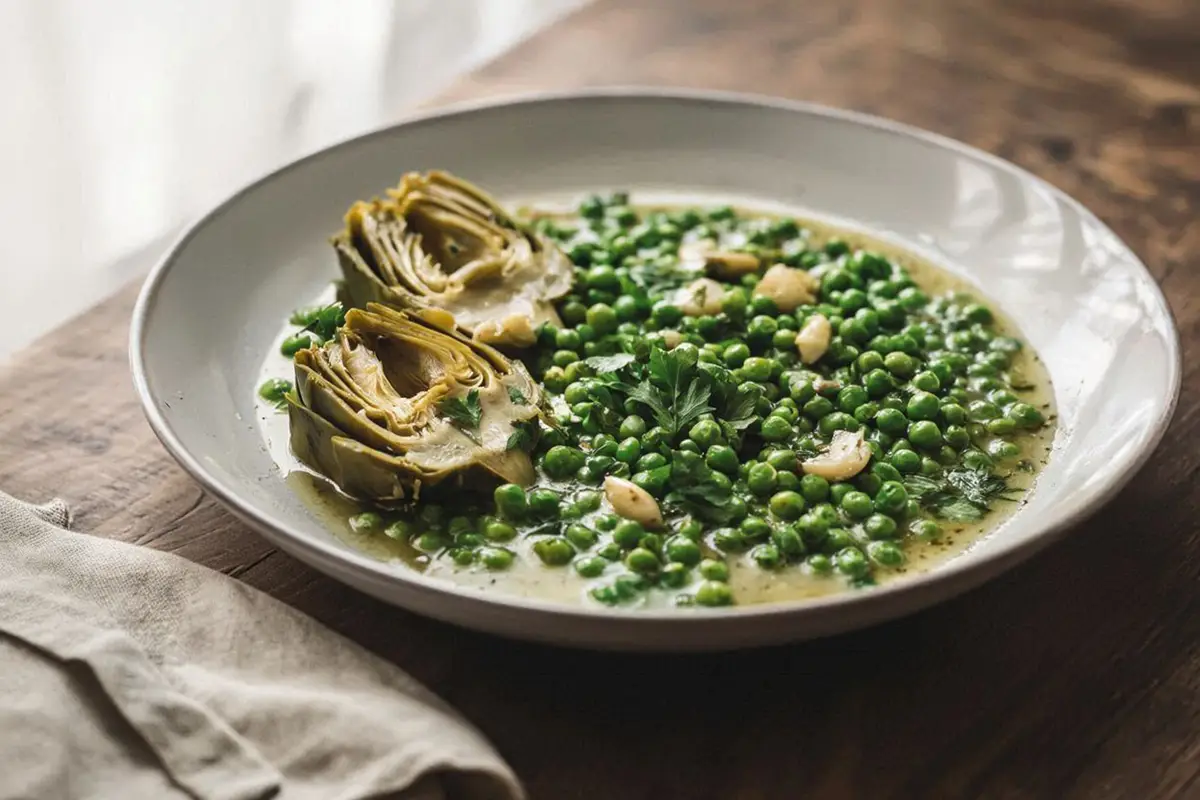
Young peas slowly braised with garlic and parsley, finished with tender artichokes and a light white roux — a delicate early 20th century spring side dish.
Quick Summary
Young peas slowly braised with garlic and parsley, finished with tender artichokes and a light white roux — a delicate early 20th century spring side dish.
Historical recipe
Modernised adaptation of an early 20th‑century source. Not independently kitchen-tested by Attic Recipes. Quantities, temperatures, and food safety guidance have been updated for a contemporary kitchen — results may vary and errors may exist. Nutritional values, where provided, are estimates only and have not been laboratory tested. Always follow current food safety guidelines for your region. If you have a health condition, allergy, or dietary requirement, consult a qualified professional before preparing this recipe.
Use of this recipe is entirely at your own risk and subject to our Terms of Service and Privacy Policy. Attic Recipes accepts no liability for any adverse outcome.
- Gluten
Additional notes
-
Caution
Contains gluten (flour in roux). Those with coeliac disease or gluten intolerance should substitute with a gluten-free flour or cornstarch slurry.
Replace the roux with 1 teaspoon of cornstarch dissolved in 2 tablespoons of cold water, stirred in at the end of cooking.
-
Note
Artichokes contain cynarin, a compound that can temporarily alter taste perception, making water and other foods taste sweeter immediately after eating. This is harmless but may be surprising.
-
Note
Peas are high in purines. Those managing gout should consume in moderation.
No substitution needed — portion control is sufficient.
- 1
Prepare the artichokes: trim the stems flush with the base and cut away any tough outer leaves. Trim the spiny tips from the remaining leaves. Wash thoroughly and submerge immediately in a bowl of cold water with the juice of 1 lemon. Hold here until needed.
Tip Artichokes oxidise rapidly once cut. Do not let them sit in plain water — the lemon acid is essential to preserve their colour and flavour. - 2
Melt 1 tablespoon of lard in a heavy-bottomed saucepan over low-medium heat. Add the whole garlic cloves and chopped parsley. Stir briefly until fragrant, about 1 minute.
- 3
Add the shelled peas to the pan. Stir to coat in the fat. Cover and braise on low heat for 30 minutes, stirring frequently. Add broth or hot water in small amounts — just enough to keep the peas from catching — as needed throughout.
Tip Young, freshly harvested peas may be ready in as little as 20 minutes. Taste regularly from the 20-minute mark. The peas should be fully tender but not mushy before the artichokes go in. - 4
Drain the artichokes from their lemon water. Nestle them into the peas. Cover and continue to braise on low heat for a further 30 minutes, or until the artichokes are completely tender when pierced at the base with a knife.
Tip Artichokes should not be overcooked — they contribute primarily a floral aroma to this dish. Remove from heat as soon as their scent is clearly present in the steam. - 5
In a small separate saucepan, melt ½ tablespoon of lard over medium heat. Add ½ tablespoon of flour and stir constantly for 1–2 minutes to form a pale roux. Do not allow it to colour.
- 6
Pour the roux over the peas and artichokes. Add additional broth or water and stir gently to combine. The finished dish should be sauced and juicy — not dry, but not a soup. Taste and adjust salt. Serve immediately.
Nutrition Information per 1 portion (approx. 240g)
Nutritional values are approximate estimates and may vary based on specific ingredients used, preparation methods, and portion sizes.
Serving Suggestions
Served alongside roast veal, lamb, or poached chicken. Can also work as a light lunch with good bread to soak up the sauce.
About This Recipe
This is a quiet, contemplative dish — one that rewards patience over technique. Young peas are braised slowly in fat with garlic and parsley until completely soft, then joined by artichokes, which contribute not mass or bulk but something rarer: scent. The cook is instructed to use their nose as the primary instrument — the dish is ready not by timing or visual cue, but by smell. It is one of the few dishes in the early 20th century home cooking tradition that makes this explicit.
Why It Works
The long, covered braise in fat — rather than boiling in water — concentrates the peas’ own sweetness and develops a depth of flavour that steaming or blanching cannot achieve. The small amount of roux added at the end is not a thickener in the conventional sense; it is a unifier, binding the braising liquid and fat into a coherent, lightly glossy sauce that coats each pea. The artichoke aroma compounds — primarily from the compound cynarin and a range of sesquiterpene lactones — are highly volatile, which is precisely why overcooking should be avoided: prolonged heat drives off the very thing that defines the dish.
Seasonal Notes
This is an early summer dish. In Central European climates, fresh peas and artichokes overlap for only a few weeks — roughly late May through June. Outside this window, frozen petits pois and jarred artichoke hearts are entirely acceptable and, in many cases, produce a more consistent result than out-of-season fresh produce.
A classic of early 20th century home cooking, preserved and adapted for the modern kitchen.
The Story Behind This Recipe
Historical Context
This dish belongs to the spring repertoire of Central European bourgeois cooking — a short seasonal window when young garden peas and early artichokes were available simultaneously. The artichoke here is not a primary ingredient but a perfume: its role is aromatic. The instruction to remove the dish from heat as soon as its floral scent is detectable is a rare and precise sensory cue in period cookery writing, reflecting a sophisticated understanding of volatile aroma compounds long before food science named them.
Modern Kitchen Adaptation
**On fat:** Lard is the traditional fat throughout. For a lighter result, substitute with: - *Butter* — adds richness and a more delicate flavour, closer to a French-influenced preparation - *Olive oil* — the healthiest option; adds a Mediterranean note that suits both artichoke and peas well **On pea selection — this matters significantly:** Fresh peas begin converting their sugars to starch within hours of harvest. A pea picked this morning is sweet, tender, and cooks in 15–20 minutes. The same pea purchased two days later from a market stall may need 35–40 minutes and will taste noticeably starchier. When buying fresh peas, look for pods that are bright, firm, and slightly glossy. Avoid any that feel rubbery or sound hollow when shaken. If fresh peas are unavailable, frozen petits pois are the best substitute — they are blanched and frozen within hours of harvest, locking in sweetness, and require no pre-braising; add them at the artichoke stage. **On artichoke preparation:** For a more refined presentation, trim the artichokes down to hearts only (removing all outer leaves and the choke). This significantly reduces cooking time to approximately 15–20 minutes and makes the finished dish easier to eat.
This recipe is an independent modern adaptation developed from historical sources in the public domain. It is provided for informational and educational purposes only and does not constitute professional dietary, nutritional, or medical advice. Food preparation involves inherent risks. The reader assumes full responsibility for safe food handling, ingredient sourcing, and adherence to current local food safety guidelines. The site operator accepts no liability for outcomes resulting from the preparation or consumption of this recipe.
One recipe.
Every week.
You Might Also Like
More recipes from the same category
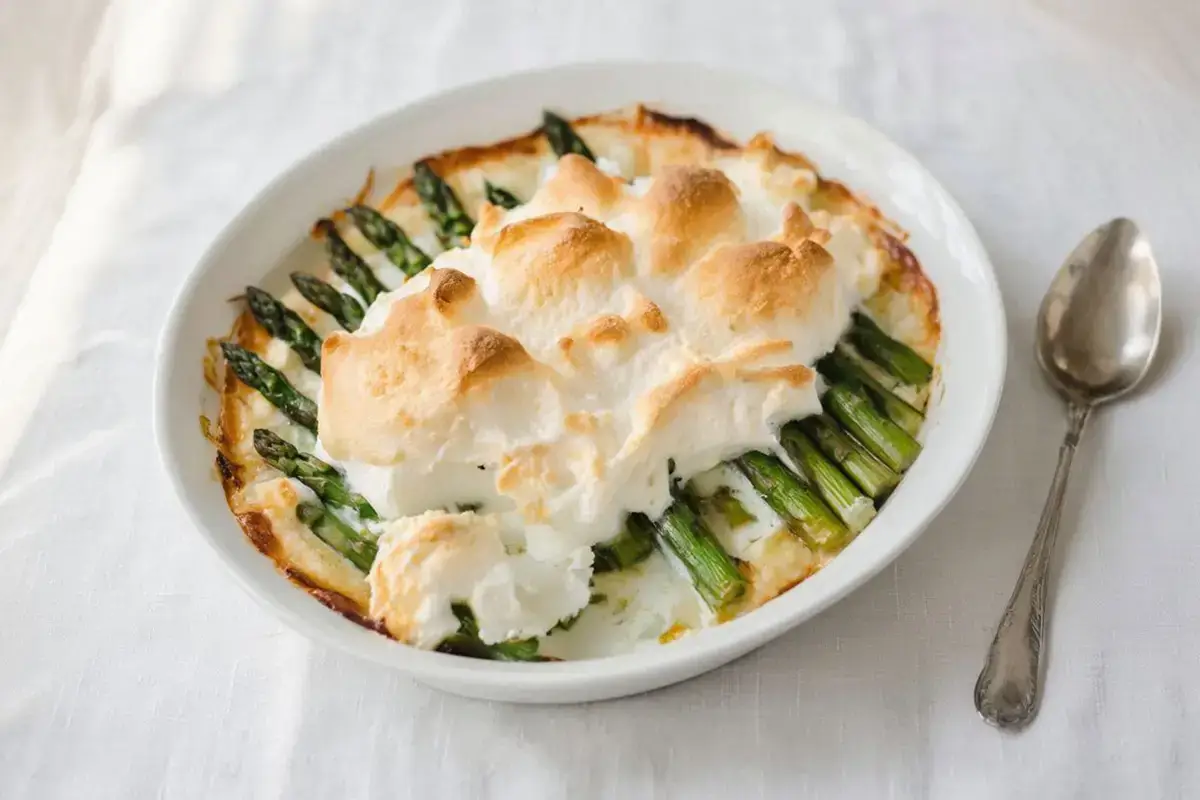
Asparagus Venetian Style
Fresh asparagus baked under a rich egg yolk cream sauce and a golden meringue-cheese topping. An elegant Central European appetizer.
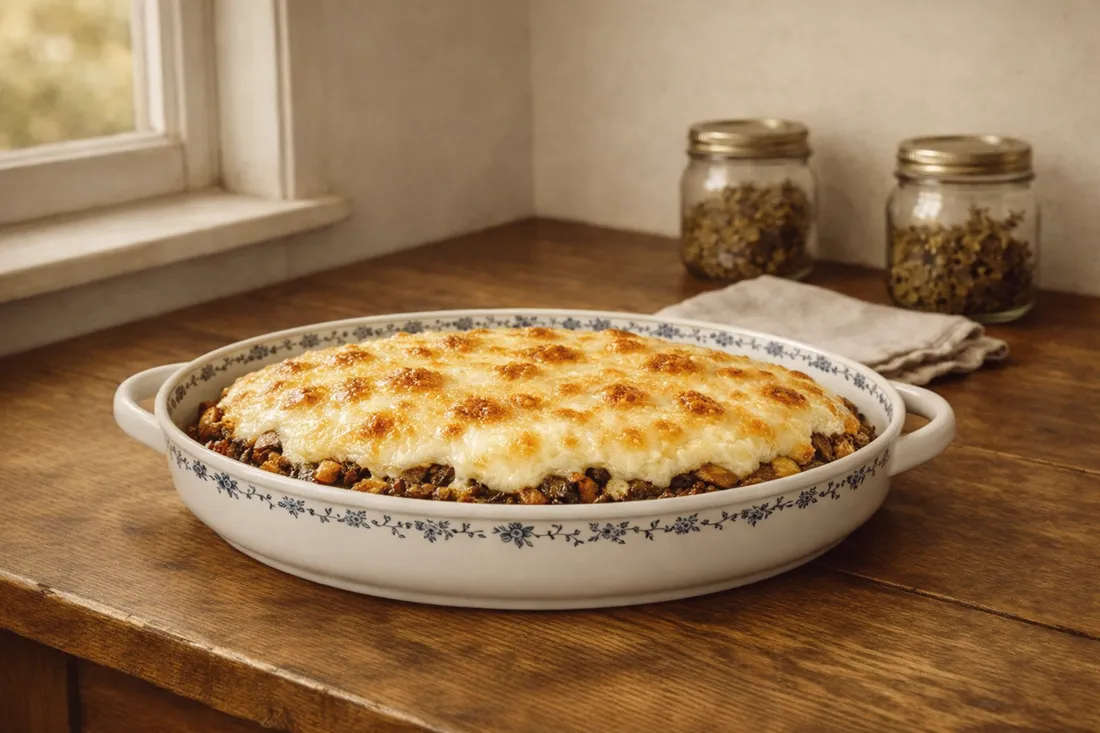
Baked Mushrooms with Hard Cheese and Eggs
Layers of sliced hard-boiled eggs and grated cheese topped with sautéed mushrooms, baked under a rich egg-enriched sour cream topping.
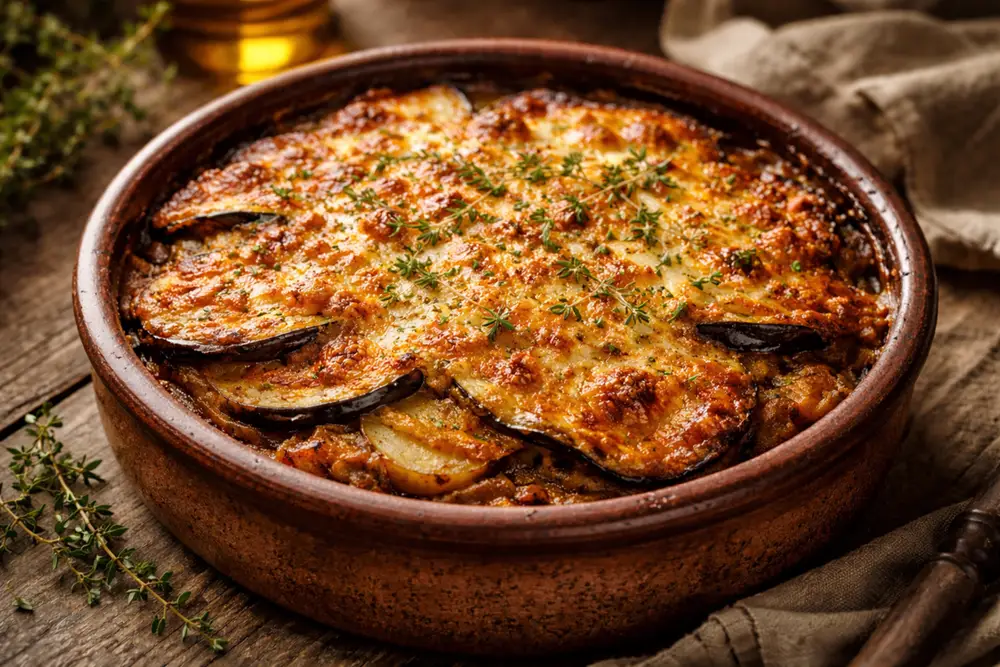
Baked Eggplant with Potatoes
A slow-baked layered casserole of eggplant, parboiled potatoes, golden fried onion, and melted cheese.