Green Pepper Steaks
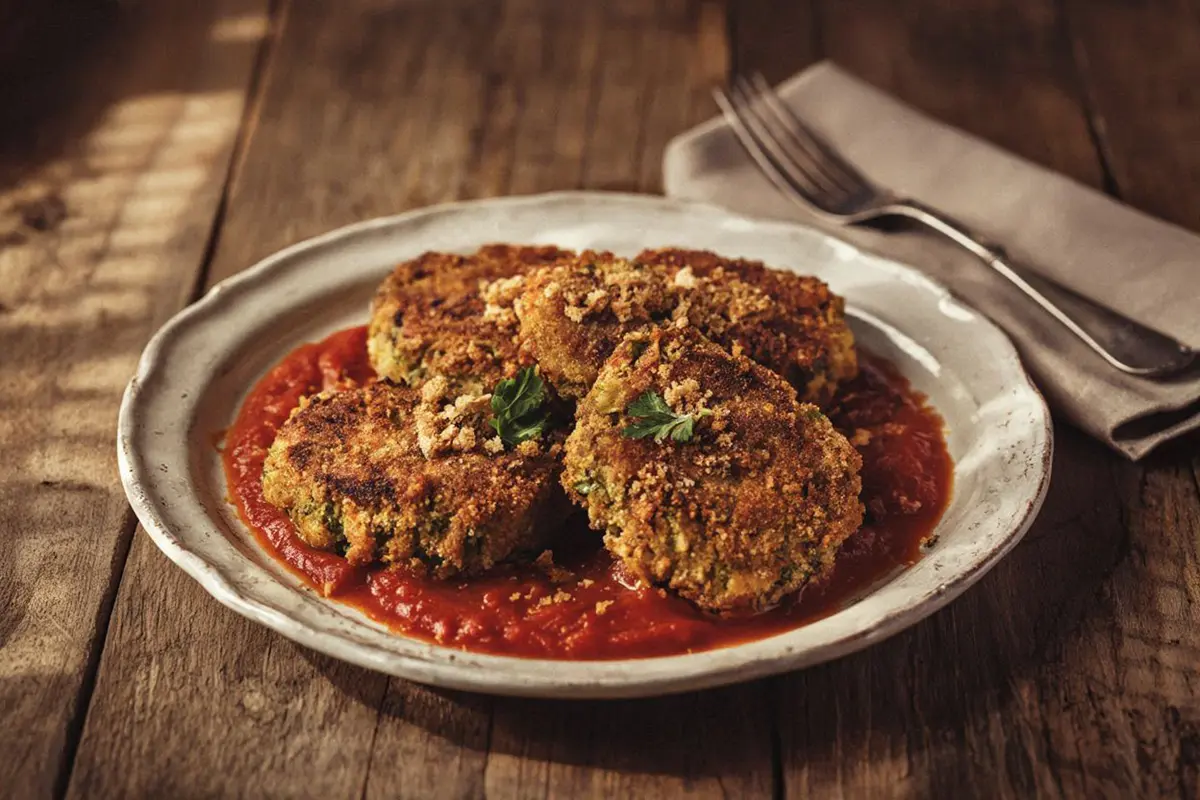
Classic vegetarian dish: roasted bell peppers transformed into crispy breaded patties with rich tomato sauce. Hearty, economical, and genuinely satisfying.
Quick Summary
Classic vegetarian dish: roasted bell peppers transformed into crispy breaded patties with rich tomato sauce. Hearty, economical, and genuinely satisfying.
This recipe uses Slow-Simmered Tomato Sauce — prepare it in advance if you haven't already.
Historical recipe
Modernised adaptation of an early 20th‑century source. Not independently kitchen-tested by Attic Recipes. Quantities, temperatures, and food safety guidance have been updated for a contemporary kitchen — results may vary and errors may exist. Nutritional values, where provided, are estimates only and have not been laboratory tested. Always follow current food safety guidelines for your region. If you have a health condition, allergy, or dietary requirement, consult a qualified professional before preparing this recipe.
Use of this recipe is entirely at your own risk and subject to our Terms of Service and Privacy Policy. Attic Recipes accepts no liability for any adverse outcome.
- Eggs
- Gluten
Additional notes
-
Caution
This recipe uses open flame to char peppers. Keep a safe distance, use long tongs, and never leave the flame unattended.
Use a broiler on high with peppers on the top rack — effective and safer than open flame for inexperienced cooks.
- 1
Grill the bell peppers directly over an open flame, on a hot stove, or under a broiler until skins are charred and blistered on all sides.
Tip Turn peppers frequently for even charring — every surface needs to blister. - 2
Place charred peppers in a bowl, cover with plastic wrap or a kitchen towel, and steam for 10–15 minutes. This loosens the skin for easy peeling.
- 3
Peel off charred skin, remove stems and seeds, and finely chop the peppers or pulse in a food processor until a coarse paste forms.
- 4
Heat 1 tablespoon of lard or oil in a saucepan over medium heat. Add chopped peppers and salt. Sauté until most moisture has evaporated and mixture thickens, about 8–10 minutes.
Tip The mixture must be dry enough to hold shape when formed into patties — cook longer if it still looks wet. - 5
Remove from heat and cool completely.
Tip Completely cool before adding egg — residual heat will scramble it. - 6
Once cooled, mix in 1 whole egg, 1 tablespoon flour, and 1 tablespoon breadcrumbs. Stir until mixture holds together. Add more breadcrumbs if too wet.
- 7
Shape into oval or round patties about 1–2cm thick.
- 8
Set up a breading station: one plate with flour, one bowl with beaten eggs, one plate with breadcrumbs.
- 9
Dredge each patty in flour, dip in beaten egg, then press into breadcrumbs on both sides.
Tip Press the breading firmly — loose coating falls off in the pan. - 10
Heat lard or oil in a large skillet over medium-high heat. Fry pepper steaks until golden and crispy on both sides, about 3–4 minutes per side. Drain on paper towels.
Tip Fry in batches — overcrowding drops the pan temperature and produces soggy coating. - 11
For the sauce: toast 4 tablespoons breadcrumbs in a dry pan until golden. Set half aside for garnish.
Tip Watch closely — breadcrumbs go from golden to burnt in seconds. - 12
Add tomato puree and 2 tablespoons lard or oil to a saucepan. Stir in half the toasted breadcrumbs. Season with salt and pepper. Simmer 10–15 minutes until thickened.
- 13
Arrange pepper steaks on a serving platter. Pour tomato sauce around or over them.
- 14
Sprinkle reserved toasted breadcrumbs over each steak just before serving.
Nutrition Information per 2 pepper steaks with sauce (approx. 220g)
Nutritional values are approximate estimates and may vary based on specific ingredients used, preparation methods, and portion sizes.
Pro Tips
- Cool the pepper mixture completely before adding egg — heat scrambles it
- The mixture must be genuinely dry before shaping — wet patties fall apart in the pan
- Press the breading firmly onto each patty to prevent it falling off during frying
- Fry in batches for the crispiest results — never crowd the pan
- Reserved toasted breadcrumbs on top add crucial textural contrast at serving
Serving Suggestions
Serve hot with crusty bread to soak up the tomato sauce, or alongside grilled meats as a substantial side. A simple cucumber and tomato salad with vinegar and oil cuts through the richness well.
About This Recipe
Fifteen green peppers, charred over flame, peeled, bound with egg and breadcrumbs, shaped into patties, breaded, and fried until crisp. The name “steaks” is intentional — these are main-course food, not a side dish. The tomato sauce thickened with toasted breadcrumbs ties everything together and gives the dish its characteristic rustic depth.
The technique is straightforward but has two points where things can go wrong: the pepper mixture must be completely dry before shaping, and completely cool before adding the egg. Get those right and the rest follows.
Why It Works
Charring the peppers does two things at once — removes the tough skin and adds smokiness that raw or boiled pepper never has. The long sauté in step 4 drives off the water that would otherwise make the patties fall apart. The double breadcrumb application (in the mixture and in the coating) gives structure from the inside and crunch from the outside.
The toasted breadcrumb sauce is the most interesting part of the recipe. Breadcrumbs toasted in a dry pan until nutty, then simmered into tomato puree, produce a sauce with a texture and depth that flour-thickened versions cannot match.
Scaling
Fifteen peppers is a large batch — it produces 12–16 patties depending on size. The recipe scales well: 8 peppers for a smaller household, 20+ if cooking for a crowd. The sauce quantity stays roughly proportional.
A classic of early 20th century home cooking, preserved and adapted for the modern kitchen.
The Story Behind This Recipe
Historical Context
Breaded vegetable patties presented as 'steaks' were a practical solution across Central European kitchens during the early 20th century — elevated meatless dishes for fasting periods, lean weeks, or simply when the vegetable garden was producing well. The technique of charring, peeling, and binding roasted peppers into patties appears in Austrian, Hungarian, and Czech cooking of the period. Thickening the tomato sauce with toasted breadcrumbs rather than flour is a distinctly Central European approach that adds nutty depth.
Modern Kitchen Adaptation
Lard is the traditional fat throughout; neutral vegetable oil is the modern alternative. Try a mix of red, yellow, and green bell peppers for a sweeter, more vibrant result. Minced garlic and fresh herbs (basil, oregano) work well added to the pepper mixture in step 6. Serve with roasted potatoes or a green salad for a complete vegetarian meal. Air fryer at 200°C / 180°C fan for 12–15 minutes is a good lower-oil alternative to pan frying.
This recipe is an independent modern adaptation developed from historical sources in the public domain. It is provided for informational and educational purposes only and does not constitute professional dietary, nutritional, or medical advice. Food preparation involves inherent risks. The reader assumes full responsibility for safe food handling, ingredient sourcing, and adherence to current local food safety guidelines. The site operator accepts no liability for outcomes resulting from the preparation or consumption of this recipe.
One recipe.
Every week.
You Might Also Like
More recipes from the same category
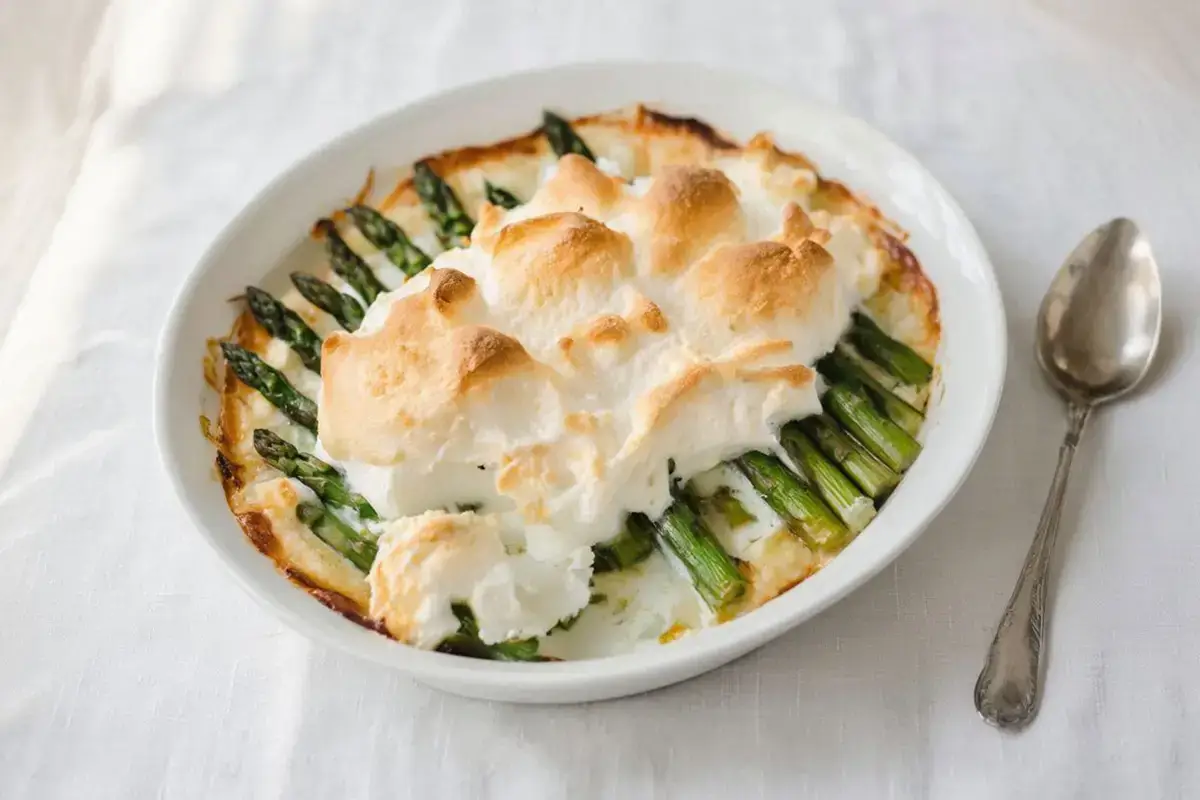
Asparagus Venetian Style
Fresh asparagus baked under a rich egg yolk cream sauce and a golden meringue-cheese topping. An elegant Central European appetizer.
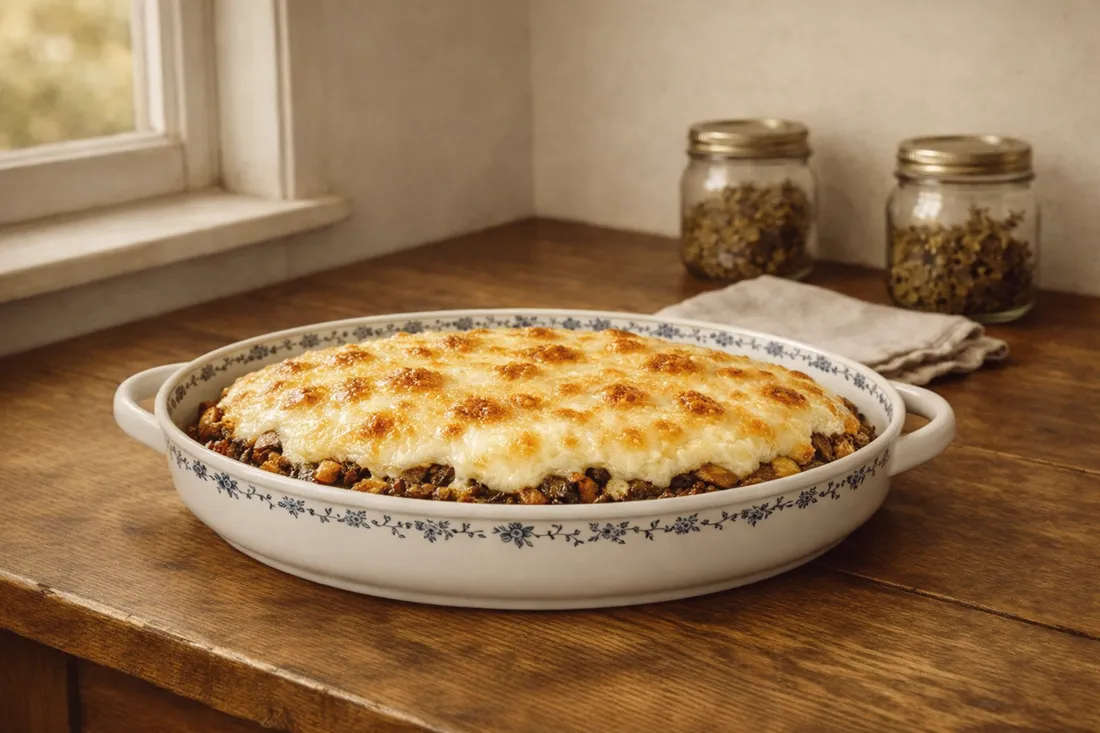
Baked Mushrooms with Hard Cheese and Eggs
Layers of sliced hard-boiled eggs and grated cheese topped with sautéed mushrooms, baked under a rich egg-enriched sour cream topping.
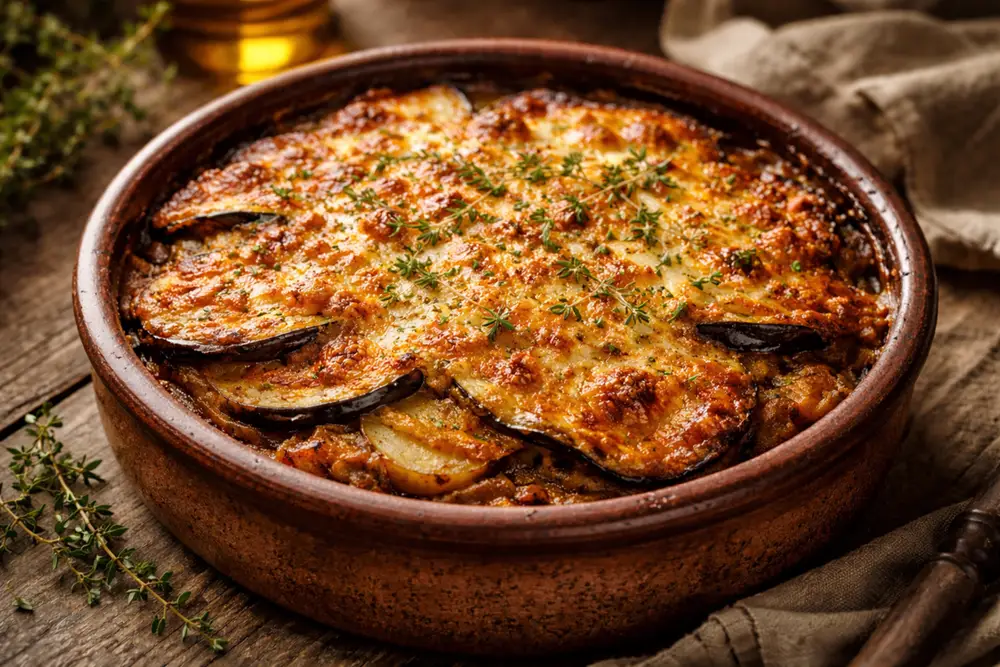
Baked Eggplant with Potatoes
A slow-baked layered casserole of eggplant, parboiled potatoes, golden fried onion, and melted cheese.