Pickled Peppers Filled with Beans
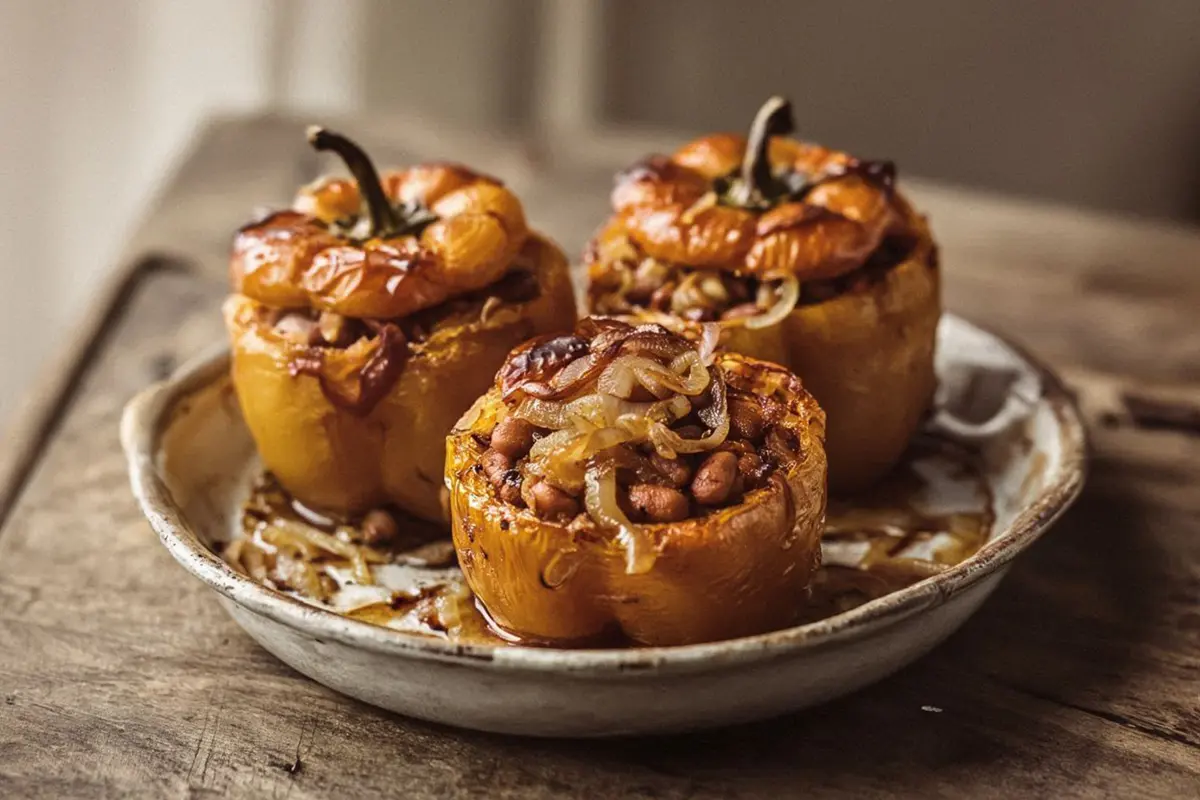
Traditional casserole: roasted pickled peppers stuffed with creamy white beans, onions, and paprika. Hearty, economical, and deeply flavored.
Quick Summary
Traditional casserole: roasted pickled peppers stuffed with creamy white beans, onions, and paprika. Hearty, economical, and deeply flavored.
Historical recipe
Modernised adaptation of an early 20th‑century source. Not independently kitchen-tested by Attic Recipes. Quantities, temperatures, and food safety guidance have been updated for a contemporary kitchen — results may vary and errors may exist. Nutritional values, where provided, are estimates only and have not been laboratory tested. Always follow current food safety guidelines for your region. If you have a health condition, allergy, or dietary requirement, consult a qualified professional before preparing this recipe.
Use of this recipe is entirely at your own risk and subject to our Terms of Service and Privacy Policy. Attic Recipes accepts no liability for any adverse outcome.
Additional notes
-
Caution
Dried beans must be fully cooked through before eating — undercooked beans contain lectins that cause digestive illness. Cook until completely tender with no chalky center. Canned beans are pre-cooked and safe to use directly.
Use canned white beans (drained and rinsed) to eliminate undercooking risk entirely.
-
Caution
This recipe uses commercially pickled peppers. Check that the jar is properly sealed before use — bulging lids, unusual odor, or cloudy brine are signs of spoilage. Discard immediately if any of these are present.
Original: Bake until completely cooked and golden brown
- 1
If using dried beans, soak in cold water for 24 hours. Drain and rinse.
Tip Soaking reduces cooking time significantly and improves digestibility. Do not skip. - 2
Place soaked beans in a large pot, cover with cold water, and bring to a full boil. Drain and discard this first water.
Tip Discarding the first boil water removes bitterness and compounds that cause digestive discomfort. - 3
Return beans to the pot with 2 finely chopped onions. Cover with fresh warm water and cook until completely tender, about 45–60 minutes.
- 4
Season with salt, remove from heat, and drain. Reserve a little cooking liquid in case the filling needs loosening.
- 5
In a saucepan, heat 1 tablespoon oil over medium heat. Add the remaining chopped onion and fry until deeply golden and caramelized, about 10–15 minutes.
Tip Properly caramelized onions take longer than you think — do not rush this step. - 6
Add paprika and black pepper to the onions, stirring quickly. Mix in the cooked beans and combine well.
- 7
Carefully remove seeds from the pickled peppers, keeping them whole. Reserve all the vinegar from the jar.
- 8
Stuff each pepper generously with the bean mixture. Reserve some beans for the base layer.
- 9
Spread the remaining beans in a casserole dish. Pour the reserved pepper vinegar over the bean base — this is the key flavoring step.
Tip The vinegar ties the dish together — do not discard it. - 10
Arrange stuffed peppers on top of the bean layer.
- 11
Mix 3 tablespoons oil with 1 teaspoon paprika and a pinch of salt. Drizzle evenly over the peppers.
- 12
Preheat oven to 180°C / 160°C fan (350°F). Bake for 30–40 minutes until peppers are golden brown and the top is slightly crispy.
Nutrition Information per 1 portion (2 stuffed peppers, approx. 400g)
Nutritional values are approximate estimates and may vary based on specific ingredients used, preparation methods, and portion sizes.
Pro Tips
- Soak dried beans for 24 hours — it makes a real difference in texture and cooking time
- Do not skip the double-boiling step — it removes bitterness and improves digestibility
- Caramelize the onions properly — 10–15 minutes on medium heat, not 3 minutes on high
- Save the pepper vinegar — it is the ingredient that ties the whole dish together
- Use toothpicks to hold soft peppers together if they lose their shape
- Leftovers improve the next day as flavors meld
Serving Suggestions
Serve hot as a main course with crusty bread. A simple cucumber salad with vinegar and oil alongside cuts through the richness. Pairs well with a light white wine or sparkling water with lemon.
About This Recipe
Pickled peppers from summer preserves, filled with spiced white beans, arranged over a bean base and baked until the tops crisp up. The vinegar from the pepper jar goes into the bean layer — that single step is what gives this dish its distinctive tangy depth and separates it from a generic bean casserole.
This is winter food in the best sense: economical, warming, and built entirely from pantry staples.
The Bean Question
Dried beans give a better texture and more flavor than canned — but they require planning. Soak overnight, double-boil, cook until completely tender. If you are short on time, two cans of drained cannellini beans skip steps 1–4 entirely and produce a perfectly good result.
Either way, the caramelized onion step is not optional. Properly golden onions — 10 to 15 minutes over medium heat, not rushed — are what make the bean filling taste like something rather than nothing.
On the Vinegar
The pickling vinegar from the peppers is a flavoring ingredient, not a byproduct to discard. Pour it over the bean base before arranging the stuffed peppers. It seasons the entire dish from underneath and gives the finished casserole a sharpness that balances the starchy beans and sweet paprika.
A classic of early 20th century home cooking, preserved and adapted for the modern kitchen.
The Story Behind This Recipe
Historical Context
Stuffed pickled pepper casseroles were a practical winter dish across Central Europe in the early 20th century — summer pickles transformed into a substantial meal when fresh vegetables were unavailable. The combination of dried beans and pickled peppers provided protein and preserved vegetables through winter months, and the technique of using the pickling vinegar in the dish itself shows the resourcefulness typical of the period.
Modern Kitchen Adaptation
Lard is not used in this recipe — vegetable oil is both the traditional and modern fat here. Canned white beans (drained and rinsed) reduce total time significantly — skip steps 1–4. A convection oven at 160°C works well. Adding a bay leaf during bean cooking adds depth. If peppers are too soft to stuff, use toothpicks to hold them together during baking.
This recipe is an independent modern adaptation developed from historical sources in the public domain. It is provided for informational and educational purposes only and does not constitute professional dietary, nutritional, or medical advice. Food preparation involves inherent risks. The reader assumes full responsibility for safe food handling, ingredient sourcing, and adherence to current local food safety guidelines. The site operator accepts no liability for outcomes resulting from the preparation or consumption of this recipe.
One recipe.
Every week.
You Might Also Like
More recipes from the same category
Apricot Fruit Paste
Sieved ripe apricots cooked with equal weight sugar and lemon juice, poured into molds and air-dried — from early 20th century Central European kitchens.
Whipped Apricot or Peach Preserve (No-Cook)
A silky, pale fruit spread made by whipping raw apricot or peach puree with sugar - no cooking required.
Blackberry and Cornelian Cherry Marmalade
Rich preserve combining tart cornelian cherries with sweet blackberries, cooked to thick consistency with a traditional two-fruit method.