Pickled Young Garlic Salad
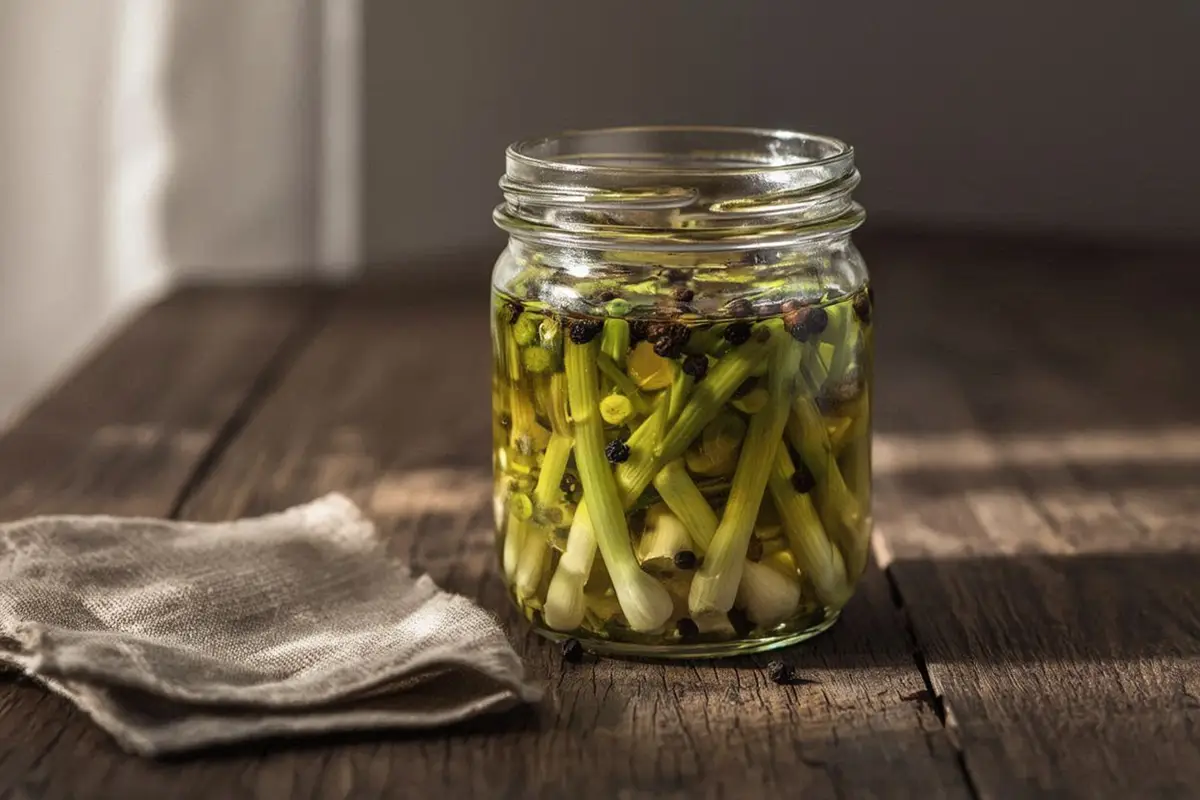
Tender blanched young garlic cloves preserved in wine vinegar and olive oil with black pepper — a sharp, fragrant spring condiment.
Quick Summary
Tender blanched young garlic cloves preserved in wine vinegar and olive oil with black pepper — a sharp, fragrant spring condiment.
Historical recipe
Modernised adaptation of an early 20th‑century source. Not independently kitchen-tested by Attic Recipes. Quantities, temperatures, and food safety guidance have been updated for a contemporary kitchen — results may vary and errors may exist. Nutritional values, where provided, are estimates only and have not been laboratory tested. Always follow current food safety guidelines for your region. If you have a health condition, allergy, or dietary requirement, consult a qualified professional before preparing this recipe.
Use of this recipe is entirely at your own risk and subject to our Terms of Service and Privacy Policy. Attic Recipes accepts no liability for any adverse outcome.
Safety note
Garlic submerged in oil is a well-documented source of Clostridium botulinum toxin — a potentially fatal foodborne illness. The spores naturally present in garlic thrive in the anaerobic (oxygen-free) environment created by oil, and cannot be seen, smelled, or tasted. Two serious botulism outbreaks in Canada and the United States were directly linked to home-preserved garlic in oil. Room-temperature storage of garlic in oil is never safe.
Refrigerate immediately after preparation and consume within 4 weeks maximum. Never store garlic in oil at room temperature. For a genuinely shelf-stable preserve, use undiluted wine vinegar at 5% acidity with a garlic-to-vinegar ratio no greater than 3:1 by weight, following tested USDA or equivalent national food safety guidelines.
Additional notes
-
Warning
The vinegar in this recipe is diluted with blanching water, which lowers its acidity below the safe threshold of pH 4.6 required to prevent bacterial growth. Diluted vinegar cannot be relied upon as a preservation agent for garlic.
For the refrigerator version, dilution is acceptable as the cold temperature provides the primary safety barrier. For any room-temperature or long-term storage, use full-strength undiluted vinegar only.
-
Note
Young garlic may turn blue or green when stored in an acid environment such as vinegar. This is caused by sulphur compounds in the garlic reacting with amino acids in an acidic environment, forming harmless pigments. It does not indicate spoilage.
No action needed. The color change is cosmetic and the garlic remains safe to eat.
- 1
Prepare the garlic: Clean the young garlic, removing any dry outer layers. Cut each clove (or section of stalk) into three pieces of roughly equal length.
- 2
Blanch: Bring 600ml of salted water to a full boil. Add the garlic pieces and blanch for 2–3 minutes — just long enough to soften slightly and lose the raw sharpness. Do not over-blanch; the garlic should retain some firmness.
Tip Blanching mellows the raw heat of the garlic significantly without removing its flavor. Young spring garlic is milder than mature garlic and requires only a brief scald. - 3
Cool: Drain the garlic, reserving the blanching water. Spread the garlic on a plate or clean towel and leave to cool completely before jarring.
- 4
Jar: Pack the cooled garlic pieces into a clean glass jar. Add the black peppercorns.
- 5
Add the pickling liquid: Mix the wine vinegar with 100ml of the reserved cooled blanching water to create the brine. Pour it over the garlic, ensuring the garlic is fully submerged. Add the olive oil on top.
Tip The vinegar must cover the garlic completely. Garlic above the liquid line is exposed to oxygen and is unsafe. Top up with additional vinegar if needed. - 6
Seal and refrigerate: Seal the jar tightly and refrigerate immediately. Use within 4 weeks.
Nutrition Information per 1 condiment portion (approx. 60g)
Nutritional values are approximate estimates and may vary based on specific ingredients used, preparation methods, and portion sizes.
Serving Suggestions
Serve as a condiment alongside grilled meats, roasted lamb, or as part of a mezze spread. The pickling liquid makes an excellent salad dressing base — a few spoonfuls whisked with a little extra olive oil makes a sharp, garlicky vinaigrette.
About This Recipe
Young spring garlic — harvested before the bulb has formed, when the whole plant is tender and mild — has a brief season and a distinctive sweetness that mature garlic entirely lacks. This simple preparation preserves it in vinegar and olive oil with black pepper, producing a sharp, fragrant condiment that pairs beautifully with grilled meats or serves as the base for a garlicky vinaigrette. This version is prepared for the refrigerator and consumed within a few weeks — safely, and at its best.
Why It Works
Blanching the garlic briefly before pickling serves two purposes: it softens the sharp, raw heat of even young garlic into something more rounded and pleasant, and it slightly opens the cell structure of the cloves, allowing the vinegar and olive oil to penetrate more quickly. The result after a day or two in the jar is a garlic that is tender, lightly acidic throughout, and fragrant with pepper — nothing like raw garlic, but unmistakably itself.
Modern Kitchen Tips
- Young garlic season: In Central European markets, young garlic is available for a narrow window in spring — typically April to early June. It is worth making a batch when you find it, as the flavor genuinely cannot be replicated with mature garlic.
- The blue color: If your garlic turns blue or green in the jar, don’t discard it. This is a harmless anthocyanin reaction with the acid — the garlic is perfectly safe.
- The pickling liquid: Don’t discard it when the garlic is gone. It makes an excellent sharp vinaigrette base or a flavor addition to marinades and sauces.
- Storage: Label the jar with the date you made it. Refrigerate immediately and use within 4 weeks.
A classic of early 20th century home cooking, preserved and adapted for the modern kitchen.
The Story Behind This Recipe
Historical Context
Pickled young garlic is a classic spring preservation across Central Europe, made in the brief window when garlic is young, mild, and tender — before the bulb has formed and the cloves have hardened. The practice of preserving spring vegetables in vinegar and oil for the months ahead was an essential part of the early 20th century household economy, where winter provisions were planned from the first days of the growing season. Young garlic was particularly valued for its purported blood-cleansing and strengthening properties, beliefs common across the region and associated specifically with spring eating.
Modern Kitchen Adaptation
Some early versions of this preserve claim the preparation 'can be kept for a long time' including over winter at room temperature — this is not safe to follow without modern food safety precautions. See the safety warnings below for full details. For a safely shelf-stable version, the vinegar must be used at full 5% acidity without dilution, and the garlic-to-vinegar ratio must be no greater than 3:1 by weight, following tested preservation guidelines. For most home cooks, the refrigerator version described here is the safest and most practical approach. Lard is not used in this recipe.
This recipe is an independent modern adaptation developed from historical sources in the public domain. It is provided for informational and educational purposes only and does not constitute professional dietary, nutritional, or medical advice. Food preparation involves inherent risks. The reader assumes full responsibility for safe food handling, ingredient sourcing, and adherence to current local food safety guidelines. The site operator accepts no liability for outcomes resulting from the preparation or consumption of this recipe.
One recipe.
Every week.
You Might Also Like
More recipes from the same category
Apricot Fruit Paste
Sieved ripe apricots cooked with equal weight sugar and lemon juice, poured into molds and air-dried — from early 20th century Central European kitchens.
Whipped Apricot or Peach Preserve (No-Cook)
A silky, pale fruit spread made by whipping raw apricot or peach puree with sugar - no cooking required.
Blackberry and Cornelian Cherry Marmalade
Rich preserve combining tart cornelian cherries with sweet blackberries, cooked to thick consistency with a traditional two-fruit method.