Piquant Sauce for Pickles, Cold Meats and Boiled Fish
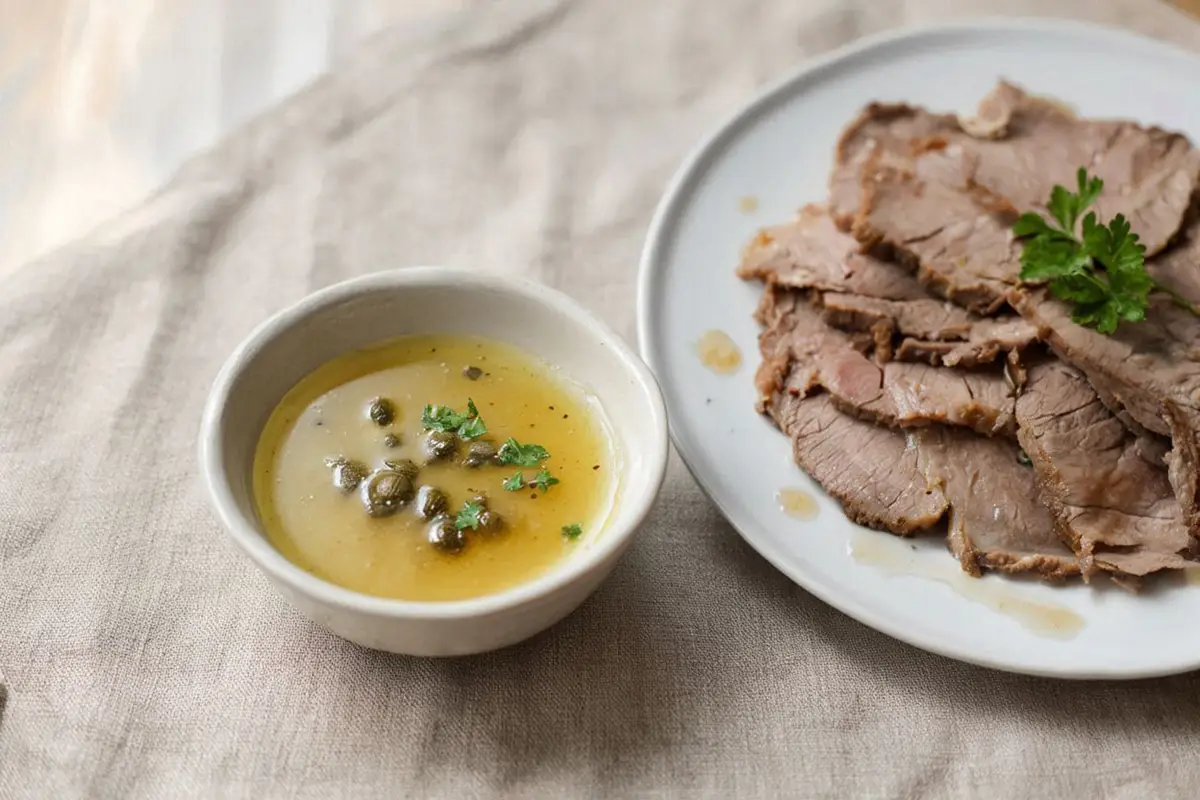
A sharp, emulsified cold sauce of mustard, white wine, capers, gherkin, and olive oil — a bold accompaniment to boiled fish, cold roasts, and aspic.
Quick Summary
A sharp, emulsified cold sauce of mustard, white wine, capers, gherkin, and olive oil — a bold accompaniment to boiled fish, cold roasts, and aspic.
Historical recipe
Modernised adaptation of an early 20th‑century source. Not independently kitchen-tested by Attic Recipes. Quantities, temperatures, and food safety guidance have been updated for a contemporary kitchen — results may vary and errors may exist. Nutritional values, where provided, are estimates only and have not been laboratory tested. Always follow current food safety guidelines for your region. If you have a health condition, allergy, or dietary requirement, consult a qualified professional before preparing this recipe.
Use of this recipe is entirely at your own risk and subject to our Terms of Service and Privacy Policy. Attic Recipes accepts no liability for any adverse outcome.
- Mustard
- Sulphites
Additional notes
-
Note
This sauce contains white wine and is not alcohol-free. Although the wine is not cooked, the finished sauce contains measurable alcohol — approximately 3–4% per serving depending on the wine used. Individuals avoiding alcohol for medical, religious, or personal reasons should be aware.
Substitute the white wine with an equal quantity of white grape juice plus 1 tbsp white wine vinegar for acidity. The emulsification behavior is identical; the flavor profile will be slightly sweeter and less complex.
-
Note
This sauce contains capers, which are high in sodium even after draining. Salt-packed capers should be thoroughly rinsed before use. Individuals on a low-sodium diet should reduce or omit the capers and adjust added salt accordingly.
-
Note
The sauce contains raw gherkin and raw onion, which some individuals with sensitive digestion may find difficult to tolerate in larger quantities. The amounts per serving are small at standard portion sizes.
- 1
Place the mustard in a medium bowl. Add the white wine gradually, stirring constantly and vigorously with a whisk or fork until the mustard is fully dissolved and the mixture is smooth and uniform. This is the emulsification base — it must be completely lump-free before anything else is added.
Tip Room temperature wine emulsifies more easily than cold. If your wine has been refrigerated, let it sit for 10 minutes before starting. - 2
Add the finely chopped gherkin, red onion, capers, and parsley to the mustard-wine base. Add the lemon juice, a pinch of salt, and a good amount of ground white pepper. Stir everything together well.
- 3
Begin adding the olive oil — very slowly, drop by drop at first, stirring constantly and vigorously throughout. As the sauce begins to thicken and emulsify, you can add the oil in a thin, steady stream, but never stop stirring. The sauce needs sustained, consistent agitation to achieve a smooth, emulsified consistency.
Tip This sauce emulsifies differently from mayonnaise — it will not become thick like mayo. The finished texture is looser and more fluid: a lightly bound, glossy sauce rather than a spread. If it separates, whisk vigorously for 1–2 minutes to bring it back together. - 4
Taste and adjust seasoning with salt, white pepper, and lemon juice. The sauce should be sharp, tangy, and well-seasoned — it is intended to cut through the fat of cold meats and boiled fish, so err toward bold rather than mild.
- 5
Transfer to a small serving dish or bowl. Serve immediately at room temperature alongside boiled fish, beef from soup (kuhano goveđe meso), cold roast meats, aspic (picti/hladetina), or any cold poached proteins.
Tip This sauce does not keep well — the emulsion is unstable and will separate within a few hours. Make it just before serving and stir again immediately before bringing to the table.
Nutrition Information per approx. 2 tbsp (30ml)
Nutritional values are approximate estimates and may vary based on specific ingredients used, preparation methods, and portion sizes.
About This Recipe
This sauce has no modern equivalent that quite matches it. It is not tartar sauce — there is no egg, no mayonnaise, no cream. It is not vinaigrette — the mustard and wine create a looser, more complex emulsion base than oil and vinegar alone. It is something sharp, briny, and aromatic — built around good olive oil and white wine, with capers and gherkin providing salt and acid in place of the vinegar a French cook might reach for. The original recipe calls it a sauce for picti, beef from the soup, boiled fish, and cold roast: every cold protein worth serving.
Why It Works
The emulsification in this sauce relies on the mustard rather than egg yolk. Mustard contains lecithin — a natural emulsifier — which allows the olive oil to bind with the wine-based liquid when added slowly with constant agitation. The result is less stable than mayonnaise (which uses a larger quantity of lecithin from egg yolk) but more than adequate for table service if made fresh. The wine provides the acid that balances the oil; the lemon adds brightness; the capers and gherkin provide brine and texture; the parsley adds freshness. Every component has a function, and removing any one of them noticeably unbalances the sauce.
On Dalmatian Olive Oil
The recipe specifies Dalmatian olive oil specifically — not as a generic instruction, but as a quality marker. Dalmatian olive oil, produced primarily from the Oblica variety on the islands and coastal areas of modern-day Croatia, is characteristically mild, buttery, and low in bitterness compared to Italian or Spanish oils. This mildness matters in a sauce where the oil is the dominant ingredient by volume. A very peppery Tuscan oil or a grassy Sicilian oil will produce a noticeably harsher result.
If Dalmatian olive oil is unavailable in your market, the closest equivalents are:
- Ligurian extra-virgin (Italy) — mild, delicate, excellent substitute
- Cretan PDO extra-virgin (Greece) — slightly fruitier but works well
- Any mild, low-bitterness extra-virgin — taste before using; if it is very peppery on the back of the throat, it will dominate the sauce
On ‘Black Onion’
The recipe specifies crni luk — literally “black onion” in Serbian/Croatian, which is the standard regional term for red onion. This is not a separate variety but a translation artifact: the dark purple-red skin of red onion led to the colloquial name across the South Slavic languages. A shallot is an equally good substitute and produces a slightly more refined, less sharp result. Standard yellow onion is not recommended — it lacks the sharpness and color that red onion or shallot brings to the finished sauce.
Serving Note: Make It Fresh
This sauce does not keep. The emulsion is inherently unstable — the wine-to-oil ratio is high and there is no egg to hold it permanently. Made fresh and served immediately, it is glossy and well-bound. Left for more than 2–3 hours, it will separate into its components. Make it immediately before serving, stir it again at the table if needed, and do not attempt to refrigerate and revive it the next day. It takes 15 minutes — there is no benefit to making it ahead.
A classic of early 20th century home cooking, preserved and adapted for the modern kitchen.
The Story Behind This Recipe
Historical Context
This sauce belongs to the Dalmatian coastal tradition of uncooked condiments built around olive oil and acid — a culinary lineage that reflects centuries of Mediterranean and Venetian influence on the eastern Adriatic coast. The use of white wine as the emulsification liquid rather than egg yolk distinguishes it from the French mayonnaise tradition and produces a lighter, sharper result better suited to the delicate boiled fish and cold meats of the Dalmatian table. Capers, a signature ingredient of the Dalmatian islands, appear consistently across this regional sauce tradition. The word 'picti' is the Dalmatian term for aspic or meat jelly — a cold set preparation of concentrated meat or fish stock once common at bourgeois tables across the Adriatic coast.
Modern Kitchen Adaptation
No quantities in this recipe required estimation — all are explicitly given. 'Black onion' is the period term for red onion or shallot, consistent with Dalmatian culinary usage of the era. 'Liquid French mustard' is directly equivalent to modern Dijon mustard. The emulsification technique has been described in detail for clarity, as the period preparation assumes existing knowledge of the method.
This recipe is an independent modern adaptation developed from historical sources in the public domain. It is provided for informational and educational purposes only and does not constitute professional dietary, nutritional, or medical advice. Food preparation involves inherent risks. The reader assumes full responsibility for safe food handling, ingredient sourcing, and adherence to current local food safety guidelines. The site operator accepts no liability for outcomes resulting from the preparation or consumption of this recipe.
One recipe.
Every week.
You Might Also Like
More recipes from the same category
Asparagus Venetian Style
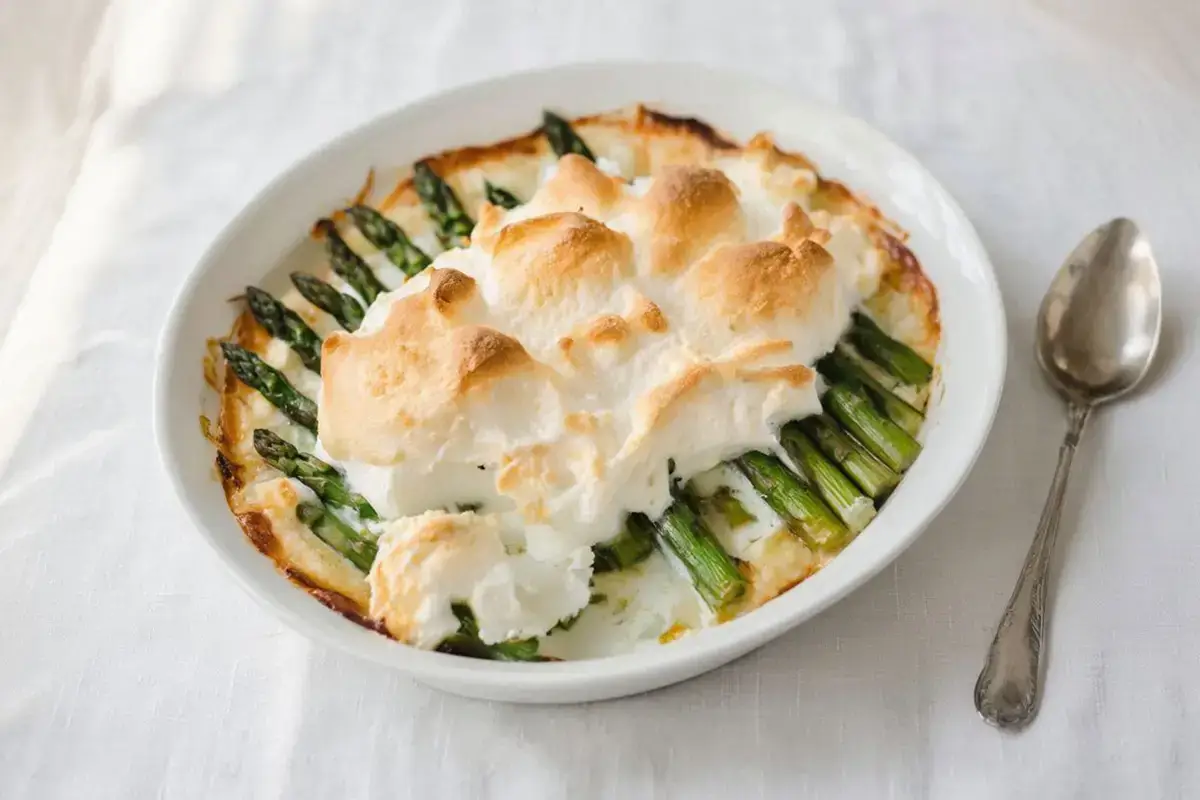
Fresh asparagus baked under a rich egg yolk cream sauce and a golden meringue-cheese topping. An elegant Central European appetizer.
Baked Mushrooms with Hard Cheese and Eggs
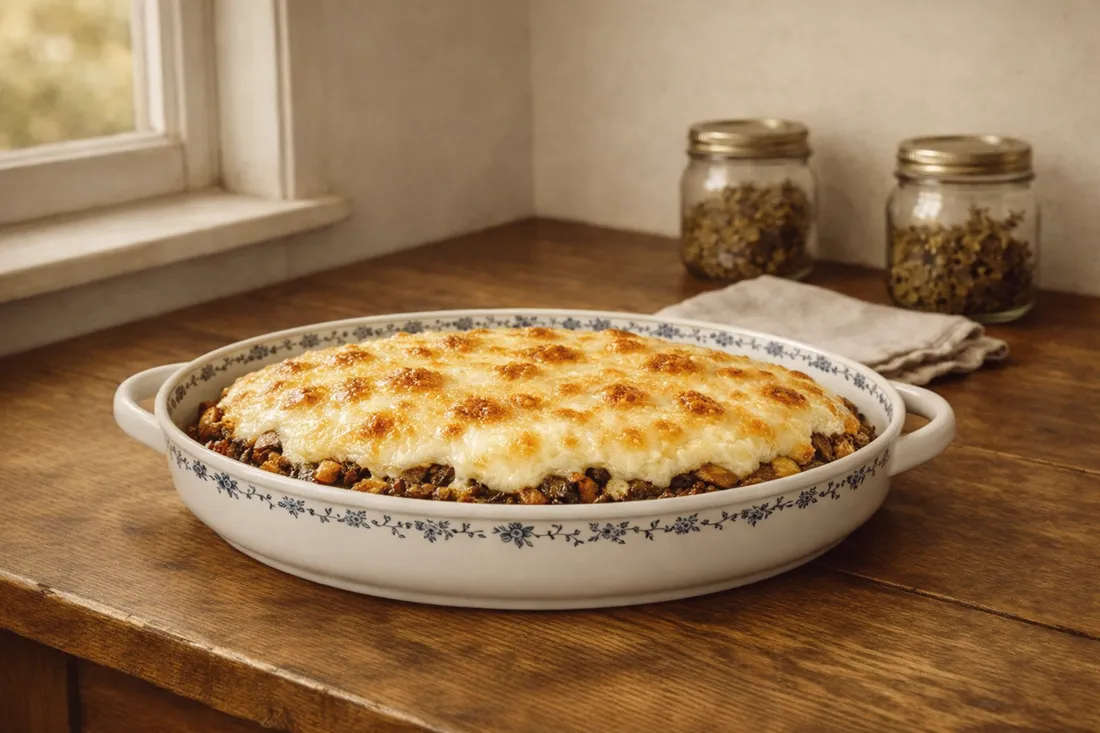
Layers of sliced hard-boiled eggs and grated cheese topped with sautéed mushrooms, baked under a rich egg-enriched sour cream topping.
Baked Eggplant with Potatoes
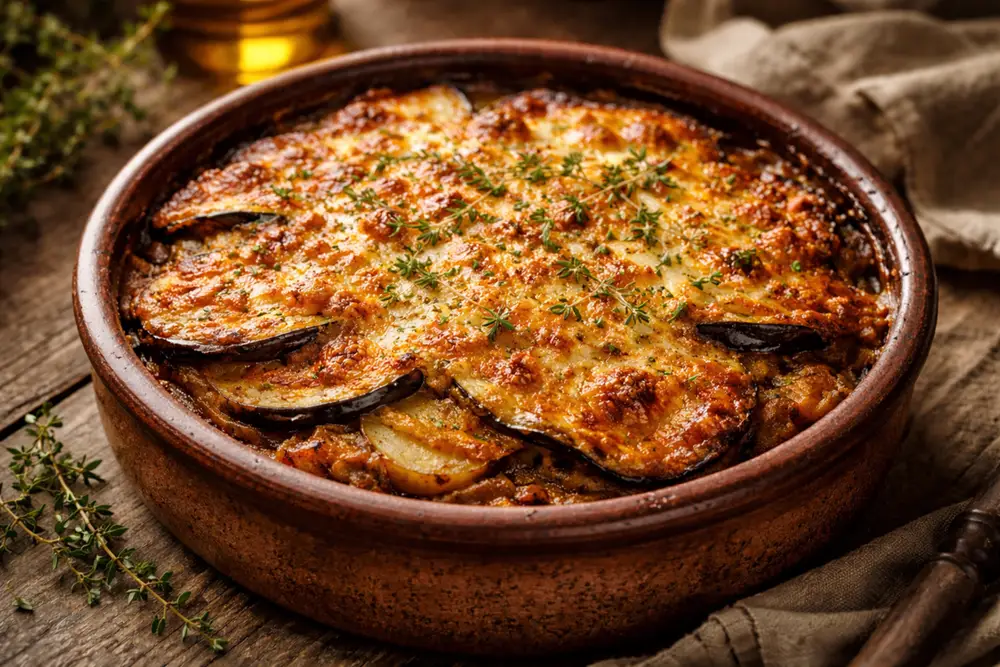
A slow-baked layered casserole of eggplant, parboiled potatoes, golden fried onion, and melted cheese.