Pork Cubes Braised and Fried in Their Own Fat
Pork cubes simmered until tender, then fried golden in their own rendered fat with paprika, pepper, and salt.
Quick Summary
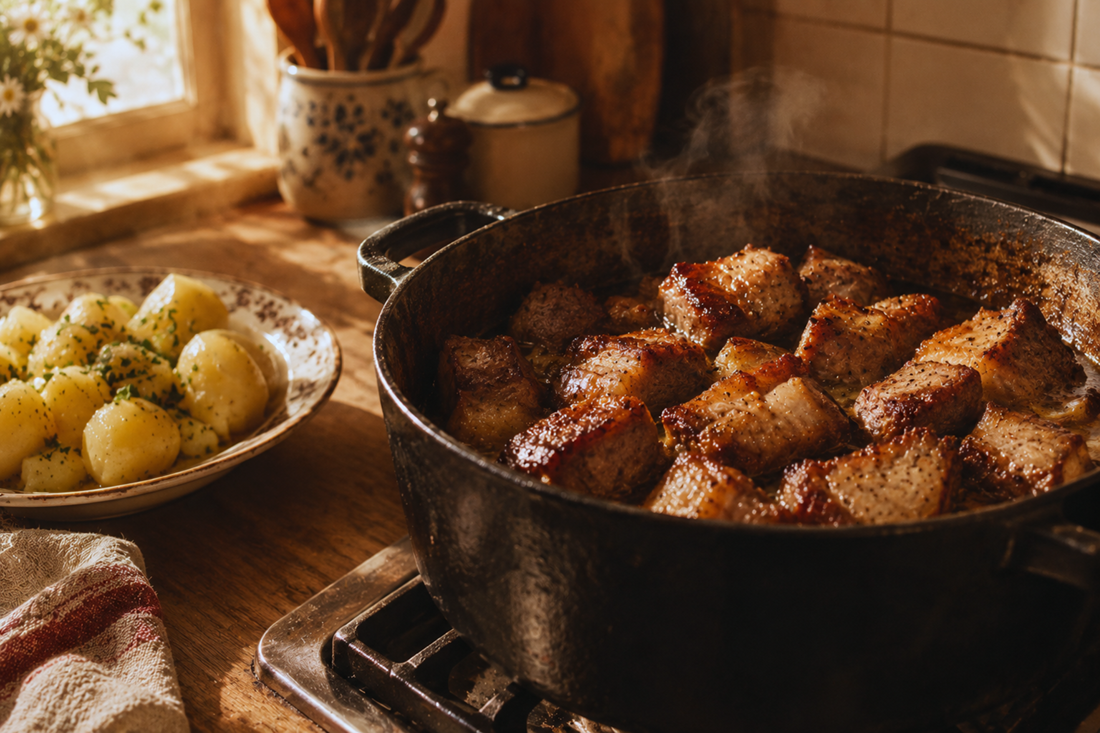
Cubed pork simmers in a little water until it evaporates and the meat turns tender, then fries briefly in its own rendered fat, seasoned with paprika, pepper, and salt. A quick stovetop main, best served right away with boiled or fried potatoes.
Historical recipe
Modernised adaptation of an early 20th‑century source. Not independently kitchen-tested by Attic Recipes. Quantities, temperatures, and food safety guidance have been updated for a contemporary kitchen — results may vary and errors may exist. Nutritional values, where provided, are estimates only and have not been laboratory tested. Always follow current food safety guidelines for your region. If you have a health condition, allergy, or dietary requirement, consult a qualified professional before preparing this recipe.
Use of this recipe is entirely at your own risk and subject to our Terms of Service and Privacy Policy. Attic Recipes accepts no liability for any adverse outcome.
Additional notes
-
Warning
Make sure the pork is cooked all the way through to a safe internal temperature (71°C / 160°F) before serving — check larger cubes for doneness, especially if reducing the simmering time.
-
Note
This dish is relatively high in saturated fat per serving, particularly when made with pork shoulder. Those managing cholesterol or heart health may prefer the leaner leg or ham option, using only a small amount of added oil.
- 1
Cut 1kg pork into small cubes and rinse well.
- 2
Place the meat in a pot and add just enough cold water to submerge it.
- 3
Cook uncovered over medium heat until the water completely evaporates; by this point the meat should be fully tender. If it's still tough, which is uncommon, add a little more water and let it evaporate again.
Tip Watch the pot closely as the water evaporates — the transition from simmering in water to frying in rendered fat happens quickly. - 4
Once all the water has evaporated, the pork will release its own fat and begin frying in it. If using a leaner cut such as leg or ham, add a small splash of oil or lard at this point, since it won't render enough fat on its own.
- 5
Add the ground paprika, black pepper, and salt, and mix well.
- 6
Fry briefly, stirring, until the meat is browned on the outside, then turn it out onto a serving plate.
- 7
Serve immediately with boiled or fried potatoes.
Nutrition Information per 1 serving (approx 170g cooked pork)
Nutritional values are approximate estimates and may vary based on specific ingredients used, preparation methods, and portion sizes.
Serving Suggestions
Serve hot with boiled or fried potatoes, straight from the pan — this dish is meant to be eaten fresh rather than made ahead.
About This Recipe
This dish gets its character from a two-step cooking process rather than a long ingredient list: pork cubes simmer in just enough water to cover them, and once that water disappears entirely, the meat keeps cooking in nothing but the fat it released on its own. No oil is added at the start — the technique itself does the work of turning simple cubed pork into something browned and richly flavored.
It’s a dish meant to be eaten right away. Once the water is gone and the meat starts frying in its own fat, it browns quickly and is at its best served hot off the pan; left to sit or reheated later, it tends to dry out and lose the texture that makes it worth making in the first place.
Why It Works
Simmering the pork in a small, controlled amount of water first ensures the meat cooks through and turns tender before any frying begins — by the time the water evaporates, there’s no risk of the outside browning before the inside is done. What’s left is a pot of already-tender meat sitting in its own rendered fat, which then just needs a short, hot finish to brown the surface. It’s essentially a self-contained braise-then-fry method that needs no added cooking fat if the right cut is used.
Modern Kitchen Tips
Cut the pork into evenly sized cubes so they all reach tenderness around the same time as the water evaporates — uneven pieces mean some will be done before others. If you’re using a leaner cut and worried about it sticking once the water is gone, have a small amount of oil ready to add rather than waiting until the pan is already dry.
A classic of early 20th century home cooking, preserved and adapted for the modern kitchen.
The Story Behind This Recipe
Historical Context
This dish is built around a two-stage stovetop method common in home kitchens of the period: meat is first simmered in a small amount of water until fully tender, and once that water evaporates completely, the meat continues cooking in its own rendered fat until browned. The approach let a modest cut of meat produce a flavorful dish without needing any added fat beyond what the meat itself released. It was understood to be best eaten freshly made, since it dries out quickly once it cools or is kept for later.
Modern Kitchen Adaptation
The original calls for 'svinjska krtina', literally lean pork, yet the method depends on the meat releasing enough of its own fat to fry in — a genuine tension in the original text. Two options are given here: pork shoulder, which reliably renders enough fat for the technique to work as written, or a leaner cut like leg or ham, which stays closer to the literal 'lean pork' but needs a small splash of added oil or lard once the water evaporates to fry properly. Water, paprika, pepper, and salt quantities are all estimated, since the original gives only 'enough to submerge the meat' and 'a knife-tip' as measures — adjust to taste and pot size. As with any braised-then-fried pork dish, make sure the meat is fully cooked through before serving; the extended simmer typically takes care of this, but check larger cubes for doneness.
This recipe is an independent modern adaptation developed from historical sources in the public domain. It is provided for informational and educational purposes only and does not constitute professional dietary, nutritional, or medical advice. Food preparation involves inherent risks. The reader assumes full responsibility for safe food handling, ingredient sourcing, and adherence to current local food safety guidelines. The site operator accepts no liability for outcomes resulting from the preparation or consumption of this recipe.
One recipe.
Every week.
You Might Also Like
More recipes you'll enjoy

Golden Fried Meat Pastries Baked in Sour Cream
Crispy egg-pasta pockets filled with savory pork, fried golden, then baked under a blanket of sour cream.
Chopped Pork with Leeks
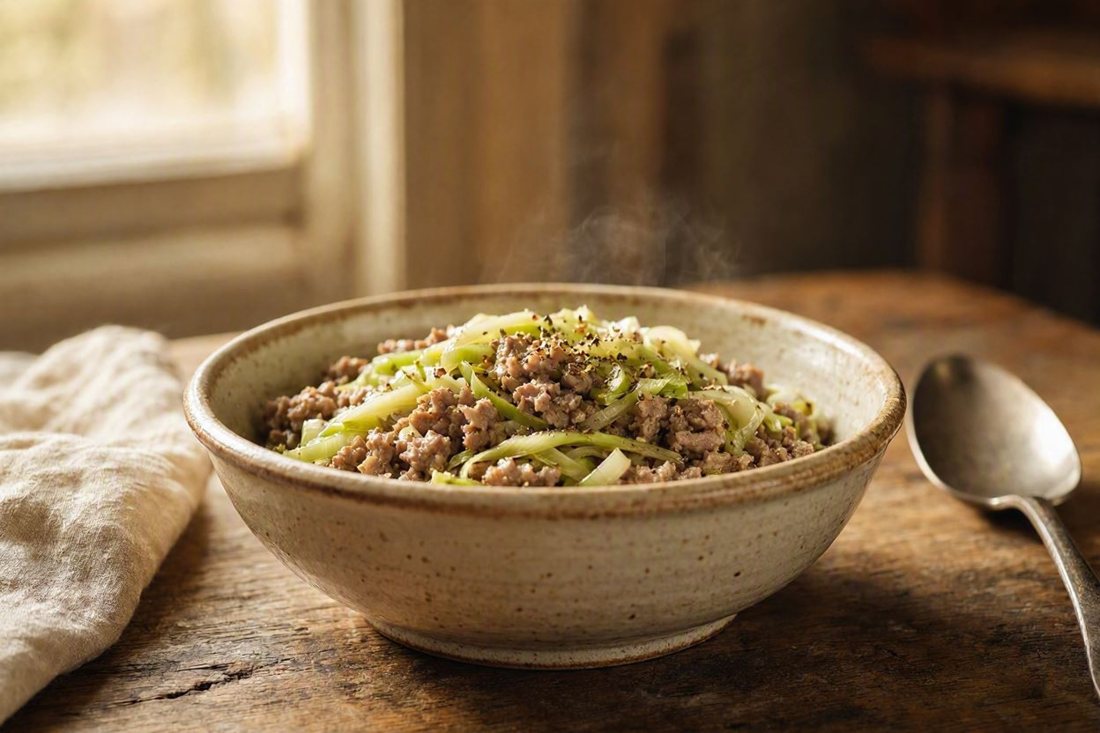
A one-pan dish of browned, hand-chopped pork and tender leeks, cooked down together until the leeks melt into the meat.
Lamb Soup with Egg and Lemon
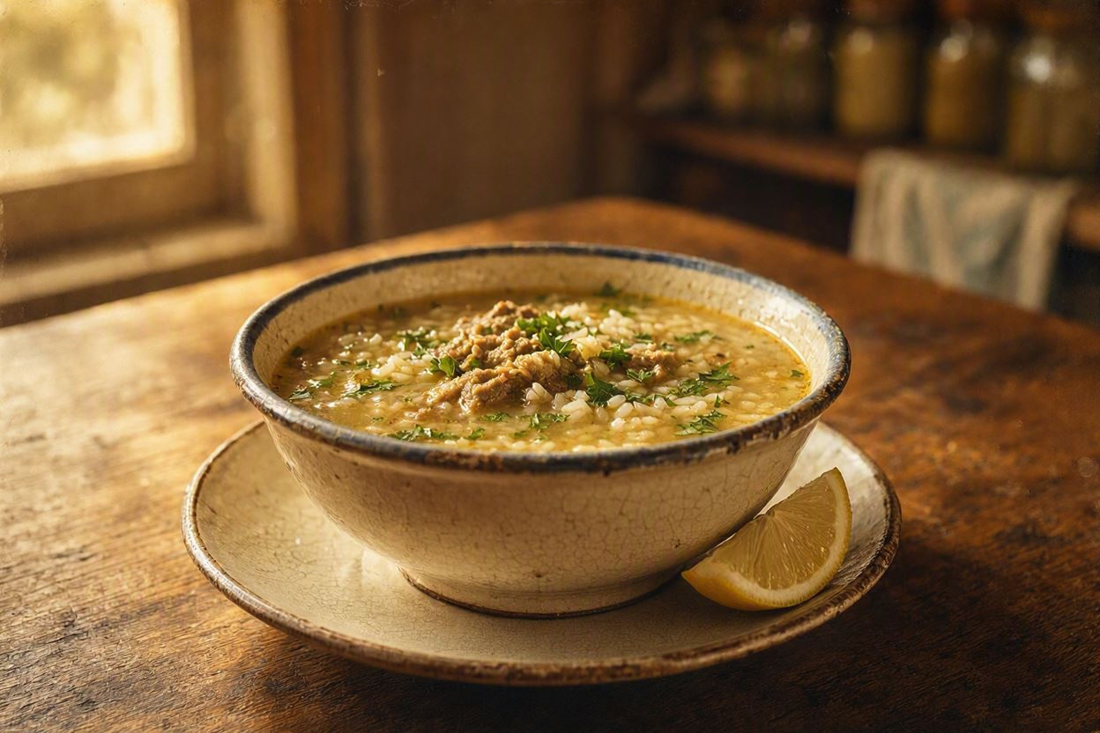
A hearty lamb broth simmered with rice and onion, finished either with a silky egg-and-lemon enrichment or a sharper wine vinegar variation.