Steamed Potato Pudding with Ham
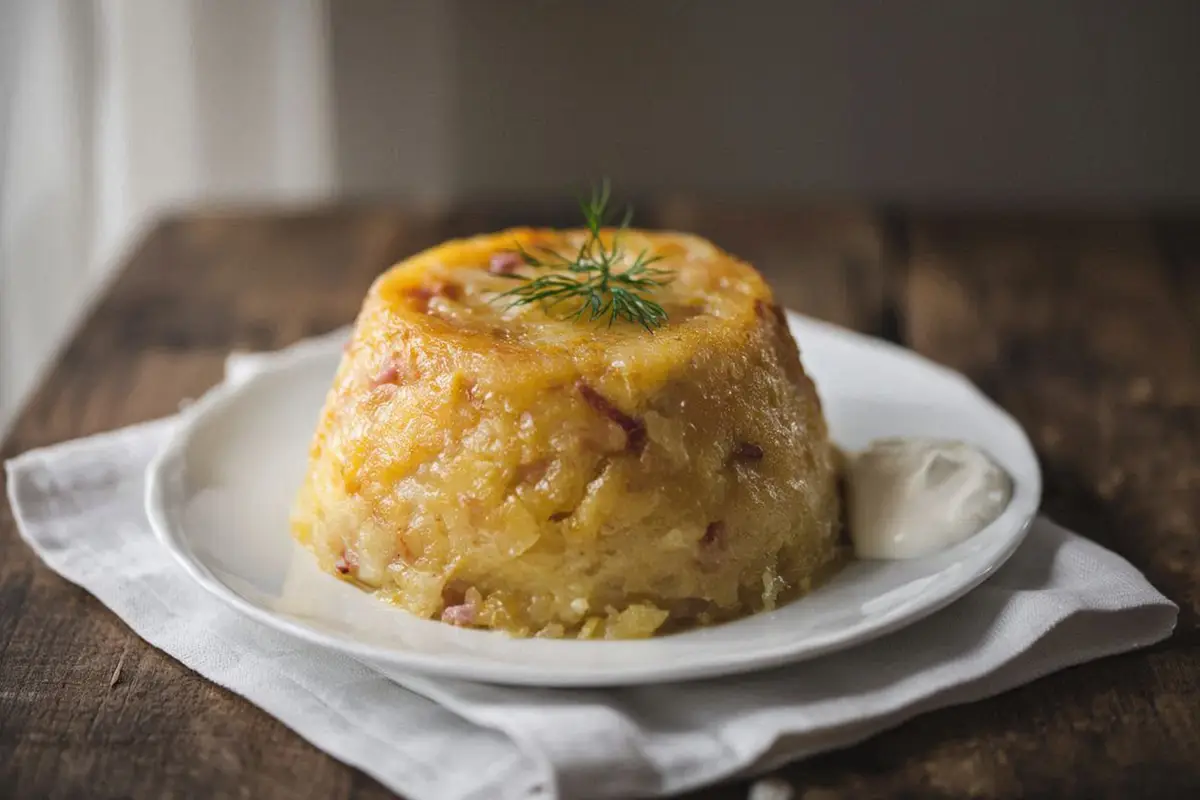
A light, airy steamed pudding of mashed potato and minced ham, lifted with beaten egg whites. A resourceful and satisfying Central European classic.
Quick Summary
A light, airy steamed pudding of mashed potato and minced ham, lifted with beaten egg whites. A resourceful and satisfying Central European classic.
Historical recipe
Modernised adaptation of an early 20th‑century source. Not independently kitchen-tested by Attic Recipes. Quantities, temperatures, and food safety guidance have been updated for a contemporary kitchen — results may vary and errors may exist. Nutritional values, where provided, are estimates only and have not been laboratory tested. Always follow current food safety guidelines for your region. If you have a health condition, allergy, or dietary requirement, consult a qualified professional before preparing this recipe.
Use of this recipe is entirely at your own risk and subject to our Terms of Service and Privacy Policy. Attic Recipes accepts no liability for any adverse outcome.
- Dairy
- Eggs
- Gluten
Additional notes
-
Warning
This recipe contains egg yolks and egg whites that are cooked within the steamed pudding. Ensure the center of the pudding reaches a safe internal temperature of 74°C (165°F) before serving. Do not serve undercooked pudding to pregnant women, children under 5, elderly individuals, or immunocompromised persons.
Use a kitchen thermometer to verify the internal temperature at the center of the pudding. If in doubt, steam for an additional 10 minutes and test again.
-
Caution
Smoked cured meat is high in sodium. Combined with the ham, this dish can have a significant salt load. Those on sodium-restricted diets should use low-sodium cooked ham and omit added salt entirely.
-
Note
Contains dairy (butter, sour cream) and eggs. Gluten is present in the flour used to dust the mold — use gluten-free flour or fine polenta as a substitute for a gluten-free version.
- 1
Peel and boil the potatoes in salted water until completely soft — about 20 minutes. Drain and mash thoroughly while still hot until completely smooth. Measure out exactly 250g of the mashed potato and set aside to cool. Reserve the rest for another use.
Tip Mash while hot for a smooth result — cold potatoes become gluey when mashed. A potato ricer gives the smoothest texture. - 2
Beat the softened butter in a large bowl for about 10 minutes until very light and creamy. Add the egg yolks one at a time, beating well after each addition.
Tip Ten minutes of beating is not an exaggeration — the more air incorporated at this stage, the lighter the final pudding. - 3
Add the cooled mashed potato to the butter and yolk mixture. Stir to combine. Add the minced ham or cured meat and the sour cream. Mix well.
- 4
In a separate clean bowl, beat the egg whites to stiff peaks. Fold them into the potato mixture in three additions using a large spatula and a gentle folding motion.
Tip Do not stir after adding the whites. The beaten whites are the only leavening agent in this pudding — losing their volume means a dense result. - 5
Grease a pudding mold or heatproof bowl generously with butter and dust with flour, tapping out any excess. Pour in the mixture and smooth the top. Cover tightly with a lid or a double layer of foil secured with string.
- 6
Steam for 30 minutes. To steam on the stovetop: place the covered mold in a large pot, add boiling water to come halfway up the sides of the mold, cover the pot, and maintain a steady simmer. To steam in the oven: place the covered mold in a deep baking dish with boiling water halfway up and bake at 160°C (320°F) for 30 minutes.
Tip Check the water level at 15 minutes and top up with hot water if needed. A steady simmer throughout — not a rolling boil. - 7
Test for doneness by inserting a skewer into the center — it should come out clean. Allow to rest in the mold for 3 to 4 minutes before turning out.
- 8
Run a knife around the edge of the mold to loosen. Place a round serving plate over the mold and invert firmly. Serve warm with a simple sour cream sauce alongside.
Nutrition Information per approx. 200g pudding
Nutritional values are approximate estimates and may vary based on specific ingredients used, preparation methods, and portion sizes.
Serving Suggestions
Serve warm, turned out onto a round plate. A simple sour cream sauce alongside works well: warm 150ml of sour cream in a small saucepan with a pinch of salt and a squeeze of lemon juice — do not boil. Pour over or serve on the side. A few sprigs of fresh dill or parsley on top of the pudding add color. Works as a main course with a simple green salad, or as a substantial starter.
About This Recipe
Mashed potato and minced ham — two of the most dependable ingredients in the Central European kitchen — combined with beaten butter, egg yolks, and finally beaten egg whites, then steamed in a covered mold for thirty minutes. The result is lighter than you expect from the ingredient list: a soft, airy pudding with the richness of potato and butter and the salty depth of the meat, lifted by the egg whites into something more refined than a simple potato and ham dish has any right to be.
It is honest, resourceful cooking that makes more of its ingredients than their cost would suggest.
Why It Works
The ten-minute beating of the butter and egg yolks is not a casual instruction — it is the structural foundation of the pudding. Thorough aeration at this stage creates a base that can support the weight of the potato and meat while still holding the volume of the egg whites when they are folded in. Underbeat the butter and the pudding will be dense. The beaten egg whites are the only leavening agent in the recipe; they must reach true stiff peaks and be folded in carefully to preserve every bit of the air that was beaten into them.
Steaming rather than baking keeps the interior moist and the texture uniform throughout — no crust, no dry edges, just an even, tender result from surface to center.
On the Meat
Smoked cured pork — prepared through autumn and winter across Central European households — gives the pudding a deeper, smokier flavor. Cooked ham produces a milder result. Either works well; the choice changes the character of the dish rather than its success.
If using smoked cured meat, taste the mixture before adding any salt — cured meat varies considerably in saltiness and the pudding can easily become over-salted.
On the Potato Measurement
The recipe specifies 500g of raw potatoes but only 250g of mashed potato in the pudding — a practical acknowledgment that peeling and boiling reduces the original weight. Starting with 500g of raw potatoes gives you approximately 350 to 400g of mashed potato after cooking; 250g goes into the pudding and the rest can be used elsewhere. Weigh the mashed potato after cooking for accuracy — the ratio matters for texture.
Troubleshooting
Pudding dense and heavy: The butter was not beaten long enough, or the egg whites were underbeaten or overmixed when folded in. Both steps require patience and a light hand.
Pudding wet in the center after 30 minutes: Water temperature was not high enough for a steady simmer, or the mold was too large and the mixture too shallow. Steam for another 10 to 15 minutes and test again.
Pudding sticks to the mold: The mold was not greased and floured thoroughly enough, or the pudding was not rested before turning out. Run a knife carefully around the entire edge before inverting.
A classic of early 20th century home cooking, preserved and adapted for the modern kitchen.
The Story Behind This Recipe
Historical Context
Steamed puddings built on a base of mashed potato, butter, and egg were a practical solution in early 20th century Central European kitchens — the potato stretched expensive meat further while the beaten egg whites gave the dish a lightness that belied its economy. The use of smoked or cured pork as the meat component reflects the Central European tradition of preserving pork through smoking and drying, which produced a more intensely flavored ingredient than fresh or cooked ham. Dishes of this type sat comfortably between everyday cooking and something presentable enough for a modest formal lunch.
Modern Kitchen Adaptation
The pudding uses only 250g of mashed potato from a larger quantity of boiled potatoes — an acknowledgment that peeling and boiling reduces the original weight. Starting with 500g of raw potatoes reliably yields approximately 350 to 400g of mashed potato, from which 250g is used. The pudding mold called for is not commonly available today; see the equipment note for modern alternatives. The 10-minute beating time for the butter and yolks is essential — it is the step that determines the texture of the finished pudding.
This recipe is an independent modern adaptation developed from historical sources in the public domain. It is provided for informational and educational purposes only and does not constitute professional dietary, nutritional, or medical advice. Food preparation involves inherent risks. The reader assumes full responsibility for safe food handling, ingredient sourcing, and adherence to current local food safety guidelines. The site operator accepts no liability for outcomes resulting from the preparation or consumption of this recipe.
One recipe.
Every week.
You Might Also Like
More recipes from the same category
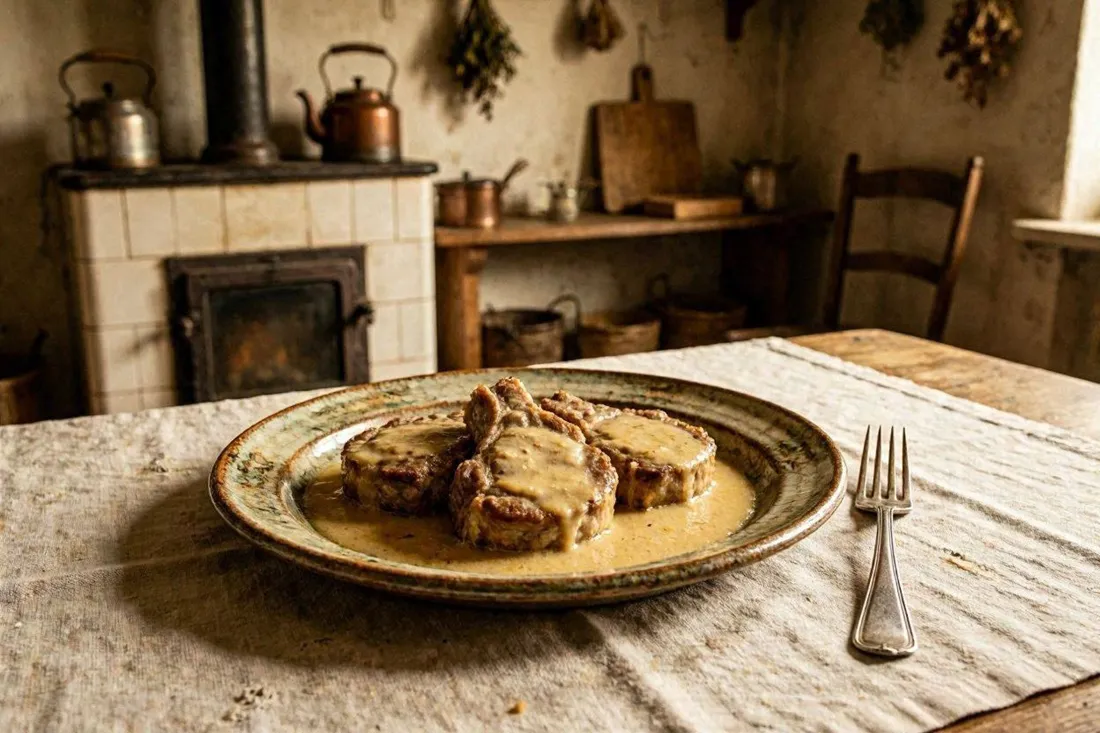
Braised Pork Chops in White Wine and Sour Cream Sauce
Pork loin chops braised with onion, carrot, parsley root, and celery root in white wine, then finished with a strained sour cream sauce.
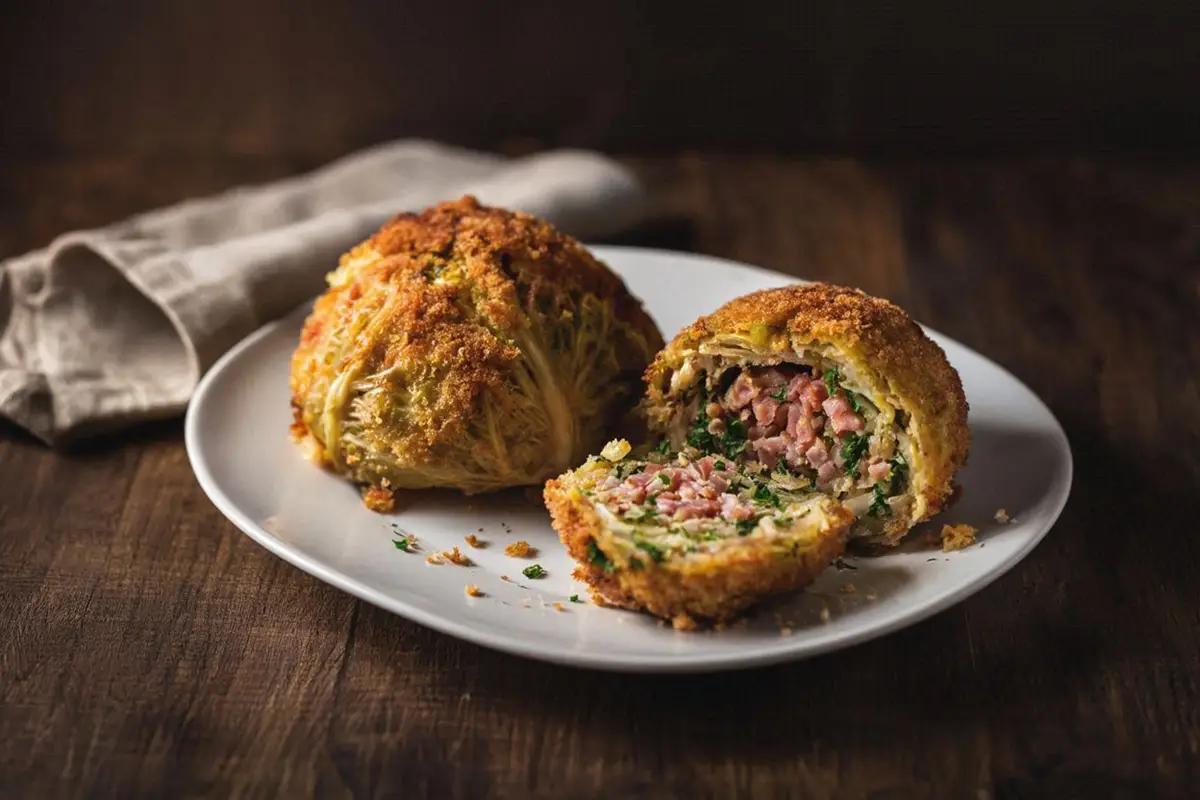
Breaded Savoy Cabbage Stuffed with Ham
Tender young savoy cabbage heads filled with ground ham, fried onion, and herbs, breaded and pan-fried until golden. A hearty Central European classic.
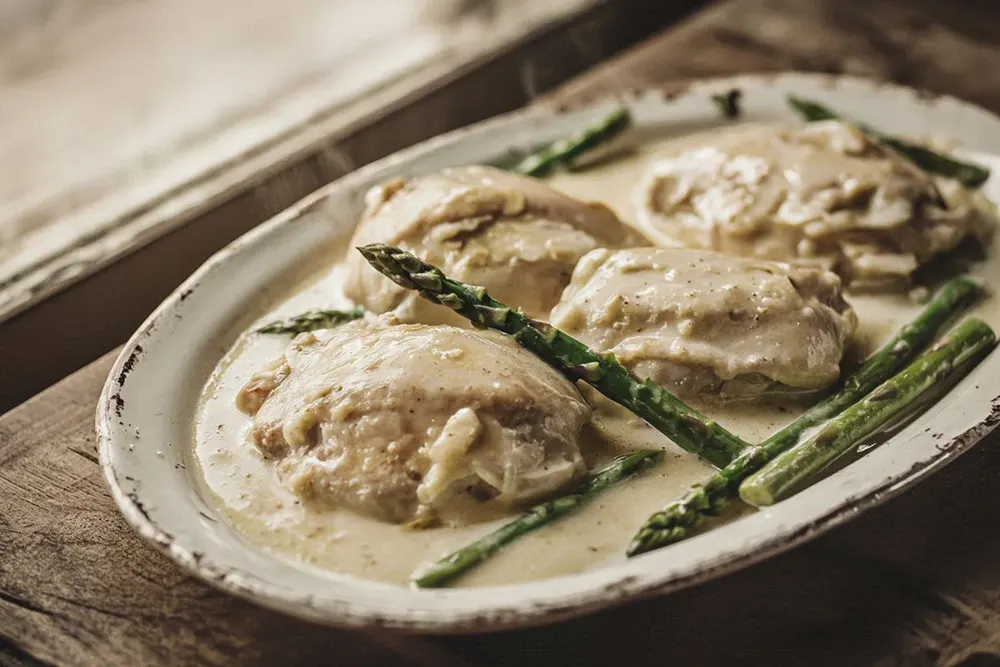
Chicken in Asparagus Sauce
A whole chicken poached in spiced broth, then finished in a silky velouté enriched with egg yolks and cream, garnished with tender asparagus tips.