Roasted Lamb Intestines
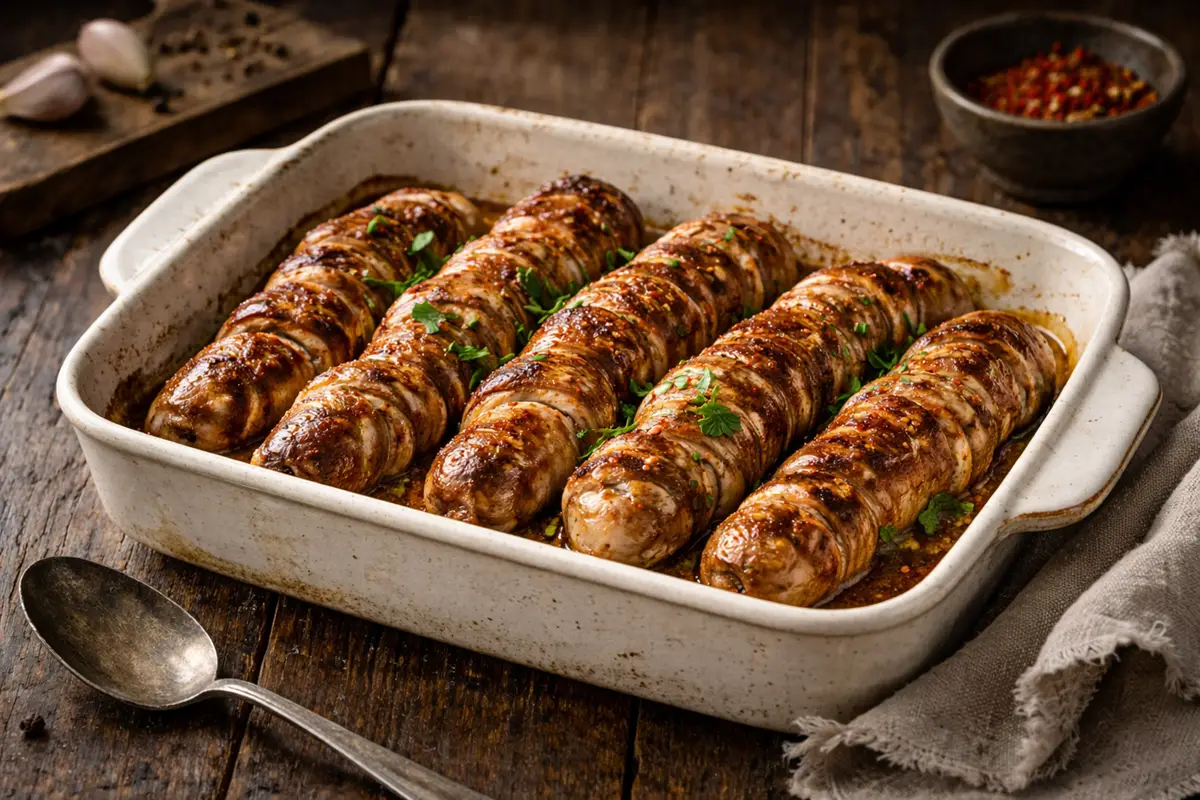
A simple nose-to-tail preparation — braided lamb intestines seasoned with salt and paprika, roasted slowly in butter until golden and tender.
Quick Summary
A simple nose-to-tail preparation — braided lamb intestines seasoned with salt and paprika, roasted slowly in butter until golden and tender.
Historical recipe
Modernised adaptation of an early 20th‑century source. Not independently kitchen-tested by Attic Recipes. Quantities, temperatures, and food safety guidance have been updated for a contemporary kitchen — results may vary and errors may exist. Nutritional values, where provided, are estimates only and have not been laboratory tested. Always follow current food safety guidelines for your region. If you have a health condition, allergy, or dietary requirement, consult a qualified professional before preparing this recipe.
Use of this recipe is entirely at your own risk and subject to our Terms of Service and Privacy Policy. Attic Recipes accepts no liability for any adverse outcome.
- Dairy
Safety note
Lamb intestines must be cooked to an internal temperature of at least 74°C (165°F) throughout. Undercooked intestines present a serious risk of foodborne illness, including E. coli and Salmonella contamination.
Use a meat thermometer inserted into the thickest part of the braid to verify doneness. Do not rely on color alone.
Safety note
Intestines must be cleaned thoroughly before cooking. Improperly cleaned intestines can harbor harmful bacteria and fecal matter. This step cannot be skipped or rushed.
Purchase pre-cleaned intestines from a reputable butcher if available. Otherwise, allow sufficient time for thorough cleaning — at minimum 20–30 minutes of careful washing.
Additional notes
-
Warning
Lamb intestines are very high in cholesterol — 335mg per serving. Those managing cardiovascular disease or hypercholesterolemia should consult their physician before consuming organ meats regularly.
Reduce portion size and serve as a shared appetizer rather than a main course to lower per-person intake.
-
Note
Organ meats including intestines are high in purines. Individuals with gout or elevated uric acid should consume in moderation.
No direct substitute — this is a specific nose-to-tail preparation. Reduce frequency of consumption if purine intake is a concern.
- 1
Clean the intestines: Rinse the intestines thoroughly under cold running water, inside and out. Turn them inside out if possible and scrub under running water. Rub with coarse salt and rinse again. For a milder flavor, soak in cold water with a splash of wine vinegar for 30 minutes, then rinse well and pat dry.
Tip The cleaning step is the most important part of this recipe. Improperly cleaned intestines will produce an unpleasant, bitter flavor that no amount of seasoning can mask. - 2
Braid the intestines: Working on a clean surface, braid or loosely coil the cleaned intestines into compact braids or rolls. Tuck the ends underneath to hold the shape during roasting.
- 3
Season and arrange: Place the braids onto a baking dish or sheet. Season generously with salt and a liberal amount of sweet paprika. Dot the surface with small pieces of fresh butter.
- 4
Roast: Place in an oven preheated to 165°C / 145°C fan (325°F). Roast for 60–90 minutes, turning the braids every 20–30 minutes, until golden brown and cooked through. The internal temperature should reach 74°C (165°F). Watch carefully in the final 15 minutes to avoid over-baking, which makes the intestines tough and dry.
Tip The intestines are done when they are golden and slightly crisped on the outside but still yielding when pressed. A meat thermometer is the safest way to verify doneness. - 5
Serve: Bring the baking dish directly to the table and serve warm.
Nutrition Information per 1 portion (approx. 125g cooked)
Nutritional values are approximate estimates and may vary based on specific ingredients used, preparation methods, and portion sizes.
About This Recipe
This is as honest as nose-to-tail cooking gets — intestines, butter, salt, paprika, and an oven. No marinade, no stuffing, no complexity borrowed from neighboring traditions. The approach here is deliberate in its restraint: clean the intestines well, braid them, season them simply, and roast them slowly until they turn golden and yielding. The dish lives or dies entirely on the quality and freshness of the intestines and the care taken during cleaning.
Why It Works
The braiding technique is functional, not decorative. By weaving the intestines into a compact structure, you create a form that holds together during the long roast, allows even heat penetration, and produces a pleasantly varied texture — some surfaces crisp and caramelized where they face the heat, others softer where the layers press together. The butter bastes the intestines as it melts, carrying the paprika into the surface and creating a deeply colored, flavorful crust. The instruction not to over-bake is critical — intestine wall is thin and collagen-rich, and beyond a certain point it becomes genuinely leathery.
Modern Kitchen Tips
- Sourcing: Fresh intestines from a young lamb are milder, more delicate, and easier to clean than those from older animals. Ask your butcher specifically for suckling or milk-fed lamb intestines if available.
- The vinegar soak: A 30-minute soak in cold water with a splash of white wine vinegar before the final rinse significantly reduces any residual odor and improves the final flavor.
- The thermometer: This is one of the few preparations where a meat thermometer is genuinely non-negotiable from a safety perspective. Intestines are opaque — you cannot assess doneness visually with confidence.
- Leftovers: Reheated the next day in a hot pan with a little extra butter, leftover intestines are arguably even better — the texture firms up and the paprika crust deepens.
A classic of early 20th century home cooking, preserved and adapted for the modern kitchen.
The Story Behind This Recipe
Historical Context
Roasted intestines appear across the full breadth of Central European and Mediterranean nose-to-tail cooking. The simplicity of this preparation — intestines, butter, salt, paprika — reflects the early 20th century peasant and small-town kitchen, where every part of the slaughtered animal was used and the cooking technique was dictated by what was available. The instruction to serve directly from the baking dish is practical and characteristic of the period: less washing up, and the retained heat of the ceramic keeps the dish warm through the meal.
Modern Kitchen Adaptation
Fresh lamb intestines must be sourced from a halal butcher or a whole-animal butcher on slaughter day — they do not keep well and should be cooked within 24 hours of purchase. Pre-cleaned intestines are sometimes available, which significantly reduces preparation time. For a more complex flavor, a teaspoon of dried oregano or a squeeze of lemon juice added before roasting is an excellent modern addition that stays within the spirit of the dish. Serve directly from the baking dish with crusty white bread to absorb the paprika butter. A simple green salad or sliced raw onion alongside is the traditional accompaniment.
This recipe is an independent modern adaptation developed from historical sources in the public domain. It is provided for informational and educational purposes only and does not constitute professional dietary, nutritional, or medical advice. Food preparation involves inherent risks. The reader assumes full responsibility for safe food handling, ingredient sourcing, and adherence to current local food safety guidelines. The site operator accepts no liability for outcomes resulting from the preparation or consumption of this recipe.
One recipe.
Every week.
You Might Also Like
More recipes from the same category
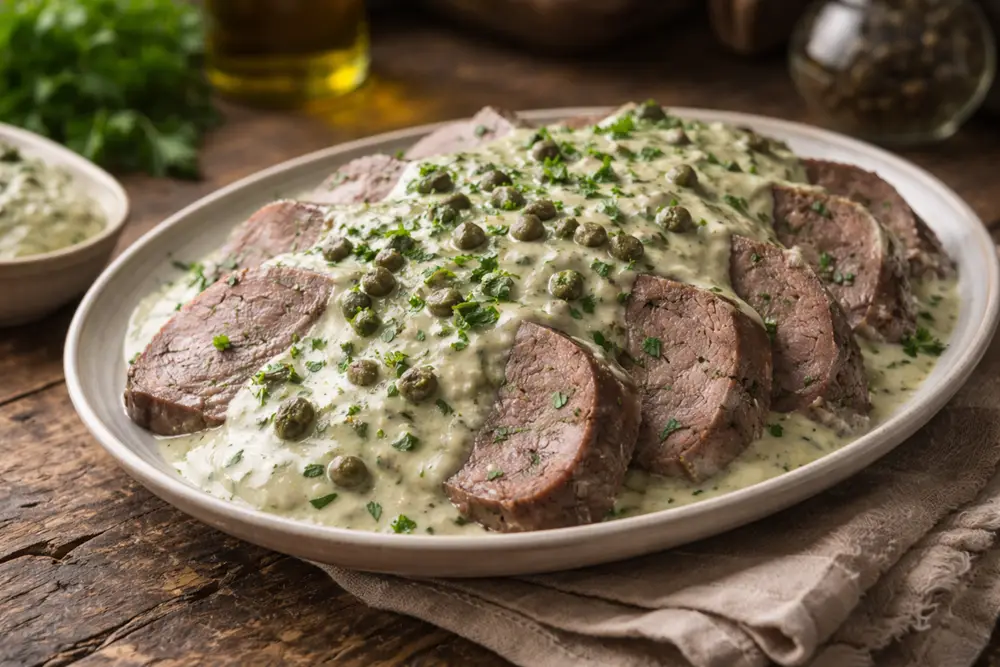
Baked Tongue in Green Sauce
Beef tongue braised with herbs, larded with bacon and roasted until golden, served in a green sauce of capers, anchovy, parsley and sour cream.
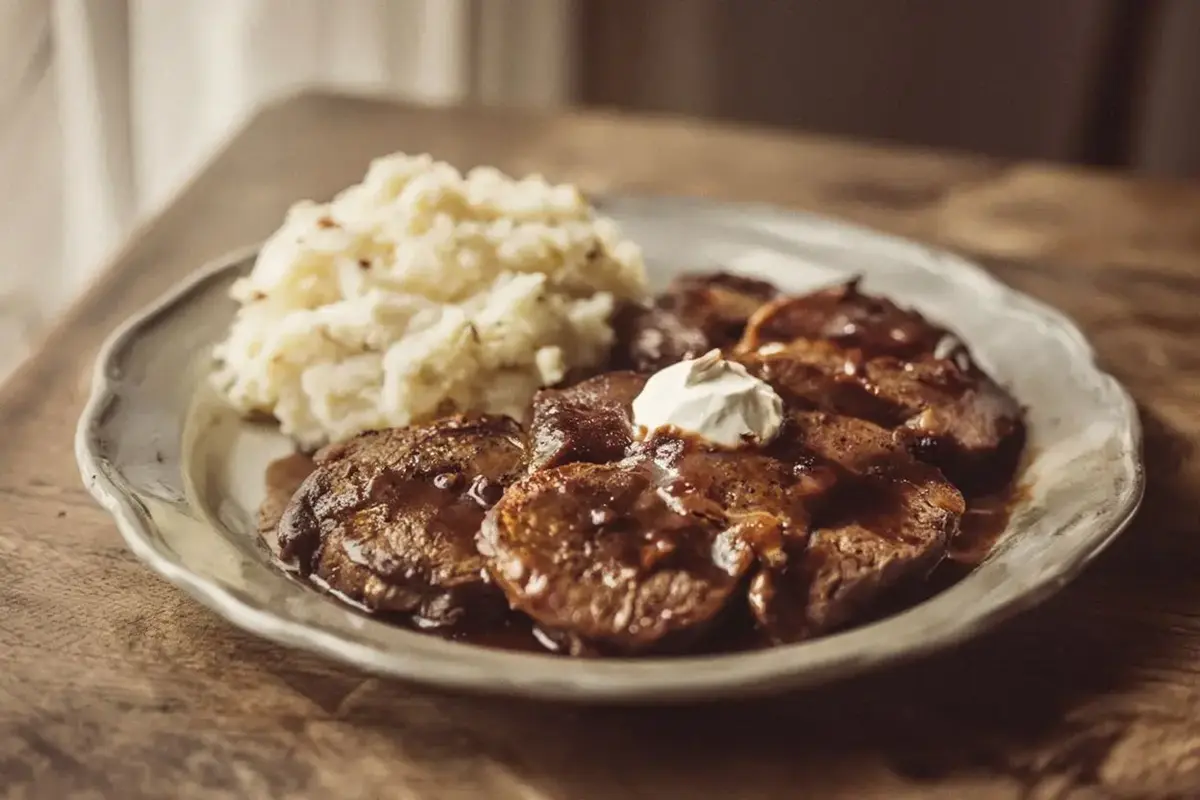
Beef Kidney with Wine
Beef kidney marinated in red wine, braised with herbs, finished with sour cream. Tender, rich, and deeply flavored.
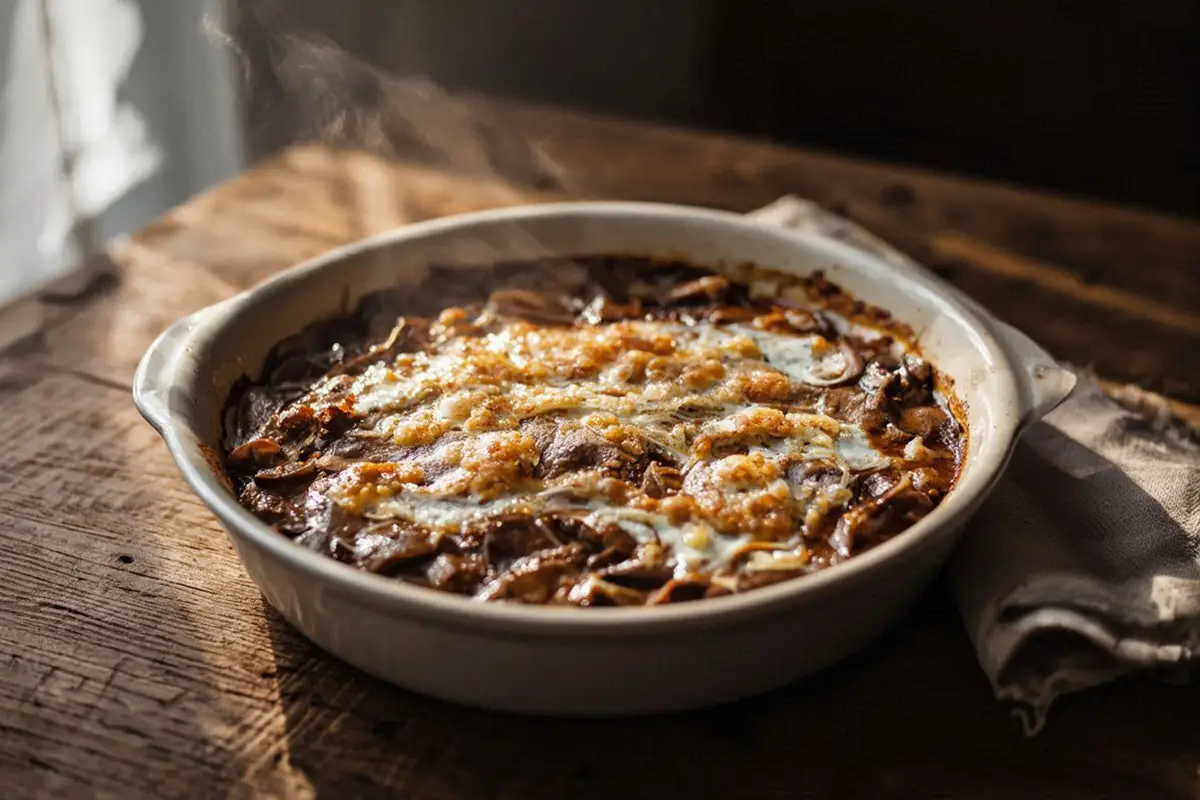
Beef Tongue in Mushroom Sauce
Tender sliced beef tongue layered in a rich dark mushroom sauce, finished with sour cream, Parmesan, and a golden oven crust.