Rose Petal Syrup
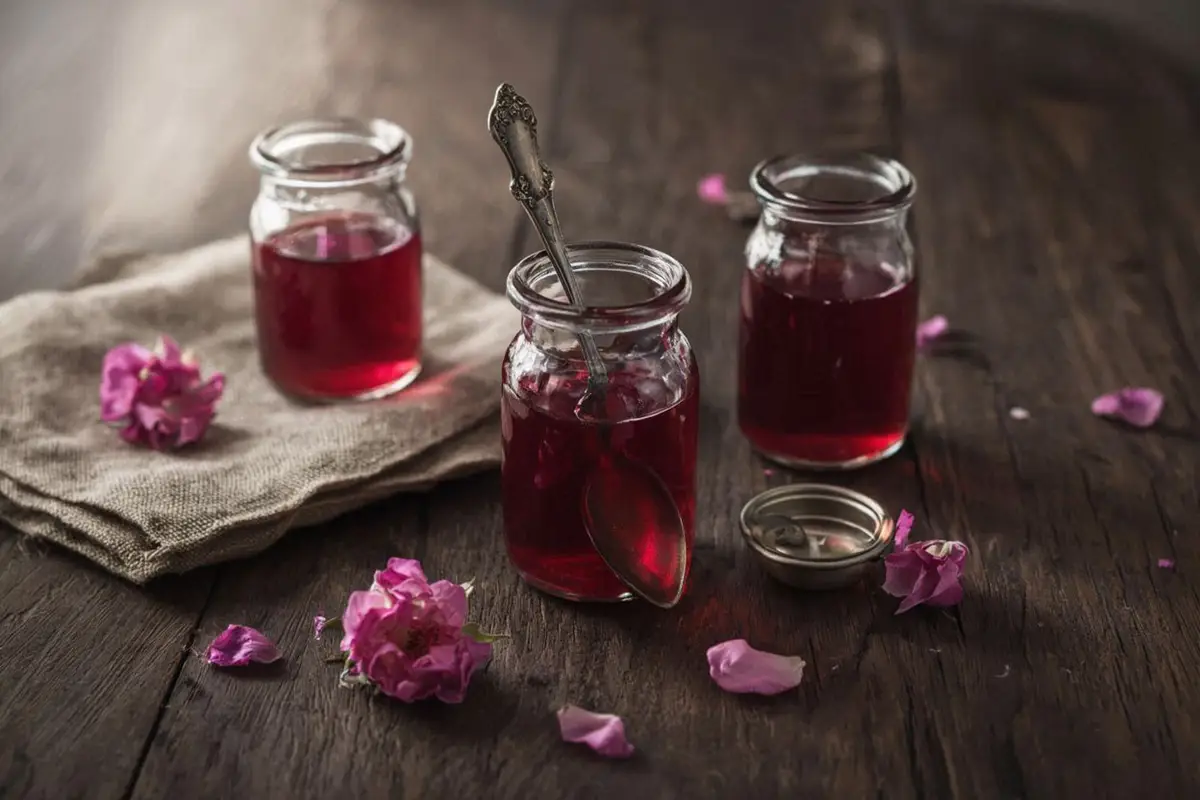
Fresh rose petals macerated overnight in sugar, pressed for their juice, and cooked into a fragrant heavy syrup with lemon.
Quick Summary
Fresh rose petals macerated overnight in sugar, pressed for their juice, and cooked into a fragrant heavy syrup with lemon.
Historical recipe
Modernised adaptation of an early 20th‑century source. Not independently kitchen-tested by Attic Recipes. Quantities, temperatures, and food safety guidance have been updated for a contemporary kitchen — results may vary and errors may exist. Nutritional values, where provided, are estimates only and have not been laboratory tested. Always follow current food safety guidelines for your region. If you have a health condition, allergy, or dietary requirement, consult a qualified professional before preparing this recipe.
Use of this recipe is entirely at your own risk and subject to our Terms of Service and Privacy Policy. Attic Recipes accepts no liability for any adverse outcome.
Safety note
Use only unsprayed, pesticide-free roses. Florist roses and most nursery roses are treated with systemic pesticides that do not wash off and are not safe for consumption. Never use roses unless you are certain they have been grown without chemical treatment.
Grow your own roses from old varieties specifically for culinary use, or source from a certified organic grower. If in doubt, do not use the petals.
Safety note
Pouring hot syrup into cold bottles will cause them to crack or shatter. Always warm bottles to 60°C before filling.
Place clean bottles in a low oven at 60°C for 15 minutes before filling.
Additional notes
-
Caution
People with known allergies to roses or plants in the Rosaceae family (which includes apples, apricots, cherries, and almonds) should exercise caution.
-
Note
Check the seal after cooling — if the lid flexes or pops, the bottle has not sealed properly. Refrigerate and consume within 2–3 weeks. If the syrup ferments, becomes cloudy, or develops an off smell after opening, discard.
- 1
Remove the petals from the roses, discarding any damaged or discolored pieces. Remove the bitter white base from each petal. Arrange a layer of petals in a deep porcelain or glass dish, followed by a layer of fine sugar. Continue alternating layers until all petals are used. Cover tightly and leave overnight at room temperature.
Tip The white base of each petal is bitter — pinch it off before layering. - 2
The next day, the petals will be limp and pale, their color and scent transferred into the liquid surrounding them. Using your hands or a potato masher, crush and press the petals thoroughly until you have extracted approximately 150–200ml of intensely fragrant juice.
- 3
Strain the juice through a fine sieve or cheesecloth, pressing firmly to extract every drop. Discard the pressed petals.
- 4
Combine the 1kg of sugar and 400ml of water in a clean saucepan. Bring to a boil and cook until noticeably thicker — light thread stage, approximately 105–108°C (221–226°F). Skim any foam.
Tip A candy thermometer removes all guesswork here. - 5
Add the strained rose juice and the lemon juice to the boiling syrup. Stir to combine and cook together for exactly 10 minutes. Do not overcook — prolonged boiling will diminish the floral aroma.
- 6
While the syrup cooks, warm the clean bottles in a low oven at 60°C (140°F) for 15 minutes, or fill briefly with hot water and empty. Cold bottles will crack when hot syrup is poured in.
- 7
Pour the hot syrup immediately into the warm bottles. Seal tightly at once. Leave undisturbed to cool completely — the heat seal creates a light vacuum as the syrup cools.
Tip The syrup will deepen in color and intensity over the first few weeks of storage. - 8
Store in a cool, dark place.
Nutrition Information per 20ml (1 tablespoon)
Nutritional values are approximate estimates and may vary based on specific ingredients used, preparation methods, and portion sizes.
About This Recipe
There is a narrow window every year — perhaps two or three weeks in late spring — when the right roses are open and fragrant enough for this syrup. Miss it, and you wait another year. Hit it right, and you have bottles of something that smells, unmistakably, of early summer preserved in sugar and sealed in glass. The method is one of extraordinary elegance: roses layered with sugar overnight, their volatile aromatic compounds drawn out by osmosis, then pressed, strained, and cooked into a syrup for exactly ten minutes. Not more.
Why It Works
Sugar draws moisture and aromatic compounds from the petals through osmosis over the course of the night — by morning the petals are limp and pale, their color and scent transferred into the liquid surrounding them. The lemon juice does two things: it prevents the syrup from crystallizing during storage, and it stabilizes the anthocyanin pigments that give the syrup its pink color. In neutral or alkaline conditions those same pigments turn blue-grey. The ten-minute cooking limit is not arbitrary — prolonged boiling volatilizes the aromatic compounds that make this syrup worth making.
Which Roses to Use
This recipe lives or dies by the quality of the petals. The best culinary varieties are old roses with strong, complex fragrance: Rosa damascena (Damask rose), Rosa centifolia (cabbage rose), Rosa gallica (Apothecary’s rose), and Rosa rugosa. Modern hybrid tea roses bred for size, color, and cut-flower longevity typically have minimal fragrance and will produce a pale, weakly scented syrup regardless of how carefully you follow the method.
The rule is simple: if the rose does not fill the room when you bring in a handful of blooms, it is not the right rose for this recipe. Always taste a petal first — it should be pleasant and floral, not metallic or bitter.
Never use florist roses. They are selected for appearance, not fragrance, and are treated with systemic pesticides that do not wash off.
The Overnight Maceration
The layering of petals and sugar is not decorative — it is the extraction step. Press the petals firmly the next morning. Every drop of that fragrant liquid is the point of the recipe.
A classic of early 20th century home cooking, preserved and adapted for the modern kitchen.
The Story Behind This Recipe
Historical Context
Rose syrup has been made across Central Europe for centuries, drawing on an older Ottoman and Persian tradition of preserving rose essence. Rosa damascena, the Damask rose, was widely cultivated throughout the region specifically for culinary and medicinal use. In early 20th century Central European households, rose syrup was considered a refined pantry item — a sign of a skilled housekeeper. The method of macerating petals overnight in sugar before pressing is the same principle used in professional rose oil extraction: sugar draws moisture and volatile aromatic compounds from the petals through osmosis. The instruction to heat bottles before filling reflects an understanding of both hygiene and thermal shock that was sophisticated for a home recipe.
Modern Kitchen Adaptation
The most critical variable in this recipe is the roses — the syrup will only be as fragrant as the petals used. 250g of petals has been standardized as the base quantity, yielding approximately 150–200ml of pressed juice. The 10-minute cooking limit after adding rose juice is important — do not extend it. Lemon juice preserves the pink color by stabilizing the anthocyanin pigments in the petals; without it the syrup may turn grey-pink. A candy thermometer simplifies the syrup stage — target 105–108°C. Stir into sparkling water for a simple rose soda. Drizzle over rice pudding, semolina cake, or vanilla ice cream. Use to soak sponge cake layers. Add a spoonful to hot or iced tea.
This recipe is an independent modern adaptation developed from historical sources in the public domain. It is provided for informational and educational purposes only and does not constitute professional dietary, nutritional, or medical advice. Food preparation involves inherent risks. The reader assumes full responsibility for safe food handling, ingredient sourcing, and adherence to current local food safety guidelines. The site operator accepts no liability for outcomes resulting from the preparation or consumption of this recipe.
One recipe.
Every week.
You Might Also Like
More recipes from the same category
Apricot Fruit Paste
Sieved ripe apricots cooked with equal weight sugar and lemon juice, poured into molds and air-dried — from early 20th century Central European kitchens.
Whipped Apricot or Peach Preserve (No-Cook)
A silky, pale fruit spread made by whipping raw apricot or peach puree with sugar - no cooking required.
Blackberry and Cornelian Cherry Marmalade
Rich preserve combining tart cornelian cherries with sweet blackberries, cooked to thick consistency with a traditional two-fruit method.