Braised and Baked Sheep's Tongues
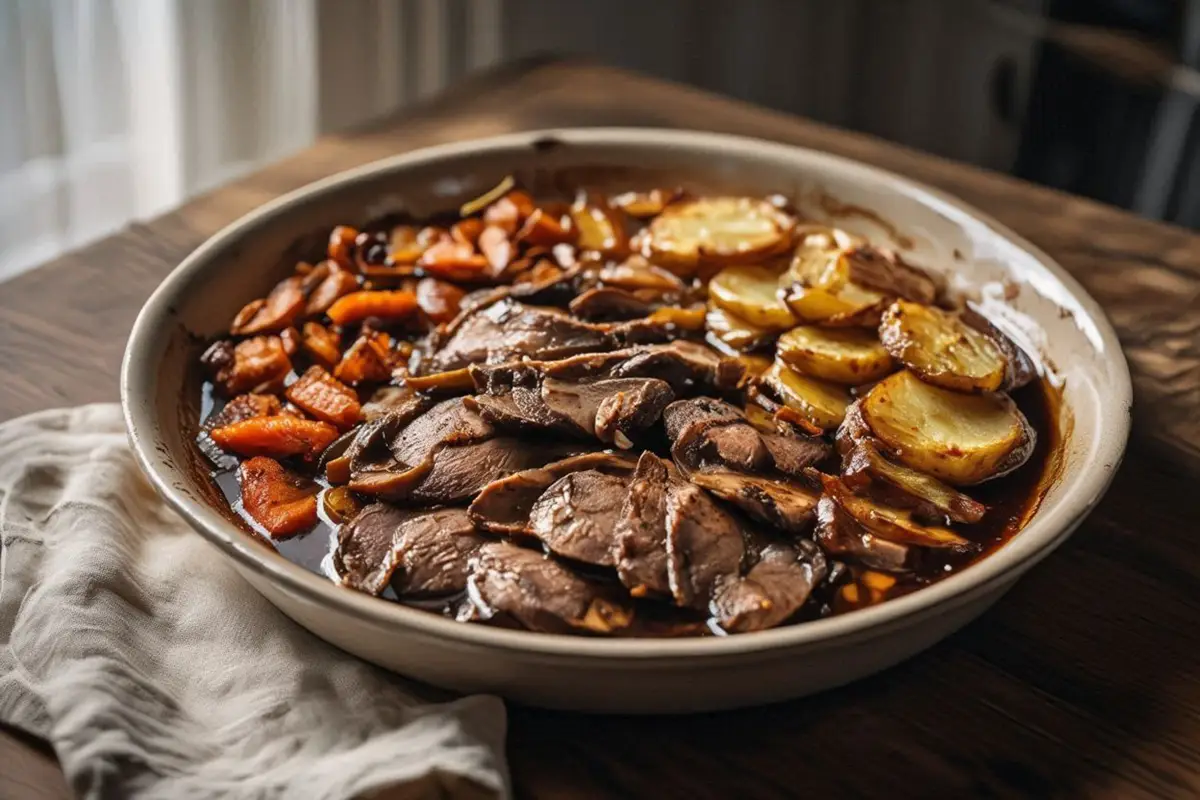
Tender sheep's tongues blanched, seared, and slow-baked with onion, carrot, white wine, and potatoes in a rich pan braise.
Quick Summary
Tender sheep's tongues blanched, seared, and slow-baked with onion, carrot, white wine, and potatoes in a rich pan braise.
Historical recipe
Modernised adaptation of an early 20th‑century source. Not independently kitchen-tested by Attic Recipes. Quantities, temperatures, and food safety guidance have been updated for a contemporary kitchen — results may vary and errors may exist. Nutritional values, where provided, are estimates only and have not been laboratory tested. Always follow current food safety guidelines for your region. If you have a health condition, allergy, or dietary requirement, consult a qualified professional before preparing this recipe.
Use of this recipe is entirely at your own risk and subject to our Terms of Service and Privacy Policy. Attic Recipes accepts no liability for any adverse outcome.
- Sulphites
Additional notes
-
Warning
High cholesterol content — 321mg per serving. Tongue is a fatty organ meat with naturally elevated cholesterol. Those managing cardiovascular disease or hypercholesterolemia should consult their physician before consuming organ meats regularly.
Reduce to 2 tongues for 4 people and increase the vegetable portion to lower the per-serving cholesterol intake.
-
Warning
High saturated fat content — 16g per serving from tongue and lard combined. Those on a saturated fat-restricted diet should be aware.
Replace lard with olive oil for searing to reduce saturated fat significantly without significantly affecting the final flavor.
-
Warning
Contains alcohol (white wine). Although most alcohol evaporates during cooking, residual traces remain. Not suitable for children or those avoiding alcohol entirely.
Replace the wine with an equal amount of good-quality chicken or lamb stock for a fully alcohol-free version.
-
Note
Organ meats including tongue are moderately high in purines. Individuals with gout or elevated uric acid should consume in moderation.
No direct substitute — tongue is the defining ingredient of this recipe. Reduce portion size if purine intake is a concern.
- 1
Blanch and peel: Place the tongues in a pot of boiling water and blanch for 10 minutes. Remove and allow to cool just enough to handle — the skin peels most easily while still warm. Peel off the entire rough outer skin from each tongue; it should come away in one piece if the tongues were blanched sufficiently.
Tip Do not allow the tongues to cool completely before peeling — the skin becomes much harder to remove once cold. - 2
Sear: Heat the lard in a heavy pan over medium-high heat. Add the peeled tongues and fry, turning, until they develop a golden-yellow color on all sides. Season with salt.
- 3
Chop and braise on the stove: Remove the tongues from the pan and chop them into thick slices or large pieces. Return them to the pan with the chopped onion, carrots, and white wine. Add enough water or broth to just cover. Bring to a simmer, cover, and cook on the stovetop for 15 minutes.
- 4
Transfer to oven: Move the contents of the pan to a ceramic baking dish or oven-safe pot. Arrange the sliced potatoes on top and around the meat. Cover and bake at 170°C / 150°C fan (338°F) for approximately 1 hour, until the tongues are fully tender and the potatoes are cooked through.
Tip Remove the lid for the final 15 minutes to allow the potatoes and meat to take on a little color and the sauce to reduce slightly. - 5
Serve: Bring the baking dish directly to the table and serve warm.
Nutrition Information per 1 portion (1 tongue + vegetables, approx. 350g)
Nutritional values are approximate estimates and may vary based on specific ingredients used, preparation methods, and portion sizes.
About This Recipe
Tongue is arguably the most underrated cut in the whole animal — soft, rich, and deeply flavored in a way that has more in common with the best slow-braised beef cheek than with the more aggressively flavored organ meats. This three-stage preparation — blanch, sear, braise-and-bake — is the classical method for unlocking that quality: the blanching removes the tough outer skin, the searing builds a crust and color, and the long oven braise with wine, vegetables, and potatoes does the rest.
Why It Works
The initial stovetop braise before the oven transfer is not redundant — it begins the tenderizing process and allows the wine and aromatic vegetables to penetrate the meat before the dry heat of the oven concentrates the surface. Tongue muscle is dense and benefits from this combined moist-then-less-moist approach more than from either method alone. The potatoes added for the oven phase absorb the braising liquid and the rendered fat from the tongue as they cook, becoming some of the best potatoes in the Central European recipe canon.
Modern Kitchen Tips
- Peel while warm: The single most important practical tip. A tongue peeled cold requires significantly more effort and often tears. Have a bowl of cold water nearby to cool your hands, not the tongue.
- The chopping step: Chopping the tongues after searing and before the braise is a deliberate technique — it increases the surface area exposed to the braising liquid, which accelerates tenderizing and produces more sauce. Leaving them whole is also valid but produces a different result.
- The wine: Use something you would drink — a dry, unoaked white with some acidity works best. Avoid anything sweet or aromatic.
- Leftovers: Cold sliced tongue from the next day, eaten on bread with mustard and pickles, is a classic Central European lunch that rivals the hot dish.
A classic of early 20th century home cooking, preserved and adapted for the modern kitchen.
The Story Behind This Recipe
Historical Context
Tongue was one of the most prized cuts in the early 20th century Central European kitchen — soft-textured, rich, and well-suited to the three-stage preparation described here: blanching to remove the skin, searing for color and flavor, and long braising to achieve full tenderness. The combination of white wine, carrots, and potatoes reflects the French-influenced domestic cooking style of the Central European bourgeois kitchen, where French braising techniques were widely adopted and adapted to local ingredients. Sheep's tongue in particular was associated with economy and skill — a modest ingredient transformed by patient cooking into something genuinely elegant.
Modern Kitchen Adaptation
Sheep's tongues can be sourced from halal butchers or whole-animal butchers; lamb tongues are an equivalent substitute and slightly smaller. If lard is unavailable, a good-quality butter or neutral oil can be used for searing, though lard gives the best color and flavor. The dish benefits from a longer initial braise — extending the stovetop phase to 30 minutes before transferring to the oven produces a noticeably more tender result. Serve directly from the baking dish with crusty bread to absorb the pan juices. A simple green salad or pickled vegetables on the side balance the richness of the meat and lard. A glass of the same dry white wine used in the cooking is the natural pairing.
This recipe is an independent modern adaptation developed from historical sources in the public domain. It is provided for informational and educational purposes only and does not constitute professional dietary, nutritional, or medical advice. Food preparation involves inherent risks. The reader assumes full responsibility for safe food handling, ingredient sourcing, and adherence to current local food safety guidelines. The site operator accepts no liability for outcomes resulting from the preparation or consumption of this recipe.
One recipe.
Every week.
You Might Also Like
More recipes from the same category
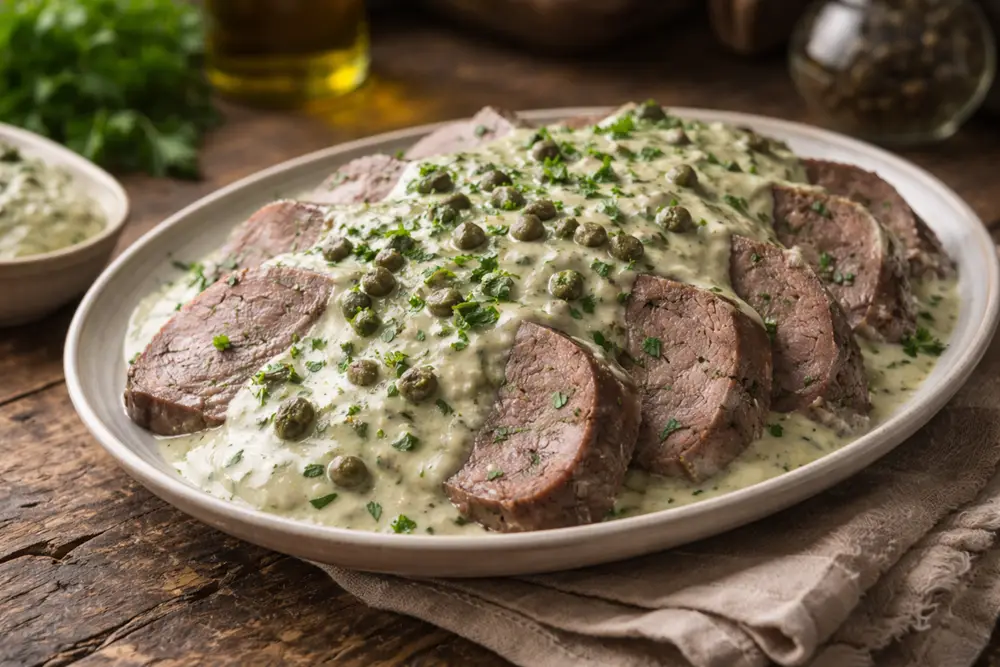
Baked Tongue in Green Sauce
Beef tongue braised with herbs, larded with bacon and roasted until golden, served in a green sauce of capers, anchovy, parsley and sour cream.
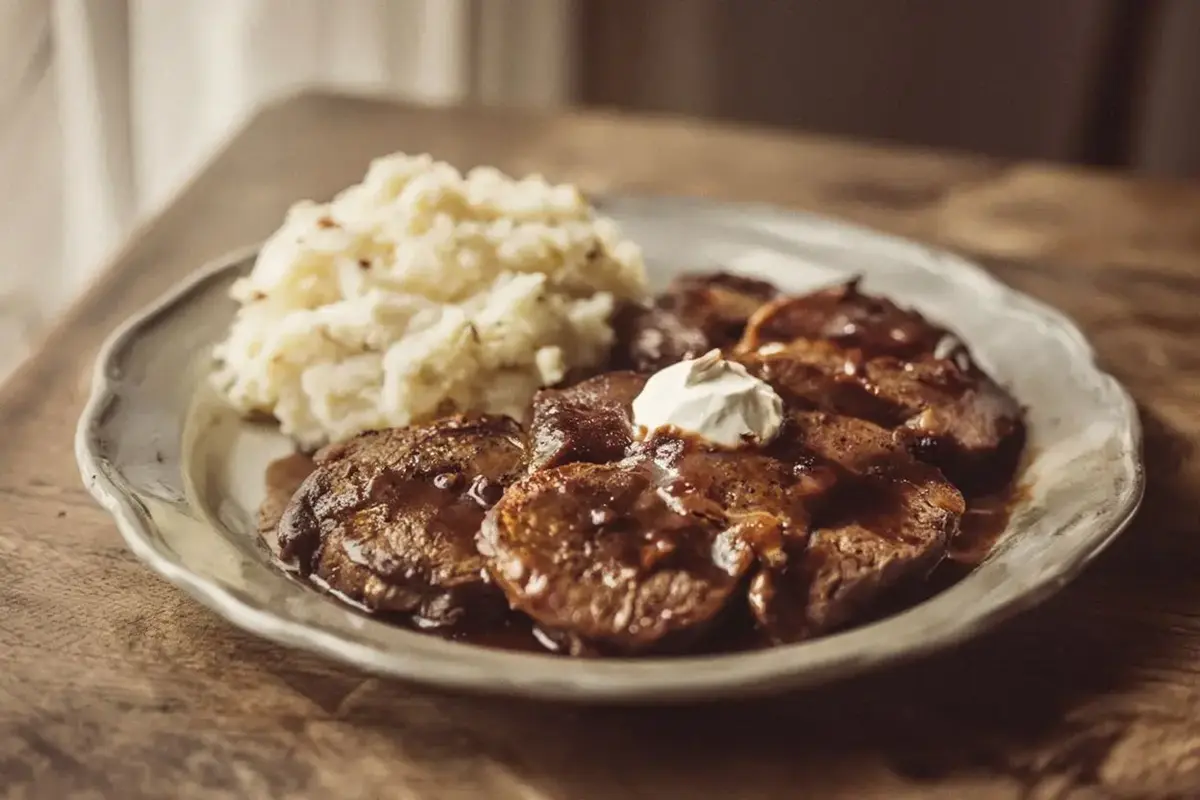
Beef Kidney with Wine
Beef kidney marinated in red wine, braised with herbs, finished with sour cream. Tender, rich, and deeply flavored.
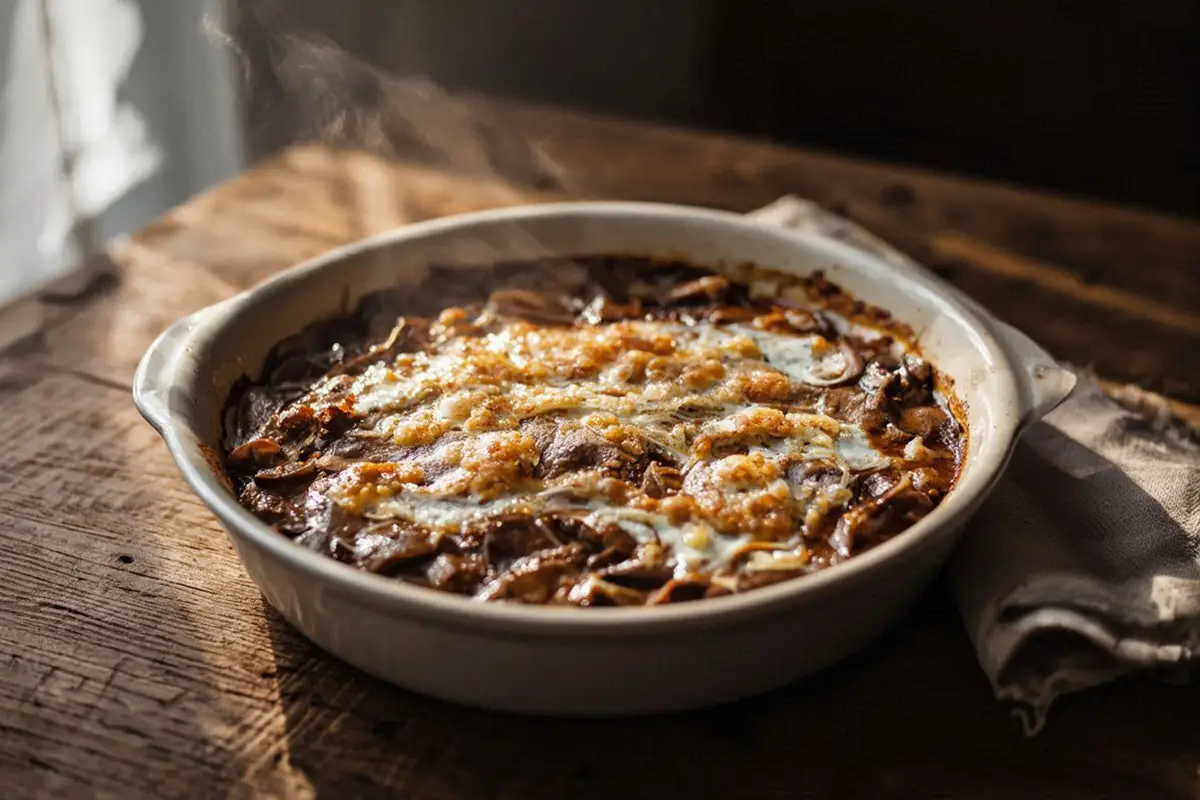
Beef Tongue in Mushroom Sauce
Tender sliced beef tongue layered in a rich dark mushroom sauce, finished with sour cream, Parmesan, and a golden oven crust.