Sweet Cabbage and Potato Salad with Sour Cream
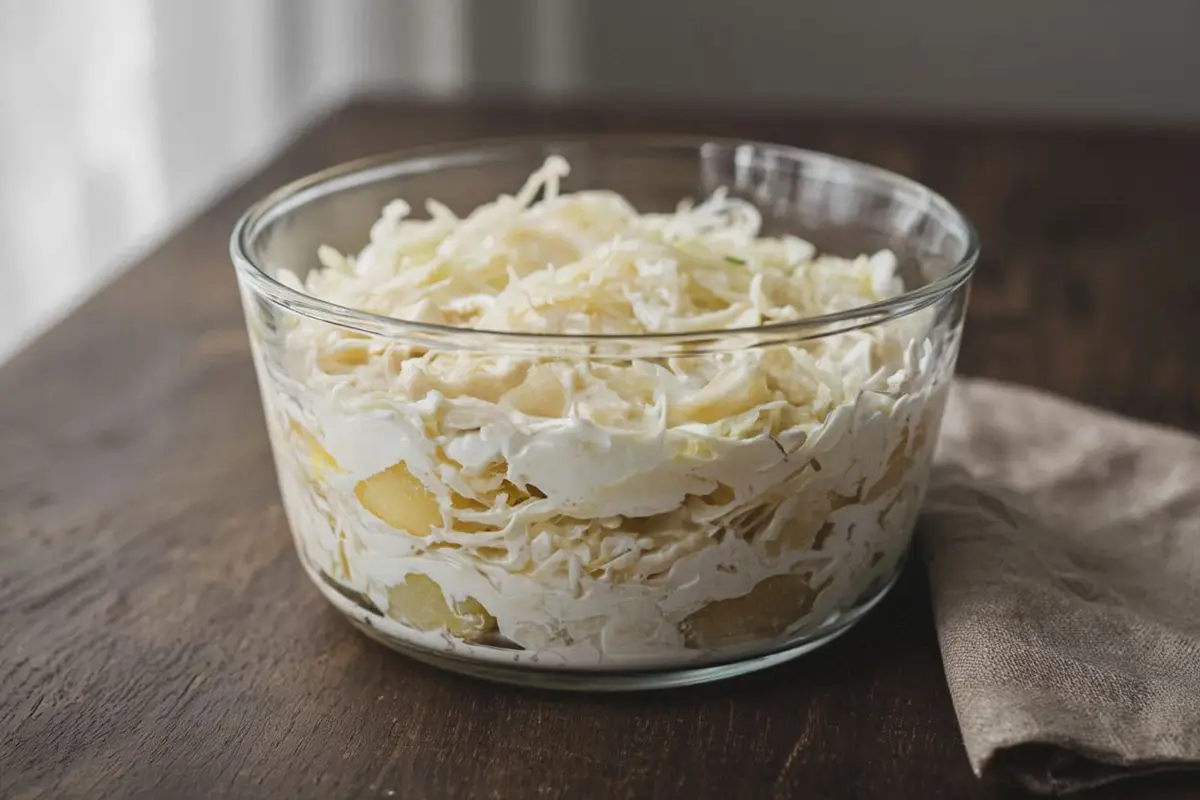
Layered Central European salad: vinegar-marinated cabbage and spring onion, alternated with boiled potato and celeriac, finished with sour cream.
Quick Summary
Layered Central European salad: vinegar-marinated cabbage and spring onion, alternated with boiled potato and celeriac, finished with sour cream.
Historical recipe
Modernised adaptation of an early 20th‑century source. Not independently kitchen-tested by Attic Recipes. Quantities, temperatures, and food safety guidance have been updated for a contemporary kitchen — results may vary and errors may exist. Nutritional values, where provided, are estimates only and have not been laboratory tested. Always follow current food safety guidelines for your region. If you have a health condition, allergy, or dietary requirement, consult a qualified professional before preparing this recipe.
Use of this recipe is entirely at your own risk and subject to our Terms of Service and Privacy Policy. Attic Recipes accepts no liability for any adverse outcome.
- Celery
- Dairy
- Sulphites
Additional notes
-
Caution
Contains dairy (sour cream). Not suitable for those with lactose intolerance or dairy allergy.
Substitute with a thick, dairy-free sour cream alternative based on oat or cashew for a similar texture.
-
Caution
Contains celery (celeriac) — a recognized EU allergen. Check for celery allergy before serving.
Celeriac can be omitted; increase the potato quantity proportionally.
-
Caution
Contains sulphites from wine vinegar — a recognized EU allergen. Those with sulphite sensitivity should exercise caution.
-
Note
High in simple carbohydrates due to potato content. Those managing blood sugar should consider portion size.
Substitute half the potato with boiled kohlrabi or turnip for a lower-glycemic variation.
- 1
Day 1 — Marinate the cabbage: Remove the outer leaves from the pointed cabbage. Wash, quarter, and remove the hard core. Slice the cabbage thinly, as for coleslaw. Finely chop the spring onion bulbs. Place the cabbage and onion together in a large bowl, pour over 150ml of wine vinegar, and mix well. Cover and refrigerate overnight.
Tip Pointed (hispi) cabbage is naturally sweeter and more tender than standard white cabbage — do not substitute with Dutch white cabbage, which is too coarse for this preparation. - 2
Day 2 — Boil the vegetables: Place the whole potatoes and the whole celeriac in a large pot of cold salted water. Bring to a boil and cook until fully tender but still holding their shape — approximately 30–40 minutes depending on size. Drain and allow to cool completely before peeling.
Tip Boiling in their skins preserves texture and prevents waterlogging. The celeriac may take slightly longer than the potatoes — check separately with a knife. - 3
Slice the cooled potatoes and celeriac into thin rounds, approximately 3–4mm thick.
- 4
Assemble the salad: In a large serving bowl, place a layer of the marinated cabbage and onion mixture. Spoon over some of the reserved vinegar marinade. Add a generous layer of sour cream.
Tip Do not discard the marinade liquid — it is the primary dressing for the cabbage layers. - 5
Add a layer of sliced potato and celeriac over the sour cream. Top with another layer of sour cream. Continue alternating layers — cabbage with vinegar and sour cream, then potato and celeriac with sour cream — until all ingredients are used. Finish with a sour cream layer on top.
- 6
Drizzle 2 tablespoons of oil evenly over the surface. Season with salt and pepper. Serve immediately, or allow to rest for 30 minutes at room temperature for the flavors to settle.
Tip This salad does not keep well overnight once assembled — the sour cream weeps and the layers lose definition. Assemble and serve the same day.
Nutrition Information per 1 portion (approx. 280g)
Nutritional values are approximate estimates and may vary based on specific ingredients used, preparation methods, and portion sizes.
Serving Suggestions
A natural accompaniment to roast pork, sausages, or smoked meats. Also works as a centerpiece cold dish on a spread table alongside pickles and dark bread.
About This Recipe
This is a salad built on patience — the overnight marination is not optional, and the layering is not decorative. The vinegar-softened cabbage and mellowed onion form one textural and flavor register; the firm, starchy potato and earthy celeriac form another. Sour cream binds the layers without homogenizing them, and the final drizzle of oil provides the finish. The result is a cold dish substantial enough to anchor a table on its own.
Why It Works
Vinegar does two things to cabbage overnight: it draws out moisture through osmosis, concentrating the flavor, and it begins to break down the cell walls, producing a texture that is soft without being limp. The reserved marinade liquid — now infused with cabbage and onion — becomes the dressing for the cabbage layers, which is why the recipe instructs you to pour it back over rather than discard it. The potatoes and celeriac are boiled whole and in their skins to prevent water absorption, which would make them fragile and bland. Sliced only after cooling, they hold their shape through the assembly process and absorb the sour cream slowly rather than collapsing under it.
Make-Ahead Notes
The cabbage marinade can be prepared up to 48 hours in advance and kept refrigerated. The boiled vegetables can also be cooked the day before and kept unpeeled in the refrigerator. Assemble the salad no more than 2 hours before serving — the sour cream begins to weep after that point and the layers lose their definition.
A classic of early 20th century home cooking, preserved and adapted for the modern kitchen.
The Story Behind This Recipe
Historical Context
Layered vegetable salads of this type were a feature of Central European middle-class tables throughout the early 20th century, particularly in households where a substantial cold dish was needed for Sunday lunch or a festive spread. The overnight marination of cabbage in vinegar — a technique widespread across the region — serves both as a tenderizer and a preservative, extending the usable life of a large head of cabbage in kitchens without reliable refrigeration.
Modern Kitchen Adaptation
Full-fat sour cream is essential for structure; low-fat versions will weep and thin the layers. If pointed cabbage is unavailable, Savoy cabbage is the closest substitute in texture and sweetness. Standard Dutch white cabbage will work but requires a longer marination — at least 24 hours — to soften adequately.
This recipe is an independent modern adaptation developed from historical sources in the public domain. It is provided for informational and educational purposes only and does not constitute professional dietary, nutritional, or medical advice. Food preparation involves inherent risks. The reader assumes full responsibility for safe food handling, ingredient sourcing, and adherence to current local food safety guidelines. The site operator accepts no liability for outcomes resulting from the preparation or consumption of this recipe.
One recipe.
Every week.
You Might Also Like
More recipes from the same category
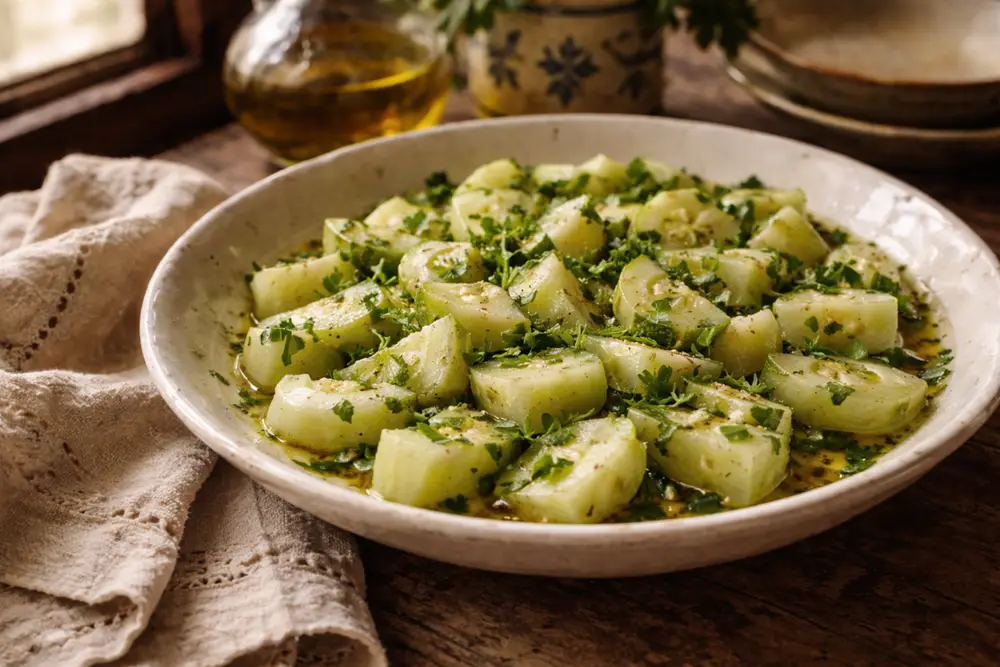
Boiled Zucchini Salad
A simple salad of boiled young zucchini, peeled and seeded, tossed warm with fresh parsley, oil, and vinegar.
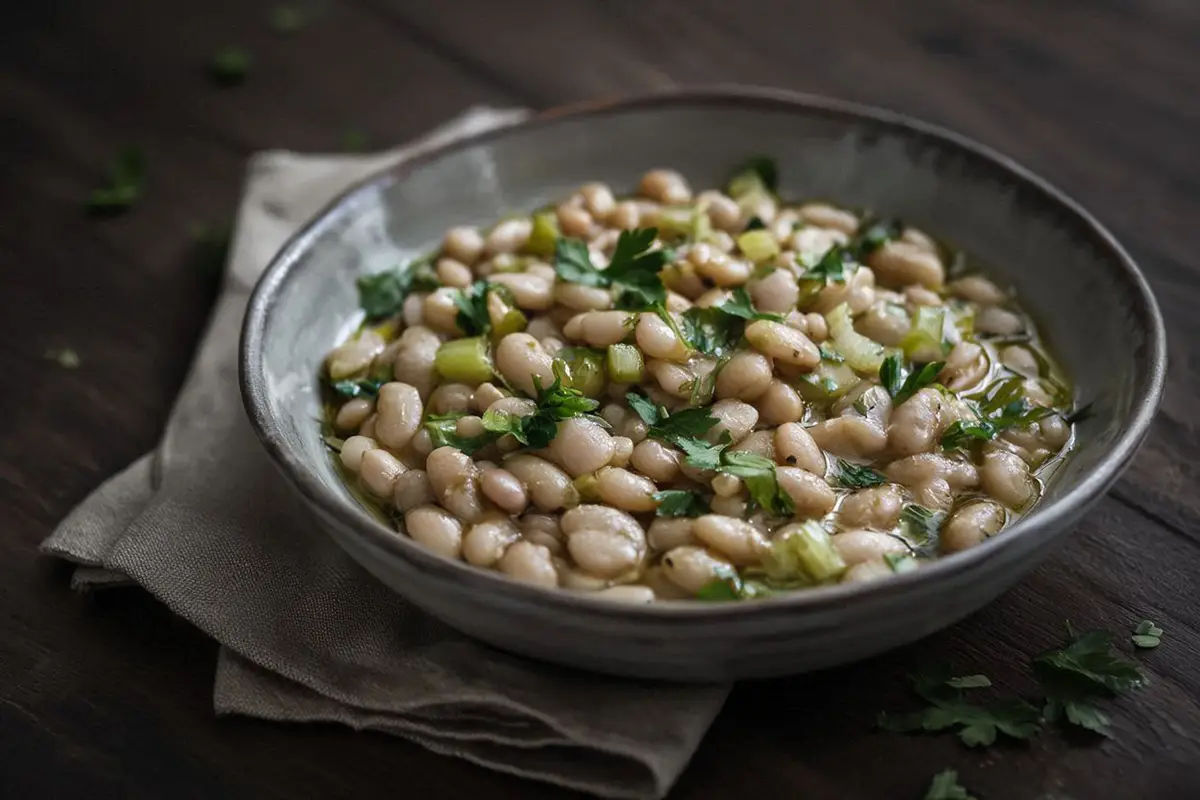
Dalmatian White Bean Salad
A traditional Dalmatian bean salad with slowly emulsified olive oil, mellowed red onion, fresh herbs, and a bright wine vinegar finish.
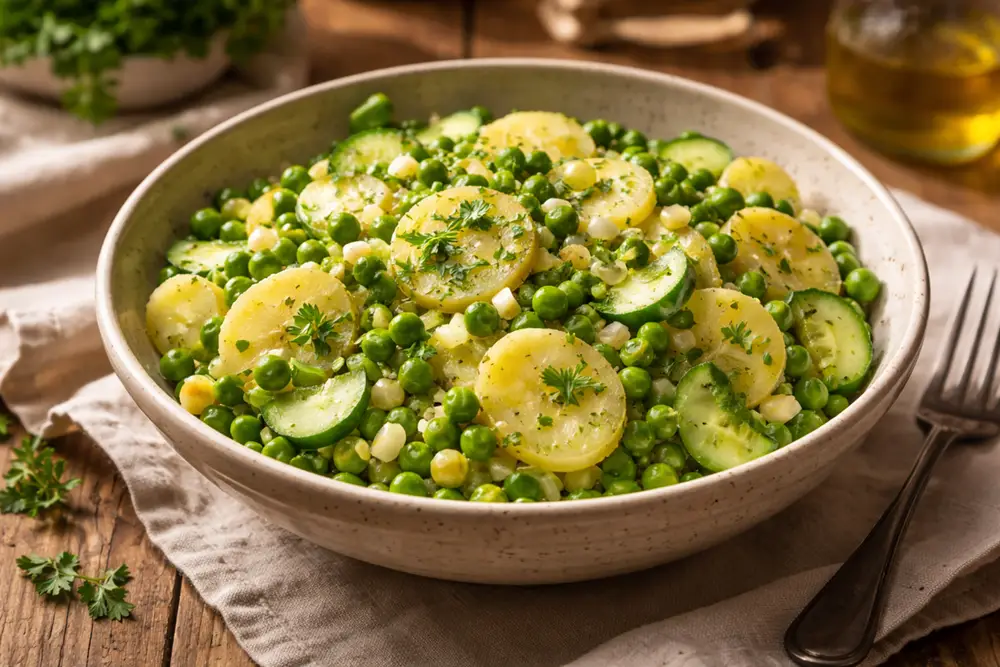
Mixed Salad with Peas
A hearty Central European potato and pea salad with cucumber, onion, and a clean oil-and-vinegar dressing, finished with fresh parsley.