Swiss Chard in the Coastal Way
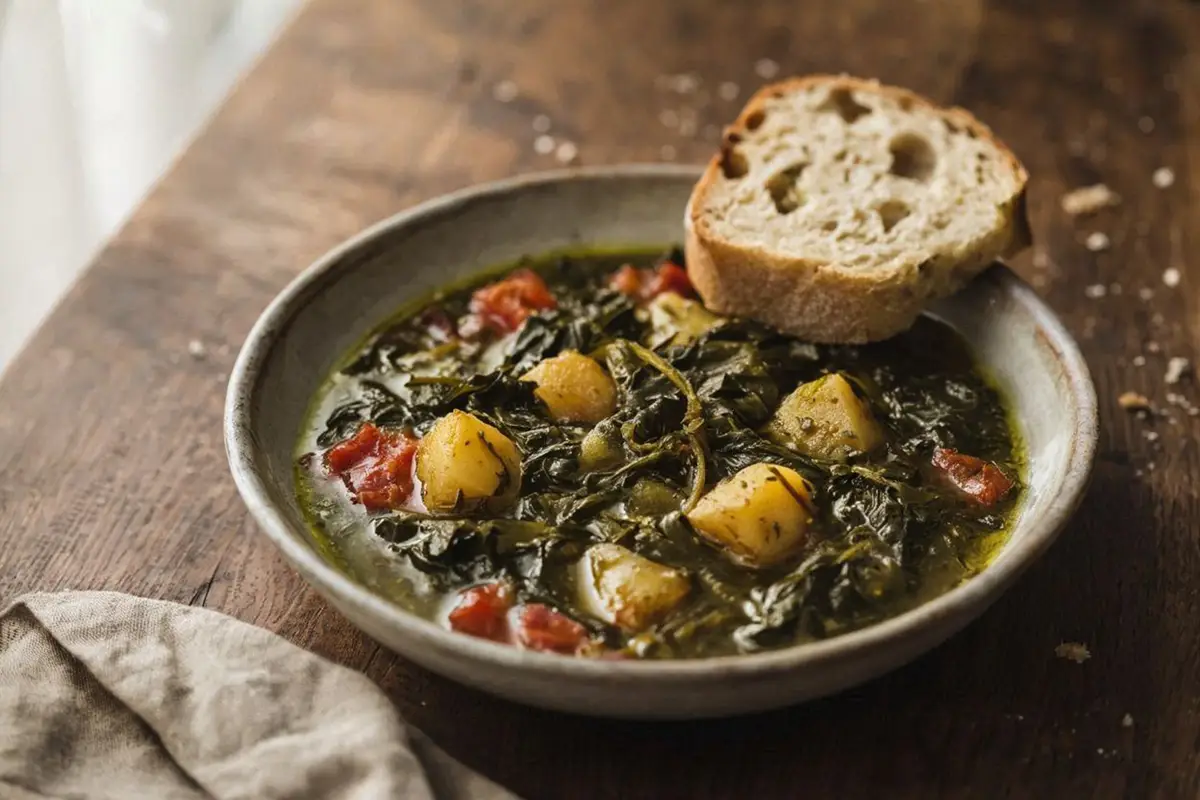
A hearty chard stew with tomatoes, potato, garlic, and olive oil, slow-cooked to a rich, soupy finish.
Quick Summary
A hearty chard stew with tomatoes, potato, garlic, and olive oil, slow-cooked to a rich, soupy finish.
Historical recipe
Modernised adaptation of an early 20th‑century source. Not independently kitchen-tested by Attic Recipes. Quantities, temperatures, and food safety guidance have been updated for a contemporary kitchen — results may vary and errors may exist. Nutritional values, where provided, are estimates only and have not been laboratory tested. Always follow current food safety guidelines for your region. If you have a health condition, allergy, or dietary requirement, consult a qualified professional before preparing this recipe.
Use of this recipe is entirely at your own risk and subject to our Terms of Service and Privacy Policy. Attic Recipes accepts no liability for any adverse outcome.
Additional notes
-
Warning
Swiss chard is high in oxalates, which bind calcium and can contribute to kidney stone formation in individuals with a history of calcium oxalate stones. Boiling and discarding the cooking water (as specified in this recipe) reduces the oxalate content significantly compared to steaming or eating raw.
Those with a history of kidney stones should consult their doctor before eating chard regularly.
-
Caution
Swiss chard is high in vitamin K, which affects blood clotting. Those taking warfarin or other anticoagulant medications should monitor their leafy green intake and consult their doctor. Contains no allergens from the 14 EU-regulated list.
Consistent moderate intake is preferable to avoidance followed by large portions — discuss with your doctor.
-
Note
This dish contains approximately 19g of olive oil per serving. While olive oil is a heart-healthy fat, those on calorie-restricted diets should account for this contribution.
Reduce to 80ml of olive oil if needed — the dish will be lighter but will lose some of its characteristic richness.
- 1
Boil the Swiss chard in well-salted water until just tender. Spring chard needs only 5–8 minutes; mature summer or autumn chard may need 12–15 minutes. Do not overcook — the chard will continue to cook in the stew. Drain, allow to cool slightly, then roughly chop.
Tip Watch the chard closely — overcooked chard loses its colour, texture, and a significant portion of its flavour. - 2
Boil the cubed potatoes separately in salted water until just cooked through but still holding their shape. Drain and set aside.
- 3
To peel the tomatoes: score a shallow cross on the base of each, lower into boiling water for 30 seconds, then transfer immediately to cold water. The skins will slip off easily. Remove as many seeds as possible and roughly chop the flesh.
- 4
Heat 125ml olive oil in a large, wide saucepan over medium heat. Add the finely chopped onion and fry until soft and translucent, about 6–8 minutes. Add the parsley and 3 crushed garlic cloves. Stir and fry for a further 1–2 minutes until fragrant.
Tip Do not rush the onion — a well-softened onion base gives this stew its depth. The garlic goes in after the onion is already soft to prevent it from burning. - 5
Add the prepared tomatoes to the pan. Stir to combine. Simmer uncovered over medium-low heat for 30 minutes, stirring occasionally, until the tomatoes have broken down into a thick, fragrant sauce.
- 6
Add the boiled chard and potatoes to the tomato base. Stir gently to combine. Add enough hot water to bring the dish to a soupy but not watery consistency.
- 7
Season with 1 tsp salt and ½ tsp black pepper. Cover and simmer on low heat for a further 60 minutes, stirring occasionally. If the liquid reduces too much, add more hot water in small amounts — the dish should remain generously sauced throughout.
Tip The long final simmer is what defines this dish. The chard, potato, and tomato gradually merge into something unified and deeply flavoured. Resist the urge to shorten it. - 8
Taste and adjust salt and pepper. Serve hot, directly from the pot, with crusty bread. Accompany with fried or grilled fish if serving as a main course.
Nutrition Information per 1 portion (approx. 310g)
Nutritional values are approximate estimates and may vary based on specific ingredients used, preparation methods, and portion sizes.
Serving Suggestions
Traditionally served alongside grilled or fried fish — particularly hake, sea bream, or sardines. Also excellent with crusty bread as a standalone meal, or alongside grilled lamb. Serve directly from the pot.
About This Recipe
This is not the quick, everyday boiled chard of the Adriatic coast — though that version is noted in the Modern Adaptation for those who want it. This is the longer, richer preparation: Swiss chard and potato slowly cooked into a tomato base fragrant with onion, garlic, parsley, and a generous pour of olive oil. The result is somewhere between a stew and a thick vegetable soup — soupy enough to need bread, substantial enough to serve as a meal.
The recipe is careful to note that this vegetable goes by two names depending on where you are: blitva on the coast, pazija further inland. The plant is identical. The dish, in its simpler form, is as old as the olive groves it relies on.
Why It Works
The three-stage structure — boiling the chard and potato separately, building the tomato base independently, then combining everything for a long final simmer — is not unnecessary complexity. It is control. Boiling the chard separately allows its cooking time to be managed precisely (spring chard and autumn chard behave very differently). Building the tomato sauce independently concentrates its flavour before the diluting effect of the chard’s residual water. The long final simmer then does what only time can do: merge three distinct elements into something that tastes like a single, unified dish rather than a vegetable medley in sauce.
The olive oil is not a background note here. At 125ml for six portions, it is a structural ingredient — the emulsifying medium that ties the tomato, chard, and potato water into a coherent, glossy broth.
On Spring vs Autumn Chard
Young spring chard is a fundamentally different ingredient from mature summer or autumn chard. The leaves are softer, less bitter, cook in half the time, and have a more delicate flavour. The recipe specifically warns not to overcook spring chard — it is a direct acknowledgement that the cook must assess the ingredient, not follow a timer blindly. Taste as you go. The chard is ready when it is tender but still has some presence — not when it has collapsed into mush.
Make-Ahead Notes
This dish improves with time. Made the day before and reheated gently, the flavours deepen considerably. Store covered in the refrigerator for up to two days. Add a small splash of hot water when reheating if the stew has thickened too much overnight.
A classic of early 20th century home cooking, preserved and adapted for the modern kitchen.
The Story Behind This Recipe
Historical Context
Swiss chard — called blitva along the Adriatic coast and pazija in inland regions — has been a staple of the Central European kitchen for centuries. This richer, tomato-based version with onion and a long simmer represents the more substantial household preparation, distinct from the simpler boiled chard dressed with olive oil and garlic that remains the most common everyday preparation. The recipe's careful note that the vegetable is called different things in different places reflects the linguistic and cultural boundaries that ran through this region in the early 20th century — the same dish, the same plant, two names separated by less than 200 kilometres.
Modern Kitchen Adaptation
**On olive oil:** The recipe specifies 125ml (⅛ litre) of oil for 1kg of chard — a generous quantity, and intentionally so. In the coastal culinary tradition this dish comes from, olive oil is not a cooking medium used sparingly; it is a primary flavour and a structural element. Do not reduce it significantly, or the dish will lose its characteristic richness. Use the best extra virgin olive oil you have. **On garlic:** The original calls for a modest amount of garlic, but contemporary versions of this dish suggest treating this as a minimum rather than a maximum. Taste and adjust freely — 3–4 cloves is a reasonable starting point. **On the two versions of this dish:** - *This recipe (richer, soupy stew)* — tomatoes, onion, long simmer; a substantial side dish or meal with bread or fish. - *Simpler everyday version* — chard and potato boiled together, drained, dressed hot with olive oil, garlic, salt, and pepper. Ready in 25 minutes.
This recipe is an independent modern adaptation developed from historical sources in the public domain. It is provided for informational and educational purposes only and does not constitute professional dietary, nutritional, or medical advice. Food preparation involves inherent risks. The reader assumes full responsibility for safe food handling, ingredient sourcing, and adherence to current local food safety guidelines. The site operator accepts no liability for outcomes resulting from the preparation or consumption of this recipe.
One recipe.
Every week.
You Might Also Like
More recipes from the same category
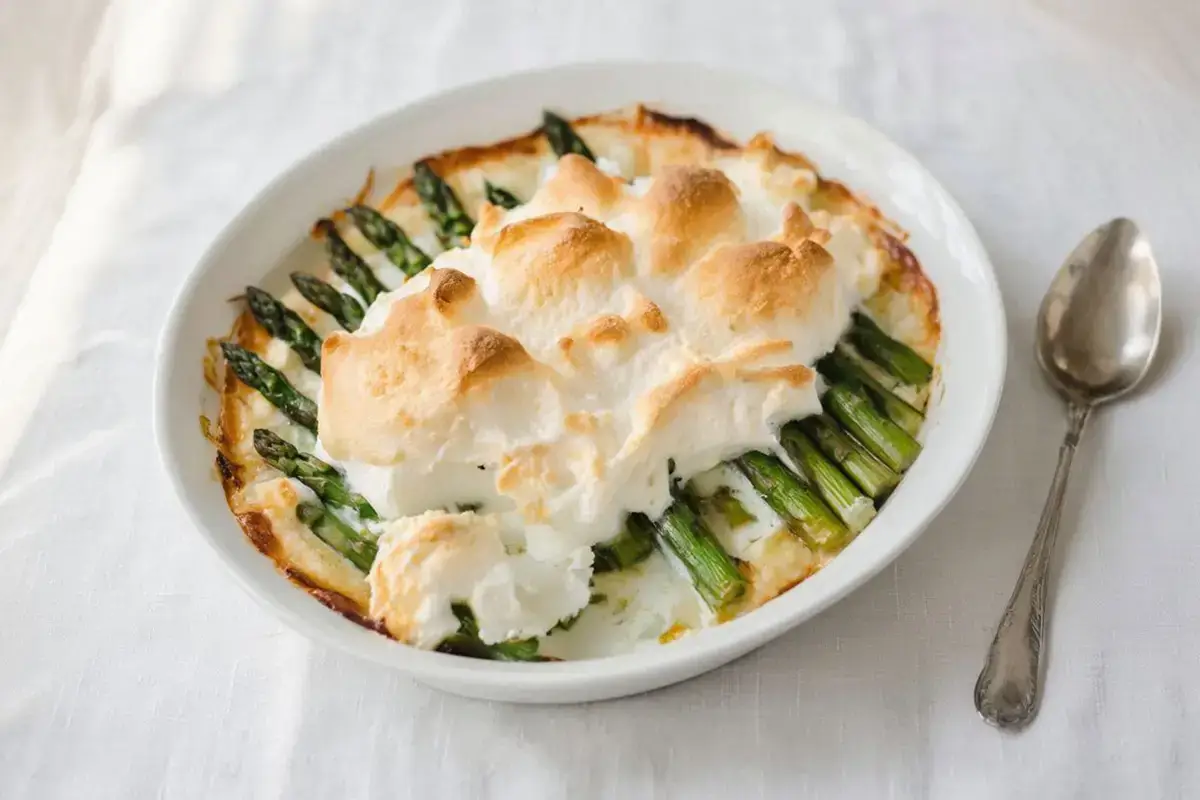
Asparagus Venetian Style
Fresh asparagus baked under a rich egg yolk cream sauce and a golden meringue-cheese topping. An elegant Central European appetizer.
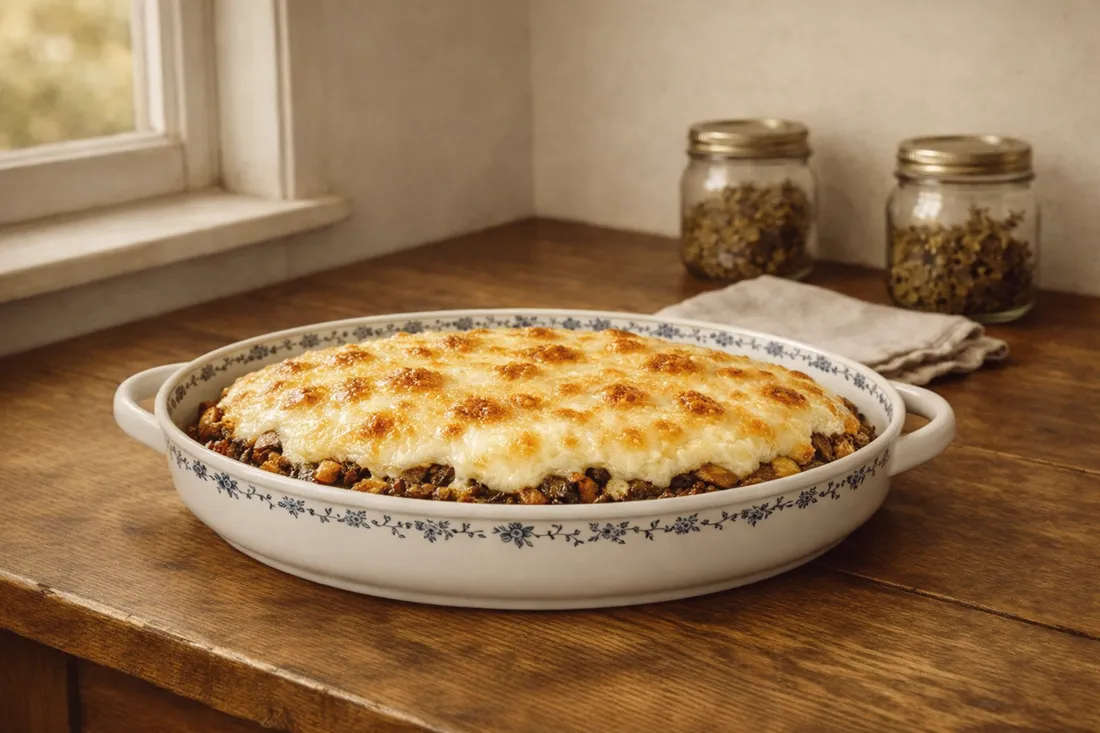
Baked Mushrooms with Hard Cheese and Eggs
Layers of sliced hard-boiled eggs and grated cheese topped with sautéed mushrooms, baked under a rich egg-enriched sour cream topping.
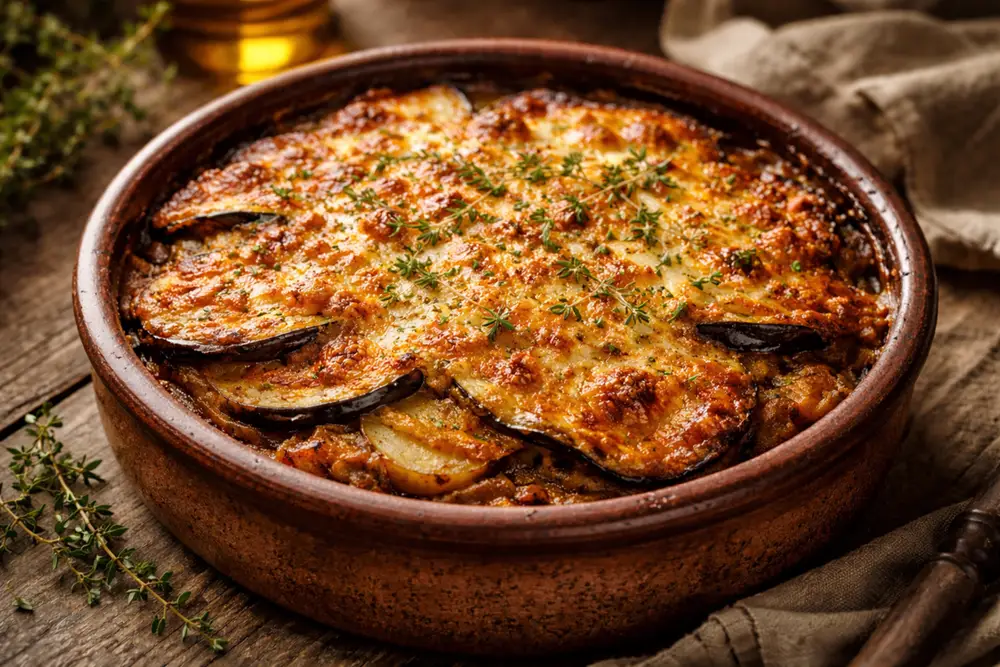
Baked Eggplant with Potatoes
A slow-baked layered casserole of eggplant, parboiled potatoes, golden fried onion, and melted cheese.