Tomatoes Stuffed with Celeriac and Mayonnaise
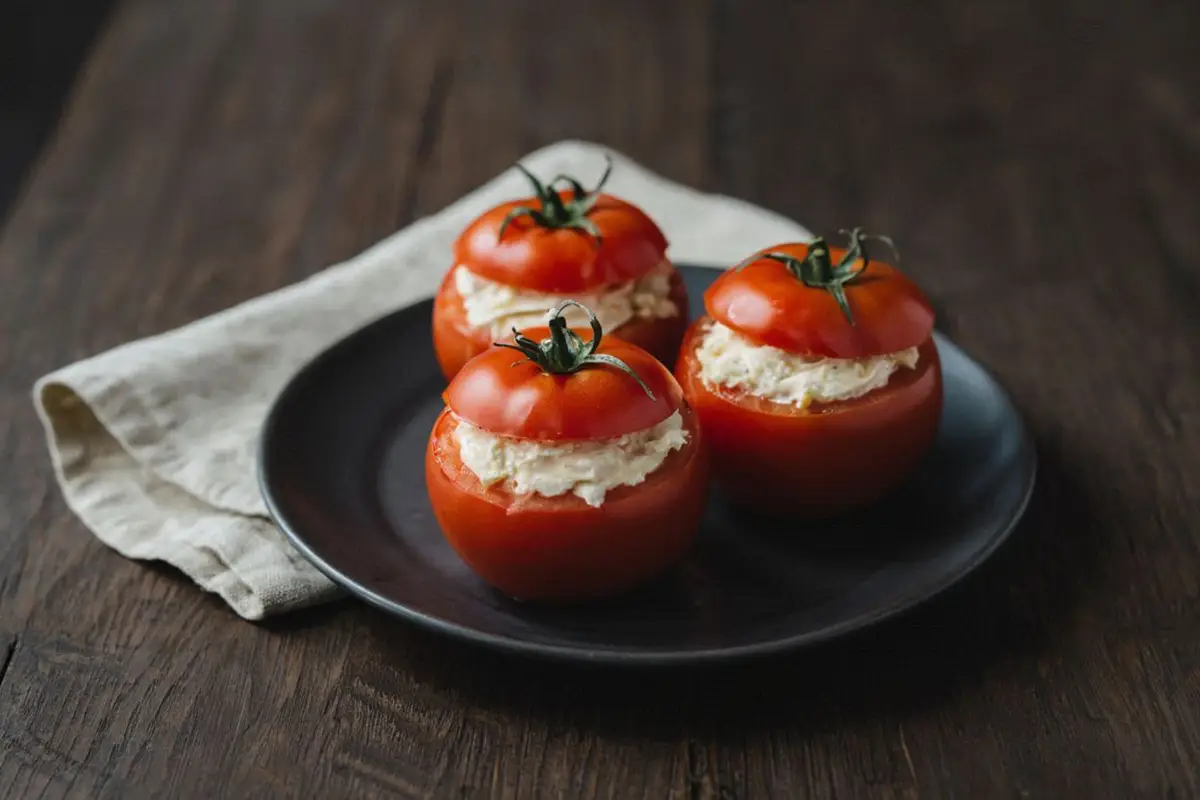
Firm tomatoes hollowed and filled with boiled celeriac bound in mayonnaise — a cool, elegant appetizer from the early 20th century table.
Quick Summary
Firm tomatoes hollowed and filled with boiled celeriac bound in mayonnaise — a cool, elegant appetizer from the early 20th century table.
Historical recipe
Modernised adaptation of an early 20th‑century source. Not independently kitchen-tested by Attic Recipes. Quantities, temperatures, and food safety guidance have been updated for a contemporary kitchen — results may vary and errors may exist. Nutritional values, where provided, are estimates only and have not been laboratory tested. Always follow current food safety guidelines for your region. If you have a health condition, allergy, or dietary requirement, consult a qualified professional before preparing this recipe.
Use of this recipe is entirely at your own risk and subject to our Terms of Service and Privacy Policy. Attic Recipes accepts no liability for any adverse outcome.
- Celery
- Eggs
- Mustard
Additional notes
-
Caution
Contains celery (celeriac) — a recognized EU allergen. Check for celery allergy before serving.
Substitute with boiled parsley root (paštrnak) for a similar texture without the celery allergen.
-
Caution
Contains eggs and typically mustard (mayonnaise). Most commercial full-fat mayonnaise contains mustard seed or mustard — both are recognized EU allergens. Check the mayonnaise label before serving to guests with egg or mustard allergies.
Use a mustard-free mayonnaise if serving to guests with mustard allergy. For egg allergy, use a plant-based mayonnaise alternative. Commercial mayonnaise uses pasteurized eggs; homemade mayonnaise carries a Salmonella risk for pregnant women, young children, the elderly, and immunocompromised individuals.
- 1
Boil the celeriac: Place the whole, unpeeled celeriac in a pot of cold salted water. Bring to a boil and cook until completely tender — approximately 25–30 minutes depending on size. Drain and allow to cool fully. Peel and chop finely.
Tip Boiling whole and unpeeled prevents waterlogging. Chop only after the celeriac has cooled completely — warm celeriac will thin the mayonnaise on contact. - 2
Prepare the tomatoes: Wash and dry the tomatoes. Slice off the tops and set aside. Using a small spoon, carefully hollow out the seeds and pulp. Lightly salt the inside of each tomato and place upside down on a paper towel to drain for 10–15 minutes.
Tip Slightly under-ripe tomatoes hold their shape far better than fully ripe ones. A tomato that is too ripe will collapse under the weight of the filling. - 3
Make the filling: Combine the cooled, finely chopped celeriac with 4 tbsp of mayonnaise. Season with salt and white pepper. The mixture should be firm enough to hold its shape in the tomato — if too loose, drain the celeriac further on a clean cloth before mixing.
- 4
Fill the tomatoes: Spoon the celeriac mixture generously into each hollowed tomato. Replace the tops if desired, or leave open. Refrigerate for at least 15 minutes before serving.
Tip Chilling firms the filling and allows the flavors to settle. Do not assemble more than 2 hours ahead — the tomato shells begin to soften and release moisture.
Nutrition Information per 1 stuffed tomato (approx. 175g)
Nutritional values are approximate estimates and may vary based on specific ingredients used, preparation methods, and portion sizes.
Serving Suggestions
Serve as a cold appetizer, arranged on a flat plate or a bed of lettuce. Pairs well with dark rye bread or as part of a cold spread alongside pickles and cured meats.
About This Recipe
Three ingredients, one technique, no heat at the table. This is the kind of dish that defines early 20th century cold appetizer cooking — restrained, elegant, and entirely dependent on the quality of what goes into it. Celeriac, boiled until tender and bound with mayonnaise, fills a hollowed tomato shell that is just firm enough to hold its shape. The result is cool, creamy, and faintly earthy, with the acidity of the tomato cutting cleanly through the richness of the dressing.
Why It Works
Celeriac has a starchy, dense texture when boiled that absorbs mayonnaise without becoming watery — unlike, say, cucumber or zucchini, which would turn the filling loose immediately. The instruction to boil whole and peel after cooking is deliberate: cut celeriac absorbs water during boiling, which dilutes both flavor and texture. Slightly under-ripe tomatoes are specified because their cell walls are firmer and their moisture content lower — a fully ripe tomato collapses within minutes of being filled. The brief refrigeration before serving is not optional; it firms the filling and allows the celeriac to absorb the mayonnaise fully rather than sitting beside it.
A classic of early 20th century home cooking, preserved and adapted for the modern kitchen.
The Story Behind This Recipe
Historical Context
Stuffed tomatoes were a fixture of the cold appetizer table across Central European households in the early 20th century, appearing in both everyday and festive contexts. Celeriac was a kitchen staple — affordable, available through the autumn and winter, and versatile enough to appear in everything from soups to salads. The combination of boiled celeriac and mayonnaise was a standard filling across the region, reflecting the period's broader enthusiasm for mayonnaise-dressed cold vegetables as a mark of refined cooking.
Modern Kitchen Adaptation
Full-fat mayonnaise is essential — reduced-fat versions are too loose and will make the filling watery. If celeriac is unavailable, parsley root (paštrnak) makes a close substitute with a slightly more herbaceous flavor. White pepper is a natural addition that does not alter the character of the dish; the filling needs no other seasoning beyond salt.
This recipe is an independent modern adaptation developed from historical sources in the public domain. It is provided for informational and educational purposes only and does not constitute professional dietary, nutritional, or medical advice. Food preparation involves inherent risks. The reader assumes full responsibility for safe food handling, ingredient sourcing, and adherence to current local food safety guidelines. The site operator accepts no liability for outcomes resulting from the preparation or consumption of this recipe.
One recipe.
Every week.
You Might Also Like
More recipes from the same category
Asparagus Venetian Style
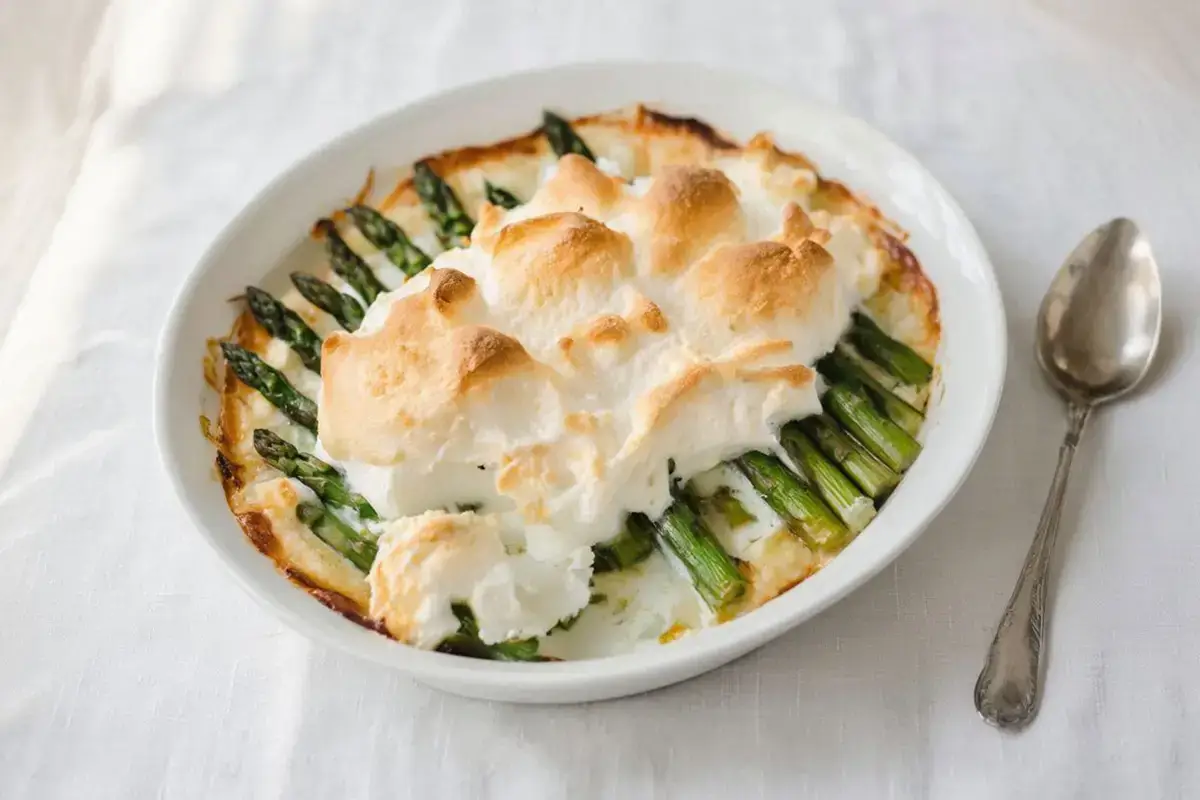
Fresh asparagus baked under a rich egg yolk cream sauce and a golden meringue-cheese topping. An elegant Central European appetizer.
Baked Mushrooms with Hard Cheese and Eggs
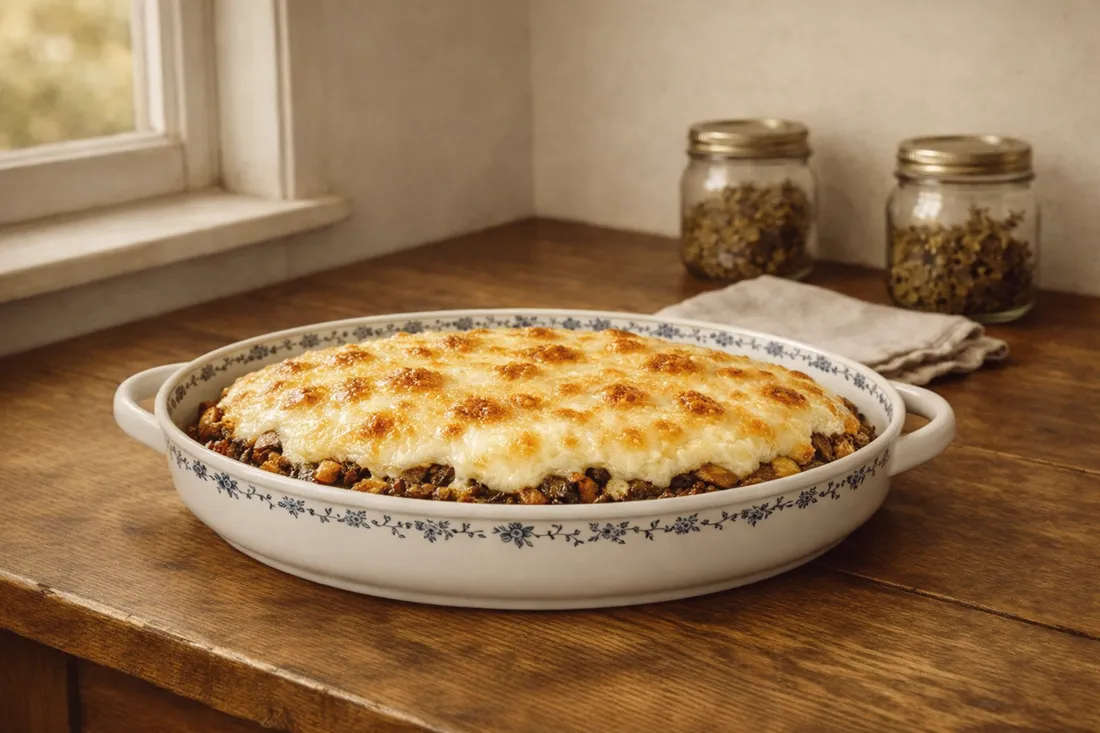
Layers of sliced hard-boiled eggs and grated cheese topped with sautéed mushrooms, baked under a rich egg-enriched sour cream topping.
Baked Eggplant with Potatoes
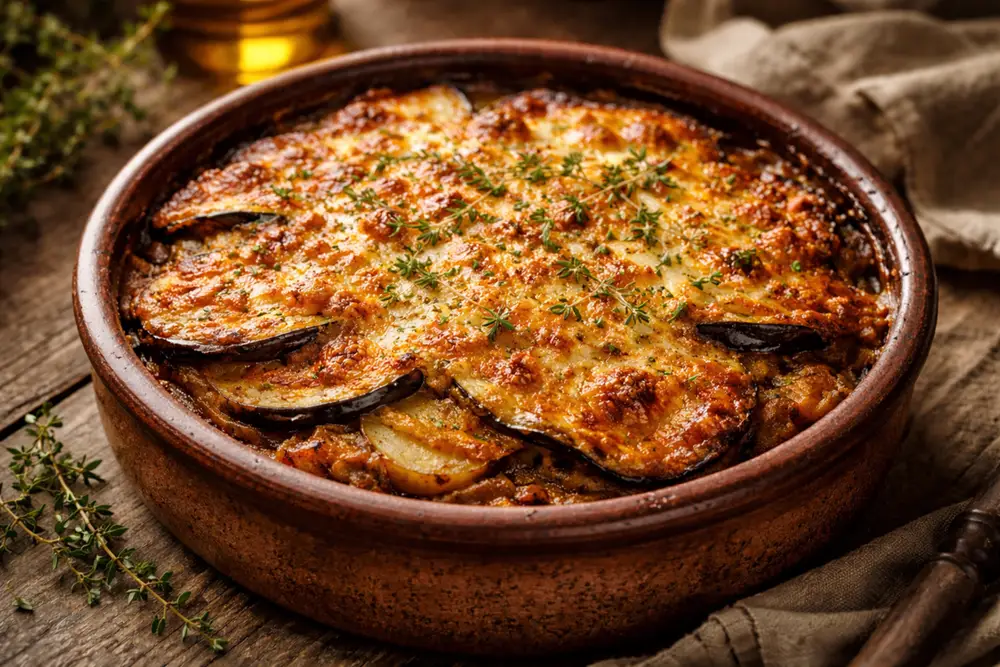
A slow-baked layered casserole of eggplant, parboiled potatoes, golden fried onion, and melted cheese.