Tripe in Cognac Sauce
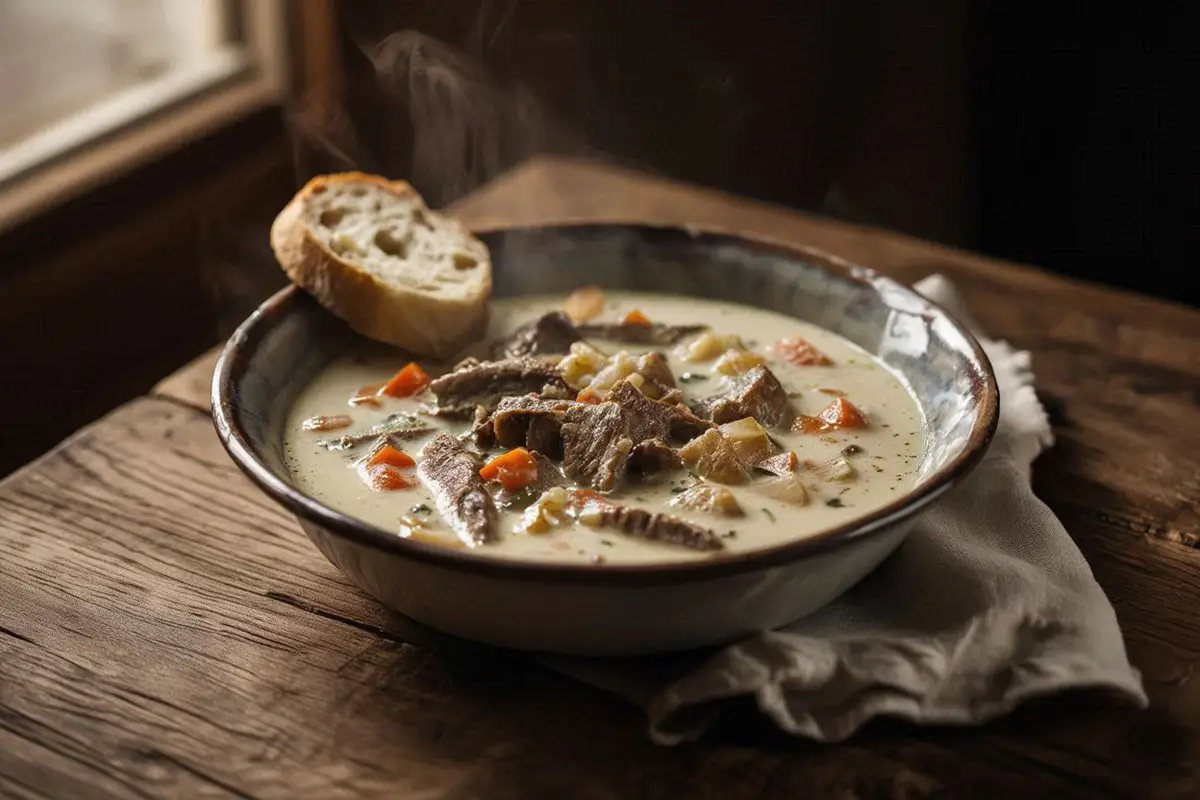
Tender veal tripe slow-braised with root vegetables, finished with sour cream and cognac for a rich, warming Central European classic.
Quick Summary
Tender veal tripe slow-braised with root vegetables, finished with sour cream and cognac for a rich, warming Central European classic.
Historical recipe
Modernised adaptation of an early 20th‑century source. Not independently kitchen-tested by Attic Recipes. Quantities, temperatures, and food safety guidance have been updated for a contemporary kitchen — results may vary and errors may exist. Nutritional values, where provided, are estimates only and have not been laboratory tested. Always follow current food safety guidelines for your region. If you have a health condition, allergy, or dietary requirement, consult a qualified professional before preparing this recipe.
Use of this recipe is entirely at your own risk and subject to our Terms of Service and Privacy Policy. Attic Recipes accepts no liability for any adverse outcome.
- Celery
- Dairy
Additional notes
-
Warning
Tripe is an organ meat. Always purchase from a reputable butcher and ensure it has been properly cleaned and processed. Tripe must be cooked until completely tender — undercooked tripe is not safe to eat and is extremely difficult to digest. Minimum internal temperature: 74°C (165°F).
-
Warning
This recipe contains a significant quantity of alcohol (100ml cognac). Cooking for 30 minutes covered reduces but does not fully eliminate alcohol content — estimated 50% retained. This dish is not suitable for children, pregnant women, or individuals avoiding alcohol.
Substitute cognac with 100ml of unsweetened apple juice plus 1 tsp of apple cider vinegar. The fruity depth is retained without alcohol. Alternatively, use a dealcoholised brandy if available.
-
Caution
This dish is high in sodium (~924mg per portion, approximately 40% of the recommended daily intake). Individuals managing hypertension or on a sodium-restricted diet should reduce or omit added salt and use unsalted broth.
-
Caution
Organ meats including tripe are high in purines. Individuals with gout or hyperuricemia should limit consumption.
-
Note
Tripe has a distinctive smell during cooking that many find strong. This is normal and diminishes after the blanching step and during the long simmer. Ensure good kitchen ventilation.
- 1
Wash the tripe thoroughly in several changes of cold water. Place in a large pot, cover with cold water, and bring to a boil. As soon as it reaches a full boil, remove from heat and drain immediately in a colander. This blanching step removes impurities and odour.
Tip Do not skip the blanching step — it significantly improves the final flavour and smell of the dish. - 2
While the tripe drains and cools slightly, finely chop the onion, celeriac, carrots, and parsley root.
- 3
Heat the lard or oil in a heavy pot over medium heat. Add all the chopped vegetables and sauté, stirring occasionally, until softened and lightly golden — about 8–10 minutes.
- 4
Cut the blanched tripe into small bite-sized pieces. Add to the pot with the sautéed vegetables and mix well to combine.
- 5
Pour in enough broth or water to cover the tripe by approximately 4cm (two fingers above the surface). Add the bay leaf, peppercorns, and 1 teaspoon of salt.
- 6
Cover the pot and simmer on low heat for 2–2.5 hours, until the tripe is completely tender. Check liquid levels every 30–40 minutes and add warm water or broth as needed — the pot should never go dry.
Tip Tripe cooking time varies significantly depending on how the tripe was pre-processed. Start checking for tenderness at 90 minutes. It is ready when a piece cuts easily with a fork and has no chew resistance. - 7
Thirty minutes before serving, pour in the sour cream and cognac. Stir well to combine with the braising liquid.
- 8
Cover and continue cooking on low heat for another 30 minutes. The sauce will thicken slightly from the sour cream. Taste and adjust seasoning with salt.
Tip Do not allow the pot to boil vigorously after adding the sour cream — it can cause the cream to curdle. Keep at a gentle simmer. - 9
Remove the bay leaf. Serve hot in deep bowls with crusty bread, mashed potatoes, or polenta.
Nutrition Information per 1 portion (approx. 150g tripe + sauce + vegetables)
Nutritional values are approximate estimates and may vary based on specific ingredients used, preparation methods, and portion sizes.
Serving Suggestions
Serve in deep bowls with crusty white bread for sauce-soaking, or alongside mashed potatoes or soft polenta. A sharp pickled vegetable on the side — cornichons, pickled peppers, or sauerkraut — cuts through the richness of the cream and cognac sauce effectively.
About This Recipe
Tripe — the honeycomb lining of the rumen, known across Central European kitchens as škembići or fileki — is a dish of contradictions that works beautifully: a humble, economical cut elevated by a luxurious finish of sour cream and good cognac. The long braising time — two hours at minimum before the cream even enters the pot — transforms the tripe from something chewy and assertive into something tender, almost yielding, with a flavour that is deep and meaty without being heavy. The cognac in the final phase adds warmth and a faint sweetness that rounds out the sour cream sauce into something genuinely complex.
Why It Works
Veal tripe is composed primarily of connective tissue and smooth muscle, both of which require prolonged moist heat to break down. During the long simmer, collagen converts to gelatin, giving the braising liquid a natural body that the sour cream and cognac then enrich further. Adding the cream and cognac only in the final thirty minutes prevents the alcohol from cooking off entirely — the residual warmth in the sauce is intentional. Sour cream, unlike heavy cream, contains lactic acid that adds a gentle tang and helps balance the richness of the fat-softened tripe.
A Note on Buying Tripe
Tripe is the honeycomb-textured lining of the first stomach (rumen) of cattle — not the stomach itself. It is sold in butcher shops across the region as škembići or fileki, and in most European supermarkets as honeycomb tripe. Modern butchers sell it in various states of cleaning — from raw (requiring extensive preparation) to fully bleached and pre-cooked. For this recipe, use tripe that has been cleaned but not pre-cooked, as the long simmer is essential to the final texture and the braising liquid forms the base of the sauce. Bleached tripe (white, sold in most supermarkets) works perfectly and requires only the initial blanching step described in the recipe.
Troubleshooting
Tripe still tough after 2 hours: Continue simmering — some tripe, depending on the animal’s age and how it was processed, can take up to 3 hours. Add liquid as needed and check every 20 minutes.
Sauce curdled after adding sour cream: This happens when the heat is too high after the cream is added. Remove from heat, let cool slightly, then stir vigorously. The sauce may not fully re-emulsify but will still taste correct. Next time, ensure a very gentle simmer after the cream goes in.
Dish smells very strong during cooking: Normal for tripe. The blanching step removes the worst of it. Open a window. The final dish will smell much milder.
A classic of early 20th century home cooking, preserved and adapted for the modern kitchen.
The Story Behind This Recipe
Historical Context
Tripe — the honeycomb lining of the first stomach (rumen) of cattle or veal — has been a staple of Central European cooking for centuries, known regionally as škembići or fileki. Valued for its economy and the deep, gelatinous richness it develops through slow cooking, it was a fixture of both working-class and middle-class households across the region. The addition of cognac to a braised tripe dish reflects the aspirational cooking style of early twentieth century urban households — cognac was a luxury imported spirit, and its use with an everyday cut like tripe created a dish that bridged the everyday and the celebratory. Similar preparations appear across the region under various names, all sharing the same foundation of long-simmered offal with aromatic root vegetables and a cream-enriched sauce.
Modern Kitchen Adaptation
The original recipe does not specify the quantity of tripe, sour cream, or the exact measure of the cognac cups. Tripe quantity is set at 800g as a standard portion for four. Sour cream is set at 200ml (one standard cup). The cognac measure is interpreted as two small Turkish coffee cups, a common domestic measure of the era equivalent to approximately 100ml total. The original specifies 'fat' without detail — lard is used per period practice, though neutral oil is an equivalent modern substitute. Liquid quantity for braising is given as a range, as pot size and tripe density affect the amount needed.
This recipe is an independent modern adaptation developed from historical sources in the public domain. It is provided for informational and educational purposes only and does not constitute professional dietary, nutritional, or medical advice. Food preparation involves inherent risks. The reader assumes full responsibility for safe food handling, ingredient sourcing, and adherence to current local food safety guidelines. The site operator accepts no liability for outcomes resulting from the preparation or consumption of this recipe.
One recipe.
Every week.
You Might Also Like
More recipes from the same category
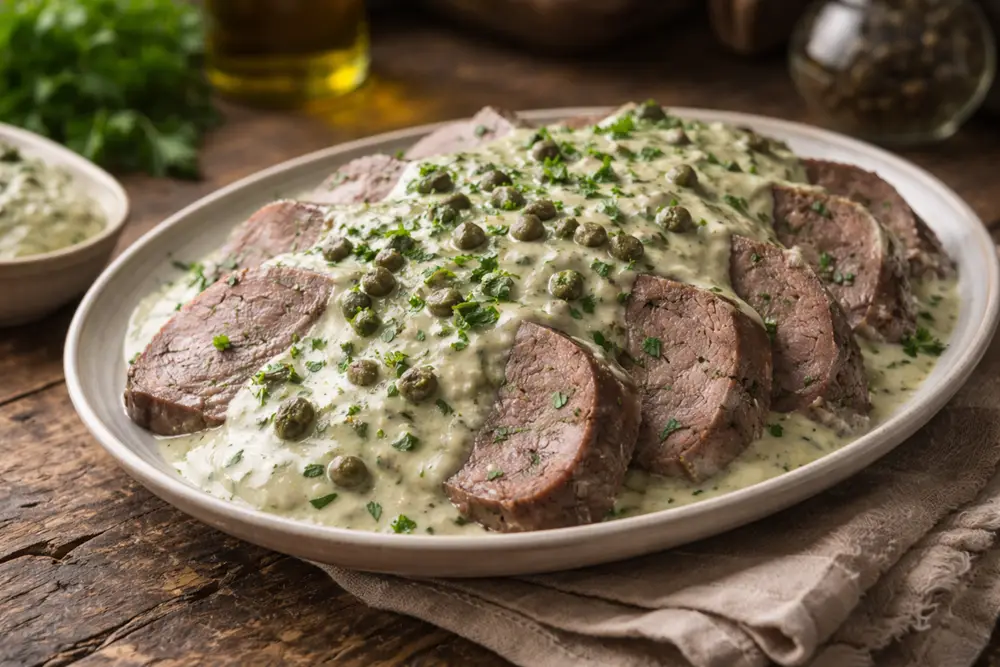
Baked Tongue in Green Sauce
Beef tongue braised with herbs, larded with bacon and roasted until golden, served in a green sauce of capers, anchovy, parsley and sour cream.
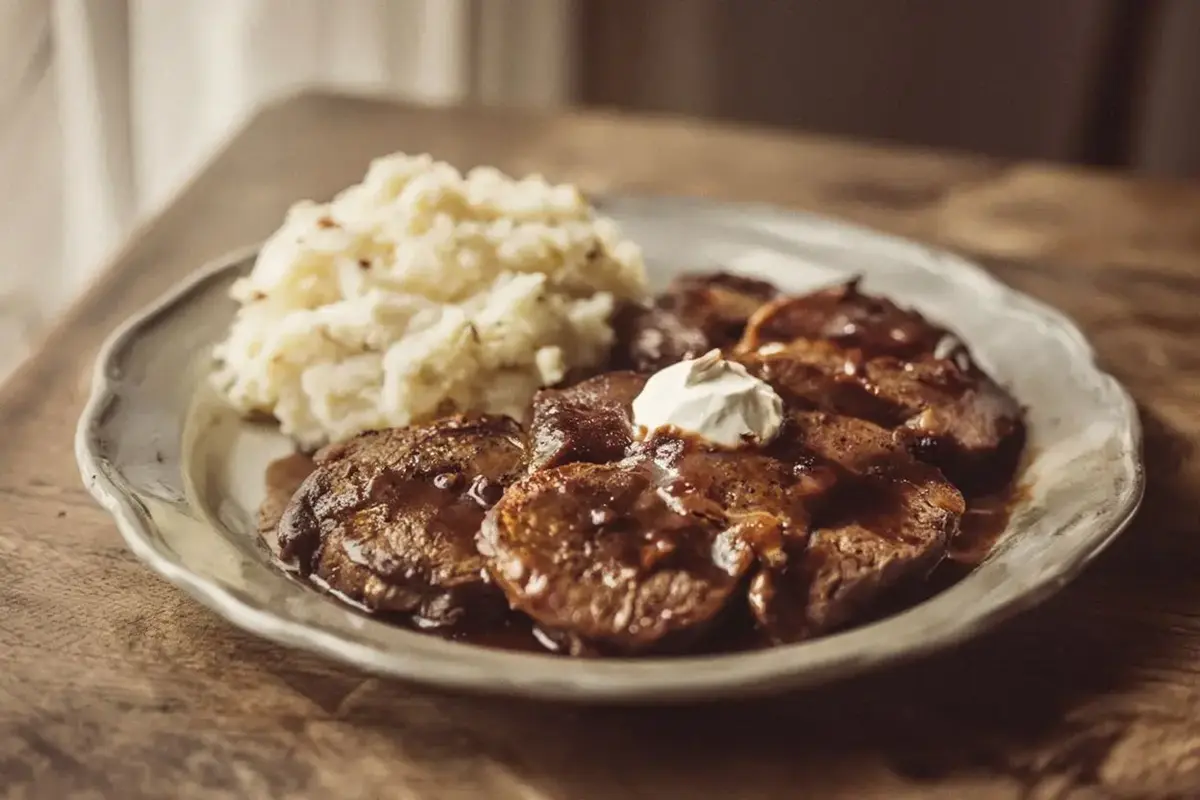
Beef Kidney with Wine
Beef kidney marinated in red wine, braised with herbs, finished with sour cream. Tender, rich, and deeply flavored.
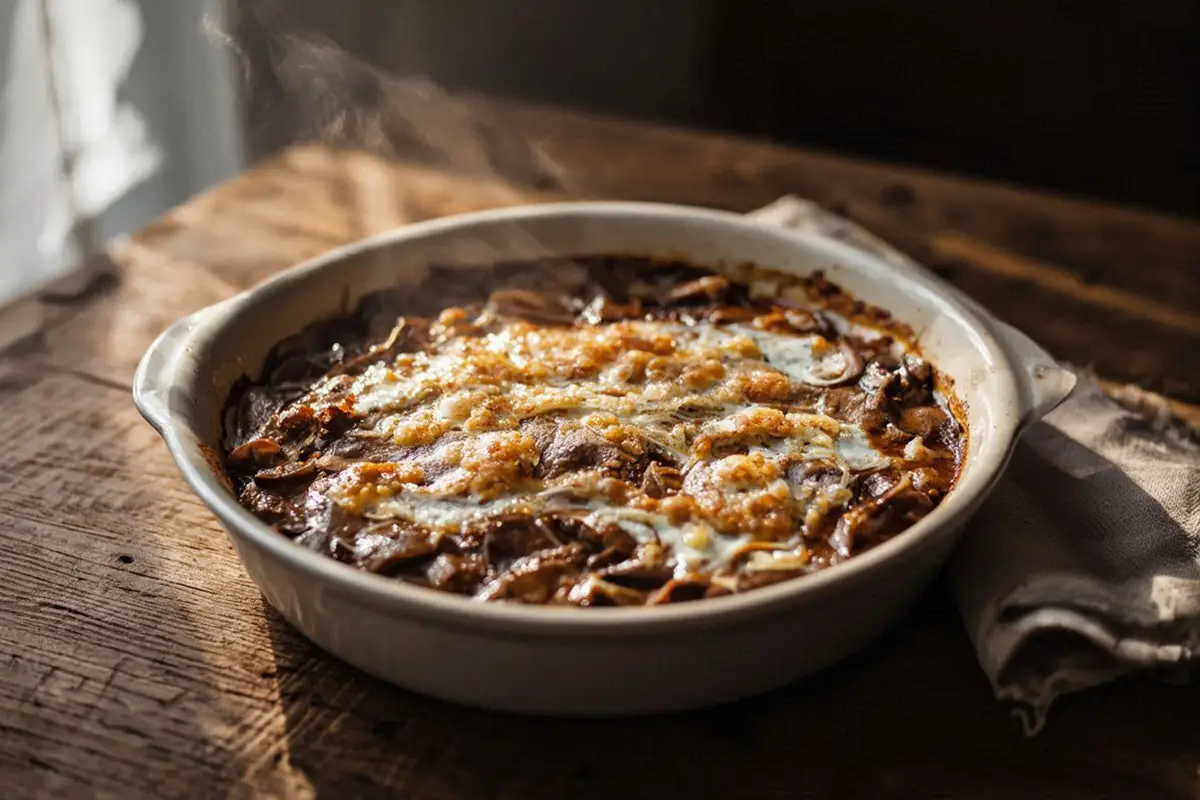
Beef Tongue in Mushroom Sauce
Tender sliced beef tongue layered in a rich dark mushroom sauce, finished with sour cream, Parmesan, and a golden oven crust.