Tripe with Onions
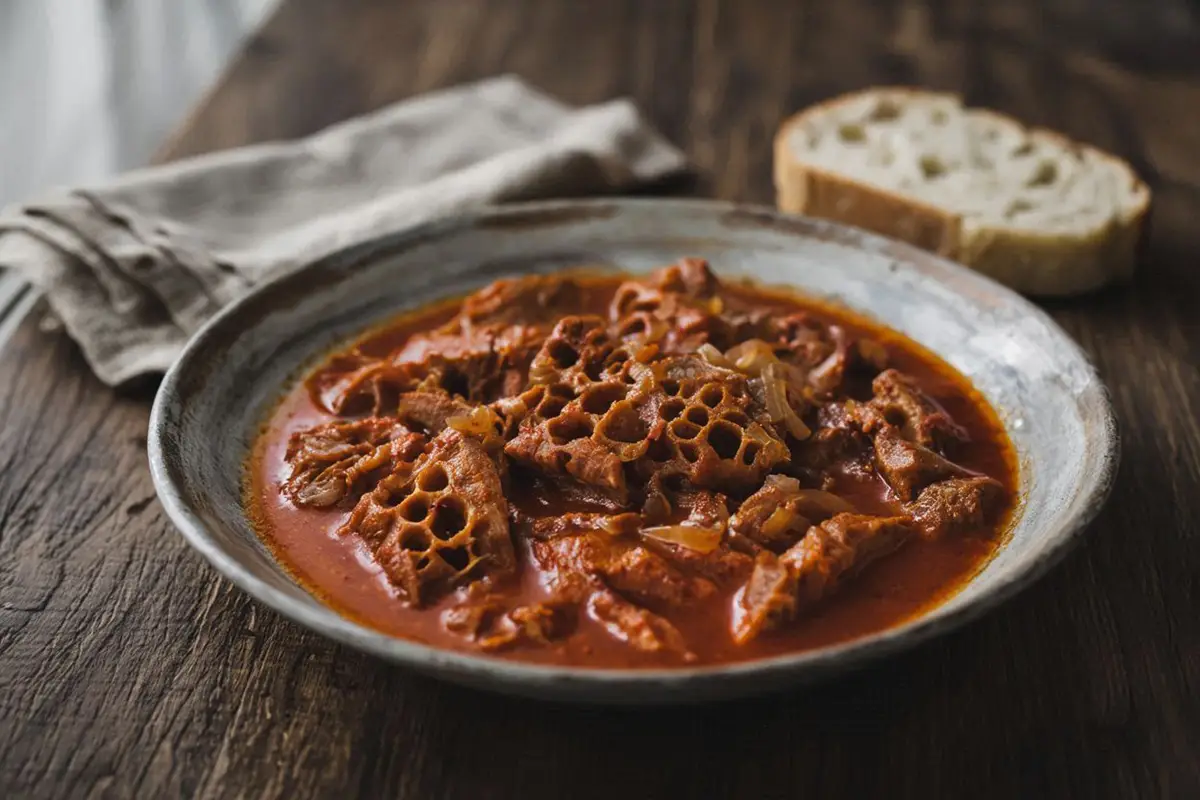
Tender honeycomb tripe slow-cooked in a rich paprika and onion sauce — a bold, deeply savory Central European classic from the early 20th century.
Quick Summary
Tender honeycomb tripe slow-cooked in a rich paprika and onion sauce — a bold, deeply savory Central European classic from the early 20th century.
Historical recipe
Modernised adaptation of an early 20th‑century source. Not independently kitchen-tested by Attic Recipes. Quantities, temperatures, and food safety guidance have been updated for a contemporary kitchen — results may vary and errors may exist. Nutritional values, where provided, are estimates only and have not been laboratory tested. Always follow current food safety guidelines for your region. If you have a health condition, allergy, or dietary requirement, consult a qualified professional before preparing this recipe.
Use of this recipe is entirely at your own risk and subject to our Terms of Service and Privacy Policy. Attic Recipes accepts no liability for any adverse outcome.
Safety note
Tripe must be cooked to a minimum internal temperature of 75°C (165°F) and must be fully tender before consumption. Undercooked tripe poses a risk of foodborne illness.
Do not shorten the boiling time. The tripe should yield easily when pressed — if it is still rubbery, continue cooking.
Additional notes
-
Warning
Beef tripe is high in cholesterol (185mg per serving). Those managing cardiovascular disease or following a low-cholesterol diet should consume in moderation.
Reduce portion size and serve with a larger side of vegetables to balance the meal.
-
Note
Organ meats including tripe are high in purines. Those with gout or hyperuricemia should limit their intake of this dish.
-
Caution
Contains hot paprika. Not suitable for young children or those with sensitivity to spicy foods.
Replace hot paprika with sweet ground paprika (slatka aleva paprika) for a mild version suitable for all ages.
- 1
Clean the tripe thoroughly at home even if pre-cleaned by the butcher — rinse under cold running water, then wash in several changes of cold water until the water runs clear and the tripe no longer has a strong odor.
Tip Soaking the tripe in cold water with a splash of white vinegar for 30 minutes before washing helps neutralize the smell significantly. - 2
Place the cleaned tripe in a large pot, cover generously with cold water seasoned with 1 tsp of salt, and bring to a boil. Add bay leaves and peppercorns if using. Reduce heat and simmer steadily for 2–2.5 hours until the tripe is completely tender — it should yield easily when pressed with a finger.
Tip Skim the foam that rises during the first 15 minutes of boiling. Reserve the cooking liquid — it is the base of your sauce. - 3
Remove the cooked tripe from the pot and set aside to cool slightly. Reserve 300–500ml of the cooking liquid. Once cool enough to handle, cut the tripe into small square pieces, approximately 3–4 cm. Remove and discard bay leaves and peppercorns.
- 4
In a separate saucepan, melt the lard over medium heat. Add the finely chopped onion and sauté until soft, golden, and just beginning to caramelize — approximately 10–12 minutes.
Tip Don't rush the onion. Properly softened onion is the flavor foundation of the sauce — it should be sweet and golden, not raw or burned. - 5
Add the hot ground paprika to the onion and stir constantly for 30–60 seconds. Do not let the paprika burn — it turns bitter very quickly on direct heat.
Tip If your paprika is very hot and pungent, start with ¼ tsp and taste before adding more. - 6
Pour enough of the reserved tripe cooking liquid into the saucepan to fully cover the tripe once it is added. Bring to a boil. Taste and adjust salt.
- 7
Add the cut tripe pieces to the boiling sauce. Reduce heat and simmer together for 10–15 minutes to allow the tripe to absorb the flavors of the sauce.
- 8
Taste and adjust seasoning. Serve hot directly from the pot into deep bowls.
Nutrition Information per 1 portion (approx. 220g tripe + sauce, based on 5 servings)
Nutritional values are approximate estimates and may vary based on specific ingredients used, preparation methods, and portion sizes.
Serving Suggestions
Serve hot with thick slices of crusty white bread to soak up the sauce. A simple cucumber salad dressed with vinegar and a pinch of sugar is a traditional accompaniment that cuts through the richness of the dish.
About This Recipe
Škembići — honeycomb tripe with onion and paprika — is one of the oldest and most honest dishes in the Central European kitchen. There is nothing refined about it, and that is precisely its strength. Slow-boiled until silky, then finished in a simple sauce of caramelized onion and hot paprika, it rewards patience with a depth of flavor that few cuts can match. This is tavern food, home food, cold-weather food.
Why It Works
Honeycomb tripe is the inner lining of the second stomach of beef cattle. Its distinctive texture — firm but yielding, with a slightly gelatinous quality — comes from the collagen that breaks down during the long boil. This is not a dish you can rush. Two hours of steady simmering is the minimum; the tripe should feel soft and pliable, not rubbery, before it goes into the sauce.
The paprika goes in after the onion, off the direct heat of the pan base, and cooks for less than a minute. This is intentional — paprika burns fast and turns bitter the moment it scorches. Adding it to softened onion rather than dry fat protects it and blooms the flavor into the oil without destroying it.
On Cleaning Tripe
Pre-cleaned tripe from a butcher is perfectly fine to use, but a second wash at home is always worthwhile. Rinse under cold running water, then soak in cold water with a splash of white vinegar for 30 minutes. This neutralizes any residual odor and ensures the cooking liquid — which becomes your sauce base — is clean and pleasant-tasting rather than overpowering.
Choosing Your Fat
Lard (mast): The traditional choice. It gives the sauce a rounded, slightly savory richness that neutral oil cannot replicate. If you can source good-quality rendered lard from a butcher, use it here.
Neutral oil: A clean, lighter result. The paprika and onion flavors come through more directly. Perfectly good — just a different dish.
Avoid olive oil — its flavor profile competes with the paprika and doesn’t suit this style of cooking.
Make-Ahead Notes
Škembići improve significantly after resting. Cook the tripe a day ahead, refrigerate in its cooking liquid, then make the sauce and finish the dish the following day. The flavors deepen overnight and the tripe becomes even more tender.
Leftovers reheat well — add a splash of water or reserved cooking liquid to loosen the sauce.
A classic of early 20th century home cooking, preserved and adapted for the modern kitchen.
The Story Behind This Recipe
Historical Context
Škembići — tripe cooked with onion and paprika — was a staple of Central European working-class and middle-class kitchens throughout the early 20th century. Offal cookery was not frugality out of necessity alone; it reflected a culinary tradition that valued the whole animal and understood how to coax deep, complex flavor from cuts that demanded patience. The combination of slow-cooked honeycomb tripe with caramelized onion and hot paprika is one of the most enduring flavor profiles in regional cooking — still found in taverns and home kitchens across the region today.
Modern Kitchen Adaptation
The original recipe calls for lard (mast) as the cooking fat, which gives the sauce a richer, more rounded flavor. Neutral oil (sunflower or vegetable) is a viable substitute for a lighter result, though the character of the dish changes slightly. For the most authentic version, lard is recommended. Pre-cleaned tripe is widely available in most butcher shops and significantly reduces preparation time.
This recipe is an independent modern adaptation developed from historical sources in the public domain. It is provided for informational and educational purposes only and does not constitute professional dietary, nutritional, or medical advice. Food preparation involves inherent risks. The reader assumes full responsibility for safe food handling, ingredient sourcing, and adherence to current local food safety guidelines. The site operator accepts no liability for outcomes resulting from the preparation or consumption of this recipe.
One recipe.
Every week.
You Might Also Like
More recipes from the same category
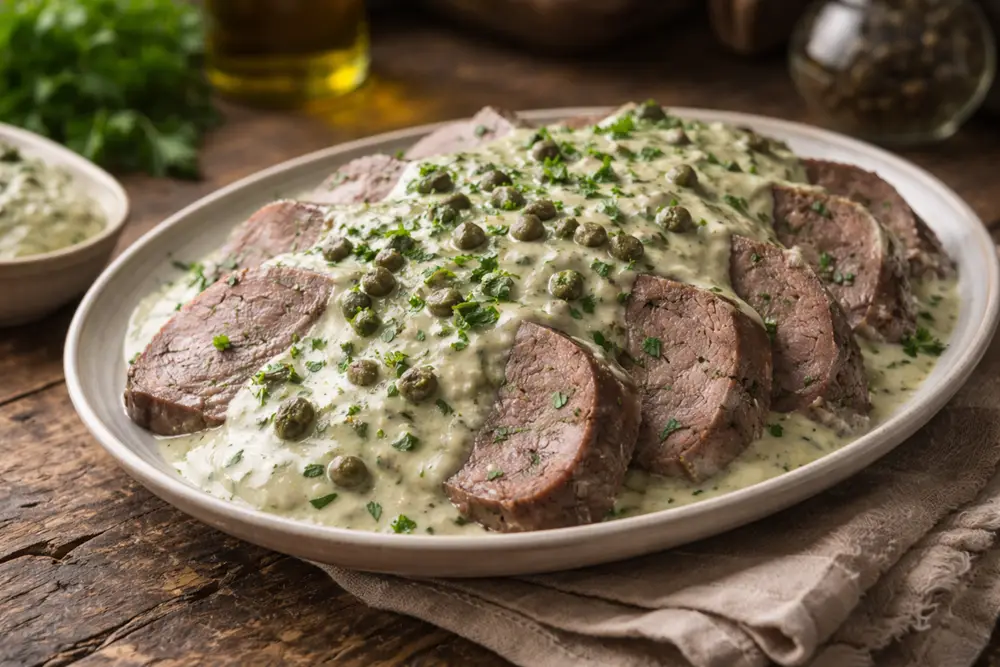
Baked Tongue in Green Sauce
Beef tongue braised with herbs, larded with bacon and roasted until golden, served in a green sauce of capers, anchovy, parsley and sour cream.
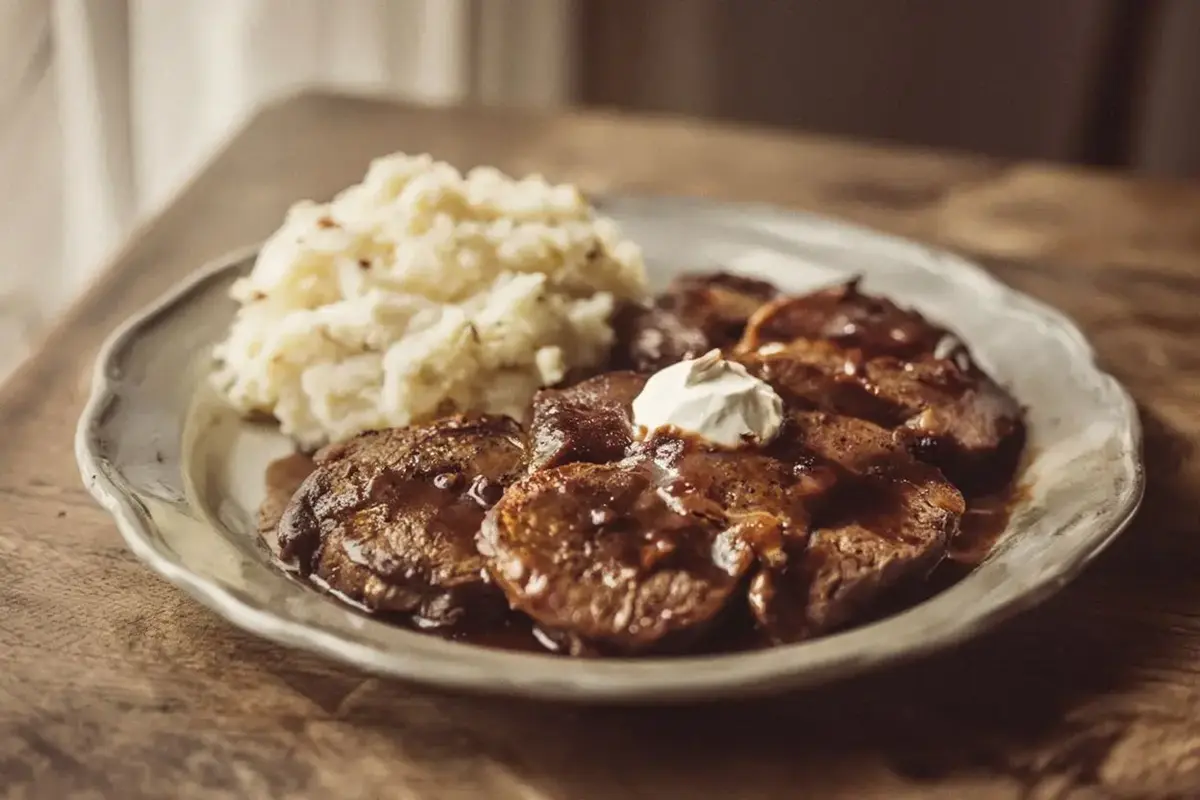
Beef Kidney with Wine
Beef kidney marinated in red wine, braised with herbs, finished with sour cream. Tender, rich, and deeply flavored.
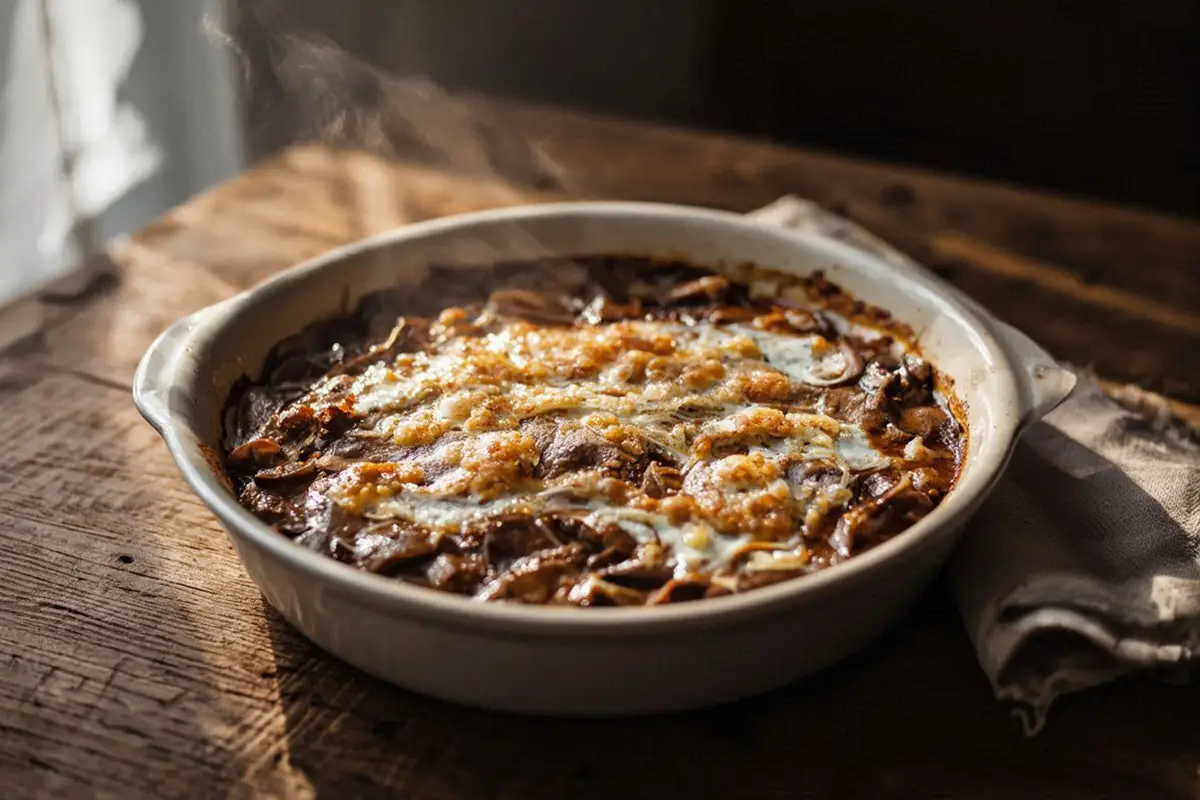
Beef Tongue in Mushroom Sauce
Tender sliced beef tongue layered in a rich dark mushroom sauce, finished with sour cream, Parmesan, and a golden oven crust.