Udder in White Horseradish Sauce
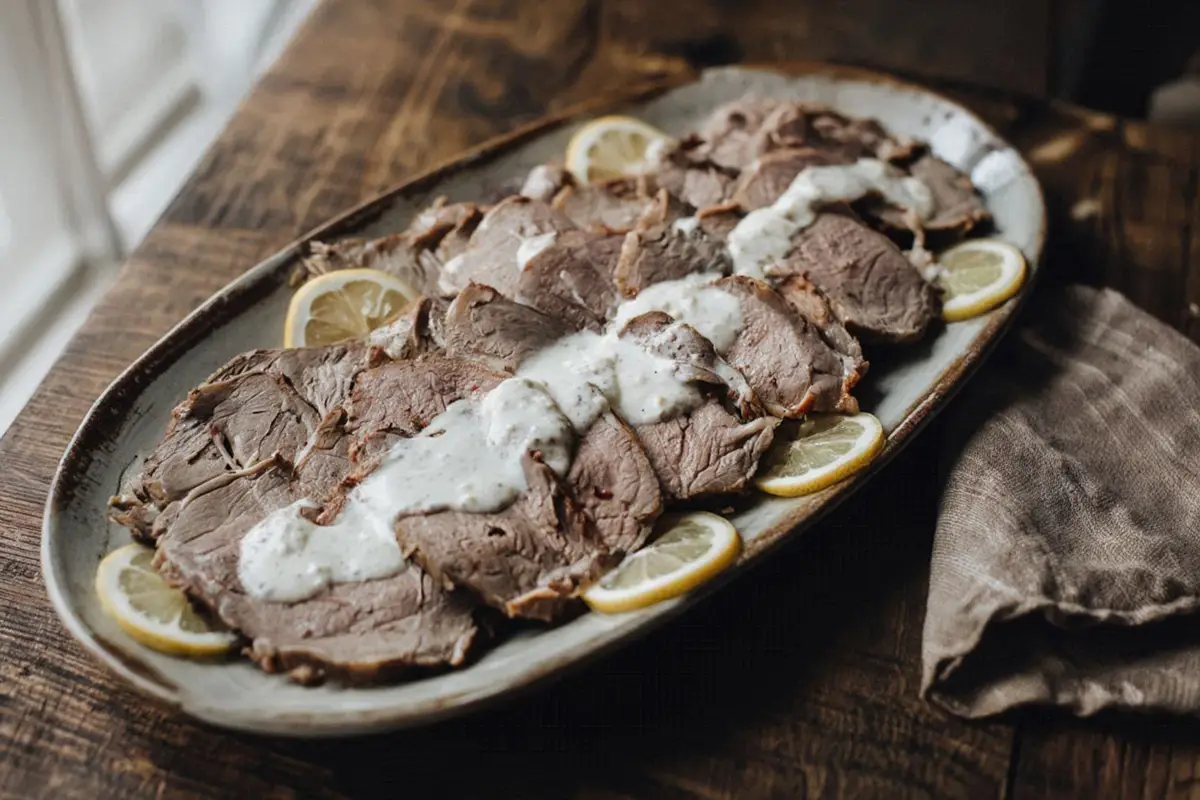
Slow-poached beef udder served sliced on a platter, draped in a silky béchamel-based horseradish sauce and garnished with lemon.
Quick Summary
Slow-poached beef udder served sliced on a platter, draped in a silky béchamel-based horseradish sauce and garnished with lemon.
Historical recipe
Modernised adaptation of an early 20th‑century source. Not independently kitchen-tested by Attic Recipes. Quantities, temperatures, and food safety guidance have been updated for a contemporary kitchen — results may vary and errors may exist. Nutritional values, where provided, are estimates only and have not been laboratory tested. Always follow current food safety guidelines for your region. If you have a health condition, allergy, or dietary requirement, consult a qualified professional before preparing this recipe.
Use of this recipe is entirely at your own risk and subject to our Terms of Service and Privacy Policy. Attic Recipes accepts no liability for any adverse outcome.
- Celery
- Dairy
- Gluten
Safety note
Beef udder must be cooked to a minimum internal temperature of 75°C (165°F) and must be completely tender throughout before serving. Undercooked udder poses a risk of foodborne illness.
Do not shorten the poaching time. If in doubt, cook for an additional 30 minutes — overcooked udder is soft but safe; undercooked is not.
Additional notes
-
Warning
High cholesterol content (210mg per serving). Those managing cardiovascular disease or following a low-cholesterol diet should consume in moderation.
Reduce portion size and serve with a larger side of vegetables to balance the meal.
-
Note
Organ meats including udder are high in purines. Those with gout or hyperuricemia should limit their intake of this dish.
-
Caution
Contains dairy (butter and whole milk in the béchamel sauce). Not suitable for those with lactose intolerance or a dairy allergy.
Substitute with lactose-free milk and dairy-free butter for an equivalent sauce texture.
-
Caution
Contains gluten (all-purpose flour in the béchamel roux). Not suitable for those with celiac disease or gluten intolerance.
Use a 1:1 gluten-free flour blend for the roux, or thicken with 1 tbsp cornstarch dissolved in cold milk.
- 1
Prepare the udder: Wash the udder thoroughly under cold running water. Place in a deep bowl, pour boiling water over it, and leave for 2–3 minutes. This initial scalding helps remove residual milk and firms the surface. Drain and transfer immediately to cold water.
Tip This scald-and-cool technique is traditional and practical — it draws out any remaining milk from the udder tissue, which would otherwise make the poaching liquid taste sour. - 2
Place the blanched udder in a large pot. Add enough cold water to fully submerge the udder. Add the halved onion, carrots, parsley root, celeriac, peppercorns, bay leaves, horseradish, and 1 tsp of salt. Bring to a boil, then reduce to a steady low simmer.
- 3
Simmer for 2–2.5 hours until the udder is completely tender — a fork should insert without resistance. Skim any foam from the surface during the first 20 minutes. Do not discard the cooking liquid.
Tip The udder is done when it feels soft and yielding throughout. Undercooked udder is rubbery and unpleasant — patience is essential here. - 4
Remove the udder from the pot and allow to rest for 10 minutes. Slice into even pieces, approximately 1–1.5 cm thick, and arrange on a long serving platter.
- 5
Make the béchamel base: Melt the butter in a saucepan over medium heat. Add the flour and stir constantly for 2 minutes until the mixture smells faintly nutty but has not yet browned.
Tip Keep the heat at medium — a white roux should not color. Stir constantly so the flour cooks evenly without catching on the bottom. - 6
Gradually pour the warmed milk into the roux in a thin stream, whisking constantly to prevent lumps. Continue whisking over medium heat for 5–8 minutes until the sauce is smooth, creamy, and thick enough to coat the back of a spoon.
- 7
Remove the sauce from the heat. Stir in the prepared horseradish, lemon juice, ½ tsp salt, ¼ tsp white pepper, and nutmeg (if using). Taste and adjust — add more horseradish for a sharper sauce, more lemon juice for brightness.
Tip Always add horseradish off the heat — prolonged cooking dulls its sharpness significantly. - 8
Pour the warm horseradish sauce generously over the sliced udder on the platter. Garnish with thin lemon slices along the edges. Serve immediately.
Nutrition Information per 1 portion (approx. 200g udder + 80ml sauce, based on 5 servings)
Nutritional values are approximate estimates and may vary based on specific ingredients used, preparation methods, and portion sizes.
Serving Suggestions
Traditionally served as a plated main course. Boiled potatoes, bread dumplings, or thick slices of crusty white bread are the natural accompaniments. A simple green salad or pickled cucumber salad provides acidity that cuts pleasantly through the richness of the sauce.
About This Recipe
This is a dish that asks for patience and rewards it. Beef udder — rarely seen on modern menus but once a respected feature of Central European home cooking — is slow-poached in an aromatic broth until completely tender, then sliced and served on a platter under a silky béchamel-based horseradish sauce. The combination is quietly elegant: mild, yielding meat, a sharp and creamy sauce, the brightness of lemon. Nothing excessive. Nothing wasted.
Why It Works
Udder is a dense, muscular tissue with a relatively high fat content distributed throughout in a fine marbling. Long, gentle poaching — never a rolling boil — breaks down the connective tissue without toughening the exterior. The initial scalding step is not optional: it draws residual milk from the tissue, which would otherwise make both the meat and the cooking liquid taste slightly sour.
The béchamel sauce is made with milk alone, not cooking liquid. This is a deliberate choice — the poaching broth is flavorful but can be quite strong, and the delicate white sauce needs a neutral base to let the horseradish speak clearly. Horseradish is added off the heat at the very last moment, preserving its sharpness. Prolonged cooking destroys the volatile compounds that give it its characteristic heat.
On Sourcing Udder
Beef udder is not a supermarket product. Your best options are:
- Specialist butchers who work with the whole animal
- Halal butchers — udder is commonly available and often pre-cleaned
- Farmers’ markets with whole-animal vendors
Ask for it pre-cleaned and, if possible, pre-blanched. If it arrives uncleaned, soak in several changes of cold water for 2–3 hours before cooking.
The Sauce: Béchamel vs. Cooking Liquid
Some regional versions of this sauce use a mixture of milk and cooking broth as the liquid for the béchamel. This produces a slightly more savory, less delicate result. For this recipe, we use whole milk only — it gives a cleaner, creamier sauce that does not compete with the horseradish. If you want to experiment, replace up to half the milk with strained, defatted poaching liquid and adjust the seasoning accordingly.
Make-Ahead Notes
The udder can be poached a day ahead, cooled in its liquid, and refrigerated overnight. This actually improves the texture — the meat firms slightly and slices more cleanly when cold. Reheat gently in a little of the reserved poaching liquid before serving. Make the béchamel fresh on the day of serving.
A classic of early 20th century home cooking, preserved and adapted for the modern kitchen.
The Story Behind This Recipe
Historical Context
Udder was a recognized ingredient in Central European household cooking throughout the early 20th century — affordable, readily available, and handled with the same care and technique as any other cut. Served sliced on a long platter with a white sauce and lemon garnish, it was considered a respectable lunch dish, not a poverty meal. The combination of a béchamel-based horseradish sauce with poached meat is deeply rooted in the broader Central European culinary tradition, found in variations across Czech, Croatian, and Hungarian kitchens of the period.
Modern Kitchen Adaptation
Beef udder is rarely found in standard supermarkets today but is available through specialist butchers and halal meat markets, where it is sometimes labeled as 'cow udder' or simply sold as offal. Ask your butcher to pre-clean it if possible. The horseradish sauce uses a straightforward béchamel base — butter, flour, and whole milk — enriched with jarred prepared horseradish. Fresh grated horseradish root gives a sharper, more pungent result if you can find it; start with 1 tbsp fresh and taste before adding more, as fresh is considerably more intense than prepared.
This recipe is an independent modern adaptation developed from historical sources in the public domain. It is provided for informational and educational purposes only and does not constitute professional dietary, nutritional, or medical advice. Food preparation involves inherent risks. The reader assumes full responsibility for safe food handling, ingredient sourcing, and adherence to current local food safety guidelines. The site operator accepts no liability for outcomes resulting from the preparation or consumption of this recipe.
One recipe.
Every week.
You Might Also Like
More recipes from the same category
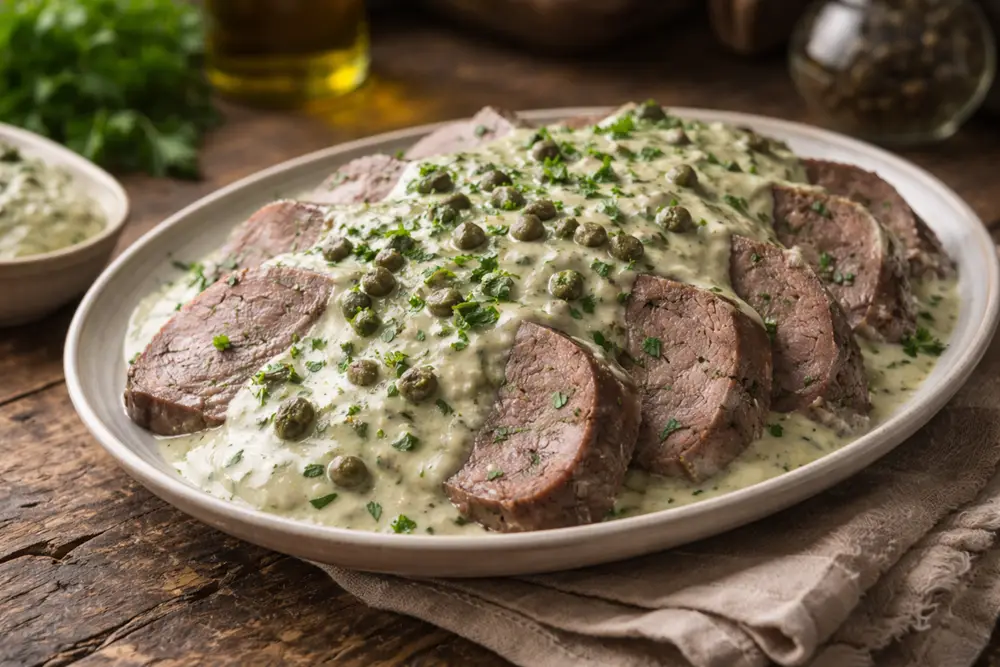
Baked Tongue in Green Sauce
Beef tongue braised with herbs, larded with bacon and roasted until golden, served in a green sauce of capers, anchovy, parsley and sour cream.
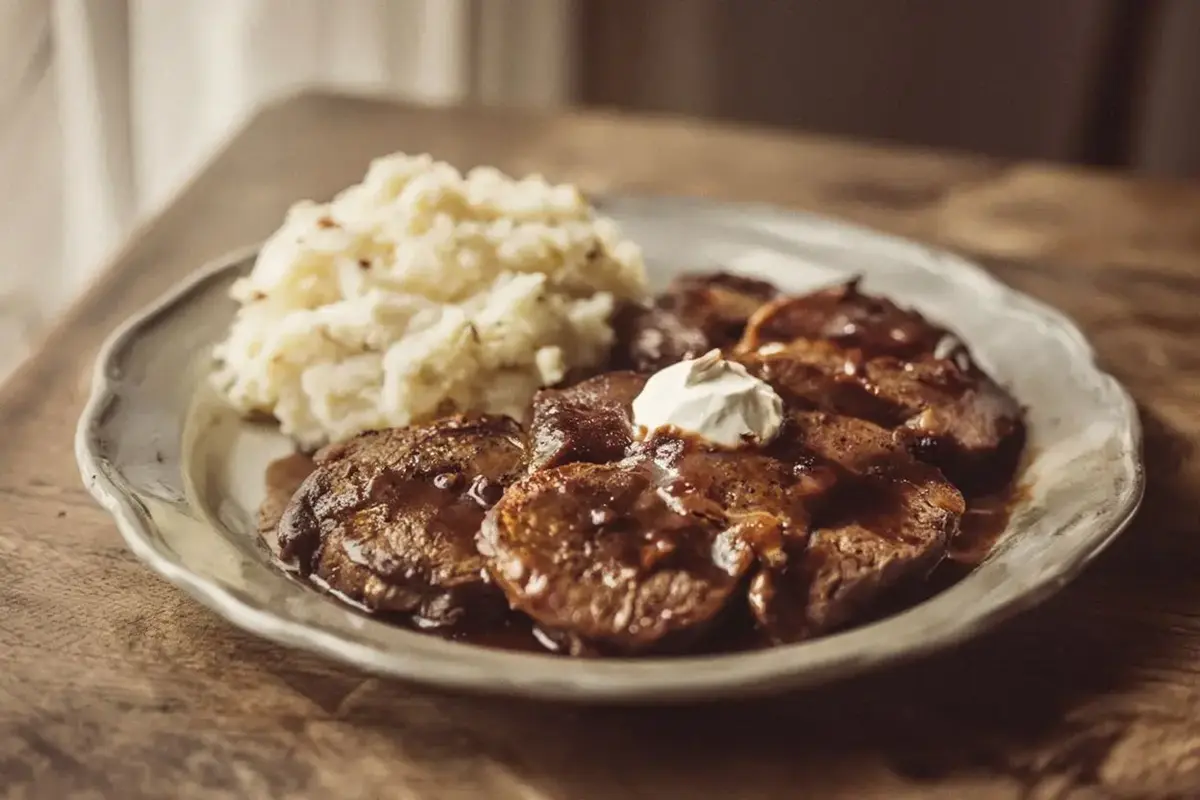
Beef Kidney with Wine
Beef kidney marinated in red wine, braised with herbs, finished with sour cream. Tender, rich, and deeply flavored.
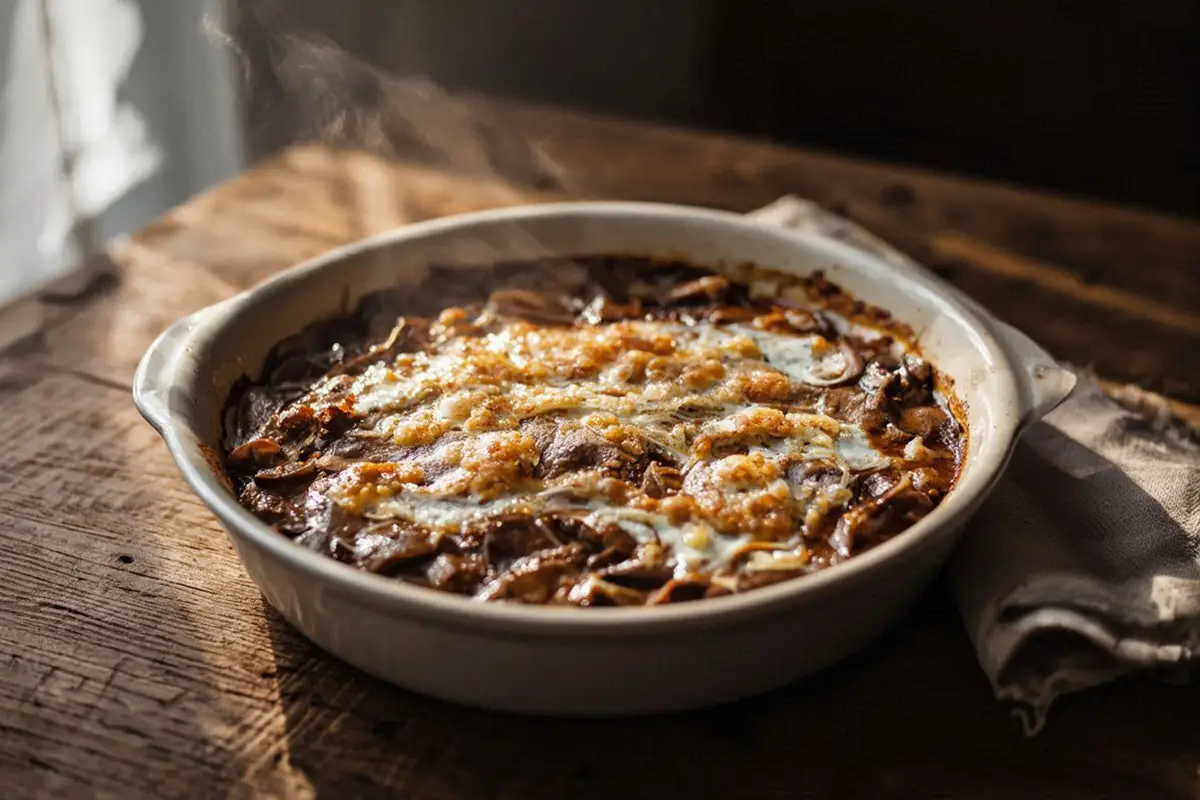
Beef Tongue in Mushroom Sauce
Tender sliced beef tongue layered in a rich dark mushroom sauce, finished with sour cream, Parmesan, and a golden oven crust.