Various Vegetables in Béchamel Sauce
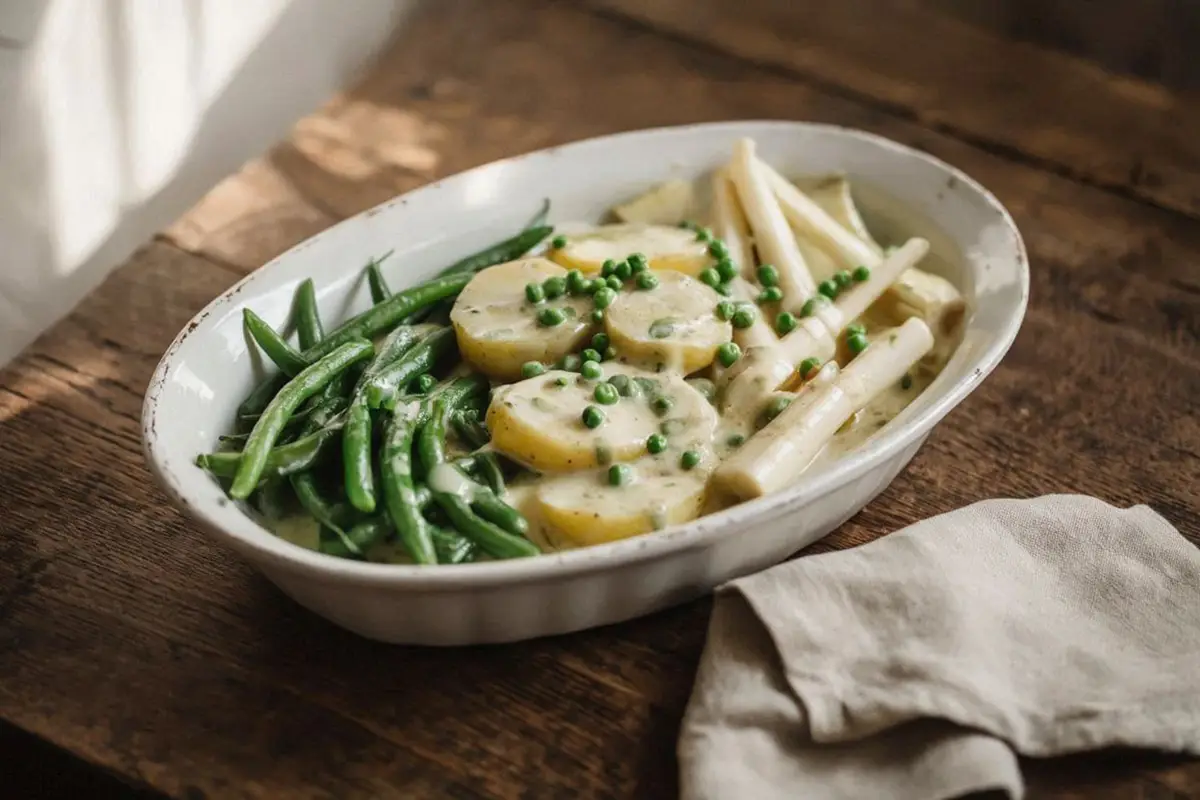
Four garden vegetables — green beans, kohlrabi, potatoes, and peas — boiled, sautéed in butter, and finished in a rich egg-yolk béchamel.
Quick Summary
Four garden vegetables — green beans, kohlrabi, potatoes, and peas — boiled, sautéed in butter, and finished in a rich egg-yolk béchamel.
Historical recipe
Modernised adaptation of an early 20th‑century source. Not independently kitchen-tested by Attic Recipes. Quantities, temperatures, and food safety guidance have been updated for a contemporary kitchen — results may vary and errors may exist. Nutritional values, where provided, are estimates only and have not been laboratory tested. Always follow current food safety guidelines for your region. If you have a health condition, allergy, or dietary requirement, consult a qualified professional before preparing this recipe.
Use of this recipe is entirely at your own risk and subject to our Terms of Service and Privacy Policy. Attic Recipes accepts no liability for any adverse outcome.
- Dairy
- Eggs
- Gluten
Additional notes
-
Warning
Contains raw egg yolks incorporated into the finished sauce off the heat. The sauce does not reach pasteurisation temperature. Not recommended for pregnant women, young children under 5, elderly individuals, or immunocompromised people.
Use pasteurised liquid egg yolks, or gently heat the yolk-enriched sauce to 71°C (160°F) while stirring constantly — do not boil.
-
Caution
Contains dairy (butter, milk, sour cream) and gluten (flour).
Substitute with lactose-free dairy products and a gluten-free flour blend (rice flour or cornstarch work well for a white roux).
- 1
Bring a large pot of salted water to a boil. Cook each vegetable separately until just tender: green beans (~8 min), kohlrabi sticks (~10 min), potato rounds (~8 min), peas (~4 min). Drain each thoroughly and set aside.
Tip Keeping the vegetables separate during boiling ensures each reaches the right texture. Do not overcook — they will continue to soften in the butter and sauce. - 2
Melt 50g of butter in a large, wide saucepan over medium heat. Add all the drained vegetables, toss well to coat, and stir briefly. Move the pan to the side of the heat while you make the sauce.
Tip The butter sauté step is essential — it adds richness and helps the sauce adhere evenly to each piece. - 3
In a separate small saucepan, melt 1 tablespoon of butter over medium heat. Add the flour all at once and stir constantly for 1–2 minutes until the roux is cooked through but still pale — it should not colour.
Tip A white roux is key to the delicate flavour of this sauce. If it begins to turn golden, reduce the heat immediately. - 4
Gradually pour in the 250ml of milk, whisking constantly to prevent lumps. Season with salt. Continue to stir over medium heat until the sauce thickens to a smooth, medium-bodied consistency that coats a spoon. Remove from heat.
- 5
Off the heat, whisk in the 2 egg yolks one at a time, then stir in the sour cream. Do not return the sauce to the heat after adding the yolks.
Tip Adding yolks off the heat prevents scrambling. The residual warmth of the sauce is enough to enrich it fully. - 6
Pour the finished sauce over the buttered vegetables. Fold gently until every piece is evenly coated. Taste and adjust salt. Serve immediately alongside roast meats.
Nutrition Information per 1 portion (approx. 210g)
Nutritional values are approximate estimates and may vary based on specific ingredients used, preparation methods, and portion sizes.
Serving Suggestions
Traditionally served as an accompaniment to various roasts — veal, pork, or chicken. Can also stand alone as a light lunch with crusty bread.
About This Recipe
A deceptively simple preparation, this dish demonstrates one of the foundational principles of the Central European kitchen: patience in preparation. Four common garden vegetables are each cooked to their own ideal texture, unified by a pale, egg-enriched béchamel that clings without overwhelming. It was — and remains — the ideal accompaniment to Sunday roasts.
Why It Works
The key is in the separation. Boiling each vegetable individually means the starchy potato water never clouds the delicate pea broth, and each piece arrives at the table at precisely the right texture. The white roux is intentionally kept pale — a blond or brown roux would introduce a nuttiness that fights the fresh, clean flavour of the vegetables. The egg yolks, stirred in off the heat, enrich the sauce to a silky consistency without turning it into a custard.
Make-Ahead Notes
All four vegetables can be boiled and drained up to one day ahead and stored covered in the refrigerator. The béchamel should be made fresh — it takes less than 10 minutes and does not hold well once the yolks are added.
Troubleshooting
- Lumpy sauce: Always add the milk gradually in a thin stream while whisking. If lumps form, pass the sauce through a fine sieve before adding the yolks.
- Sauce too thick: Add milk one tablespoon at a time off the heat until the desired consistency is reached.
- Vegetables too wet: After draining, spread them briefly on a clean kitchen towel before adding to the butter. Excess water will make the sauce watery.
A classic of early 20th century home cooking, preserved and adapted for the modern kitchen.
The Story Behind This Recipe
Historical Context
This dish reflects a hallmark of Central European middle-class cooking from the early 20th century — the careful technique of boiling each vegetable separately, then unifying them under a single enriched sauce. The white béchamel, finished with egg yolks and soured cream, represents the Austro-Hungarian kitchen's preference for pale, delicate sauces over heavier reductions.
Modern Kitchen Adaptation
The original calls for cooking each vegetable entirely separately, which remains the correct approach — it allows precise texture control for four very different cooking times. Frozen peas work well here and require no pre-boiling; simply add them to the butter sauté step from frozen.
This recipe is an independent modern adaptation developed from historical sources in the public domain. It is provided for informational and educational purposes only and does not constitute professional dietary, nutritional, or medical advice. Food preparation involves inherent risks. The reader assumes full responsibility for safe food handling, ingredient sourcing, and adherence to current local food safety guidelines. The site operator accepts no liability for outcomes resulting from the preparation or consumption of this recipe.
One recipe.
Every week.
You Might Also Like
More recipes from the same category
Asparagus Venetian Style
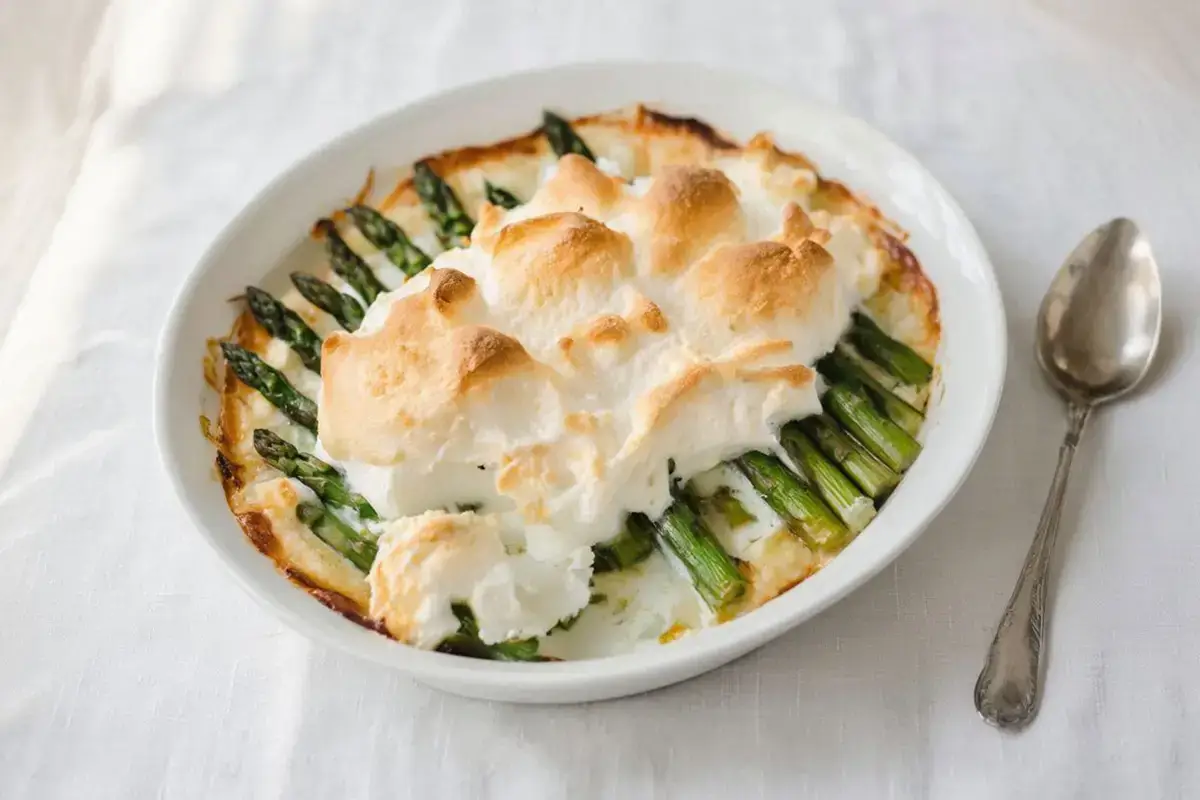
Fresh asparagus baked under a rich egg yolk cream sauce and a golden meringue-cheese topping. An elegant Central European appetizer.
Baked Mushrooms with Hard Cheese and Eggs
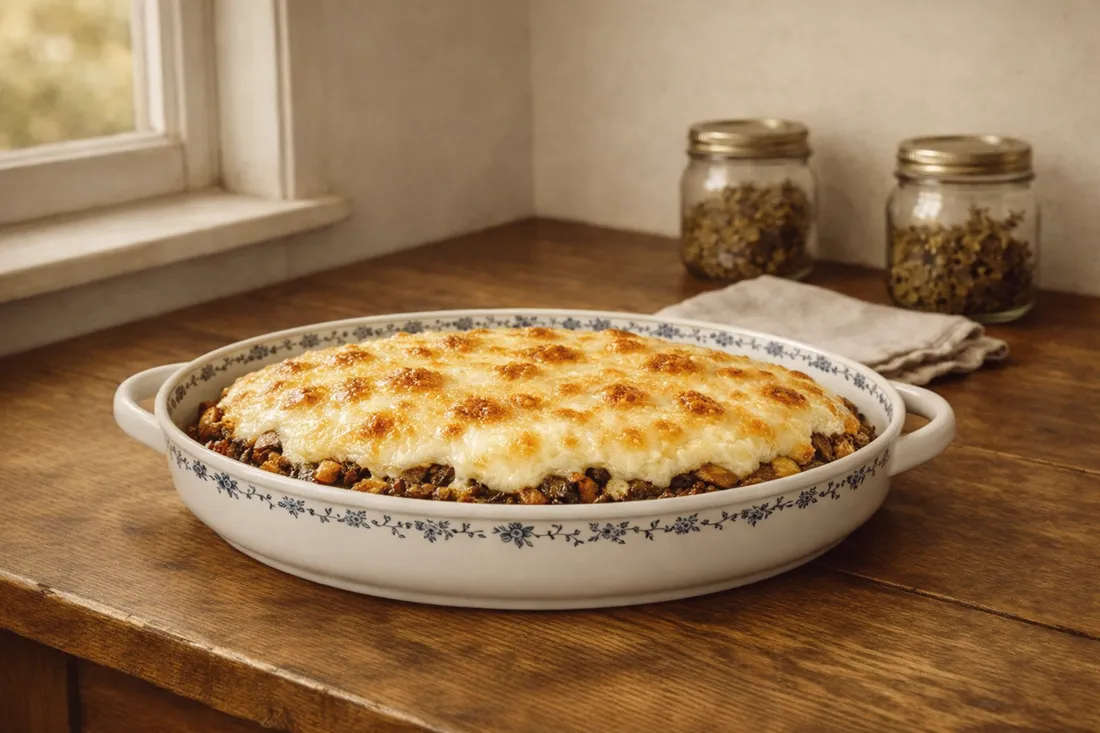
Layers of sliced hard-boiled eggs and grated cheese topped with sautéed mushrooms, baked under a rich egg-enriched sour cream topping.
Baked Eggplant with Potatoes
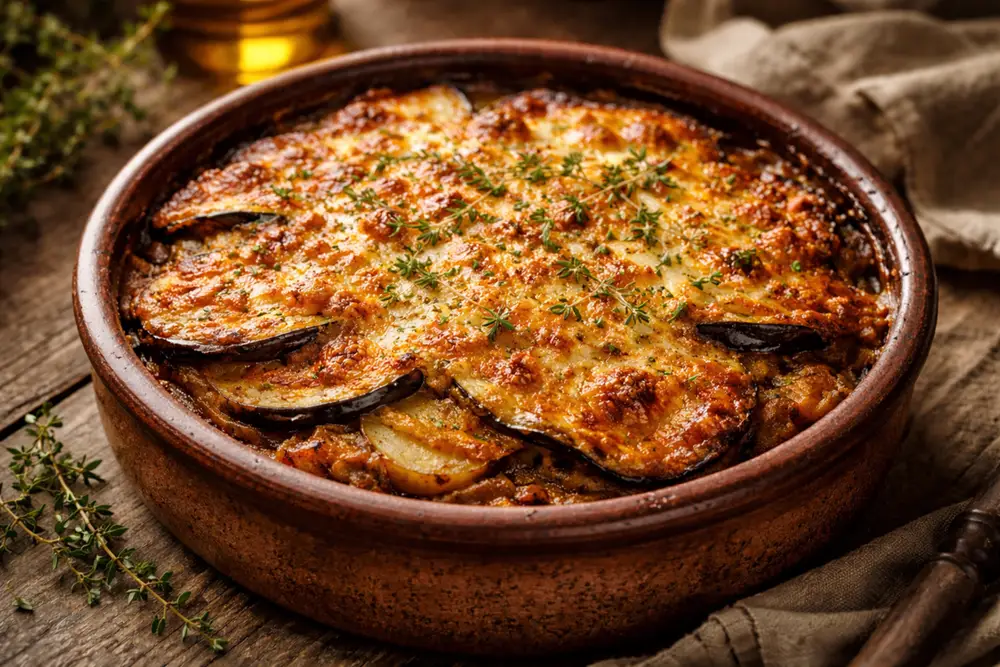
A slow-baked layered casserole of eggplant, parboiled potatoes, golden fried onion, and melted cheese.