Veal Roast in Sweet Wine
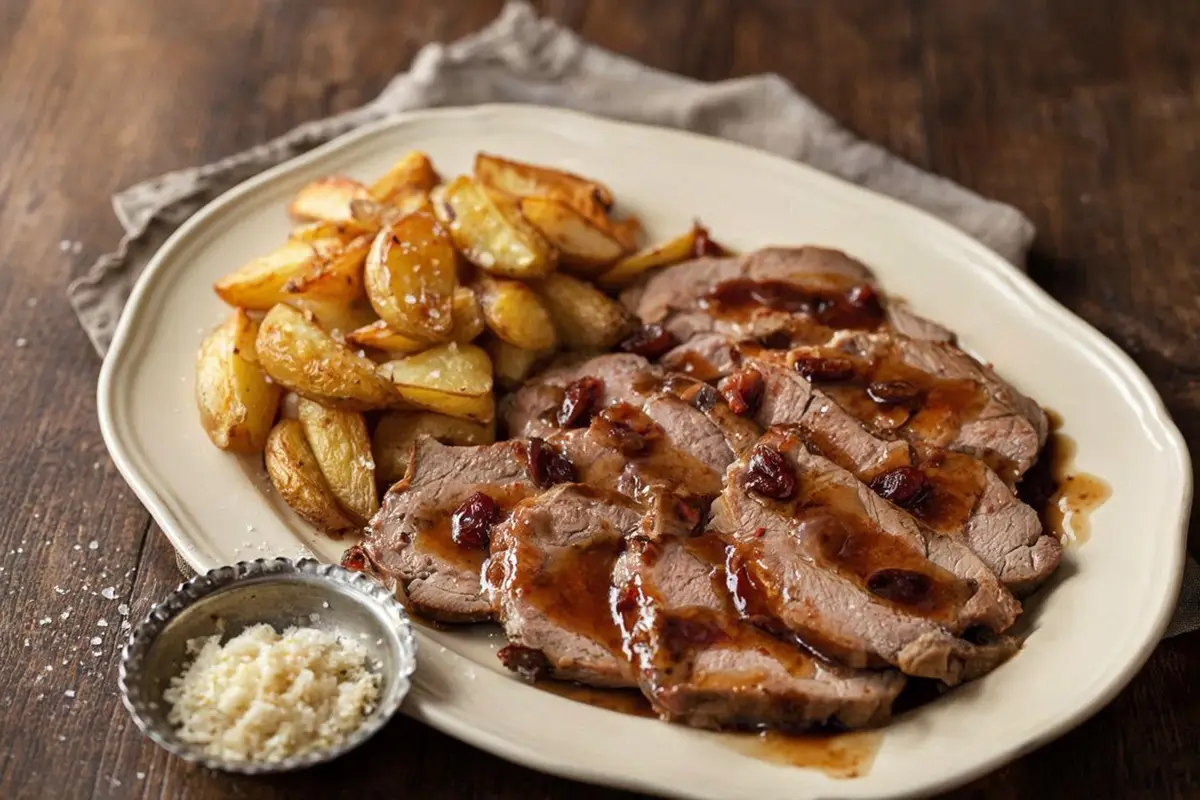
Larded veal tenderloin slow-braised in fresh grape must with raisins, lemon zest, and a sharp horseradish finish. A rich Central European classic.
Quick Summary
Larded veal tenderloin slow-braised in fresh grape must with raisins, lemon zest, and a sharp horseradish finish. A rich Central European classic.
Historical recipe
Modernised adaptation of an early 20th‑century source. Not independently kitchen-tested by Attic Recipes. Quantities, temperatures, and food safety guidance have been updated for a contemporary kitchen — results may vary and errors may exist. Nutritional values, where provided, are estimates only and have not been laboratory tested. Always follow current food safety guidelines for your region. If you have a health condition, allergy, or dietary requirement, consult a qualified professional before preparing this recipe.
Use of this recipe is entirely at your own risk and subject to our Terms of Service and Privacy Policy. Attic Recipes accepts no liability for any adverse outcome.
- Sulphites
Additional notes
-
Caution
This recipe is elevated in sodium (~920mg per portion — approximately 40% of the recommended daily intake). The primary source is smoked bacon used for larding. Individuals managing hypertension, kidney disease, or sodium-restricted diets should exercise caution.
Replace smoked bacon with unsmoked pork fatback or pancetta (significantly lower sodium). Reduce or omit added salt from the meat — the larding fat will provide sufficient seasoning.
-
Warning
Veal must reach an internal temperature of 70°C (160°F) and rest for 3 minutes before serving. Do not rely on cook time alone — use a meat thermometer.
An instant-read thermometer eliminates guesswork and is the only reliable method for safely verifying doneness in thick cuts.
-
Caution
This recipe uses šira (fresh grape must or young sweet wine). Depending on the fermentation stage of the šira used, alcohol content may vary from zero to moderate. Fully unfermented grape must (grape juice) contains no alcohol. Exercise caution when the recipe is prepared with partially or fully fermented šira and serving to children, pregnant women, or individuals avoiding alcohol.
Use 100% unsweetened grape juice for a guaranteed alcohol-free version. The flavour profile remains faithful to the original.
-
Caution
Raw horseradish may cause irritation in individuals with gastrointestinal conditions or reflux. The sauce contains a concentrated amount — serve in smaller quantities for sensitive diners.
-
Note
Raisins pose a choking hazard for young children. Omit or blend into the sauce when serving to children under 4.
- 1
Using a larding needle or thin knife, pierce the veal tenderloin lengthwise in several places and push the bacon strips through the meat. Season the outside generously with salt.
Tip Larding is not optional here — veal tenderloin is extremely lean and will dry out over a 3-hour cook without the internal fat from the bacon. - 2
Heat the lard or oil in a heavy-bottomed enamel pot or Dutch oven over medium-high heat. Add the larded veal and brown well on all sides, turning occasionally, until a deep golden crust forms — about 8–10 minutes total.
- 3
Add the chopped onions and carrots to the pot. Continue cooking, stirring the vegetables occasionally, until the meat has absorbed the released juices and the vegetables begin to soften and colour, about 5 minutes.
- 4
Add the bay leaf, raisins, and lemon zest. Pour in a generous splash of šira (about 50ml) to deglaze, scraping up any browned bits from the bottom.
- 5
Reduce heat to the lowest possible simmer. Over the next 2–3 hours, baste and braise the meat by adding small splashes of šira every 20–30 minutes. The pot should never go dry; the meat should always sit in a shallow pool of simmering liquid.
Tip Keep the pot at a very gentle simmer — visible steam, not a rolling boil. High heat over this duration will toughen even tender veal. - 6
While the veal braises, roast the potatoes separately: cut into wedges, toss with oil, salt, and rosemary, and roast at 200°C conventional / 180°C fan (400°F) for 40–45 minutes until golden and crisp.
- 7
Once the veal is tender and cooked through (internal temperature 70–75°C / 160–165°F), remove it from the pot and let it rest for 10 minutes before slicing.
- 8
Strain the braising juices and vegetables through a fine sieve into a small saucepan, pressing to extract all liquid. Taste and adjust seasoning.
- 9
Remove the sauce from heat completely. Stir in the freshly grated horseradish. Do not return to heat after this point.
Tip Boiling fresh horseradish turns it bitter and destroys its sharp aroma. Add strictly off heat, just before serving. - 10
Slice the veal and arrange on a serving dish with the roasted potatoes. Pour the horseradish sauce over the meat and serve immediately.
Nutrition Information per 1 portion (approx. 140g veal + sauce + 150g roasted potatoes)
Nutritional values are approximate estimates and may vary based on specific ingredients used, preparation methods, and portion sizes.
Serving Suggestions
Serve with the roasted potatoes as described, or alongside buttered egg noodles. A crisp green salad with a vinegar dressing provides a clean contrast to the sweet, rich sauce. A small glass of young sweet wine or grape juice alongside echoes the braising liquid beautifully.
About This Recipe
Veal tenderloin braised low and slow in sweet grape must is one of those dishes that rewards patience with extraordinary depth. The larding technique — threading bacon strips directly through the lean meat — is the quiet secret behind its succulence, while the raisins, lemon zest, and final hit of fresh horseradish give the sauce a complexity that is difficult to achieve by any shortcut. This is a dish that tastes expensive and laborious but requires only attentiveness, not skill.
Why It Works
Veal tenderloin is among the leanest cuts of meat available, which makes it both prized for texture and vulnerable to drying out. By larding it — inserting fat directly into the interior — the bacon bastes the meat from the inside throughout the long braise, compensating for the lack of natural marbling. The braising liquid, gradually built up from repeated additions of šira rather than a single large pour, concentrates slowly and develops layered natural sweetness from the grape sugars without becoming cloying. Adding horseradish off heat at the end exploits the volatile compounds responsible for its characteristic sharpness: heat destroys them rapidly, which is why cooked horseradish is mild and why this recipe treats it as a cold finish rather than an ingredient.
Troubleshooting
The sauce is too sweet: Grape must and young wines vary considerably in sugar content depending on grape variety and fermentation stage. If the sauce tastes unbalanced at the end, a small squeeze of lemon juice or a teaspoon of white wine vinegar added before straining will sharpen it immediately.
The meat seems tough after 2 hours: Veal tenderloin should be yielding well before the 3-hour mark. If it still feels firm, your simmer may be too low. Increase heat slightly and check in 20-minute intervals. Conversely, if the liquid is reducing too fast, the simmer is too high — add warm water and reduce heat.
The sauce is thin after straining: Return the strained sauce to the heat and reduce uncovered for 5–8 minutes before adding the horseradish. Do not thicken with flour — the vegetable solids pressed through the sieve provide enough body once reduced.
Make-Ahead Notes
The braised veal (without the horseradish) keeps well refrigerated for up to 2 days. Reheat the sliced meat gently in the strained sauce over low heat. Grate and stir in the horseradish only when ready to serve — never into leftovers destined for reheating.
A classic of early 20th century home cooking, preserved and adapted for the modern kitchen.
The Story Behind This Recipe
Historical Context
Braising lean meats in šira — fresh grape must or young sweet wine — was a well-established technique across Central European households in the early 20th century. Šira was a seasonal ingredient, available during and shortly after harvest, and its natural sugars and acidity made it a natural braising liquid for mild meats like veal. The combination of sweet grape must, raisins, and lemon zest creates a balanced sweet-sour profile common in the culinary traditions of the region. Horseradish as a finishing condiment, rather than a cooked ingredient, appears frequently in recipes of this era as a sharp counterpoint to richly braised meats.
Modern Kitchen Adaptation
Šira — fresh grape must or very young, lightly fermented sweet wine — is widely available in Central European wine-producing regions during harvest season. Where šira is unavailable, unsweetened 100% grape juice is the closest substitute, replicating the natural fruit sugar and acidity. A young, lightly sweet Riesling or Muscat can also work. Fortified wines (sherry, port) are not appropriate substitutes — they introduce oxidative notes absent from the fresh must. Fan-assisted oven temperature for the garnish potatoes: 180°C fan / 200°C conventional. Internal temperature guidelines and the explicit off-heat horseradish instruction have been added for modern food safety compliance.
This recipe is an independent modern adaptation developed from historical sources in the public domain. It is provided for informational and educational purposes only and does not constitute professional dietary, nutritional, or medical advice. Food preparation involves inherent risks. The reader assumes full responsibility for safe food handling, ingredient sourcing, and adherence to current local food safety guidelines. The site operator accepts no liability for outcomes resulting from the preparation or consumption of this recipe.
One recipe.
Every week.
You Might Also Like
More recipes from the same category
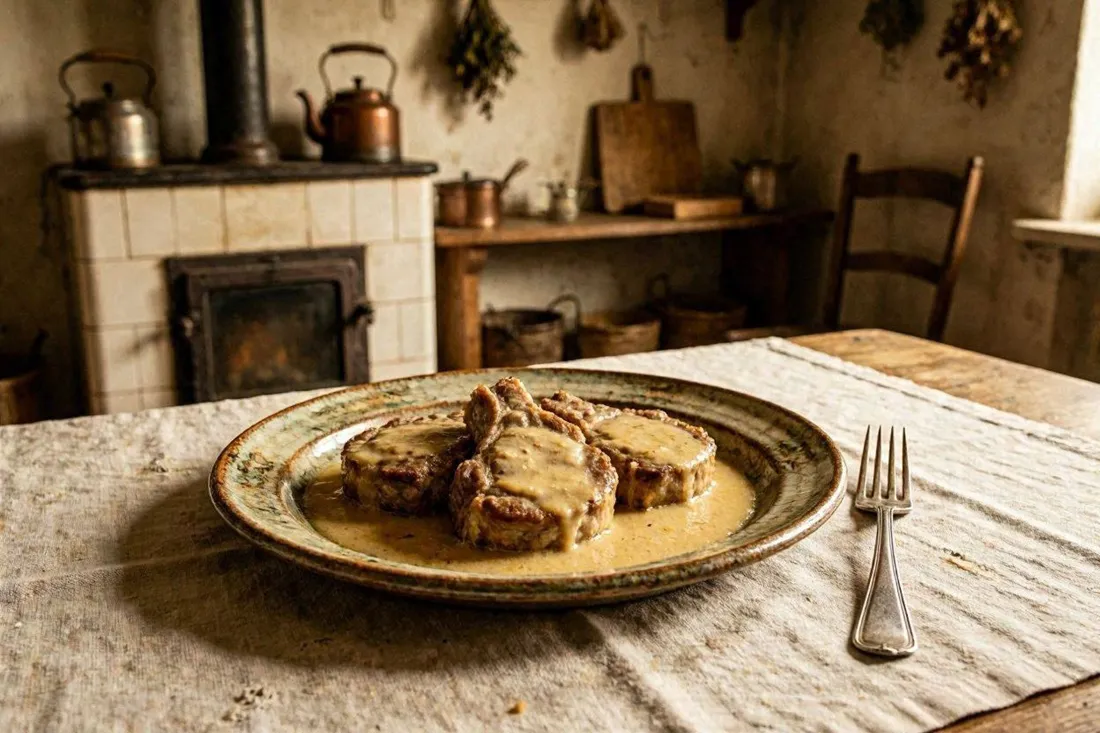
Braised Pork Chops in White Wine and Sour Cream Sauce
Pork loin chops braised with onion, carrot, parsley root, and celery root in white wine, then finished with a strained sour cream sauce.
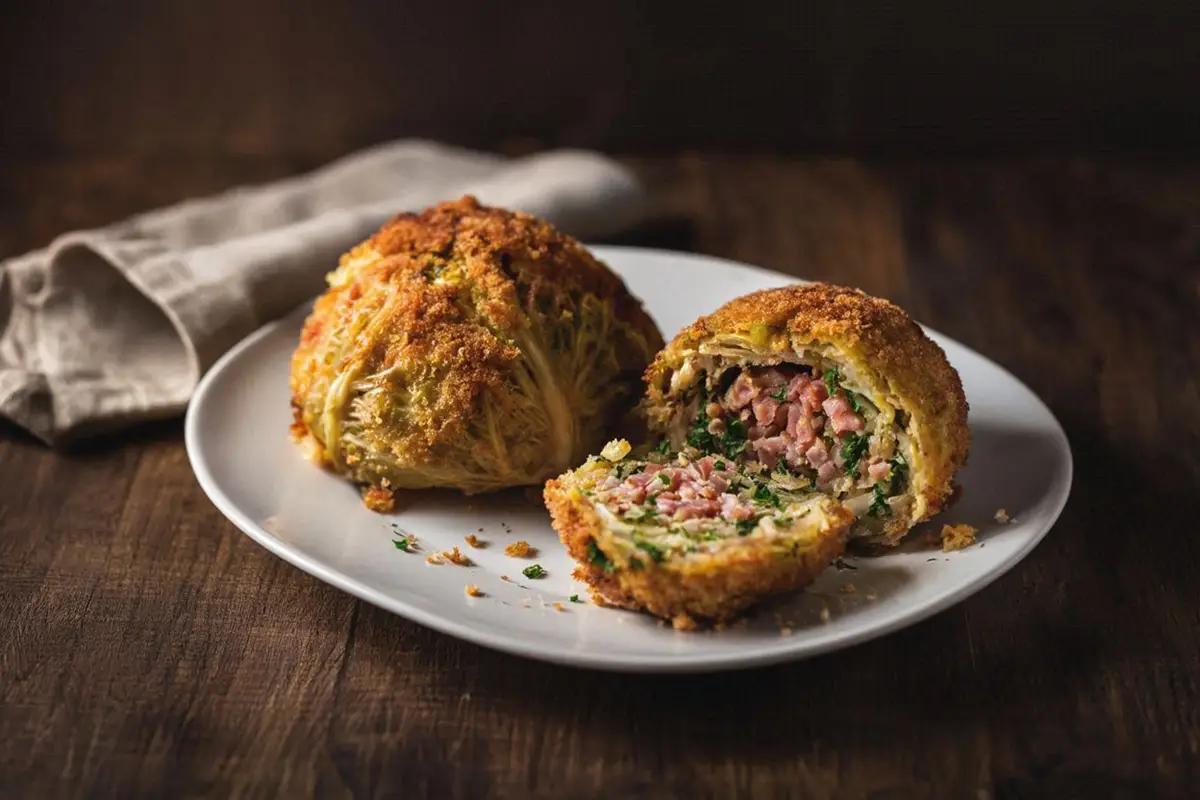
Breaded Savoy Cabbage Stuffed with Ham
Tender young savoy cabbage heads filled with ground ham, fried onion, and herbs, breaded and pan-fried until golden. A hearty Central European classic.
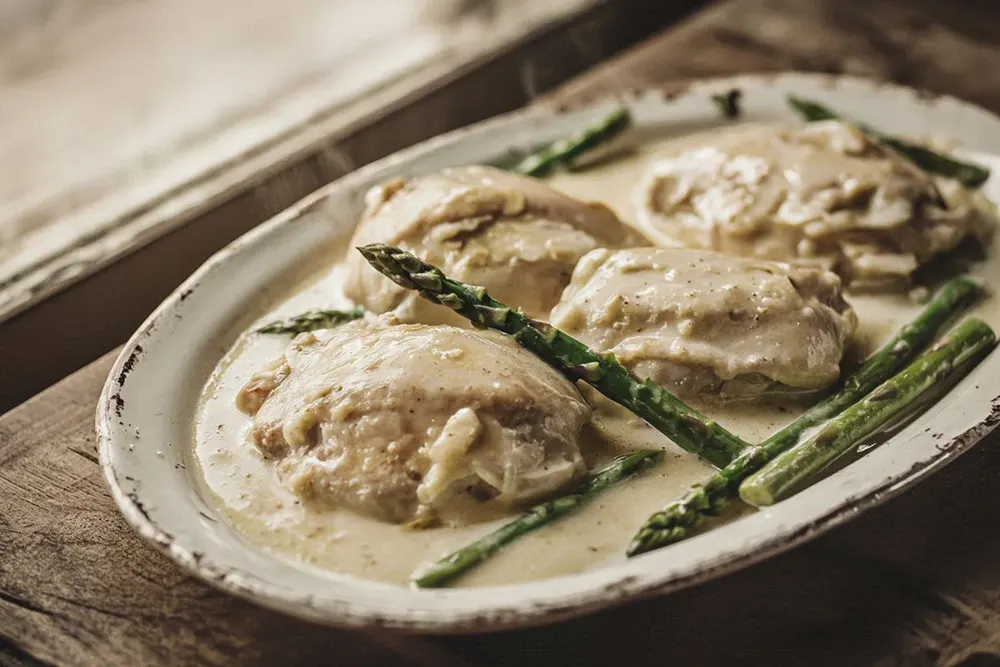
Chicken in Asparagus Sauce
A whole chicken poached in spiced broth, then finished in a silky velouté enriched with egg yolks and cream, garnished with tender asparagus tips.