Veal Tongue in Sardinate Sauce
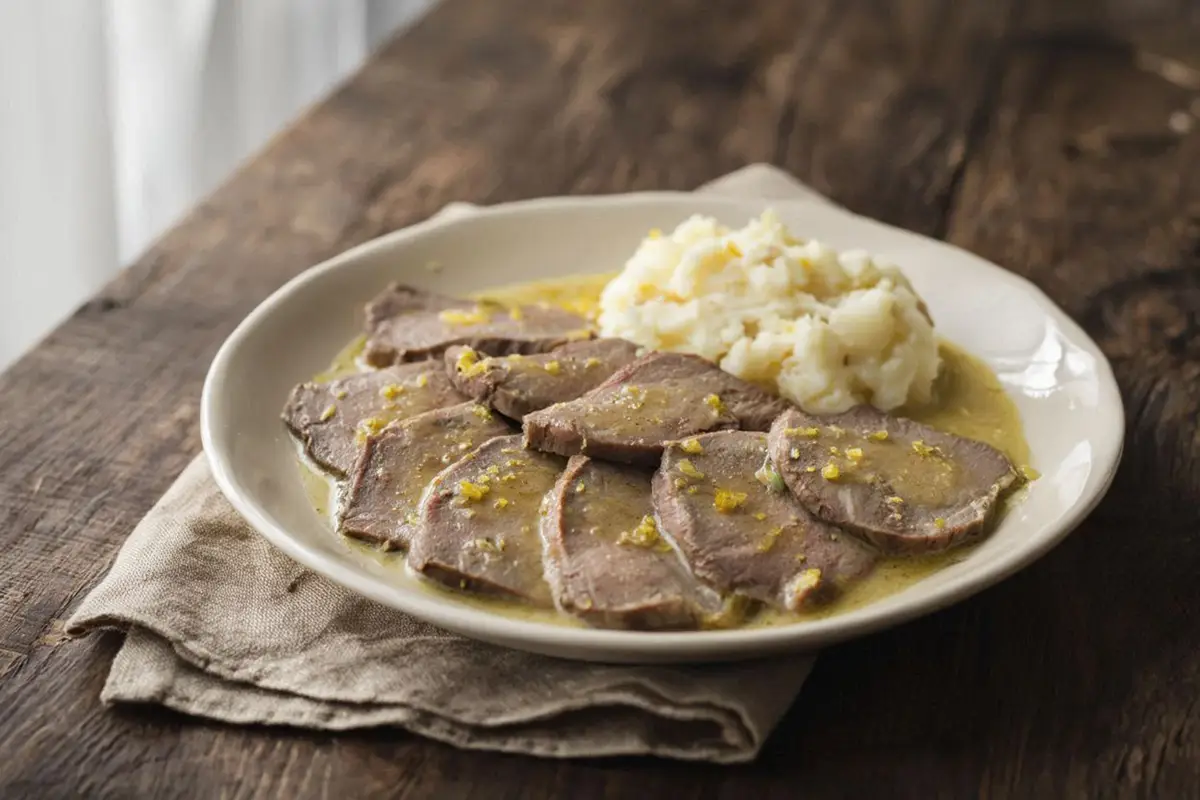
Tender boiled veal tongue sliced and finished in a rich anchovy-butter sauce with white wine and lemon — a refined Central European classic.
Quick Summary
Tender boiled veal tongue sliced and finished in a rich anchovy-butter sauce with white wine and lemon — a refined Central European classic.
Historical recipe
Modernised adaptation of an early 20th‑century source. Not independently kitchen-tested by Attic Recipes. Quantities, temperatures, and food safety guidance have been updated for a contemporary kitchen — results may vary and errors may exist. Nutritional values, where provided, are estimates only and have not been laboratory tested. Always follow current food safety guidelines for your region. If you have a health condition, allergy, or dietary requirement, consult a qualified professional before preparing this recipe.
Use of this recipe is entirely at your own risk and subject to our Terms of Service and Privacy Policy. Attic Recipes accepts no liability for any adverse outcome.
- Celery
- Dairy
- Eggs
- Fish
- Gluten
- Sulphites
Safety note
This recipe contains raw egg yolk that is not fully cooked. Raw or undercooked eggs carry a risk of Salmonella. This dish is not suitable for pregnant women, children under 5, the elderly, or immunocompromised individuals.
Use pasteurised egg yolk, available in most supermarkets. Alternatively, omit the yolk — the sauce will be slightly less rich but safe for all diners.
Additional notes
-
Warning
Veal tongue is an organ meat. A single portion contains approximately 269mg of cholesterol — about 90% of the recommended daily intake. Individuals with cardiovascular disease, high cholesterol, or on a cholesterol-restricted diet should consult their doctor before consuming organ meats regularly.
-
Caution
This recipe contains sardines (fish). It is not suitable for individuals with fish or shellfish allergies. If substituting with anchovies, the same allergy risk applies.
Omit sardines entirely and substitute with 1 tsp of white miso or 1 tsp of Worcestershire sauce (fish-free version) for umami depth.
-
Caution
This recipe contains alcohol (white wine). Cooking reduces but does not fully eliminate alcohol content. Exercise caution when serving to children, pregnant women, or individuals avoiding alcohol.
Substitute with an equal quantity of white grape juice plus a few drops of white wine vinegar for acidity.
-
Note
Organ meats such as tongue are very high in purines. Individuals with gout or hyperuricemia should limit or avoid consumption.
- 1
Wash the veal tongue thoroughly under cold running water, scrubbing the surface. Rinse in several changes of cold water to remove any impurities.
- 2
Place the tongue in a large pot, cover completely with fresh cold water, and bring to a boil. Add the soup greens. Reduce to a steady simmer and cook for 2–2.5 hours, until a skewer passes through the thickest part with no resistance.
Tip Starting in cold water draws impurities to the surface. Skim any foam that forms in the first 15 minutes. - 3
Remove the tongue from the pot. Reserve 300ml of the strained broth for the sauce. While the tongue is still hot, peel away the thick outer skin starting from the tip — it should slip off easily. If it resists, return to hot broth for a few minutes.
Tip Do not let the tongue cool before peeling — the skin becomes very difficult to remove once cold. - 4
Slice the peeled tongue into finger-width strips (approximately 1cm thick). Set aside.
- 5
In a heavy saucepan over medium-low heat, melt the butter. Add the flour and stir continuously for 1–2 minutes to form a smooth roux — do not let it colour.
- 6
Add the finely chopped sardines, lemon zest, and white wine. Stir well to combine with the roux.
- 7
Gradually add the warm strained tongue broth, a ladleful at a time, stirring constantly to prevent lumps. Bring the sauce to a gentle boil, stirring until thickened and smooth.
- 8
Remove the saucepan from heat. Quickly whisk in the egg yolk, stirring fast to temper it into the hot sauce without scrambling. Do not return to a boil after adding the yolk.
Tip For extra insurance against scrambling, mix the egg yolk with 1 tbsp of the warm sauce first, then stir back in. - 9
Add the sliced tongue to the finished sauce and return to very low heat for 3–5 minutes to warm through and let the flavours blend. Do not boil.
- 10
Serve immediately in a deep bowl. Mashed potatoes or plain boiled rice alongside are ideal for absorbing the sauce.
Nutrition Information per 1 portion (approx. 145g tongue + sauce)
Nutritional values are approximate estimates and may vary based on specific ingredients used, preparation methods, and portion sizes.
Serving Suggestions
Serve in a deep bowl with mashed potatoes or plain boiled rice to absorb the sauce. A simple cucumber salad dressed with vinegar provides a clean, acidic contrast to the richness of the sardine butter sauce.
About This Recipe
Veal tongue in a sardinate sauce is a dish that rewards patience and a willingness to work with an unfamiliar cut. The tongue, long-simmered until completely yielding, becomes almost silky in texture — nothing like what squeamishness might suggest. The sauce is the real achievement here: sardine-enriched butter, thickened with a roux, finished with white wine and egg yolk. It is simultaneously delicate and deeply savoury, the sardines invisible but present in every bite.
Why It Works
Veal tongue is one of the most naturally tender cuts when cooked correctly — it contains a high proportion of collagen-rich connective tissue that, over two hours of simmering, converts to gelatin. This gives both the meat and the resulting broth a characteristic richness that forms the base of the sauce. The sardines dissolve completely into the butter roux, contributing glutamate compounds that amplify the overall savoriness without any perceptible fishiness. Sardines are milder and less salty than anchovies, making them a more forgiving choice in a sauce that already has salt from the tongue broth — but anchovies work as a substitute if used in smaller quantity. The egg yolk, added off heat, enriches the sauce with lecithin — a natural emulsifier — giving the final sauce its smooth, coating consistency.
First-Timer Notes on Tongue
The appearance of a whole tongue before cooking can be off-putting. This is normal, and it changes entirely once cooked. The key steps are: start in cold water (not boiling), skim the first foam, and peel while hot. A tongue that is properly cooked and freshly peeled is indistinguishable in texture from any other braised meat. The skin, once removed, is discarded — only the pale, tender interior is served.
Troubleshooting
Sauce has lumps: Strain through a fine-mesh sieve and return to heat, whisking. Add a small splash of warm broth if too thick.
Egg yolk scrambled: This happens when the sauce is too hot when the yolk is added. The sauce is still edible — strain to remove any cooked egg pieces. Next time, remove from heat completely and let cool for 60 seconds before whisking in the yolk.
Tongue skin not peeling easily: The tongue needs to be hotter — return it to the warm broth for 5 minutes. Cold tongue does not peel.
Sauce too salty: Sardines and tongue broth together can be salty depending on brands and the amount of salt used in boiling. Always taste before seasoning and consider using unsalted butter.
A classic of early 20th century home cooking, preserved and adapted for the modern kitchen.
The Story Behind This Recipe
Historical Context
Veal tongue in a butter-enriched sauce was a hallmark of refined household cooking across Central Europe in the early twentieth century. Organ meats were prized rather than marginalised — tongue in particular was considered a delicacy, reserved for guests or Sunday meals. The sardine-based sauce reflects the widespread availability of canned sardines in the region during this period — Portuguese and Adriatic sardines in oil were a common pantry staple across Central European households by the early 1900s. Used as a seasoning agent rather than a main ingredient, sardines dissolve into the butter roux and contribute depth without any pronounced fish flavour. This technique of using preserved fish as an umami base was common in Austro-Hungarian and Italian-influenced cooking of the era.
Modern Kitchen Adaptation
Quantities for the broth used in the sauce and the order of sauce construction have been standardised for clarity. Modern technique — building a roux before adding liquids — prevents lumping. The egg yolk has been moved to an off-heat step with explicit tempering instructions, as period cooks would have understood this instinctively but modern cooks may not. Enough cold water to cover the tongue fully is the correct starting point. Servings are based on a standard veal tongue weight of approximately 900g.
This recipe is an independent modern adaptation developed from historical sources in the public domain. It is provided for informational and educational purposes only and does not constitute professional dietary, nutritional, or medical advice. Food preparation involves inherent risks. The reader assumes full responsibility for safe food handling, ingredient sourcing, and adherence to current local food safety guidelines. The site operator accepts no liability for outcomes resulting from the preparation or consumption of this recipe.
One recipe.
Every week.
You Might Also Like
More recipes from the same category

Baked Tongue in Green Sauce
Beef tongue braised with herbs, larded with bacon and roasted until golden, served in a green sauce of capers, anchovy, parsley and sour cream.
Beef Kidney with Wine
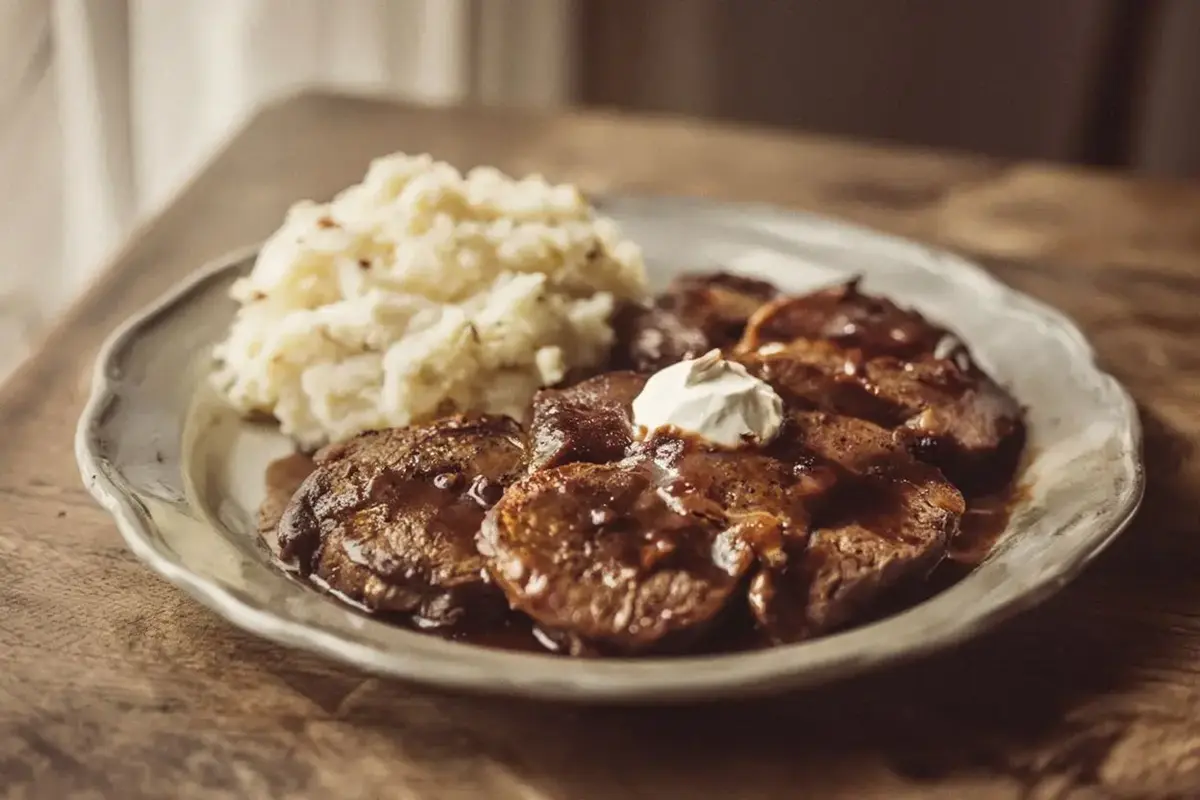
Beef kidney marinated in red wine, braised with herbs, finished with sour cream. Tender, rich, and deeply flavored.
Beef Tongue in Mushroom Sauce
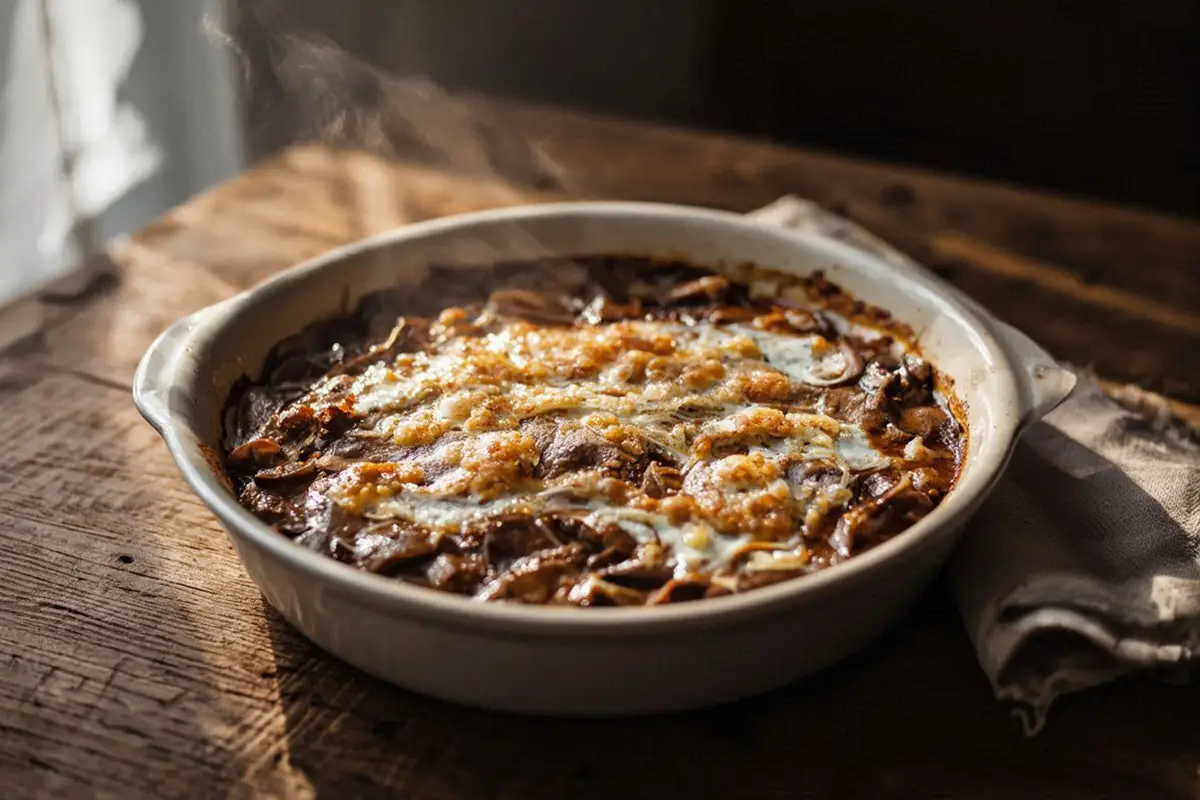
Tender sliced beef tongue layered in a rich dark mushroom sauce, finished with sour cream, Parmesan, and a golden oven crust.