Vegetable Dumplings
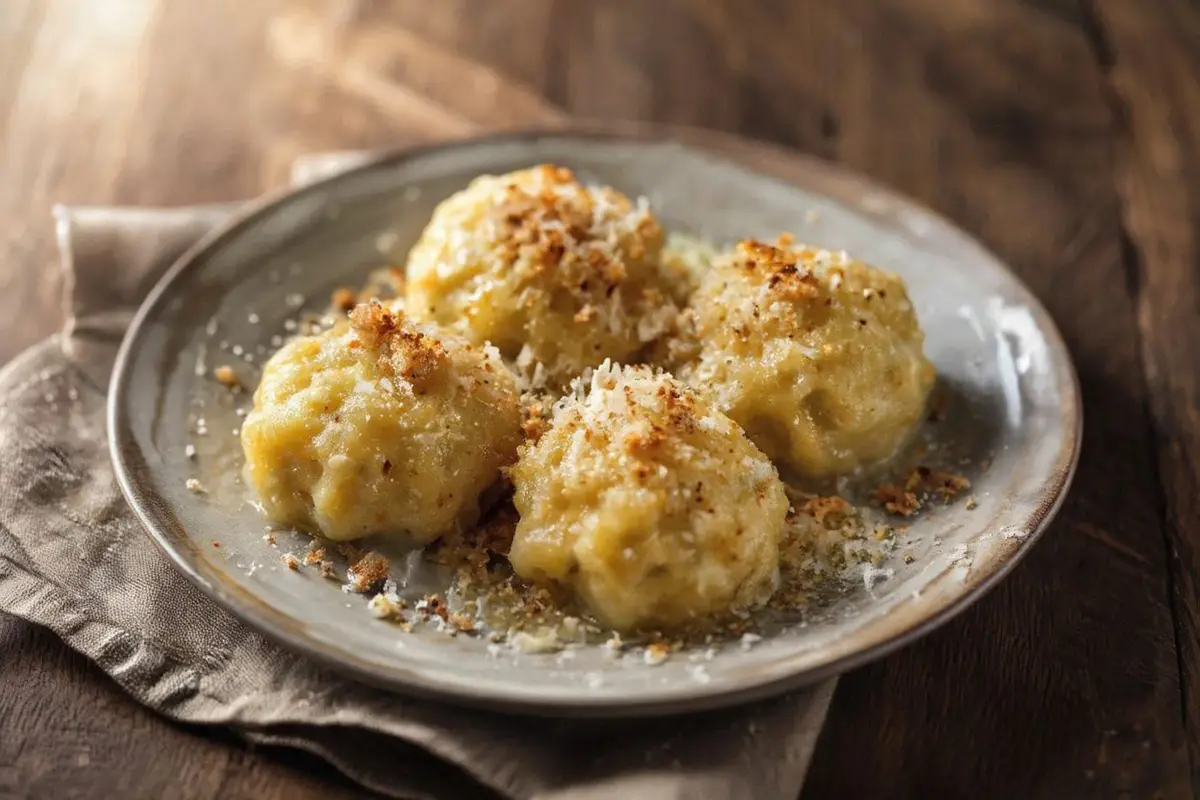
Hearty Central European dumplings of seasonal vegetables and stale bread rolls, boiled and finished with toasted breadcrumb butter and grated cheese.
Quick Summary
Hearty Central European dumplings of seasonal vegetables and stale bread rolls, boiled and finished with toasted breadcrumb butter and grated cheese.
Historical recipe
Modernised adaptation of an early 20th‑century source. Not independently kitchen-tested by Attic Recipes. Quantities, temperatures, and food safety guidance have been updated for a contemporary kitchen — results may vary and errors may exist. Nutritional values, where provided, are estimates only and have not been laboratory tested. Always follow current food safety guidelines for your region. If you have a health condition, allergy, or dietary requirement, consult a qualified professional before preparing this recipe.
Use of this recipe is entirely at your own risk and subject to our Terms of Service and Privacy Policy. Attic Recipes accepts no liability for any adverse outcome.
- Celery
- Dairy
- Eggs
- Gluten
Additional notes
-
Caution
Contains gluten (flour, bread rolls) and dairy (butter, cheese, milk). Contains eggs. Major allergens: gluten, dairy, egg.
For a gluten-free version, substitute with a gluten-free flour blend and gluten-free breadcrumbs. Note that gluten-free dumplings are harder to bind — add an extra egg and allow the dough to rest for 15 minutes before shaping.
-
Note
Kale contains goitrogens and oxalates, both of which are reduced significantly by cooking. At the quantities used here (100g raw per 4–6 portions) there is no meaningful concern for healthy individuals.
- 1
Prepare all vegetables: peel and cut carrots, celeriac, kohlrabi, and potato into small, uniform cubes. Remove tough stems from kale and finely chop the leaves. Break cauliflower into very small florets.
Tip Uniform small pieces are important — they need to soften fully during the stew and then integrate into the dumpling dough without large chunks. Aim for pieces no larger than 1cm. - 2
Melt 2 tablespoons of lard or butter in a wide saucepan over medium heat. Add all the prepared vegetables and stew together, stirring occasionally. Add broth or hot water in small amounts — just enough to prevent catching. Continue until all vegetables are completely soft, approximately 20–25 minutes.
Tip The vegetables should be fully soft — not al dente. They are going into a dough, and any firmness will remain in the finished dumpling. - 3
While the vegetables are stewing, cut the bread rolls into small cubes. Fry in 1 tablespoon of lard or butter over medium-high heat until golden and crispy on the outside. Set aside.
- 4
Remove the stewed vegetables from the heat. Allow to cool for 10 minutes — the mixture should not be steaming hot when the eggs are added.
- 5
Add the fried bread cubes to the vegetables. In a small bowl, beat the 2 eggs with 60ml of milk. Pour over the vegetable-bread mixture. Add the 150g of flour. Mix everything together thoroughly. The dough should be firm and stiff — similar to gnocchi or noklice dough — and hold its shape when pressed. If the mixture is too wet, add flour one tablespoon at a time. If too dry to come together, add the remaining milk a splash at a time.
Tip The dough must be firm enough to shape into dumplings by hand. If it sticks to everything and will not hold a shape, it is too wet — add more flour. A properly mixed vegetable dumpling dough feels heavy and dense, not light or airy. - 6
Season with 1 teaspoon of salt, black pepper, and nutmeg if using. Mix well and taste — the dough itself should be well seasoned before shaping.
- 7
Dust your hands generously with flour. Shape the dough into round dumplings approximately 5–6cm in diameter. Roll each one briefly between floured palms to compact and smooth.
Tip Keep your hands floured throughout shaping. The dumplings should feel firm and compact — not loose or crumbly. If they are falling apart, the dough is too dry; dampen your hands slightly. - 8
Bring a large pot of well-salted water to a gentle boil. Lower the dumplings carefully into the water. Do not boil vigorously — a gentle simmer prevents the dumplings from breaking apart. Cook for 12–15 minutes, until the dumplings float and feel firm when pressed gently.
Tip Test one dumpling first. If it breaks apart in the water, the dough needs more flour. Remove it, return the mixture to the bowl, add flour, reshape, and test again. - 9
While the dumplings are cooking, melt 50g of butter in a small pan over medium heat. Add the breadcrumbs and toast, stirring constantly, until golden brown and fragrant. Watch carefully — breadcrumbs burn quickly.
- 10
Drain the cooked dumplings carefully with a slotted spoon. Arrange on a serving plate or in a wide bowl. Pour the hot toasted breadcrumb butter over the top. Serve immediately with finely grated hard cheese.
Nutrition Information per 2–3 dumplings (approx. 220g)
Nutritional values are approximate estimates and may vary based on specific ingredients used, preparation methods, and portion sizes.
Serving Suggestions
Served as a main course with the toasted breadcrumb butter and grated cheese as specified. Can also accompany a light broth or creamy mushroom sauce. Leftovers can be sliced and pan-fried in butter the next day — they develop a golden crust and are excellent with sour cream.
About This Recipe
This is a recipe built around a principle rather than a fixed list of ingredients — take whatever the market has this week, 100g of each, and make dumplings. The six vegetables here (carrot, celeriac, kale, kohlrabi, potato, cauliflower) are the autumn and winter answer to that principle. In spring the answer would be different: peas, young spinach, asparagus. The formula stays the same; the dish changes with the season.
What makes these dumplings interesting is their texture — dense, substantial, and complex in cross-section, with visible pieces of vegetable, fragments of fried bread, and the quiet warmth of nutmeg running through everything. The toasted breadcrumb butter finish is not garnish; it is the sauce, the crunch, and the last layer of flavour all at once.
Why It Works
The stale bread rolls do two things simultaneously: they absorb the residual moisture from the stewed vegetables, preventing the dough from becoming wet and unworkable, and they add a gentle savouriness and texture that plain flour would not. Frying them first in fat creates a slightly resistant exterior on each cube — they hold their identity within the dumpling rather than dissolving entirely into the dough. The result is a dumpling with interior texture rather than a uniform paste.
The firm, stiff dough is not negotiable. A soft dumpling dough will fall apart in the boiling water. The test is simple: if you can shape a ball by hand and it holds its shape on the counter without sagging, the consistency is correct.
Seasonal Variations
| Season | Substitute vegetables |
|---|---|
| Spring | Young peas, spinach, asparagus tips, leek |
| Summer | Zucchini, green beans, fresh corn, tomato (drain well) |
| Autumn | Pumpkin, parsnip, beetroot, celeriac |
| Winter | Carrot, kohlrabi, potato, cauliflower, kale (original) |
Keep the total vegetable weight at 600g regardless of combination. Watery vegetables (zucchini, tomato) should be salted and drained before stewing to prevent an overly wet dough.
Troubleshooting
- Dumplings falling apart in the water: Dough is too wet or under-floured. Remove, return to bowl, add flour, reshape.
- Dumplings dense and heavy: This is correct — these are not light Austrian bread dumplings. They should be substantial.
- Breadcrumb butter burning: Keep the heat medium-low and stir constantly. Breadcrumbs go from golden to burnt in under a minute.
A classic of early 20th century home cooking, preserved and adapted for the modern kitchen.
The Story Behind This Recipe
Historical Context
Vegetable dumplings — Gemüseknödel in the Austro-Hungarian tradition — represent one of the most practical expressions of early 20th century household cooking: a flexible formula that adapts entirely to whatever the market offers that week. The instruction to buy 100g of each available seasonal vegetable is not imprecision — it is a deliberate design for a dish that changes character across the year, tasting of root vegetables in autumn, lighter and greener in spring. The toasted breadcrumb butter finish (Butterbrösel) is a classically Central European technique, used across Bohemian, Austrian, and Hungarian kitchens as both a sauce and a textural contrast to the soft dumplings beneath.
Modern Kitchen Adaptation
**On vegetables:** This recipe names six vegetables typical of the autumn and winter market: carrots, celeriac, kale, kohlrabi, potatoes, and cauliflower. In spring, substitute younger, lighter vegetables: peas, young spinach, asparagus tips, or fresh herbs in place of kale. The formula of 100g per vegetable remains constant — the dish adapts to the season. **On fat:** Lard is the historically correct fat for this dish. Alternatives: - *Butter* — adds richness and a more refined flavour; the natural choice for the breadcrumb topping regardless - *Olive oil* — lighter; works well for the vegetable stew but produces a less traditional result **On bread rolls:** Day-old or stale rolls absorb the vegetable moisture without becoming soggy. Fresh rolls will produce a wetter mixture — if only fresh rolls are available, cube them and leave uncovered for several hours before using, or dry briefly in a low oven (100°C for 15 minutes). **On cheese:** A firm, salty domestic cheese is the traditional choice. Today, Parmesan or Grana Padano are the most practical options, though a firm aged sheep's or cow's milk cheese works beautifully.
This recipe is an independent modern adaptation developed from historical sources in the public domain. It is provided for informational and educational purposes only and does not constitute professional dietary, nutritional, or medical advice. Food preparation involves inherent risks. The reader assumes full responsibility for safe food handling, ingredient sourcing, and adherence to current local food safety guidelines. The site operator accepts no liability for outcomes resulting from the preparation or consumption of this recipe.
One recipe.
Every week.
You Might Also Like
More recipes from the same category
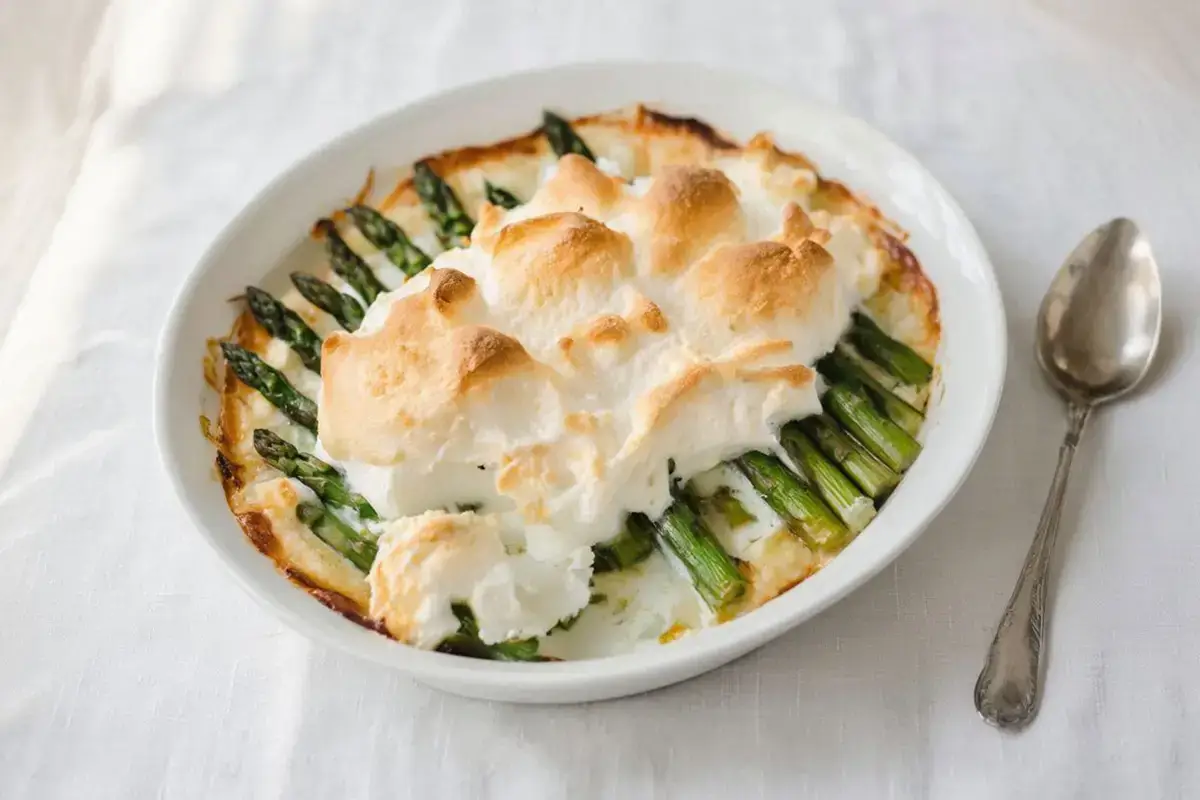
Asparagus Venetian Style
Fresh asparagus baked under a rich egg yolk cream sauce and a golden meringue-cheese topping. An elegant Central European appetizer.
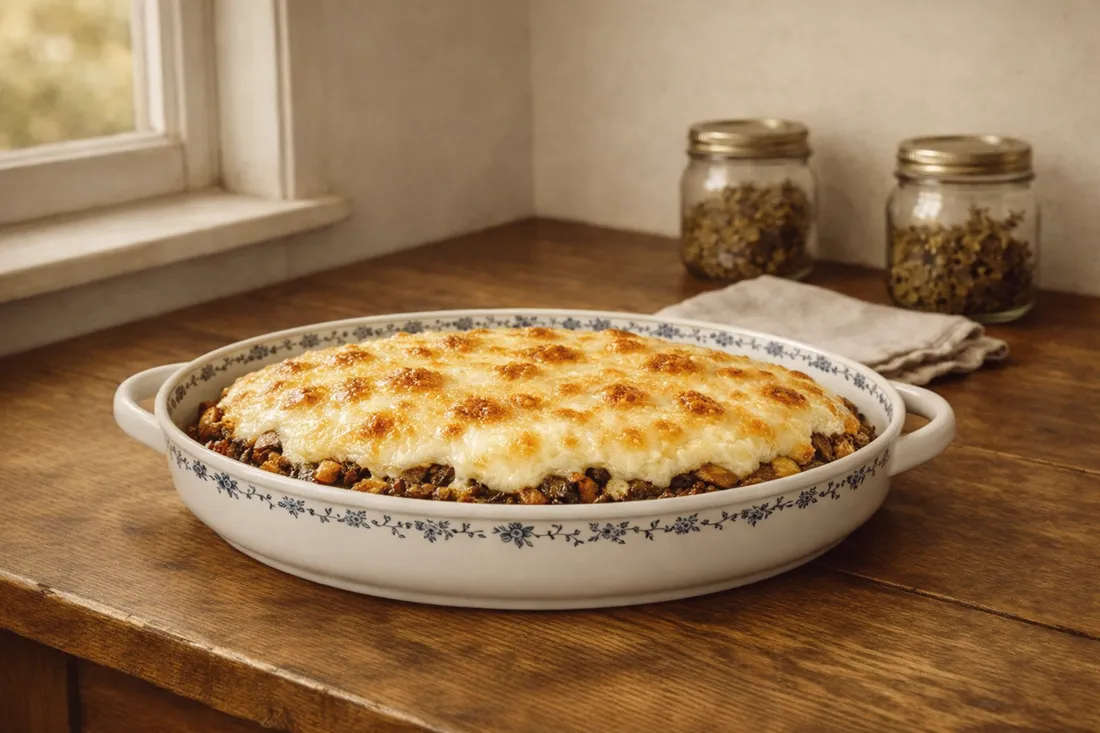
Baked Mushrooms with Hard Cheese and Eggs
Layers of sliced hard-boiled eggs and grated cheese topped with sautéed mushrooms, baked under a rich egg-enriched sour cream topping.
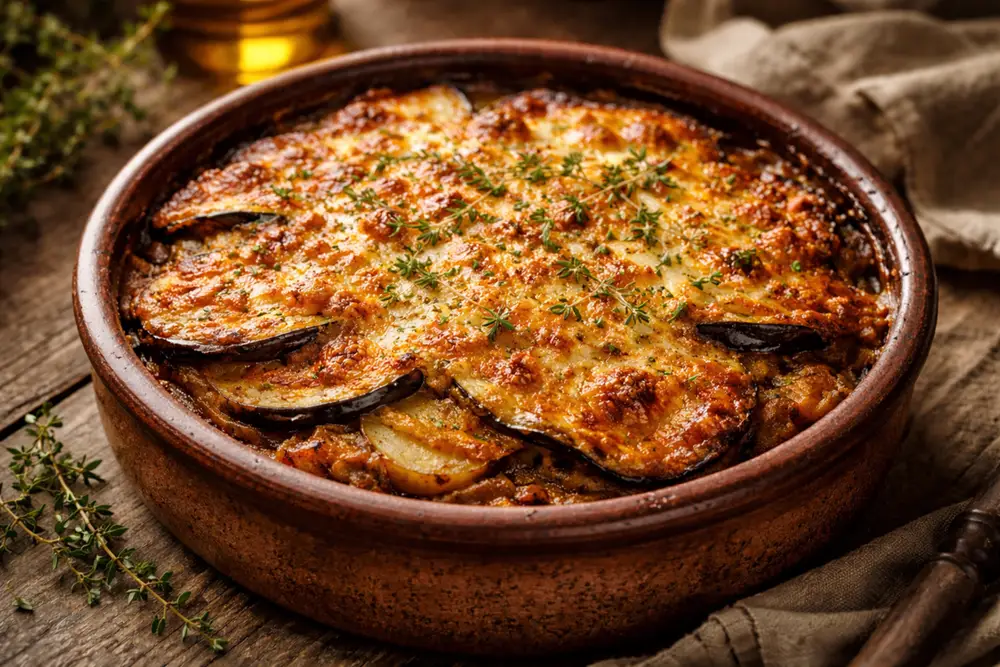
Baked Eggplant with Potatoes
A slow-baked layered casserole of eggplant, parboiled potatoes, golden fried onion, and melted cheese.